
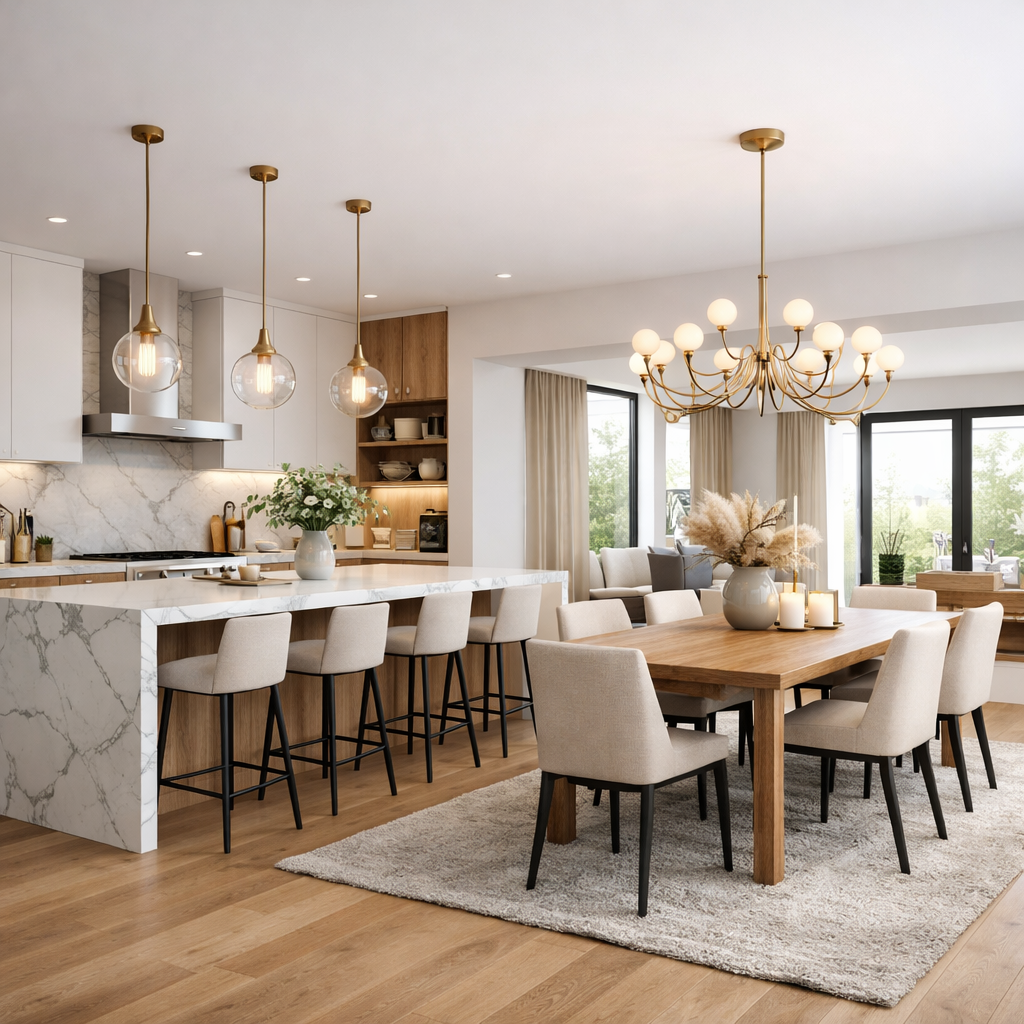
Designing a home that feels intentional can be overwhelming when you try to solve every space at once. A room-by-room interior design approach offers a more disciplined path: you make thoughtful decisions in manageable phases while still protecting the overall vision. By treating each room as a distinct project—yet keeping a shared thread of color, materials, and style—you can achieve cohesive home decor without sacrificing practicality, comfort, or budget control.
Understanding Room-by-Room Interior Design
What Is Room-by-Room Interior Design?
Room by room interior design is a structured method of planning, furnishing, and styling a home one space at a time. Instead of making scattered purchases or tackling the entire house in a single push, you define priorities, establish a design direction, and then apply it systematically. Each room receives attention for its layout, function, and aesthetics, while key elements—such as a consistent palette, recurring finishes, or a signature pattern—create visual continuity from one area to the next🛋️
This approach is especially effective for renovations, new homeowners, and anyone who wants home decorating room by room without expensive missteps. You can refine decisions as you go, learn what works in your home’s light and scale, and allocate resources where they will have the greatest impact.
Benefits of a Room-by-Room Design Approach
A phased strategy offers clarity. You start with the rooms that influence daily life most, then move to secondary spaces with greater confidence. It also supports smarter budgeting: you can invest in durable anchor pieces first and postpone purely decorative upgrades until the foundation is complete.
Equally important, room-by-room planning improves outcomes. You are more likely to measure properly, select appropriate proportions, and choose finishes that harmonize. The result is not merely a collection of well-decorated rooms, but a home with a coherent identity—an essential hallmark of cohesive home decor.
Living Room Interior Design Ideas
Layout, Furniture Placement, and Focal Points
The living room sets the tone for the entire home, so start by resolving function before style. Identify how the space needs to perform—conversation, media viewing, reading, entertaining—and let that guide your interior design layout ideas. Establish clear pathways, keeping circulation comfortable around seating and between doorways. A well-planned arrangement feels effortless because it respects how people naturally move.

Define a focal point to anchor the layout. It may be an architectural feature such as a fireplace or picture window, or a designed feature like a media wall, built-ins, or a statement artwork. Arrange primary seating to acknowledge this focal point while supporting conversation. When space allows, float a sofa away from the wall to create depth and a more considered plan; use a console table behind it to add function and a finished look.
Scale is decisive. Choose a rug large enough to unify the seating area—typically with at least the front legs of major pieces on the rug. Balance visual weight by mixing heights and silhouettes: a low-profile sectional pairs well with a taller bookcase or a floor lamp, while compact chairs can offset a substantial sofa. These living room design ideas create structure, which makes styling far easier.
Color Schemes, Lighting, and Decor Styling
A sophisticated living room palette is built in layers: a dependable neutral base, a mid-tone that adds warmth or depth, and restrained accents for contrast. Neutrals need not be bland; consider stone, camel, warm gray, or creamy off-white. Accents can come through textiles, art, and curated objects rather than large furniture pieces, allowing you to refresh the room without major replacements.
Lighting should be treated as a design system, not a single fixture. Combine ambient light (ceiling fixtures), task light (reading lamps), and accent light (picture lights, sconces, or uplighting) to achieve flexibility throughout the day. Dimmer switches and warmer bulbs are small upgrades with outsized impact, improving mood and making finishes appear richer.
For decor, prioritize fewer, better items. Use a considered mix of materials—ceramic, wood, glass, metal—to create tactile interest. Style shelves with negative space, varying object heights, and a balance of horizontal and vertical elements. Art should be sized to its wall: a common mistake is undersized work that makes the room feel incomplete. Thoughtful bathroom interior styling may be trending, but living spaces benefit just as much from restraint and intentionality.
Kitchen and Dining Room Design Tips
Functional Kitchen Layouts and Storage Solutions
Strong kitchen interior design starts with workflow. Whether your space is galley, L-shaped, U-shaped, or open-plan, the goal is to support preparation, cooking, and cleanup with minimal friction. Keep frequently used items near their point of use: knives and boards close to prep zones, pots near the cooktop, and everyday dishes near the dishwasher. These practical choices make even modest kitchens feel more generous.
Storage should be planned in three dimensions. Full-height cabinetry maximizes capacity, while deep drawers outperform lower cabinets for accessibility. Consider pull-out organizers for oils and spices, tray dividers for baking sheets, and integrated waste/recycling solutions to reduce visual clutter. Open shelving can be effective when used sparingly—ideally for attractive, uniform items—so the kitchen remains calm rather than chaotic.
Materials and finishes influence both aesthetics and longevity. Select countertops and flooring that suit your household’s wear patterns, and choose hardware that complements the broader home palette. Repeating a metal finish—brushed nickel, unlacquered brass, matte black—across the kitchen and adjacent rooms is a simple way to reinforce cohesive home decor.
Dining Room Styling for Everyday Use and Entertaining
The best dining rooms feel polished without being precious. Begin with proportion: ensure enough clearance around the table for chairs to pull out comfortably, and select a table shape that suits the room’s geometry. A rectangular table often works best in longer rooms, while a round table promotes conversation and softens tight corners.
Lighting is the dining room’s signature. Hang a pendant or chandelier centered over the table, sized to the tabletop rather than the room. As a general guide, the fixture’s diameter should be roughly half to two-thirds the width of the table, and it should hang low enough to feel intimate without obstructing sightlines. Layer in soft perimeter lighting—such as sconces or a sideboard lamp—to create atmosphere.
For dining room decor tips that hold up in daily life, focus on practical elegance: durable fabrics for upholstered chairs, a sideboard that stores linens and serveware, and a centerpiece that is easy to move when the table is in use. Art and mirrors can add depth; a mirror placed to reflect a window amplifies daylight and makes the room feel more expansive.
Top Interior Design Mistakes and How to Avoid Them
Top 10 Tips for Healthy Snacking
The Best Home Workout Equipment
Bedroom and Bathroom Interior Design
Cozy Bedroom Design: Color, Textiles, and Furniture
Bedroom design inspiration should begin with comfort and quiet. Choose a palette that supports rest—soft neutrals, muted blues and greens, or warm earthy tones—and keep contrasts gentle. If you want drama, introduce it through texture and depth rather than harsh color shifts: a deep headboard, a moody wall color, or layered bedding can feel enveloping without being heavy.
Textiles do much of the work in a bedroom. Invest in quality bedding, add a throw with a tactile weave, and layer curtains for both softness and light control. A rug under the bed reduces noise and adds warmth; extend it far enough that it greets your feet on both sides. These choices create the sensory richness that distinguishes a merely furnished room from a truly restorative one.
Furniture placement should privilege ease. Allow comfortable access on both sides of the bed when possible, and use nightstands proportionate to the mattress height for practical reach. If space permits, incorporate a bench, a compact reading chair, or a dresser that doubles as a styling surface. Keep decor curated: a few meaningful pieces, calm artwork, and discreet storage produce a room that feels composed rather than crowded.
Spa-Like Bathroom Design: Fixtures, Lighting, and Finishes
A spa-like bathroom succeeds when it is both serene and efficient. Begin by clarifying priorities: better storage, improved lighting, or upgraded fixtures often deliver more daily satisfaction than purely decorative changes. Streamlined cabinetry with well-planned interiors—drawer organizers, pull-out trays, and dedicated zones for toiletries—reduces clutter, which is essential for refined bathroom interior styling.
Fixtures set the visual tone. Choose a consistent style language—modern, transitional, classic—and repeat it across the faucet, shower trim, and accessories. If you are mixing metals, do so deliberately, with a dominant finish and a secondary accent. Surfaces should feel intentional: large-format tiles minimize grout lines, while natural stone or stone-look porcelain adds understated luxury.
Lighting is where many bathrooms fall short. Pair flattering, vertical illumination at the mirror with ambient ceiling light, and consider a dimmer for evening routines. A backlit mirror can add a hotel-like polish, while warmer color temperature bulbs soften the overall effect. Finally, incorporate tactile elements—plush towels, a teak stool, a simple tray—to reinforce the sense of ritual and calm.
Conclusion
Room-by-room interior design is not a slower path to the same result; it is a more precise method of creating a home that works. By prioritizing layout, committing to a coherent palette, and selecting durable foundational pieces before decorative accents, you build momentum without losing the larger vision. Whether you are refining living room design ideas, optimizing kitchen interior design, applying dining room decor tips, seeking bedroom design inspiration, or elevating bathroom interior styling, the most successful homes are shaped through intentional decisions—made one room at a time, yet united by a consistent design language.
Top Interior Design Mistakes and How to Avoid Them
Contemporary Interior Design: What It Really Means
Mediterranean Interior Design for Warm, Inviting Spaces
Zoo-Doku