
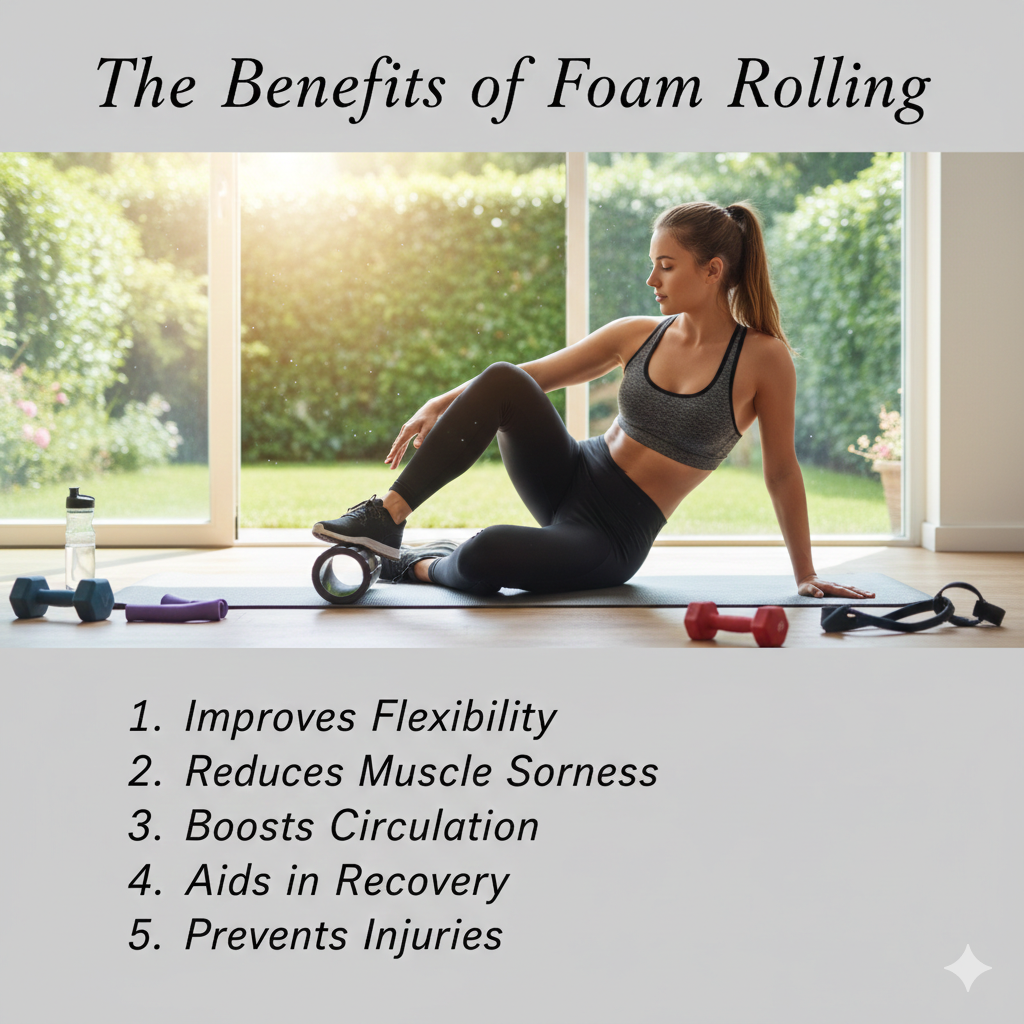
Foam rolling has moved from niche recovery practice to mainstream staple in gyms, physical therapy clinics, and home workout spaces. Used correctly, it can improve movement quality, reduce the “tight” sensation that limits training, and support more consistent performance. This guide explains what is foam rolling, the science behind self myofascial release, and the most reliable foam rolling benefits, along with practical guidance on how to foam roll properly and build a sustainable routine.
What Is Foam Rolling and How Does It Work?
What Is a Foam Roller? Types, Densities, and Textures
A foam roller is a cylindrical tool designed to apply controlled pressure to muscles and surrounding tissues. While the concept is simple, choosing the right roller can determine whether your sessions feel productive or punishing.
- Smooth rollers: Even pressure distribution and the most beginner-friendly option. Ideal for learning technique and managing tenderness.
- Textured rollers: Raised ridges or knobs concentrate pressure and can feel more intense. Useful for experienced users who tolerate deeper sensation.
- High-density rollers: Firmer, less “give,” and often preferred for larger athletes or those who want stronger pressure.
- Soft-density rollers: More forgiving; a practical starting point if you are new to foam roller exercises or highly sensitive.
- Specialty shapes: Half rollers (excellent for balance and spinal positioning work) or vibrating rollers (may help some users with comfort and perceived recovery).
The best foam roller is the one you will use consistently. For most people, a medium-density smooth roller offers the best blend of comfort, control, and results.
How Foam Rolling Works: Self-Myofascial Release Explained
Foam rolling is commonly described as self myofascial release—a self-administered technique that applies pressure to muscle and fascia (the connective tissue network that surrounds and interweaves with muscles). Although foam rolling does not “break up” fascia in a literal sense, it can influence how tissues feel and move through several mechanisms:
- Neurological modulation: Pressure and slow rolling can alter the nervous system’s perception of threat and tightness, reducing protective muscle guarding.
- Improved tissue glide: Gentle compression paired with movement may help tissues slide more smoothly, which supports better range of motion.
- Circulatory effects: Rolling can increase local blood flow and warmth, which often makes movement feel easier.
- Pain sensitivity changes: Many users experience a temporary decrease in tenderness, making it easier to train or stretch with good form.
In practice, foam rolling works best as a bridge between mobility work, strength training, and recovery—less a cure-all, more a high-leverage addition to an intelligent program.
Key Health and Fitness Benefits of Foam Rolling
Physical Benefits: Flexibility, Mobility, and Muscle Recovery
One of the most consistent foam rolling benefits is improved short-term range of motion. When paired with active movement (such as bodyweight lunges or controlled leg swings), rolling can make joints feel less restricted without the performance drop sometimes associated with prolonged static stretching.
Foam rolling for flexibility is most effective when you treat it as preparation for better movement rather than a stand-alone solution. For example, rolling the calves and quads before a squat session often improves depth by reducing the sensation of stiffness and enhancing ankle and hip mechanics.
Another widely reported advantage is foam rolling for recovery. After intense training, muscles can feel heavy, tender, and resistant. Foam rolling may help by:
- Reducing delayed-onset muscle soreness in some individuals
- Improving perceived readiness for subsequent sessions
- Encouraging gentle movement on rest days, which supports circulation and tissue health
While foam rolling is not a substitute for sleep, nutrition, and sensible training volume, it is a practical tool for maintaining comfort and consistency—two prerequisites for long-term fitness progress.
Performance Benefits: Strength, Power, and Injury Prevention
Performance improvements from foam rolling are typically indirect but meaningful. Better movement quality can translate into better training sessions: deeper squats without compensations, smoother running mechanics, and cleaner overhead positions. When athletes can access the range of motion they need, they often lift, sprint, and jump with greater efficiency.
Used strategically, foam rolling can also support injury risk management. It will not “injury-proof” a body, but it can help address common precursors to overuse problems:
- Compensation patterns: If one area feels restricted, another often overworks. Rolling may reduce perceived tightness that drives compensatory movement.
- Training continuity: Small aches often derail consistency. Foam rolling can help keep minor discomfort from escalating by improving comfort and movement options.
- Warm-up quality: Brief rolling before training can make dynamic warm-ups feel more effective, especially for hips, calves, and upper back.
In other words, foam rolling is not a performance enhancer by itself; it is a performance enabler when integrated with smart coaching, progressive loading, and adequate recovery.
How to Foam Roll Safely and Effectively
Beginner-Friendly Foam Rolling Techniques for Major Muscle Groups
Effective foam rolling is controlled, unhurried, and purposeful. Aim for moderate discomfort—never sharp pain, numbness, or tingling. As a baseline, spend 30–60 seconds per area, breathing steadily and relaxing as the tissue adapts.
Calves
- Sit with the roller under one calf, hands behind you for support.
- Roll slowly from the Achilles area toward the back of the knee, stopping before the joint.
- Rotate the leg slightly inward and outward to cover different fibers.
Hamstrings
- Place the roller under the hamstrings and lift hips gently with your hands.
- Roll from just above the knee to the base of the glutes.
- Keep pressure tolerable; hamstrings can be sensitive for beginners.
Quadriceps (Front Thigh)
- Lie face down with the roller under the thighs.
- Roll from just above the knee to the front of the hip.
- To bias the outer quad, angle slightly; to reduce intensity, keep more body weight on your forearms.
Glutes and Hip External Rotators
- Sit on the roller, cross one ankle over the opposite knee (figure-four position).
- Lean toward the crossed-leg side and roll slowly across the glute.
- Pause on tender points and breathe, then continue.
Upper Back (Thoracic Spine)
- Lie on your back with the roller under your upper back, arms across your chest or supporting your head.
- Roll from mid-back to the tops of the shoulder blades.
- Avoid rolling directly on the lower back, which is less suited to direct pressure.
As you progress, combine rolling with gentle active movements—such as ankle pumps while rolling calves or small knee bends while rolling quads—to integrate new range of motion into usable control.
Common Foam Rolling Mistakes to Avoid
Many people miss results not because foam rolling is ineffective, but because execution is rushed or overly aggressive. These mistakes are especially common:
- Rolling too fast: Speed creates sensation without meaningful adaptation. Slow down and stay deliberate.
- Chasing pain: Intensity is not a marker of effectiveness. Excessive pressure can increase guarding and prolong soreness.
- Rolling directly on joints or the lower back: Focus on muscle tissue, not bony structures. The lumbar spine is better served with core stability work and gentle mobility drills.
- Ignoring breathing: Holding your breath increases tension. Exhale slowly to encourage relaxation.
- Using foam rolling as a substitute for strength: If a joint lacks stability, it will often feel “tight.” Pair rolling with strengthening to make changes stick.
If pain is sharp, radiating, or accompanied by numbness, stop and consult a qualified clinician. Discomfort should be manageable and should improve as you warm up.
How to Add Foam Rolling to Your Workout and Daily Routine
When to Foam Roll: Before vs. After Exercise
Timing depends on your goal and the demands of your training session.
- Before exercise: Keep it brief—about 5–8 minutes total. Prioritize areas that commonly limit your movement (calves, quads, glutes, upper back). Follow with dynamic drills and sport-specific warm-up work. This approach often supports mobility without dulling power output.
- After exercise: Use a calmer pace for 8–15 minutes. Focus on downshifting, gentle pressure, and breathing. This is an effective window for foam rolling for recovery, especially after high-volume lifting or long runs.
- On rest days: A short session can reduce stiffness from inactivity and complement walking, light cycling, or mobility flows.
Consistency matters more than perfection. A manageable, repeatable routine outperforms an ambitious plan you abandon after a week.
Sample Foam Rolling Routines for Runners, Lifters, and Desk Workers
Foam Rolling Routine for Runners (8–12 minutes)
- Calves: 60 seconds per side
- Quads: 60 seconds per side
- Glutes/hip external rotators: 60 seconds per side
- Hamstrings: 45 seconds per side
- Optional: Upper back 60 seconds total (especially if you run with rounded shoulders)
Best use: after easy-to-moderate runs or later in the day after hard sessions. Pair with light hip and ankle mobility drills.
Foam Rolling Routine for Lifters (5–10 minutes pre-lift)
- Upper back: 60–90 seconds total
- Glutes: 45–60 seconds per side
- Quads: 45–60 seconds per side
- Calves: 45–60 seconds per side
Best use: before squats, deadlifts, and overhead work. Follow with activation and ramp-up sets to reinforce range of motion under control.
Foam Rolling Routine for Desk Workers (6–10 minutes daily)
- Upper back: 60–90 seconds total
- Glutes: 60 seconds per side
- Hip flexor region via quad rolling (front of thigh near the hip): 45–60 seconds per side
- Calves: 45–60 seconds per side
Best use: mid-day or early evening to counter prolonged sitting. Add short walking breaks and basic hip extension movements for a more complete approach.
These templates can be adjusted to your tolerance and schedule. If you are short on time, prioritize the one or two areas that most reliably feel restricted and rotate focus across the week.
Conclusion
Foam rolling is a practical, evidence-informed way to enhance movement quality and support recovery when it is applied with intention. The most credible foam rolling benefits include short-term improvements in mobility, reduced perceived muscle soreness, and better readiness to train—especially when combined with dynamic warm-ups and strength work. Choose a suitable roller, apply moderate pressure, move slowly, and build a repeatable foam rolling routine that fits your training and lifestyle. Over time, those small, consistent sessions often translate into smoother workouts, fewer interruptions, and more resilient performance.