
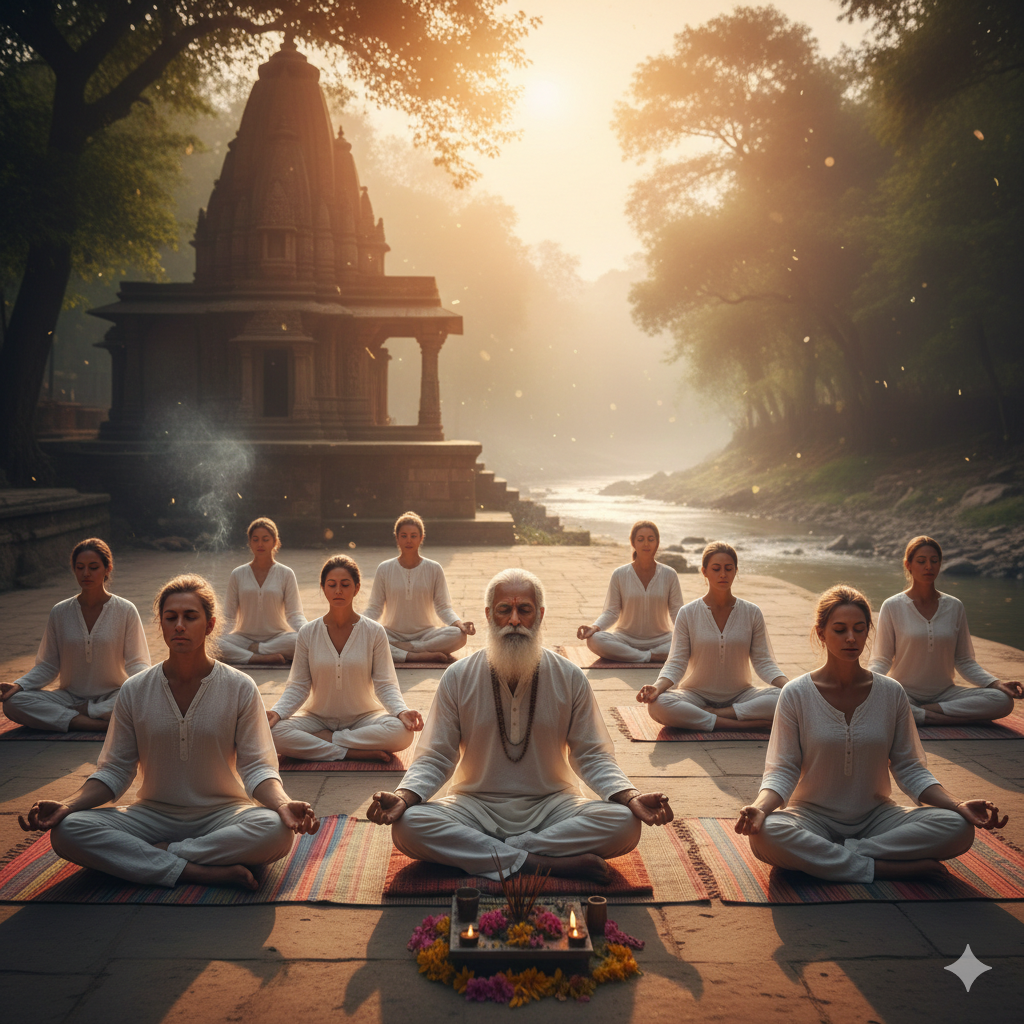
Stress is not merely a feeling; it is a full-body state that shapes attention, sleep, digestion, and emotional regulation. Meditation offers a practical way to interrupt the stress cycle by training the mind to settle, the breath to slow, and the nervous system to recalibrate. If you have been searching for how to meditate to reduce stress without complicated rituals or vague instructions, this guide will walk you through a clear, beginner-friendly approach grounded in science and designed for everyday life.
Understanding Meditation for Stress Reduction
What Is Meditation and How Does It Reduce Stress?
Meditation is a structured mental practice that strengthens your ability to direct attention, observe experience without immediately reacting, and return to the present moment. In practical terms, meditation to reduce stress works by creating a pause between a stressor and your response. Instead of spiraling into rumination or tension, you learn to recognize stress signals early—tight shoulders, racing thoughts, shallow breathing—and respond with steadier awareness.
Over time, stress relief meditation improves your capacity for self-regulation. Rather than attempting to “empty the mind,” you practice returning to an anchor—often the breath or bodily sensations—whenever the mind wanders. This repeated return is the training. The more consistently you practice, the more accessible calm becomes under pressure.
The Science Behind Meditation and Stress Relief
Stress activates the body’s threat response, largely mediated by the sympathetic nervous system and stress hormones such as cortisol. Meditation practices—especially mindfulness-based methods—are associated with reduced physiological arousal and improved emotional control. Research suggests that regular practice can support parasympathetic activation (the “rest-and-digest” response), lowering heart rate and easing muscle tension.
From a neurological perspective, mindfulness for stress reduction is linked to changes in brain regions involved in attention and emotion regulation. While results vary by individual and practice type, many studies indicate improved resilience: stressful thoughts may still arise, but they are less likely to dictate behavior. This is one of the most practical benefits of meditation for stress—not the elimination of stress, but a stronger capacity to meet it with clarity.
Preparing to Meditate for Stress Relief
Creating a Calm Environment for Your Practice
You do not need a perfect sanctuary, but your environment should reduce friction. Choose a space where you can sit comfortably and remain undisturbed for a few minutes. Silence is helpful, yet not mandatory; the aim is to minimize avoidable interruptions. Consider these simple adjustments:
- Set boundaries: Let others know you are unavailable, or use “do not disturb” settings on devices.
- Support posture: Use a chair with feet flat on the floor or sit on a cushion that elevates the hips slightly.
- Soften sensory input: Dim lighting if possible, and keep the room at a comfortable temperature.
A calm setting helps in beginner meditation for stress because it reduces the need to “fight” your surroundings. As your practice matures, you can meditate in less controlled environments and still access steadiness.
Choosing the Best Time and Duration for Meditation
The best time is the time you can sustain. Many people prefer morning practice because it shapes the day before stress accumulates. Others find an evening session helps discharge tension and improves sleep quality. If you tend to feel overwhelmed midday, a brief session during a lunch break can reset focus.
Duration should be realistic. A consistent five minutes can outperform an ambitious plan that collapses after three days. For most people, a practical progression looks like this:
- Week 1: 5 minutes daily
- Week 2: 7–10 minutes daily
- Week 3 and beyond: 10–20 minutes, or two shorter sessions
This gradual approach supports a sustainable daily meditation routine and keeps the practice associated with relief rather than obligation.
Step-by-Step Guide: How to Meditate to Reduce Stress
Simple Breathing Meditation Technique for Stress
Breathing-based practice is one of the most accessible meditation techniques for stress, because the breath is always available and directly influences arousal. Use the steps below as a reliable template:
- Adopt a steady posture. Sit upright but not rigid. Let the shoulders drop. Rest hands on thighs or in your lap.
- Set a gentle intention. Silently name your purpose: “I am practicing to steady my mind and ease stress.”
- Bring attention to the breath. Notice where it is most vivid—nostrils, chest, or abdomen.
- Slow the exhale slightly. Without forcing, allow the out-breath to lengthen. This supports downshifting from stress.
- Count if helpful. Inhale (1), exhale (2), up to 10, then begin again. If counting feels effortful, drop it.
- Handle distractions skillfully. Thoughts will appear. When you notice you have drifted, label it softly—“thinking”—and return to the breath.
- Close with a transition. After your timer ends, take one deeper breath, feel your feet, and reorient gradually before standing.
This is not a test of concentration. It is a rehearsal of recovery: each time you return to the breath, you practice stepping out of the stress loop. Over weeks, this becomes a dependable form of breathing exercises for stress that you can use in meetings, before sleep, or during anxious moments.
Guided Body Scan Meditation for Deep Relaxation
A body scan is particularly effective when stress is stored as physical tension. It cultivates interoceptive awareness—your ability to sense internal signals—so you can soften bracing patterns before they escalate into headaches, irritability, or fatigue.
- Position yourself. Lie down or sit comfortably. If lying down makes you sleepy, keep a slight bend in the knees or choose a seated posture.
- Begin with grounding. Feel contact points: feet on the floor, back against a chair, or the weight of the body on a mat.
- Scan slowly from feet upward. Place attention on the toes, then the soles, ankles, calves, knees, and thighs. Notice sensations without judgment—warmth, tingling, tightness, or neutrality.
- Invite release rather than forcing it. Where you detect tension, imagine the area softening on each exhale. The instruction is permission, not pressure.
- Move through the torso and arms. Notice the abdomen, chest, upper back, shoulders, arms, hands, and fingers. Many people hold stress in the jaw and shoulders; linger briefly if needed.
- Include the neck, face, and head. Soften the tongue, unclench the jaw, relax around the eyes, and smooth the forehead.
- End with whole-body awareness. Sense the body as a single field. Take three unhurried breaths before returning to normal activity.
This form of stress relief meditation can be especially valuable after demanding work, intense conversations, or long periods of screen time. It trains you to recognize stress early in the body—often before it fully registers in the mind.
Making Meditation a Daily Stress-Relief Habit
How to Stay Consistent and Overcome Common Challenges
Consistency is less about willpower and more about design. The most common obstacles—restlessness, skepticism, and “lack of time”—are often solved by simplifying the practice and linking it to an existing routine.
- If you feel too busy: Commit to a minimum viable session (3–5 minutes). A short practice done daily reinforces identity and momentum.
- If your mind feels noisy: Treat mental activity as expected, not as failure. The skill is noticing and returning, which is precisely how to meditate to reduce stress effectively.
- If you become impatient: Choose a clear structure—breath counting or a body scan—so each session has a defined path.
- If you forget: Attach meditation to a cue: after brushing teeth, after morning coffee, or before closing your laptop at day’s end.
Approach practice with seriousness, yet without severity. When meditation becomes another arena for self-criticism, it can amplify stress. When it becomes a predictable refuge, it steadily builds resilience.
Tracking Your Progress and Enhancing Your Practice
Meditation progress is often subtle. Instead of expecting permanent calm, track more practical signals: shorter recovery time after stressful events, fewer reactive decisions, improved sleep onset, or a greater ability to notice tension before it escalates.
To refine your daily meditation routine, consider these methods:
- Keep a brief log: Note duration, technique used, and a one-sentence observation (for example, “Shoulders relaxed after 6 minutes”).
- Use gentle metrics: Rate perceived stress before and after on a 1–10 scale. Patterns emerge over weeks.
- Rotate techniques thoughtfully: Use breathing meditation when mentally agitated and the body scan when physically tense. This keeps meditation to reduce stress responsive rather than rigid.
- Deepen gradually: Increase duration in small increments, or add a second short session during high-pressure days.
Enhancement is not about intensity; it is about precision and regularity. As your attention becomes steadier, mindfulness for stress reduction begins to appear outside formal sessions—in conversations, commutes, and moments when you would previously have reacted automatically.
Conclusion
Learning how to meditate to reduce stress is ultimately learning how to return—again and again—to what is stable: breath, body, and present-moment awareness. With a calm setup, a realistic schedule, and simple methods such as breathing practice and the body scan, meditation becomes a practical tool rather than an abstract ideal. Start small, practice consistently, and measure progress by resilience: a quieter nervous system, clearer choices, and a more spacious relationship with the pressures of daily life.