
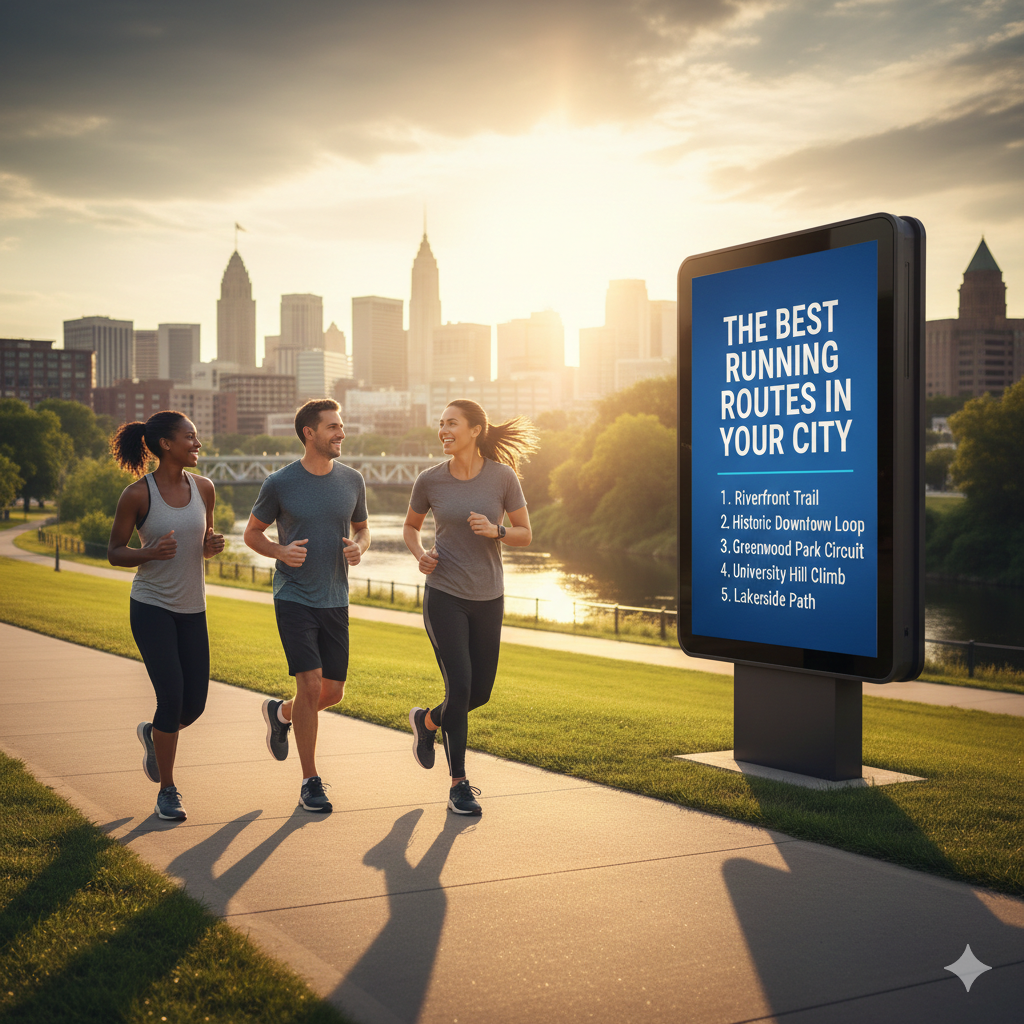
Finding the right running route can transform a routine workout into a ritual you look forward to. The best paths offer more than mileage: they provide safe footing, reliable lighting, inspiring scenery, and enough variety to keep training purposeful. This city running guide gathers standout options across terrain types and difficulty levels, so you can decide where to run [your city] based on your goals—easy recovery, steady aerobic mileage, or focused speed and hill work.
Top Running Routes in [Your City]: An Overview
Why [Your City] is Great for Runners
[Your City] is built for runners who value choice. You can thread together waterfront promenades, spacious park loops, and neighborhood greenways without excessive stop-and-go. Many corridors feature wide pathways, predictable surfaces, and natural landmarks that help you pace by feel rather than constantly checking a watch. In short, the best places to run [your city] tend to be both practical and memorable—ideal for year-round consistency.
How to Use This Guide to Find Your Ideal Route
Start with your primary purpose, then match it to the route profile. If you want steady mileage with minimal interruptions, prioritize long continuous paths and larger parks. If you are building speed, look for measured loops or gently rolling roads that allow controlled intervals. New runners should choose flat, well-marked routes with frequent exit points and nearby amenities. Throughout the recommendations below, you will find options that cover scenic runs, beginner running paths, trail running segments, and reliable marathon training routes in [your city].
Scenic Running Routes in [Your City]
Best Waterfront & Park Loops
Waterfront Promenade Out-and-Back
If [Your City] has a riverwalk, lakefront, or harbor path, make it your default scenic route. Waterfronts typically offer long sightlines, fewer crossings, and soothing wind patterns that keep temperatures manageable. Run an out-and-back to control distance precisely: 20 minutes out, 20 minutes back for an uncomplicated aerobic session. These are among the most dependable running routes [your city] for tempo efforts because the grade is usually gentle and consistent.
Central Park Loop (or Your Largest Signature Park)
A major park loop is valuable because it can serve multiple training needs: easy jogs, progression runs, and controlled workouts using natural markers like bridges, trailheads, or mile posts. Choose the interior loop when you want a quieter experience and the perimeter when you want a steadier surface and fewer sharp turns. As a rule, park loops deliver the most efficient combination of beauty and logistics—restrooms, water fountains, benches, and multiple access points.
Botanical Garden / Arboretum Perimeter Route
Where permitted, the perimeter of an arboretum or landscaped garden district often offers smooth pavement, shade, and a calmer atmosphere than major thoroughfares. It is an excellent choice for recovery runs or steady midweek mileage when you want your heart rate to stay low. Consider it a refined version of scenic runs [your city], particularly during seasonal bloom periods.
Iconic City Landmarks and Skyline Views
Landmark-to-Landmark “City Highlights” Circuit
Design a route that links two or three recognizable landmarks—such as a historic square, a major museum, a cathedral, or a civic center—using the most pedestrian-friendly streets. This style of run provides natural segmentation: warm up to the first landmark, settle into rhythm between points, then finish with a relaxed cooldown. For visitors and locals alike, it is one of the most rewarding ways to experience where to run [your city] while maintaining a clear structure.
Skyline Overlook Route
Many cities have a bridge, bluff, or elevated boulevard that frames the skyline. Use it as the centerpiece of a run scheduled around sunrise or late afternoon light for maximum visibility and safety. If traffic is a concern, choose quieter hours and favor paths with physical separation from vehicles. The result is a route that feels cinematic without sacrificing practicality.
Beginner-Friendly and Family Running Routes
Easy, Flat Paths for New Runners
Neighborhood Greenway or Multi-Use Path
For beginners, consistency matters more than novelty. A greenway with predictable footing, minimal elevation, and frequent intersections to shorten the route is ideal. Keep your first weeks simple: a 1–2 mile out-and-back or a short loop you can repeat. These beginner running paths [your city] reduce decision fatigue and make it easier to track progress.
School Track and Adjacent Park Connector
When open to the public, a track is the most controlled environment you can find. It eliminates hills, traffic interactions, and surface surprises. Pair it with a short adjacent park connector to add variety without increasing complexity. This combination is particularly useful for run-walk programs and for families with different paces who want a shared meeting point.
Safe, Well-Lit Routes for Early Morning or Evening Runs
Well-Lit Park Perimeter or Popular Fitness Corridor
When you run outside daylight hours, choose routes with consistent lighting, steady foot traffic, and clear sightlines. A park perimeter road, a busy fitness promenade, or a municipal trail near residential neighborhoods often provides the best balance. These are typically the most reliable safe running routes [your city], especially when you avoid isolated shortcuts and stick to the main arteries.
Downtown Core Loop (Short, Bright, Highly Visible)
A compact downtown loop can be safer at dawn or dusk because streets are well-lit and there are usually open businesses, public transit stops, and clear signage. Plan the loop to minimize crossings and avoid nightlife hotspots if you prefer a calmer environment. For many runners, this is the most convenient option when time is limited.
Advanced, Trail, and Long-Distance Running Routes
Challenging Hill and Interval Training Routes
Hill Repeats on a Steady Grade
Identify a hill with a consistent incline lasting 60–180 seconds at hard effort. Warm up thoroughly on flat ground, then run controlled repeats with easy jog recovery back down or along a flatter return. The best hill routes are predictable and uninterrupted—few driveways, minimal intersections, and good shoulder space. This is the simplest way to add strength, efficiency, and speed without a track.
Measured Loop for Structured Intervals
A loop of roughly 0.5–1 mile with minimal crossings is perfect for interval training. You can run it as alternating hard/easy laps, or as a threshold set with steady splits. Parks, campuses, and waterfront circuits often suit this format. For runners focused on performance, these routes are essential components of a serious city running guide.
Trail and Long-Distance Courses for Marathon Training
Urban-to-Trail Connector Long Run
For marathon preparation, continuity is everything. Build a long run that starts on roads or a paved path, then transitions to a packed-dirt trail for softer impact before returning on pavement. This blend reduces repetitive stress while teaching you to maintain rhythm across surfaces. It is one of the most effective marathon training routes [your city] when you want variety without sacrificing predictability.
Regional Park or Nature Reserve Trail Network
If [Your City] has a large regional park with marked trails, use it for aerobic endurance and technical skill. Choose rolling trails for steady-state efforts, and reserve more rugged segments for days when you can focus on foot placement. Trail runs build resilience, improve proprioception, and keep training mentally fresh. When done consistently, trail running [your city] becomes a powerful complement to road mileage.
Long, Straight Multi-Use Path for Marathon-Specific Pacing
A long, uninterrupted path—especially one with mile markers—supports marathon-pace blocks and fueling practice. Plan a route with easy access to water fountains or set up a personal aid strategy (stash a bottle, loop past your car, or arrange a friend to hand off fluids). Long straightaways can feel monotonous, but they are unmatched for learning discipline at race pace.
Tips for Running Safely and Efficiently in [Your City]
Safety, Gear, and Weather Considerations
Prioritize visibility and predictability. Choose routes with consistent lighting, broad shoulders or separated paths, and fewer complex intersections. Wear reflective elements at dawn, dusk, or night, and assume drivers may not yield even at marked crossings.
Match footwear to surface. Road shoes work best on pavement and smooth paths; consider a light trail shoe if your route includes dirt, gravel, or wet leaves. A small change in traction can prevent slips and overuse issues.
Plan for [Your City]’s weather patterns. In heat, seek shade and waterfront breezes, run earlier, and reduce intensity. In cold or wet conditions, dress in breathable layers and protect extremities. After storms, avoid flooded underpasses and slick boardwalk sections, which can turn otherwise reliable running routes [your city] into hazards.
Apps, Maps, and Local Running Groups to Join
Use route-planning tools. Apps like Strava, Komoot, and MapMyRun can reveal popular segments, elevation profiles, and surface types. Cross-check with Google Maps Street View to confirm sidewalk continuity and crossing complexity before committing to a new route.
Save “go-to” loops for consistency. Maintain two or three dependable routes—one short and flat, one scenic and moderate, and one long-run option—so you can train without constant planning. This approach helps you consistently identify the best places to run [your city] for each workout type.
Join a local running group. Clubs and store-led runs offer safety in numbers, route knowledge, and accountability. They are also an efficient way to discover lesser-known scenic runs [your city] and learn which paths are best at specific times of day.
Conclusion
The most satisfying runs happen when route, purpose, and conditions align. Whether you prefer a tranquil waterfront, a landmark-filled city circuit, a flat beginner loop, or a demanding trail network, [Your City] offers options that can support every stage of your training. Use this guide to refine your routine, rotate surfaces and scenery, and build a shortlist of dependable routes you can return to all year—confident you have found truly strong running routes [your city].