
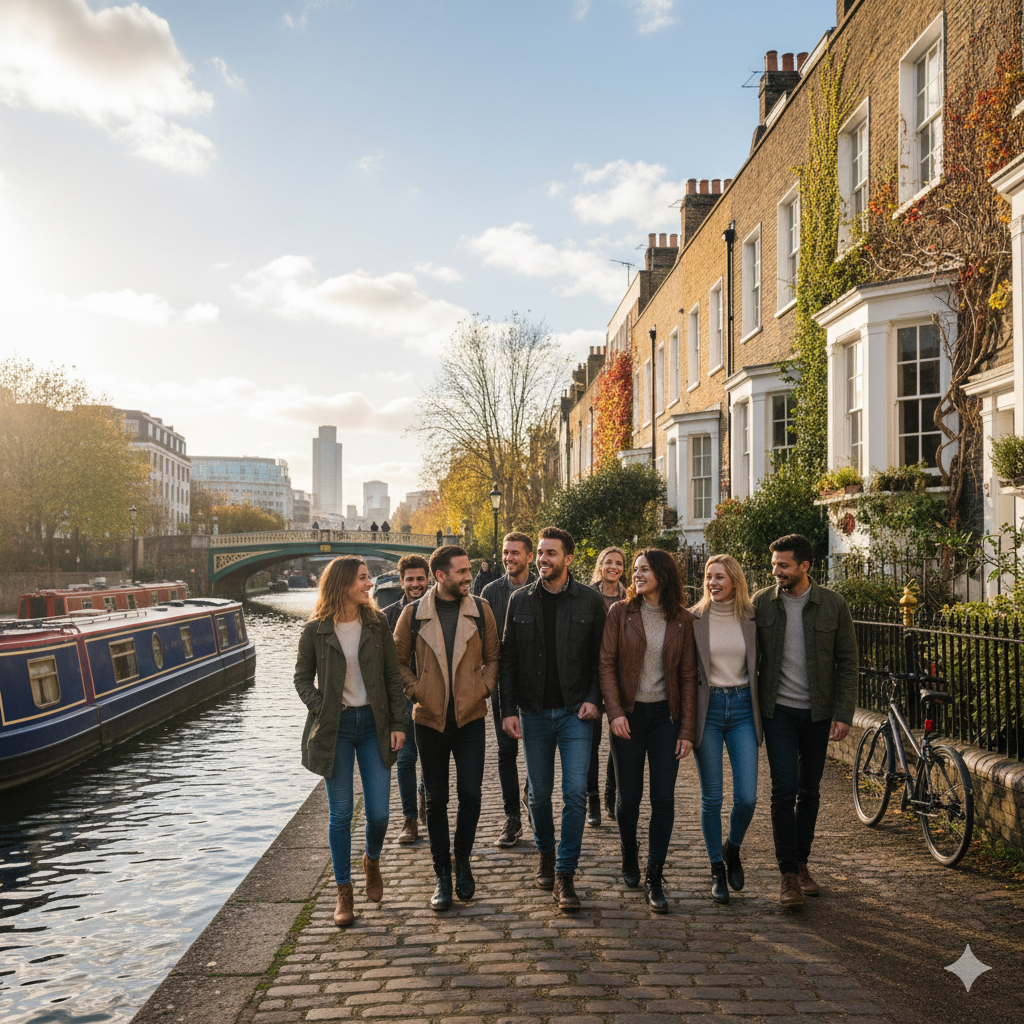
Mindful walking is one of the most accessible ways to bring meditation into everyday life. It requires no special equipment, no silent room, and no extended time commitment. With a few simple adjustments in attention, an ordinary stroll becomes a walking meditation that steadies the nervous system, clarifies the mind, and reconnects you with your body’s natural rhythm. If you have been wondering how to practice mindful walking without overcomplicating it, the approach below will help you begin—and sustain—a daily mindfulness practice that feels realistic.
What Is Mindful Walking?
Definition of Mindful Walking
Mindful walking is the practice of walking while deliberately placing attention on present-moment experience. Instead of moving on autopilot—planning, rehearsing conversations, or scrolling through worry—you observe what is happening now: the sensations of the feet touching the ground, the movement of the legs, the cadence of breath, and the sounds and sights around you.
This is not about “emptying the mind.” Thoughts will arise. The essential skill is to notice when attention drifts and to return, gently and repeatedly, to the direct experience of walking. Over time, this trains steadiness, perspective, and calm.
Benefits of Mindful Walking for Mental and Physical Health
The benefits of mindful walking combine the physiological advantages of gentle movement with the psychological benefits of mindfulness. Practiced consistently, it can support both mental clarity and bodily wellbeing.
- Mindfulness and stress relief: Shifting attention from rumination to sensory experience can reduce perceived stress and ease mental agitation.
- Improved emotional regulation: Observing thoughts and feelings without immediately reacting builds psychological flexibility.
- Better focus: The repeated act of returning attention to the present strengthens concentration in daily tasks.
- Enhanced body awareness: Attuning to posture, gait, and tension can encourage more efficient movement and fewer aches from habitual strain.
- Gentle cardiovascular support: Even moderate walking contributes to circulation and overall physical conditioning, especially when practiced regularly.
For many people, mindful walking is also more approachable than seated meditation. Movement can make it easier to settle, particularly during periods of restlessness or fatigue.
How to Practice Mindful Walking Step by Step
Preparing Your Body and Mind for Mindful Walking
Effective mindful walking techniques begin before your first step. Preparation helps you move from scattered attention into a deliberate, receptive state.
- Choose a suitable route: Select a safe, relatively calm path—indoors or outdoors. A park loop, quiet street, or even a hallway can work.
- Decide on a short duration: Start with 5–10 minutes. A modest commitment makes consistency easier, which is essential for a durable practice.
- Remove distractions: If possible, walk without music or podcasts. Place your phone on silent and out of sight.
- Set an intention: Silently name what you are doing: “I am walking mindfully for the next 10 minutes.” This simple phrase clarifies purpose.
- Check posture: Stand upright without rigidity. Relax the shoulders, soften the jaw, and let your arms hang naturally.
These small choices reduce friction and make the practice more coherent. You are not trying to engineer a perfect experience; you are creating conditions that support attention.
A Simple Mindful Walking Exercise for Beginners
This mindful walking exercise is designed as a stable starting point for mindful walking for beginners. It is intentionally straightforward and can be repeated daily.
- Begin with stillness (30–60 seconds): Stand and notice your breath. Observe sensations in your feet and legs. Let the mind settle without force.
- Start walking slowly: Take smaller steps than usual. Feel the shift of weight from heel to toe, and the moment the foot lifts from the ground.
- Use a primary anchor: Choose one point of focus: the soles of the feet, the swing of the arms, or the breath. Keep returning to that anchor.
- Notice distraction without judgment: When you realize you are thinking, label it briefly—“thinking,” “planning,” “remembering”—and return to sensation.
- End deliberately: After your chosen time, stop. Take two slower breaths and note how you feel physically and mentally before resuming your day.
Consistency matters more than intensity. A short practice done frequently will yield stronger results than an occasional long session.
Techniques to Deepen Your Mindful Walking Practice
Breathing Techniques to Use While Walking
Breath is a refined, portable anchor for walking meditation. It can also help regulate stress responses by encouraging steadier respiratory patterns. Choose one technique and keep it gentle; forced breathing tends to create tension.
- Natural breath tracking: Simply observe inhalations and exhalations as they occur. Feel the breath in the chest, ribs, or abdomen while you continue walking at a comfortable pace.
- Step-and-breath synchronization: Pair breath with steps. For example, inhale for 3 steps and exhale for 3 steps. Adjust the count to your comfort and fitness level.
- Lengthened exhale: Without straining, allow the exhale to be slightly longer than the inhale (e.g., inhale for 3 steps, exhale for 4). Many people find this supports calm and steadiness.
If you become short of breath, return to normal walking respiration. The goal is awareness, not breath control.
Using Your Senses to Stay Present During Walking Meditation
The senses provide immediate access to the present moment. When the mind becomes abstract and busy, sensory attention restores concreteness and clarity. This approach is especially helpful when practicing mindfulness and stress relief in dynamic environments.
- Sound: Listen to nearby and distant sounds without labeling them as good or bad. Notice volume, rhythm, and direction.
- Sight: Soften your gaze. Observe colors, light, shapes, and movement. Avoid scanning for problems; simply receive visual information.
- Touch: Feel air temperature on the skin, clothing against the body, and the contact between your feet and the ground.
- Smell: Notice subtle scents—rain, grass, coffee, pavement warming in the sun—without chasing them.
- Interoception (internal sensation): Sense the heartbeat, muscle activity, and areas of tension. Adjust your pace or posture if needed.
A useful structure is to select one sense for a minute, then move to another. This keeps attention fresh while remaining anchored in direct experience.
How to Make Mindful Walking a Daily Habit
Fitting Mindful Walking into Your Daily Routine
To transform mindful walking from an occasional exercise into a reliable daily mindfulness practice, integrate it with routines that already exist. Habits form more easily when they are attached to predictable cues.
- Use transitions: Practice for 5 minutes after lunch, before your first meeting, or when you return home. Transitional moments naturally invite a reset.
- Convert existing walks: Turn part of your commute, dog walk, or school drop-off into a brief walking meditation by removing distractions and choosing a clear anchor.
- Schedule it with precision: Place a short mindful walk on your calendar. Treat it as a meeting with your wellbeing.
- Keep the bar low: On demanding days, commit to two minutes. Continuity preserves the habit, even when time is scarce.
With repetition, mindfulness becomes less of an activity and more of a way of moving through ordinary life—with composure and attentiveness.
Common Mistakes to Avoid When Practicing Mindful Walking
Many people abandon the practice not because it is ineffective, but because they misunderstand what it should feel like. Avoid these frequent errors to keep your progress steady.
- Expecting immediate calm: Some walks will feel restless or distracted. This is not failure; noticing distraction is the practice.
- Overcorrecting the mind: Harsh self-criticism creates resistance. Redirect attention firmly, but with patience.
- Walking too fast at first: Speed can make sensation harder to perceive. Begin slower, then gradually return to a natural pace while maintaining awareness.
- Multitasking: Checking messages, composing emails mentally, or planning relentlessly undermines mindfulness. Choose one simple anchor and stay with it.
- Neglecting safety: Stay aware of traffic, obstacles, and your surroundings. Mindfulness includes wise attention to what is real and present.
When these pitfalls are addressed, how to practice mindful walking becomes less mysterious: it is the steady cultivation of attention, step by step.
Conclusion
Mindful walking offers an elegant solution to modern overstimulation: it pairs movement with presence, restoring clarity without requiring elaborate conditions. By starting with a beginner-friendly mindful walking exercise, refining attention through breath and sensory techniques, and weaving the practice into daily routines, you create a sustainable method for calm, focus, and resilience. Over time, the most profound benefits of mindful walking appear quietly—through a steadier mind, a more relaxed body, and a renewed capacity to meet each day with composure.
Celestial Stackmaster
Core Loop: Vertical block stacking with slicing physics.
Precision Rewards: “Perfect” drops snap into place with a glow effect.
Dynamic Difficulty: Block speed increases as you climb higher.
Atmospheric Visuals: A cosmic “Zenith” background with color-shifting fog that evolves with your score.
Responsive Controls: Fully playable on desktop (click) and mobile (tap).
Camera System: Dynamic camera that tracks your progress toward the stars.
How to Play
Objective: Stack blocks as high as possible without missing the tower.
Controls: Click or Tap anywhere to drop the moving block onto the stack.
Pro Tip: Align the block perfectly with the one below to keep its full size; otherwise, the overhanging part will be sliced off!