
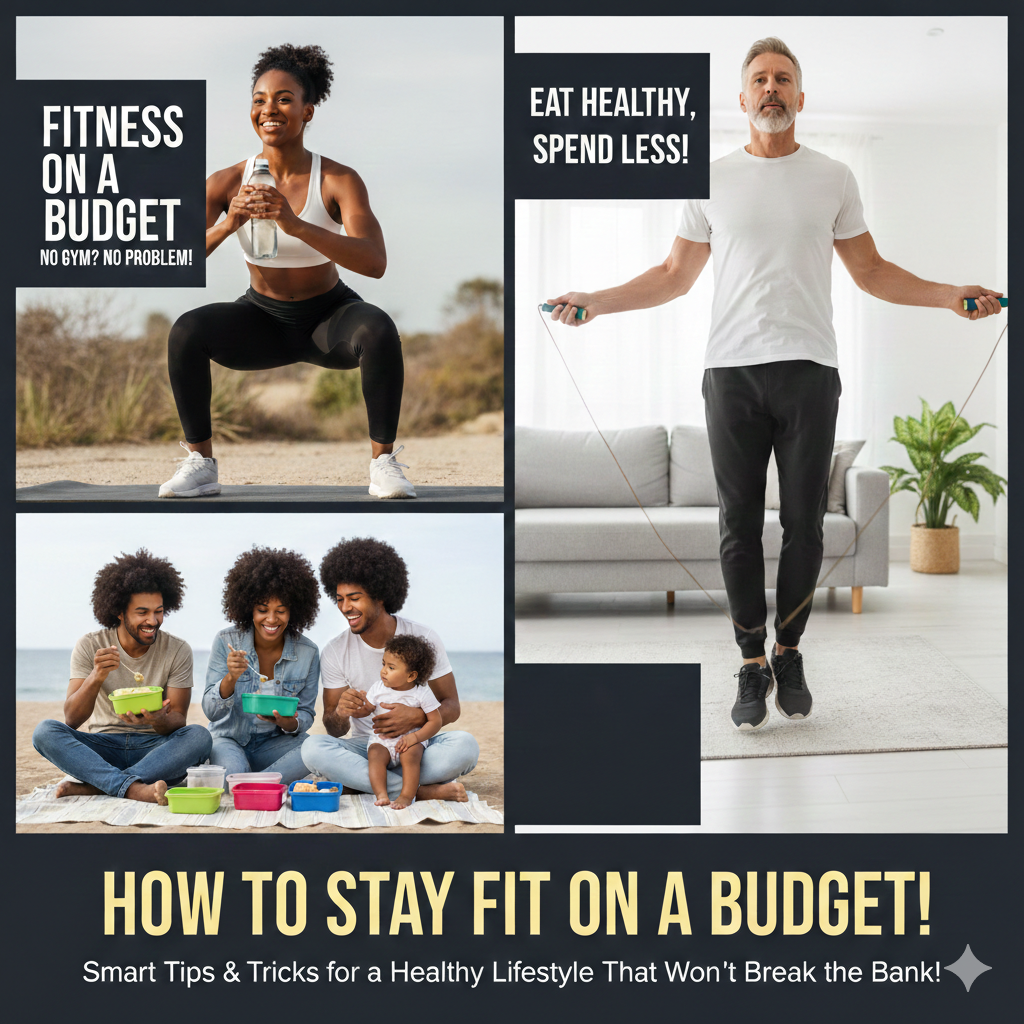
Fitness plateaus rarely break by accident. More often, they yield to a clear plan with a firm deadline, measurable targets, and a structure that removes daily decision fatigue. That is precisely why fitness challenges have become a reliable catalyst for change. Whether you want a focused 30 day fitness challenge, a strategic home workout challenge, or a performance-driven plan built around strength and conditioning, the right challenge can turn good intentions into consistent execution—and, ultimately, visible results.
Understanding Fitness Challenges and How They Boost Results
What Are Fitness Challenges and Why They Work
A fitness challenge is a time-bound training commitment with defined rules, progressive targets, and a method for tracking outcomes. Unlike open-ended routines that can drift over time, a challenge creates a short, purposeful training block—often 14, 21, or 30 days—designed to improve one or more fitness qualities such as strength, endurance, mobility, or body composition.
They work because they reduce ambiguity. You know what to do, when to do it, and how to judge progress. The structure is also inherently behavioral: a challenge encourages repetition, and repetition is the engine of habit formation. Finally, the “finish line” matters. A fixed endpoint increases follow-through because the effort feels finite, and small daily wins accumulate quickly into momentum.
Key Benefits: Motivation, Accountability, and Faster Progress
The most effective fitness challenge for results leverages three powerful forces:
- Motivation through clarity: A defined schedule eliminates guesswork and keeps training sessions focused.
- Accountability through measurement: When workouts and metrics are logged, it becomes harder to rationalize skipped sessions or drifting intensity.
- Faster progress through density: Many challenges increase training frequency or volume in a controlled way, creating a concentrated stimulus that can accelerate adaptation—provided recovery is respected.
Importantly, “faster” should not mean reckless. The best fitness challenges use progressive overload, sensible rest, and clear modification options to keep consistency high and injury risk low.
Choosing the Best Fitness Challenge for Your Goals
How to Match Fitness Challenges to Weight Loss, Strength, or Endurance
The best fitness challenges are not universal; they are aligned with your primary objective. Select a challenge that emphasizes the adaptations you want most.
- For weight loss: Choose a weight loss fitness challenge that combines strength training (to preserve muscle) with moderate-to-high weekly movement volume. Look for plans that include step goals, short conditioning sessions, and progressive resistance work. Nutrition consistency will matter as much as training.
- For strength and muscle gain: Prioritize progressive resistance training with repeatable lifts (squats, hinges, presses, rows). The challenge should track load, reps, and sets—not just sweat. Conditioning can be included, but it should not compromise recovery.
- For endurance: Pick challenges built around running, cycling, rowing, or brisk walking, with gradually increasing duration or distance. A balanced plan includes easy sessions, one quality session, and at least one rest day to protect joints and connective tissue.
If you are torn between goals, start with the constraint that most limits you. Many people benefit from strength-first challenges because stronger muscles and better movement mechanics improve performance across the board, including fat loss and endurance capacity.
Safety Tips and Readiness Checklist Before You Start
A challenge is only “effective” if you can complete it. Use this readiness checklist before committing:
- Medical clearance: If you have cardiovascular risk factors, chronic pain, recent injury, or are returning after a long break, consult a qualified clinician.
- Baseline capacity: Can you complete two to three workouts per week now without lingering soreness that disrupts daily life? If not, start with a lighter beginner fitness challenge.
- Time realism: Confirm the daily or weekly time requirement. Consistency beats ambition.
- Technique first: If a challenge includes complex lifts, ensure you can perform them safely—or substitute with simpler patterns.
- Recovery plan: Schedule rest days, sleep targets, and hydration. A challenge without recovery is a shortcut to stagnation.
Finally, define your success metrics in advance. Completion is a win, but pairing completion with measurable outcomes—such as improved push-up reps or reduced waist measurement—makes the effort tangible.
Top Fitness Challenges to Try for Every Level
Beginner-Friendly Fitness Challenges You Can Start Today
These options are practical, scalable, and ideal if you are building consistency or returning after time away. Many can be done as a home workout challenge with minimal equipment.
1) 30-Day Daily Steps Challenge
Goal: Build a strong movement baseline and support fat loss without excessive fatigue.
How it works: Start with your current average steps and add 500–1,000 steps every 5–7 days until you reach a sustainable target (often 8,000–12,000 for many adults, depending on lifestyle).
Why it helps: It increases calorie expenditure, improves aerobic base, and reinforces daily discipline.
2) 30-Day Bodyweight Strength Foundation
Goal: Improve full-body strength and joint control.
Format: 3 workouts per week, alternating two sessions:
- Workout A: Squat variation, incline push-up, hip hinge (glute bridge), plank
- Workout B: Reverse lunge, row variation (band or backpack row), overhead press (light dumbbells/band), dead bug
Progression: Add reps first, then add difficulty (lower incline push-ups, slower tempo, or additional sets). This is a structured 30 day fitness challenge that prioritizes mastery over exhaustion.
3) Mobility and Posture Reset (21 Days)
Goal: Reduce stiffness and improve movement quality.
How it works: Commit to 10–15 minutes daily focusing on hips, thoracic spine, ankles, and controlled breathing. Track consistency and subjective outcomes like reduced back tightness or easier squats.
Best for: Desk-bound schedules, beginners with limited range of motion, and anyone who wants training to feel better, not merely harder.
4) “No-Zero” Core Stability Challenge
Goal: Build trunk endurance and spinal control.
Rule: No zero days for 14–30 days; complete one short core circuit daily (5–8 minutes).
Suggested circuit: Side plank, bird dog, dead bug, suitcase carry (if available).
Why it works: The low time cost improves adherence while strengthening a key foundation for lifting and athletic movement.
5) Beginner Interval Cardio Challenge
Goal: Improve aerobic fitness safely.
Format: 3 sessions per week for 4 weeks: 1 minute brisk effort + 2 minutes easy, repeated 6–10 rounds. Progress by adding rounds or slightly reducing easy time.
Best for: Those who find steady cardio monotonous but want an approachable structure.
Advanced Fitness Challenges for Fat Loss, Muscle Gain, and Performance
Advanced challenges demand more recovery, tighter technique, and better stress management. They are excellent for experienced trainees seeking a fresh stimulus, provided form and sleep are non-negotiable.
1) Strength Progression Challenge (4–6 Weeks)
Goal: Increase key lifts with measured overload.
Structure: 3–4 days per week, built around squat/hinge/push/pull. Track top sets and back-off volume. Add small load increments weekly while keeping 1–3 reps in reserve.
Why it works: It focuses on performance metrics that correlate strongly with muscle gain and long-term athletic capacity.
2) Advanced Conditioning Density Challenge (21–30 Days)
Goal: Improve work capacity and support fat loss while maintaining strength.
Method: Choose a fixed circuit (for example: kettlebell swings, push-ups, goblet squats, rows). Perform it for a set time (12–20 minutes) and aim to complete more quality rounds over time.
Key rule: Maintain form; density increases should come from efficiency, not sloppy reps.
3) Pull-Up Specialization Challenge
Goal: Achieve your first pull-up or increase max reps significantly.
Format: 3 sessions per week using a mix of assisted pull-ups, slow negatives, and horizontal rows. Track total weekly reps and gradually increase volume.
Why it works: Specificity and progressive volume build both strength and skill.
4) Advanced Body Composition Challenge (30 Days)
Goal: A disciplined, sustainable cut without sacrificing performance.
Training: 3–5 strength sessions weekly plus low-impact cardio or step targets.
Nutrition focus: A modest calorie deficit, high protein, consistent meal timing, and planned flexibility.
Measurement: Weekly averages for scale weight, waist measurement, and training performance to ensure fat loss rather than muscle loss.
5) Endurance Progression Challenge (6 Weeks)
Goal: Improve pace, distance, or overall stamina.
Approach: One long easy session, one interval session, and one tempo/steady session weekly. Increase total weekly volume by no more than 5–10% to reduce overuse risk.
Best for: Runners, cyclists, and hybrid athletes who want structured progress without burnout.
If you want additional fitness challenge ideas, consider combining complementary targets: a step challenge paired with a strength foundation, or a mobility reset layered onto a lifting plan. The most reliable improvements often come from balanced constraints, not maximal intensity.
How to Stay Consistent and Track Your Fitness Challenge Progress
Tools, Apps, and Trackers to Measure Your Results
Progress becomes compelling when you can see it. Choose a few metrics that match your goal and track them consistently:
- Workout log: Record sets, reps, loads, rest times, and subjective effort. A simple notes app or spreadsheet works.
- Wearables: Step count, resting heart rate, and sleep duration are useful for recovery awareness, especially during a demanding block.
- Body measurements: Waist, hips, and progress photos (weekly, same lighting) often reveal changes that the scale misses.
- Performance benchmarks: Max push-ups, plank time, 1-mile time trial, or a consistent circuit score—repeat every 2–4 weeks.
Avoid tracking everything. Too many metrics dilute focus. Select two to four indicators and review them weekly, not obsessively every day.
Motivation Hacks and Habit Strategies to Complete Your Challenge
Consistency is rarely a matter of willpower alone. It is a matter of design.
- Make the start frictionless: Pre-schedule sessions, set out equipment the night before, and decide the workout time in advance.
- Use minimum commitments: On low-energy days, complete a reduced version (for example, one set of each movement). This protects the habit loop and prevents all-or-nothing thinking.
- Create accountability: Train with a partner, share weekly check-ins, or post your completion calendar where you will see it daily.
- Reward consistency, not perfection: Aim for 85–90% adherence. That level is both realistic and highly effective over 30 days.
- Plan recovery like training: Sleep targets, hydration, and protein intake improve performance and reduce the temptation to skip sessions due to fatigue.
When motivation drops—as it inevitably will—return to the simplest question: what is the smallest action that keeps the challenge alive today? That answer is usually enough to carry you to tomorrow.
Conclusion
The best results come from structured effort applied consistently, not from sporadic bursts of intensity. Well-designed fitness challenges provide the structure, urgency, and measurement that make consistency more likely—whether you choose a beginner fitness challenge to build momentum or an advanced fitness challenge to sharpen performance. Select a challenge that aligns with your goal, confirm your readiness, track a few meaningful metrics, and prioritize sustainable execution. Complete the block, evaluate what worked, and then build your next phase on the progress you earned.
Celestial Stackmaster
Core Loop: Vertical block stacking with slicing physics.
Precision Rewards: “Perfect” drops snap into place with a glow effect.
Dynamic Difficulty: Block speed increases as you climb higher.
Atmospheric Visuals: A cosmic “Zenith” background with color-shifting fog that evolves with your score.
Responsive Controls: Fully playable on desktop (click) and mobile (tap).
Camera System: Dynamic camera that tracks your progress toward the stars.
How to Play
Objective: Stack blocks as high as possible without missing the tower.
Controls: Click or Tap anywhere to drop the moving block onto the stack.
Pro Tip: Align the block perfectly with the one below to keep its full size; otherwise, the overhanging part will be sliced off!