
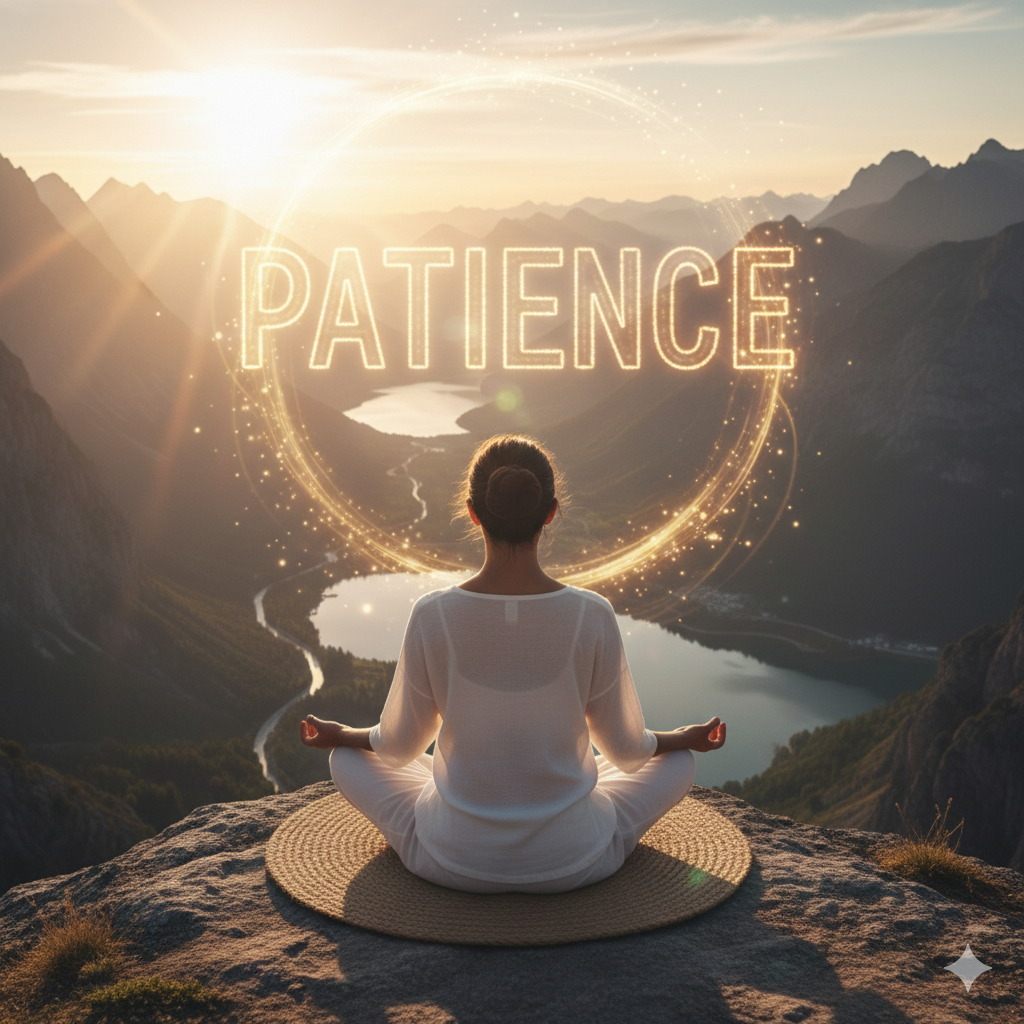
Patience is often described as a virtue, yet in daily life it can feel like a scarce resource. Deadlines compress, conversations escalate, and minor inconveniences become triggers. Meditation offers a practical way to train patience as a skill rather than waiting for it to appear. With consistent practice, you can create more space between stimulus and response, develop steadier emotional control, and access reliable stress relief when pressure rises.
Understanding Meditation for Patience
What Does It Mean to Meditate for Patience?
Meditation for patience is the deliberate practice of noticing discomfort—mental, emotional, or physical—without immediately trying to escape it. In practical terms, it means training attention to remain present when irritation arises, then choosing a response that aligns with your values rather than reacting on impulse.
Patience is not passivity. It is the capacity to tolerate delay, uncertainty, and frustration while maintaining clarity. When you learn how to meditate for patience, you strengthen self-regulation: you recognize agitation earlier, soften the body’s stress response, and redirect the mind before it spirals into blame or urgency. Over time, this is how many people increase patience with meditation—by repeatedly practicing steadiness in small moments, so it becomes available in the difficult ones.
Benefits of Meditation for Emotional Control and Stress Relief
Patience depends on the nervous system’s ability to downshift from reactivity. Meditation supports this by improving awareness of internal signals—tight shoulders, shallow breathing, racing thoughts—so you can intervene early. This is the foundation of emotional control through meditation: not suppression, but intelligent regulation.
https://www.teepublic.com/t-shirt/53793384-yoga-wellness?store_id=2851997
Regular practice also functions as stress relief meditation. As attention stabilizes and breathing becomes more even, the mind is less likely to interpret inconvenience as threat. This typically leads to fewer impulsive comments, less rumination after conflict, and a greater ability to stay constructive under pressure. In professional and personal relationships, the effect can be substantial: calmer listening, more measured decisions, and a noticeable reduction in unnecessary friction.
Preparing to Meditate for Increased Patience
Creating a Calming Space and Mindset
You do not need a dedicated room, but you do need consistency. Choose a location where you can sit without being interrupted for a few minutes. Reduce sensory clutter—silence notifications, dim harsh lighting, and keep the temperature comfortable. This signals the brain that the practice is safe and intentional.
Equally important is mindset. Approach the session as training, not performance. The goal is not to feel serene immediately; it is to observe the mind faithfully and return to the anchor each time you drift. That repeated return is the muscle that supports mindfulness for patience.
- Posture: Sit upright but not rigid, with a relaxed jaw and unclenched hands.
- Anchor: Decide in advance whether you will focus on breath, body sensations, or sound.
- Attitude: Commit to being curious about impatience rather than judging it.
When and How Often to Meditate for Best Results
Frequency matters more than duration. A brief, daily session builds the continuity that transforms behavior. For many people, a daily meditation routine of 7–12 minutes is enough to produce noticeable shifts in reactivity within a few weeks.
Timing should match your life. Morning sessions tend to reduce reactivity throughout the day; midday sessions reset the nervous system before afternoon demands; evening practice can dissolve accumulated tension and reduce the tendency to replay conflicts. If you are new, choose a single time slot and protect it for two weeks. Consistency creates momentum.
Step-by-Step Meditation Techniques to Build Patience
Simple Breathing Meditation for Patience
This practice uses breath as a stabilizing reference point. It is one of the most accessible meditation techniques for patience because it can be done anywhere and quickly interrupts escalation.
- Set a timer for 5–10 minutes. Sit comfortably with an upright spine.
- Find the breath where it is most vivid: nostrils, chest, or abdomen. Do not force depth; aim for natural ease.
- Count gently to support attention: inhale “one,” exhale “one,” up to “ten,” then begin again at “one.”
- Notice impatience as a set of sensations—tightness, heat, restlessness—rather than a command you must obey.
- Return without criticism whenever the mind wanders. The return is the training effect.
- Close deliberately by taking one slower exhale, relaxing the shoulders, and opening your eyes with a softened gaze.
If counting feels mechanical, replace it with a phrase on the exhale such as “soften” or “steady.” This keeps attention close to the body and supports breathing exercises for patience that you can reuse during tense conversations.
Guided Mindfulness Meditation to Respond Instead of React
When impatience is tied to people—family dynamics, workplace stress, public interactions—mindfulness training becomes especially valuable. This approach strengthens the ability to recognize a trigger, pause, and choose a response. It is a practical method for anyone learning how to meditate for patience in the context of real-world pressure.
- Begin with three grounding breaths. Inhale through the nose, exhale slowly. Let the exhale be slightly longer to encourage settling.
- Scan the body from forehead to feet. Identify where reactivity lives for you—often the chest, throat, or stomach.
- Label what is present in simple terms: “irritation,” “urgency,” “worry,” “tightness.” Labeling helps create psychological distance.
- Allow the experience for 30–60 seconds without fixing it. This is the heart of training patience: staying present with discomfort safely.
- Investigate gently: What story is the mind telling? “They should know better,” “This should be faster,” “I cannot handle this.” Recognize it as a narrative, not a fact.
- Choose one intentional response before returning to your day: relax the jaw, slow your speech, ask one clarifying question, or simply pause before replying.
This structure builds mindfulness for patience by repeatedly practicing the same skill: recognizing escalation early enough to redirect it. Over time, you will likely notice that the pause becomes easier to access, even in moments that previously felt automatic.
How to Meditate for a Positive Mindset
Making Patience Meditation a Daily Habit
Integrating Meditation into Busy Schedules
Patience improves through repetition, not ideal conditions. If time is limited, treat meditation as a non-negotiable micro-practice rather than a lengthy ritual. Even three minutes can shift the nervous system when done consistently.
- Pair it with an existing routine: after coffee, before the first email, or immediately after shutting your laptop.
- Use “transition moments”: one minute in the car before entering work, or two minutes before a difficult meeting.
- Adopt a minimum viable practice: one mindful breath cycle (inhale, exhale) repeated ten times with full attention.
These small sessions still qualify as meditation for patience because they rehearse the core skill: noticing the impulse to rush and choosing steadiness instead.
Tracking Your Progress and Staying Consistent
Progress is often subtle, especially at first. Rather than measuring meditation by how calm you feel during the session, measure it by what happens afterward. Are you pausing more often before responding? Recovering from irritation faster? Speaking with greater restraint? These are meaningful indicators that you are beginning to increase patience with meditation.
To maintain consistency, keep tracking simple:
- Use a brief log: note the duration and one sentence on your mood before and after.
- Identify trigger trends: record when impatience appears most—commutes, multitasking, specific conversations.
- Recommit weekly: choose a realistic schedule and protect it like an appointment.
If you miss a day, avoid dramatic “starting over” narratives. Return the next day with the same clarity. Consistency is built through repetition and repair, which is itself a form of patience training.
Conclusion
Patience is not a personality trait reserved for a select few; it is a capacity you can cultivate through attention and repetition. By preparing a steady environment, practicing targeted meditation techniques for patience, and establishing a sustainable daily meditation routine, you strengthen the ability to stay composed under pressure. Whether you rely on breathing exercises for patience in the moment or structured mindfulness practice to reshape habits over time, the outcome is the same: more space, clearer choices, and a calmer way of meeting life’s inevitable delays and challenges.

Slither Arcade
Features
- Classic Gameplay: Grow your snake by eating apples while avoiding self-collision.
- Dynamic Difficulty: The game speed increases as you eat more food.
- Juicy Polish: Screen shakes on eating, pulsing food animations, and high-score tracking.
- Responsive Controls: Use Arrow keys, WASD, or swipe on touch devices/mouse.
- Visuals: Custom-generated stylized assets and a minimalist neon background.
How to play:
- Controls: Use Arrow Keys or WASD to change direction. On mobile, Swipe in the direction you want to turn.
- Objective: Eat the glowing red apples to grow and increase your score. The game ends if you collide with your own tail.
The snake wraps around the screen edges, allowing for strategic maneuvers! Enjoy your game.Controls Reminder: The golden apple slows time for 5 seconds