
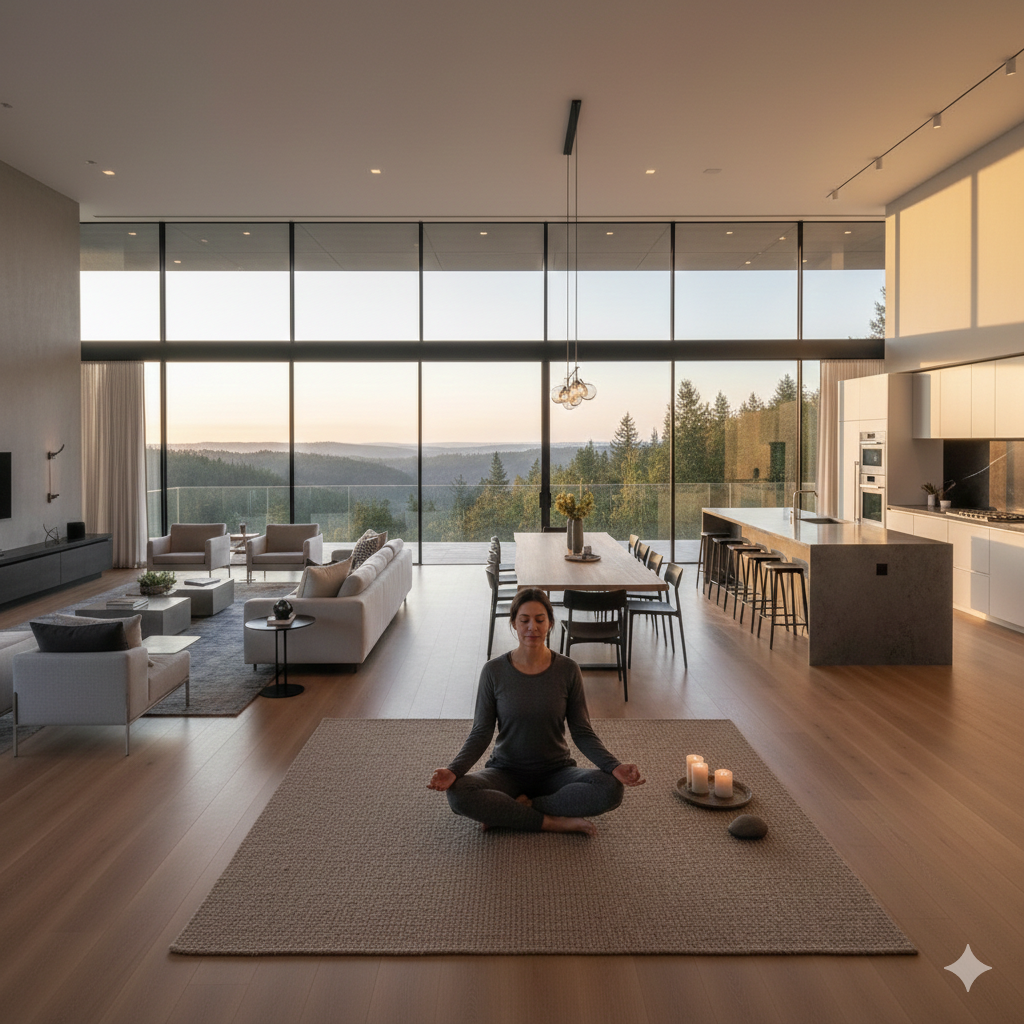
Self-discovery rarely arrives as a sudden revelation. More often, it unfolds through quiet, consistent attention to what you think, feel, and avoid. When approached skillfully, meditation becomes a disciplined form of inner listening—one that clarifies values, exposes repeating patterns, and strengthens the capacity to choose rather than react. This guide explains how to meditate for self-discovery using practical methods that support insight, stability, and meaningful change.
Understanding Meditation for Self-Discovery
What Is Self-Discovery and Why It Matters
Self-discovery is the ongoing process of understanding your inner landscape: motivations, fears, attachments, needs, and aspirations. It is not a single identity statement or personality label; it is a refined awareness of how your mind operates and what genuinely sustains you. This matters because many life decisions are made on autopilot—driven by inherited expectations, social comparison, or unexamined beliefs.
With clearer self-knowledge, choices become more coherent. You recognize which goals reflect your values rather than your anxieties. You notice the difference between ambition and avoidance, between commitment and compulsion. Over time, self-understanding strengthens emotional resilience, improves relationships, and reduces the quiet friction of living out of alignment.
https://www.teepublic.com/t-shirt/50549691-slow-pet-fast-car?store_id=2851997
How Meditation Supports Inner Awareness and Growth
Meditation for inner awareness works by training attention and refining perception. Instead of being pulled through the day by thoughts and moods, you learn to witness them. This shift—moving from identification to observation—creates space for insight. Patterns that once felt inevitable become visible and therefore workable.
Unlike problem-solving, which tends to force an answer, mindfulness for self-discovery cultivates a receptive intelligence. You begin to notice subtle cues: the bodily sensation that precedes a defensive reaction, the emotional tone behind a “reasonable” decision, or the narratives that keep you small. As these become clear, meditation for personal growth becomes practical rather than abstract: you can respond differently because you see more accurately.
Preparing to Meditate for Self-Discovery
Creating a Safe, Quiet Space for Inner Exploration
Self-discovery requires psychological safety. Choose a space where you are unlikely to be interrupted, and make it visually calm. A chair is often better than the floor if discomfort will dominate your attention. Use a timer so you are not checking the clock, and consider soft lighting to reduce overstimulation.
Equally important is internal safety. If you are working with grief, trauma, or intense anxiety, keep sessions brief and stabilizing. Let the aim be clarity, not self-criticism. When difficult material arises, the practice is not to push further, but to steady attention and return to the breath. A grounded container supports honest exploration without emotional flooding.
Setting an Intention for Your Self-Discovery Practice
Intention gives direction to attention. Before you begin, define what you are seeking to understand—not as a demand for immediate answers, but as a compass. Examples include: “I want to understand what I truly value,” “I want to see what drives my procrastination,” or “I want to relate to my emotions with more maturity.”
Keep the intention concise and compassionate. In self-inquiry meditation practice, harshness often disguises itself as “discipline.” Replace self-judgment with curiosity. A useful framing is: “May I see clearly.” Clarity invites truth; pressure invites performance.
Step-by-Step Meditation Techniques for Self-Discovery
Guided Self-Inquiry Meditation: Questions to Ask Yourself
This guided meditation for self-discovery blends mindfulness with structured inquiry. Practice for 10–20 minutes, adjusting as needed.
- Settle the body (1–2 minutes).
Sit upright with a relaxed chest and an easy jaw. Feel points of contact—feet on the floor, hands resting, back supported. Take three slower breaths to signal a deliberate transition into stillness.
- Stabilize attention (3–5 minutes).
Bring awareness to the breath at the nostrils or abdomen. When the mind wanders, return without commentary. This is not a warm-up; it is the foundation of self-discovery meditation techniques. Stable attention prevents inquiry from turning into rumination.
- Open monitoring (2–3 minutes).
Widen awareness to include thoughts, emotions, and bodily sensations. Notice what is most prominent. Name it gently—“planning,” “tightness,” “sadness”—then let the label dissolve back into observation.
- Ask one question, then listen (5–8 minutes).
Choose a single inquiry and give it space. Do not interrogate yourself. Offer the question, then return to silence and notice what arises as sensations, images, memories, or shifts in mood.
Useful questions for meditation for self-discovery:
- What am I feeling right now—beneath my explanations?
- What am I avoiding, and what do I fear would happen if I faced it?
- What do I most want in this season of life—and what need does it point to?
- Where am I not being honest with myself, even in subtle ways?
- What belief is shaping my choices today, and is it true?
- When do I feel most like myself, and what qualities are present then?
- What am I trying to prove, and to whom?
- Distill insight (1–2 minutes).
Before ending, ask: “What is the simplest truth I can take from this?” Look for one sentence, one felt sense, or one practical next step. Insight is valuable only when it becomes actionable clarity.
- Close deliberately (30–60 seconds).
Return to the breath. Feel the room again. End with a brief commitment: “I will carry this awareness into my next conversation,” or “I will pause before reacting today.”
This approach answers the question of how to meditate for self-discovery in a way that is structured yet flexible. Over time, you will learn which questions open you and which trigger repetitive analysis. Prefer the questions that create steadiness, honesty, and movement.
Journaling After Meditation to Deepen Self-Understanding
Journaling transforms fleeting insight into a record you can revisit. Immediately after practice, write for five minutes without editing. Focus on what you noticed, not on crafting a story. This is where meditation for self-discovery becomes a method rather than a mood.
Use a simple format to keep your writing precise:
- What I observed: sensations, emotions, recurring thoughts.
- What it might mean: values, unmet needs, fears, or desires.
- One experiment: a small action to test the insight in real life.
If you prefer prompts, try these:
- “The pattern I keep seeing is…”
- “I feel most tense when…”
- “A boundary I may need is…”
- “The courageous next step is…”
The goal is not constant intensity. It is accuracy over time. Even a few lines per session can reveal the architecture of your inner life—what energizes you, what depletes you, and where you repeatedly compromise yourself.
Making Self-Discovery Meditation a Daily Habit
Overcoming Common Challenges and Mental Blocks
Many people abandon a daily self-discovery routine because they expect immediate transformation or unusually “quiet” sessions. In reality, distraction is part of training. When you notice wandering attention and return, you are building the very skill that enables insight: the ability to come back to what is true.
Common obstacles have practical solutions:
- Restlessness: shorten sessions to 7–10 minutes, then build gradually. Use breath counting (1 to 10) to stabilize attention.
- Emotional discomfort: anchor in the body—feel the feet, lengthen exhalations, and label sensations. If intensity persists, shift to a calming practice rather than pushing deeper.
- Overthinking: reduce inquiry questions. Ask one, then return to sensory experience. Insight arises from space, not force.
- Inconsistency: attach practice to an existing habit—after morning coffee, before lunch, or after brushing teeth. Consistency is more valuable than duration.
- Self-judgment: treat the mind as data, not a verdict. The purpose of meditation for inner awareness is to see clearly, not to punish yourself for what you see.
Self-discovery is rarely linear. Some days deliver clarity; others reveal resistance. Both are informative. If you can meet each session with measured curiosity, the practice becomes sustainable.
Tracking Your Personal Growth and Next Steps
Growth becomes visible when you track it. Once a week, review your journal and identify themes: repeated triggers, familiar narratives, emerging desires, or changing priorities. This turns self-discovery meditation techniques into a coherent feedback loop.
Use a brief weekly check-in:
- One insight: what did you learn about your motivations or values?
- One pattern: what keeps recurring in thought, emotion, or behavior?
- One action: what specific step will you take next week?
Also notice subtler markers of meditation for personal growth: fewer impulsive reactions, clearer boundaries, improved concentration, more honest communication, or a calmer response to uncertainty. These shifts indicate that mindfulness for self-discovery is translating into lived change.
If you reach an insight that requires support—such as a longstanding relational wound or persistent anxiety—consider integrating therapy, coaching, or a trusted teacher. Meditation can illuminate the terrain; skilled guidance can help you navigate it responsibly.
Conclusion
Meditation for self-discovery is not a retreat from life; it is a disciplined return to it with clearer eyes. By preparing a stable environment, setting a compassionate intention, practicing focused self-inquiry, and consolidating insights through journaling, you build a reliable method for understanding yourself. With repetition, this becomes more than a practice session—it becomes a way of meeting decisions, relationships, and challenges from a place of inner awareness. Commit to a modest, consistent routine, and let clarity accumulate. Over time, you will not merely learn who you are; you will learn how to live as that person.
How to Meditate for Resilience
Top 10 Tips for Healthy Snacking
How to Stay Fit with Limited Equipment
Slither Arcade
Features
- Classic Gameplay: Grow your snake by eating apples while avoiding self-collision.
- Dynamic Difficulty: The game speed increases as you eat more food.
- Juicy Polish: Screen shakes on eating, pulsing food animations, and high-score tracking.
- Responsive Controls: Use Arrow keys, WASD, or swipe on touch devices/mouse.
- Visuals: Custom-generated stylized assets and a minimalist neon background.
How to play:
- Controls: Use Arrow Keys or WASD to change direction. On mobile, Swipe in the direction you want to turn.
- Objective: Eat the glowing red apples to grow and increase your score. The game ends if you collide with your own tail.
The snake wraps around the screen edges, allowing for strategic maneuvers! Enjoy your game.Controls Reminder: The golden apple slows time for 5 seconds