
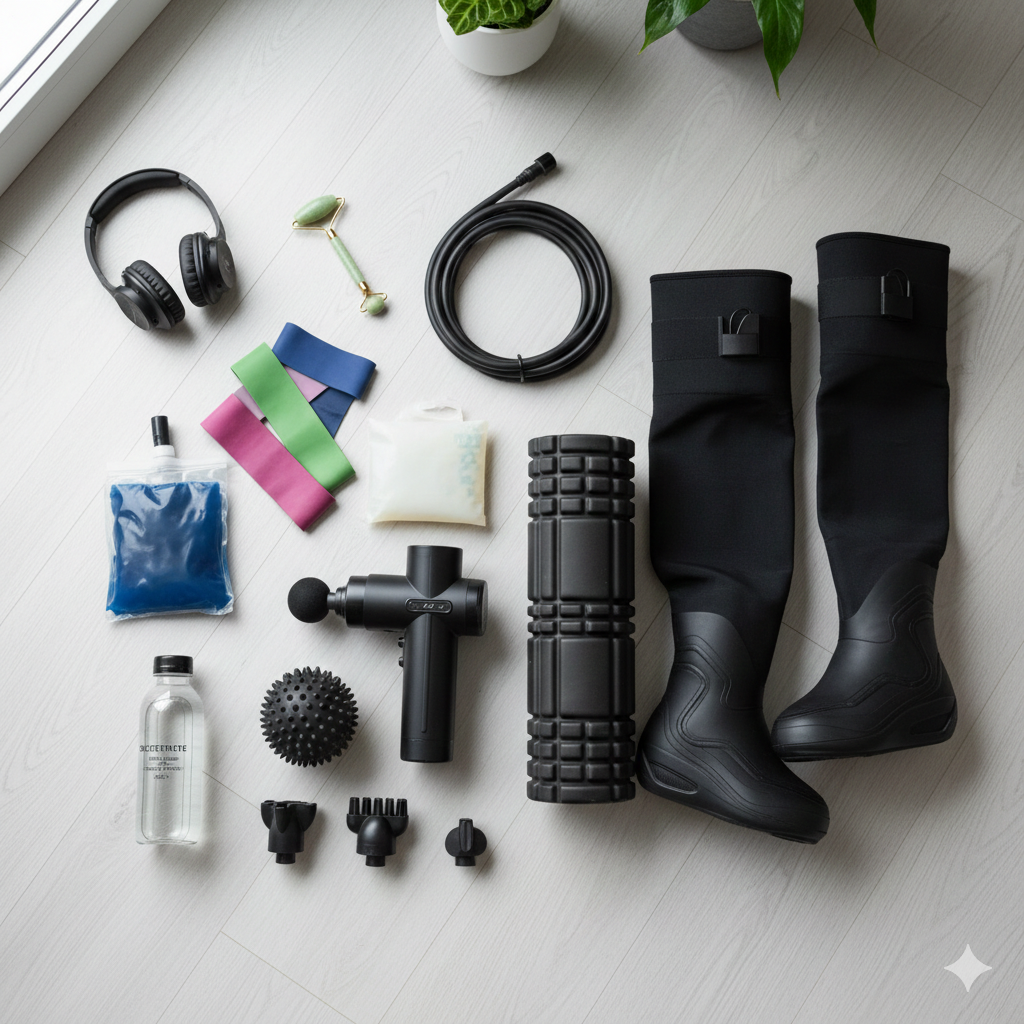
Recovery is no longer an afterthought reserved for elite professionals with large support teams. For modern athletes, it is a performance discipline in its own right—one that influences training consistency, injury risk, and long-term progression. The best recovery tools for athletes can reduce post-training soreness, restore mobility, and help you arrive at your next session prepared rather than depleted. The key is choosing athletic recovery equipment that matches your sport’s demands, your training volume, and the specific stress your body absorbs week after week.
Understanding Recovery Tools for Athletes
What Are Recovery Tools and Why They Matter
Recovery tools are devices and methods designed to accelerate the body’s return to baseline after physical stress. Some are simple and inexpensive, such as foam rollers and lacrosse balls. Others are advanced technologies, including compression recovery boots, infrared recovery devices, and electrical muscle stimulation (EMS). Regardless of complexity, their purpose is consistent: to improve circulation, reduce perceived soreness, relieve tissue stiffness, and maintain range of motion.
While no tool can replace sleep, nutrition, hydration, and smart programming, the right post workout recovery tools can enhance the quality of your recovery window. They can also improve training adherence by making soreness more manageable, which is often the difference between consistent progress and sporadic setbacks.
How Recovery Impacts Performance, Strength, and Longevity
Training creates adaptation by imposing stress; recovery determines whether that stress becomes improvement or accumulative fatigue. In strength and power sports, inadequate recovery can blunt force production and degrade technique under load. In endurance training, it may impair energy availability, worsen movement economy, and increase overuse risk. For field and court athletes, poor recovery can compromise sprint mechanics, deceleration control, and joint resilience.
Effective recovery supports tissue quality, neuromuscular readiness, and mental freshness. Over months and years, it also influences longevity—protecting tendons, preserving mobility, and reducing the frequency of minor issues that can quietly erode performance. If your goal is how to speed up muscle recovery, the most reliable pathway is a consistent routine built on fundamentals, reinforced by targeted tools.
https://www.teepublic.com/t-shirt/50549691-slow-pet-fast-car?store_id=2851997
Essential Muscle Recovery Tools Every Athlete Should Own
Foam Rollers, Massage Guns, and Trigger Point Devices
These staples cover the majority of day-to-day recovery needs, especially when used with intention rather than as a rushed ritual.
- Foam rollers: A high-density roller is a versatile starting point for improving short-term mobility and reducing the sensation of stiffness after training. It is particularly useful for the quadriceps, glutes, calves, and upper back. Consider a smooth roller for beginners and a textured option if you prefer deeper pressure.
- Massage guns for athletes: Percussive therapy devices can help reduce perceived muscle tightness and improve readiness when applied for brief, targeted sessions. They are most effective on large muscle groups—glutes, hamstrings, quads, lats—using moderate pressure and controlled movement. Avoid aggressive use over joints, bony areas, or acute injuries.
- Trigger point devices: Lacrosse balls, massage balls, and targeted sticks provide precise pressure for areas that rollers may miss, such as the hip rotators, plantar fascia, pec minor, or the muscles surrounding the shoulder blade. They are among the most cost-effective muscle recovery tools and are easy to travel with.
Practical use matters. For post-session relief, keep intensity moderate and focus on slow breathing. For pre-training readiness, use shorter, lighter exposures to avoid temporary strength inhibition that can occur with overly intense soft-tissue work.
Compression Gear, Sleeves, and Recovery Boots
Compression is a cornerstone in athletic recovery equipment because it supports circulation and can reduce the heavy, swollen feeling that follows intense sessions or travel.
- Compression sleeves and garments: Calf sleeves, tights, and arm sleeves are convenient for endurance athletes and team-sport players managing frequent running loads. They are also helpful during long flights or extended periods of sitting.
- Compression recovery boots: These devices use intermittent pneumatic compression to cycle pressure through the legs, encouraging fluid movement and easing lower-body fatigue. For athletes with high running volume, repeated jumping, or significant lower-limb soreness, boots can be a valuable upgrade—particularly during heavy training blocks and tournaments.
Compression is not a substitute for movement, but it pairs well with low-intensity activity such as walking, cycling, or mobility work. If you train twice daily or compete on consecutive days, compression can be an efficient way to improve how your legs feel between sessions.
Advanced Recovery Technologies for Serious Athletes
Cold Therapy, Cryotherapy, and Ice Baths
Cold exposure remains one of the most discussed strategies in recovery. Its main benefit is symptom management: it can reduce soreness perception and calm acute inflammation after demanding workloads, collisions, or tournaments. For athletes who must perform again soon, cold therapy for sports can be practical.
- Ice baths: Accessible and effective for reducing perceived soreness when timed appropriately. Typical protocols range from brief immersions to moderate exposures, but comfort and safety should guide duration and temperature.
- Cold plunges: Similar to ice baths but often more consistent in temperature control and convenience for daily use.
- Whole-body cryotherapy: A high-cost option used in some facilities; evidence is mixed, and outcomes often resemble other forms of cold exposure when variables are controlled.
Timing is essential. After sessions designed to maximize muscle growth and strength adaptation, frequent immediate cold exposure may blunt some training signals. Many athletes reserve cold therapy for competition phases, high-impact weeks, or when soreness threatens training quality. In other words, it is a tool to deploy strategically, not automatically.
Infrared Saunas, Red Light Therapy, and EMS Devices
Advanced modalities can be helpful when used as part of a broader routine. They are not magic solutions, but they may support recovery capacity, comfort, and training continuity for serious athletes.
- Infrared saunas: Unlike traditional saunas that primarily heat the air, infrared systems aim to heat tissues more directly. Many athletes use them to promote relaxation, circulation, and a sense of looseness—particularly during high-stress periods. Hydration and electrolyte replacement are crucial to avoid compounding fatigue.
- Red light therapy: Often grouped with infrared recovery devices, photobiomodulation is used with the goal of supporting tissue quality and reducing soreness. Device quality varies widely; if you invest, prioritize reputable brands with clear specifications.
- EMS devices: Electrical muscle stimulation can be useful for light muscle activation, circulation support, or maintaining muscle engagement during deloads and travel. It is not a replacement for training, but it can complement recovery on days when you need gentle input without mechanical load.
These technologies tend to offer diminishing returns unless your basics are strong. Athletes who sleep poorly, under-eat, or train with chronic overload will not “out-tech” those issues. However, for high-frequency training and long competitive seasons, these tools can meaningfully improve comfort and readiness.
How to Choose the Best Recovery Tools for Your Sport
Factors to Consider: Sport Type, Training Load, and Budget
Choosing the best recovery tools for athletes is less about trends and more about matching a tool to your dominant stressors.
- Sport type: Endurance athletes typically benefit from lower-body compression, targeted soft-tissue tools, and strategies that address repetitive loading. Strength athletes often prioritize mobility preservation, tissue tolerance, and managing localized soreness. Team-sport athletes may need a blend: rapid turnaround tools between practices, plus joint-friendly modalities for high-impact demands.
- Training load and schedule: If you train three times per week with ample rest, simple muscle recovery tools may be enough. If you train daily, double, or compete on weekends, consider upgrading to compression boots, sauna access, or structured cold therapy.
- Budget and adherence: The best device is the one you will use consistently. A lacrosse ball used five times per week often outperforms a premium machine used once per month. Start with affordable, high-utility tools, then add advanced modalities when your routine is stable.
Also consider practicality: noise level (massage guns), storage space (rollers and boots), and travel needs (compact trigger point tools). Safety matters as well—athletes with cardiovascular concerns, neuropathy, or recent surgery should consult a clinician before aggressive heat, cold, or compression interventions.
Building a Personalized Recovery Routine for Daily Use
A recovery routine should be simple enough to sustain and specific enough to be effective. The most reliable approach combines daily habits with targeted interventions based on training stress.
- Daily foundation (10–20 minutes): Light mobility for commonly restricted areas, brief soft-tissue work on high-tension zones, and a short walk to promote circulation. This is the baseline for most athletes using post workout recovery tools.
- Post-session reset (5–15 minutes): Use a foam roller or massage gun on primary movers, followed by gentle stretching or breathing drills to downshift the nervous system.
- High-load days: Add compression sleeves or boots, prioritize carbohydrates and protein, and aim for earlier sleep. If soreness threatens the next session, consider cold therapy for sports later in the day rather than immediately after training.
- Travel and tournament weeks: Emphasize compression, hydration, and short mobility breaks. Trigger point devices and compact massage tools are particularly valuable here.
Track outcomes rather than chasing sensations. Better recovery is reflected in steadier performance, fewer nagging pains, improved sleep quality, and a reduced gap between how you feel at the start of training and how you want to feel.
Conclusion: The most effective recovery strategy blends fundamentals with the right tools, used at the right time. Start with essentials—foam rollers, targeted trigger point devices, and well-chosen massage guns for athletes—then consider compression recovery boots and advanced modalities as your training demands grow. Whether your priority is comfort, readiness, or long-term resilience, investing in smart athletic recovery equipment can help you train consistently, perform reliably, and extend your athletic lifespan.
How to Meditate for Resilience
How to Create a Family Fitness Plan
The Best Workout Playlists for Motivation
Slither Arcade
Features
- Classic Gameplay: Grow your snake by eating apples while avoiding self-collision.
- Dynamic Difficulty: The game speed increases as you eat more food.
- Juicy Polish: Screen shakes on eating, pulsing food animations, and high-score tracking.
- Responsive Controls: Use Arrow keys, WASD, or swipe on touch devices/mouse.
- Visuals: Custom-generated stylized assets and a minimalist neon background.
How to play:
- Controls: Use Arrow Keys or WASD to change direction. On mobile, Swipe in the direction you want to turn.
- Objective: Eat the glowing red apples to grow and increase your score. The game ends if you collide with your own tail.
The snake wraps around the screen edges, allowing for strategic maneuvers! Enjoy your game.Controls Reminder: The golden apple slows time for 5 seconds