
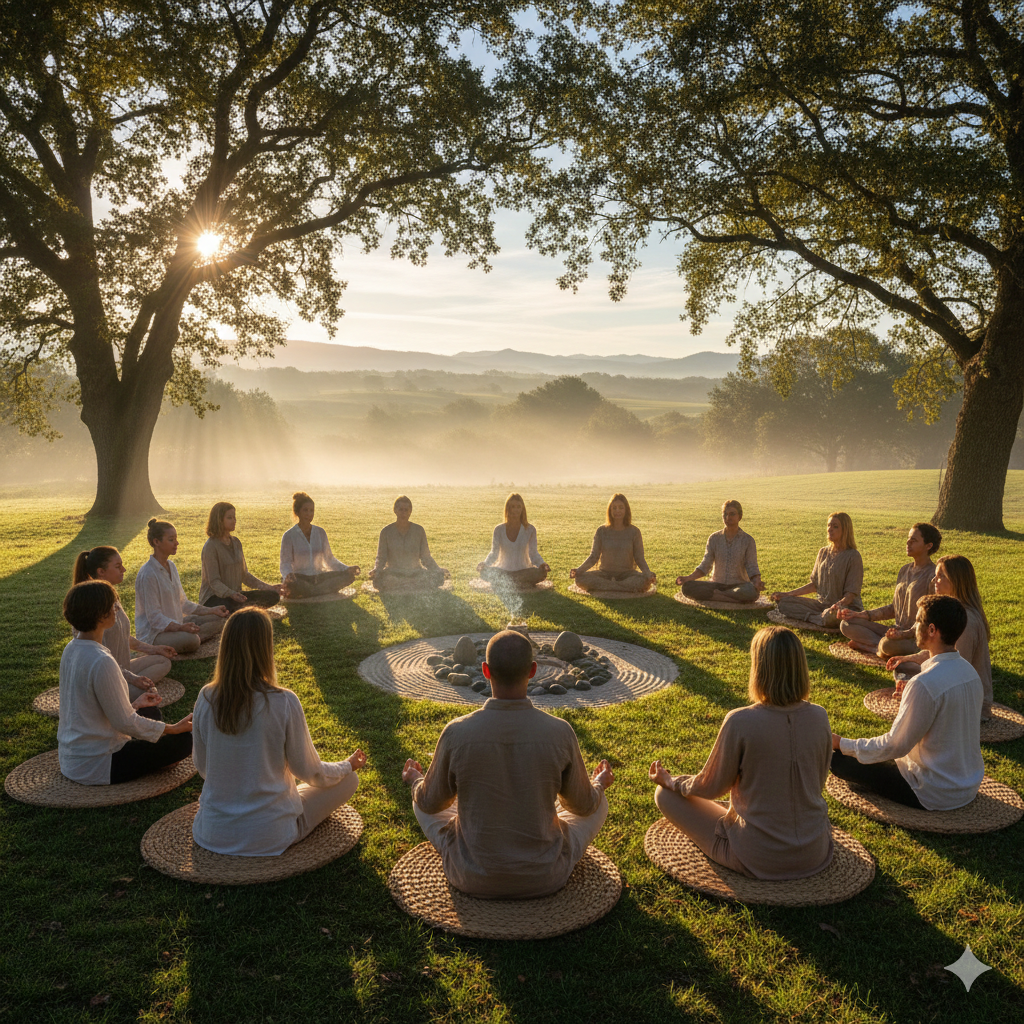
Meditation is often introduced as a solitary practice, yet many practitioners discover that consistency, insight, and motivation deepen when they sit with others. If you are looking to find a meditation group that matches your temperament and schedule, a structured approach will save time and help you identify a community where your practice can mature. This guide explains what meditation groups are, why they matter, where to search for local and online options, and how to choose a setting that supports your goals.
Understanding Meditation Groups and Their Benefits
What Is a Meditation Group?
A meditation group is an organized gathering—regular or occasional—where participants practice meditation together. Sessions may include silent sits, guided meditation, mindfulness instruction, brief talks, chanting, or discussion. Some groups are secular and skills-based, such as a mindfulness meditation group focused on attention training and stress reduction. Others are faith-adjacent or rooted in specific lineages, including Zen, Vipassana, Tibetan traditions, or broader spiritual meditation groups.
Groups also vary in formality. A community center may host a drop-in weekly sit with a facilitator, while a monastery-affiliated sangha may follow a defined curriculum and established rituals. Many modern communities are hybrid, offering in-person sessions and virtual meetings to accommodate different needs. Understanding these distinctions will make it easier to evaluate fit rather than choosing based on proximity alone.
Key Mental, Emotional, and Social Benefits of Group Meditation
The group meditation benefits are not merely motivational. Practicing alongside others can strengthen attention, reduce avoidance, and improve follow-through because the session’s structure creates a dependable container for practice. Over time, this consistency tends to translate into more stable habits and clearer self-observation.
Emotionally, group practice can normalize common challenges—restlessness, self-criticism, and fluctuating concentration—so they feel less personal and more workable. Many participants report a steadier relationship with discomfort as they learn, implicitly, that difficult moments are part of the path rather than evidence of failure.
Socially, a meditation community offers something that self-guided practice often lacks: perspective and support. Questions can be clarified, misconceptions corrected, and experiences contextualized without dramatization. For beginners, a well-run beginner meditation group can reduce uncertainty and provide simple, reliable instruction. For experienced meditators, long-term membership can deepen learning through shared silence, accountability, and skilled facilitation.
How to Prepare Before Joining a Meditation Group
Clarifying Your Meditation Goals and Preferences
Before you decide how to join a meditation group, identify what you want the practice to cultivate. Your goal does not need to be grand, but it should be specific enough to guide your choices. Some people prioritize stress management and emotional regulation; others want a disciplined contemplative practice, philosophical study, or a spiritual framework that aligns with their beliefs.
Next, consider practical preferences. Do you want guided meditation or mostly silent sitting? Are you comfortable with chanting or devotional elements, or do you prefer a secular approach? Would you benefit from a structured curriculum, or do you prefer open, drop-in sessions? Finally, be honest about pace and intensity. If you are new, look for environments that normalize gradual development and provide clear orientation rather than assuming prior experience.
Deciding Between Online vs. In‑Person Meditation Groups
Online meditation groups offer accessibility and variety. They are ideal if you travel frequently, have limited mobility, or live in an area with few options. Virtual sessions also allow you to explore teachers and traditions beyond your city, often with minimal commitment. However, online practice can feel less immersive, and home environments sometimes make it harder to settle into stillness.
In-person groups provide embodied connection and fewer digital distractions. A dedicated space—whether a studio, temple, or quiet room—often supports deeper concentration. If you are seeking local meditation groups, in-person attendance may also foster relationships that extend beyond the cushion, which can be particularly valuable during stressful life periods. Many people find the best balance in hybrid participation: online sessions for consistency, in-person gatherings for depth and community.
Practical Ways to Find a Meditation Group Near You
Using Online Directories, Apps, and Social Media
If your aim is to find a meditation group efficiently, begin with targeted online tools. Established directory sites, local event listings, and meditation-focused platforms often include filters for location, tradition, and schedule. Event-based services can be useful for discovering one-time introductions that serve as gateways to ongoing groups. Meditation apps sometimes host live sessions and community forums where you can locate online meditation groups with reputable facilitators.
Social media can also be effective when used strategically. Search for local groups using city and neighborhood terms paired with “meditation,” “mindfulness,” or “sangha.” Community pages and professional networks may list recurring events at yoga studios, counseling centers, or wellness clinics. When evaluating options found on social platforms, look for clear session descriptions, facilitator credentials, consistent scheduling, and transparent expectations regarding cost and participation.
Finding Meditation Groups Through Local Community Resources
Some of the most stable meditation communities are found through offline channels. Public libraries, community centers, and adult education programs frequently host mindfulness classes or weekly sits. Universities and hospitals may offer meditation groups through wellness initiatives, and these programs often emphasize evidence-based instruction and accessibility.
Yoga studios, psychotherapy practices, and integrative health clinics may also sponsor group meditation sessions led by experienced teachers. In addition, places of worship—Buddhist centers, monasteries, interfaith communities, and contemplative Christian groups—often maintain consistent schedules and clear frameworks for practice. If you are searching for local meditation groups, a brief phone call can quickly clarify whether sessions are beginner-friendly, donation-based, or structured as a course.
Choosing the Right Meditation Group for You
Questions to Ask and What to Look For in a Group
Not every group will align with your needs, and discernment is an advantage rather than a barrier. When you contact or visit a group, ask practical and philosophical questions that reveal how the community operates:
- What is the format? Clarify the balance of guided practice, silent sitting, instruction, and discussion.
- Who facilitates, and what is their training? Look for humility, clarity, and appropriate experience, especially if the group includes intensive practices.
- Is it suitable for beginners? A beginner meditation group should offer orientation, clear cues, and a non-pressured pace.
- What tradition or approach informs the teaching? Understand whether it is secular mindfulness, lineage-based, or explicitly spiritual.
- What are the costs? Many groups use donation models; paid programs should be transparent about fees and what they include.
- How is inclusion handled? A healthy meditation community welcomes questions, respects boundaries, and avoids coercive dynamics.
Also pay attention to intangible indicators: the atmosphere in the room, how newcomers are greeted, and whether the facilitator encourages critical thinking alongside commitment. The best group for you is not necessarily the most popular; it is the one that supports steady practice without compromising your values.
Meditation Group Etiquette and What to Expect in Your First Session
First sessions can feel unfamiliar, particularly if the group follows a formal structure. Arrive a few minutes early so you can settle in and ask logistical questions quietly. Wear comfortable clothing, silence your phone, and follow the room’s norms regarding shoes, seating, and conversation. If cushions or chairs are available, choose what supports your posture; discomfort is distracting and unnecessary.
During practice, follow the facilitator’s cues and keep movement minimal. If you need to adjust your posture, do so slowly and discreetly. Many groups include a brief introduction or check-in; participate to the degree you feel comfortable, but do not feel obliged to share personal details. A well-facilitated session balances openness with privacy.
Afterward, it is appropriate to ask clarifying questions about technique, schedule, or recommended resources. If the group resonates, consider attending consistently for several weeks before evaluating. Many people discover that the initial unfamiliarity fades quickly, replaced by the steadying effect of shared practice.
Conclusion
To find a meditation group that genuinely supports your practice, combine self-knowledge with practical research. Clarify your goals, decide whether online or in-person participation fits your life, and use both digital tools and community resources to explore options. As you visit groups, evaluate facilitation, format, and culture with care. The right setting—whether a mindfulness meditation group, a beginner-focused class, or one of many spiritual meditation groups—can provide structure, insight, and a sense of belonging that strengthens your meditation for years to come.