
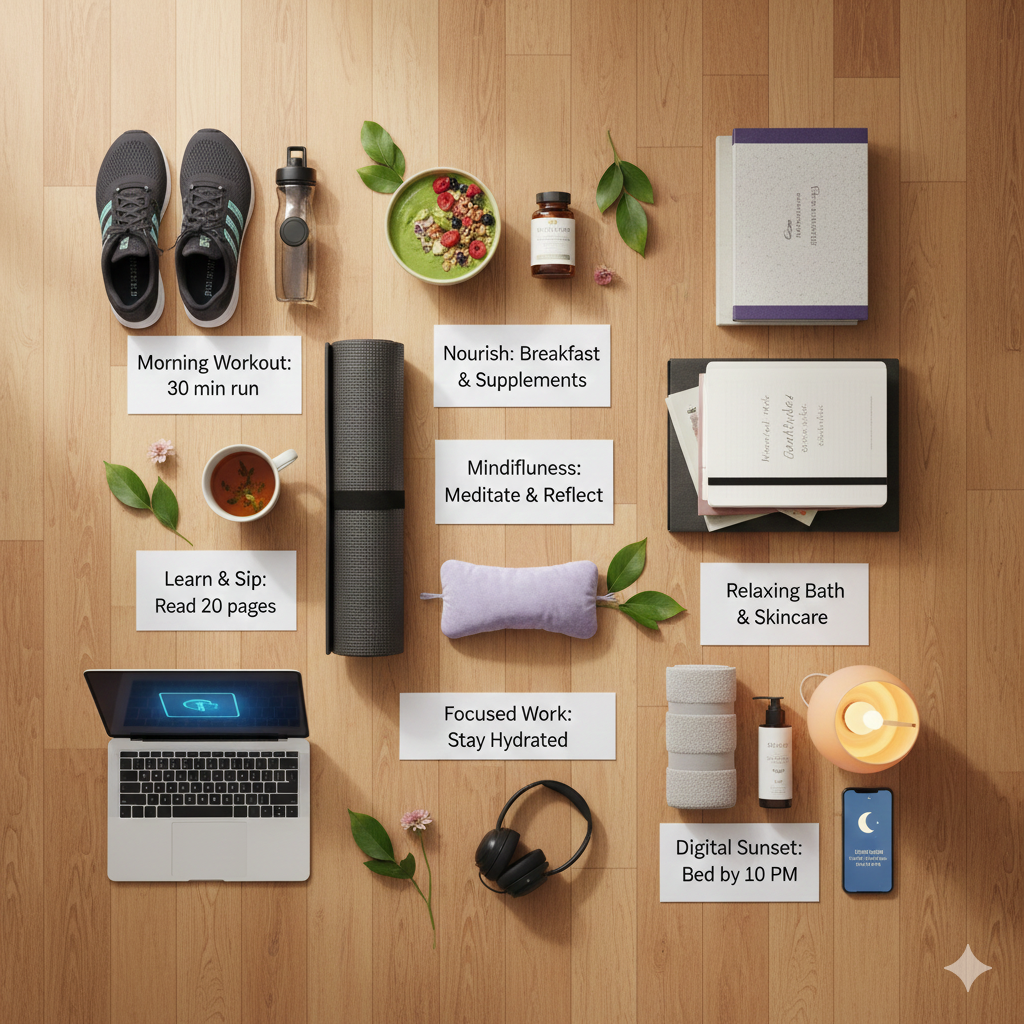
Wellness is not a single habit or a short-term project. It is the cumulative effect of daily choices that shape your energy, focus, resilience, and long-term health. A well-designed wellness routine turns those choices into a reliable system—one that supports you even when motivation fluctuates. This guide explains how to create a wellness routine that matches your lifestyle, strengthens mental and physical wellness, and evolves into a truly sustainable wellness plan.
Understanding What a Wellness Routine Is
What Is a Wellness Routine?
A wellness routine is a structured set of intentional practices that protect and improve overall well-being. Unlike a rigid schedule or a trend-based program, it is a personal framework built around your needs, constraints, and goals. It can include movement, nutrition, sleep hygiene, stress regulation, and meaningful downtime. Importantly, a wellness routine does not demand perfection; it creates consistency, offering a repeatable baseline that makes healthy decisions easier to sustain.
For those seeking a wellness routine for beginners, the most effective approach is not to do everything at once. It is to establish a small number of high-impact habits you can maintain, then expand gradually as the routine becomes effortless.
Benefits of a Daily Wellness Routine
A thoughtful daily wellness routine delivers benefits that compound over time. It reduces decision fatigue by pre-planning key behaviors, which frees mental space for work, relationships, and creativity. It can stabilize mood by improving sleep quality and lowering chronic stress. It also supports physical health by anchoring consistent movement and nutrition patterns.
Beyond measurable outcomes, a routine strengthens self-trust. When you keep commitments to yourself—even small ones—you build momentum. This is the often-overlooked foundation of a resilient healthy lifestyle routine.
How to Design a Personalized Wellness Routine
Assessing Your Current Lifestyle and Wellness Needs
Before adding new practices, evaluate what is already happening. A routine succeeds when it fits the realities of your schedule, responsibilities, and energy patterns. Start with a brief self-audit:
- Energy map: Identify when you feel most alert and when you typically crash. This helps you place exercise, focused work, and restorative breaks strategically.
- Stress triggers: Note recurring stressors—commute, workload peaks, family obligations—and how you currently respond to them.
- Sleep and recovery: Track sleep duration and quality for a week. Poor recovery often undermines every other wellness goal.
- Nutrition patterns: Observe meal timing, hydration, and reliance on convenience foods. Look for friction points, not failures.
- Current self-care: Identify what genuinely replenishes you versus what merely distracts you. A credible self-care routine restores capacity.
This assessment is not a judgment. It is a diagnostic tool to ensure your new wellness habits address the factors that matter most.
Setting Realistic Wellness Goals and Priorities
Wellness goals work best when they are specific, practical, and tied to outcomes you can feel. Instead of “get healthy,” define what “healthy” means in your context: more stable energy, fewer stress headaches, improved strength, or better sleep continuity.
Use a prioritization approach to avoid overload:
- Select one primary objective for the next 2–4 weeks (for example, sleep consistency or daily movement).
- Choose two supporting behaviors that make the primary objective more likely (for example, a caffeine cutoff time and a 10-minute evening wind-down).
- Define a minimum viable version of each habit so you can keep it on difficult days.
This strategy keeps your plan realistic. A routine that fits imperfect weeks is far more valuable than an ambitious template you cannot sustain.
Key Components of an Effective Wellness Routine
Physical Wellness: Exercise, Sleep, and Nutrition Habits
Physical wellness is not about intensity; it is about reliability. When exercise, sleep, and nutrition are treated as non-negotiable pillars, the rest of your routine becomes easier to maintain.
Exercise: Choose movement you will actually repeat. For many people, consistency improves faster with moderate effort than with occasional high-intensity bursts. Aim for a blend of cardiovascular activity, strength training, and mobility work, calibrated to your fitness level and schedule. If time is limited, prioritize short sessions you can perform frequently—walking, bodyweight circuits, or brief resistance workouts.
Sleep: Sleep is the most underestimated performance enhancer. Build simple anchors: a consistent wake time, reduced evening screen exposure, and a predictable pre-sleep sequence. If insomnia is an issue, focus on lowering arousal rather than forcing sleep—dim lighting, slower breathing, gentle stretching, and a cool bedroom environment. Small improvements in sleep quality can transform your capacity to sustain other wellness habits.
Nutrition: A sustainable approach emphasizes structure over restriction. Start with fundamentals: regular meals, protein and fiber at each meal, adequate hydration, and a plan for busy days. If your routine collapses when you are rushed, add a few reliable options—simple breakfasts, ready-to-eat proteins, and balanced snacks. The goal is not dietary perfection; it is a pattern that supports steady energy and reduces impulsive choices.
Mental and Emotional Wellness: Stress Management and Mindfulness
A strong routine must address the internal environment as deliberately as the external. Without stress regulation, even well-designed nutrition and exercise plans tend to erode under pressure. Supporting mental and physical wellness requires daily practices that downshift your nervous system and build emotional flexibility.
Stress management: Identify one or two techniques that work quickly and reliably. Options include breathing exercises (such as extended exhale breathing), brief outdoor breaks, journaling to clarify priorities, or short bouts of movement to discharge tension. The best method is the one you will use in real time, not the one that sounds ideal in theory.
Mindfulness: Mindfulness does not require long meditation sessions. It is a skill of attention and awareness. You can cultivate it through a five-minute morning sit, a mindful walk, or a deliberate pause before meals. Over time, mindfulness improves impulse control, reduces rumination, and strengthens your ability to respond rather than react—an essential element of any enduring self-care routine.
How to Stick to Your Wellness Routine Long-Term
Creating a Flexible Schedule and Tracking Your Progress
Adherence improves when a routine is both structured and adaptable. Instead of scheduling an ideal day, design for the week you actually have. Use “anchors”—fixed points in your day that naturally support a habit. For example, stretch after brushing your teeth, walk after lunch, or plan tomorrow’s breakfast during your evening wind-down.
Flexibility is also a matter of tiers. Create three versions of your routine:
- Minimum: the smallest set of actions that maintains momentum (for example, 10 minutes of movement, a protein-forward meal, and a consistent bedtime).
- Standard: your typical plan when life is stable.
- Optimal: an expanded version for lighter weeks.
Tracking should be simple enough that it never becomes a barrier. A weekly checklist, habit tracker, or brief notes in a calendar can reveal patterns without creating pressure. Focus on leading indicators—sleep timing, movement frequency, stress breaks—because these predict outcomes. This approach turns your routine into a measurable sustainable wellness plan rather than a vague intention.
Overcoming Common Obstacles and Adjusting Your Routine
Most routines fail for predictable reasons: unrealistic expectations, overly complex plans, and all-or-nothing thinking. The solution is not more discipline; it is better design.
- When time is scarce: reduce friction. Prepare workout clothes the night before, batch-cook simple staples, and choose shorter sessions that still “count.”
- When motivation drops: rely on identity and environment. Place cues where you will see them and remind yourself that consistency is the goal, not intensity.
- When stress spikes: prioritize recovery. Scale down workouts if needed, protect sleep, and increase calming practices. High-stress periods are precisely when a routine is most valuable.
- When boredom appears: rotate methods, not the mission. Change the workout type, add new recipes, or adjust mindfulness techniques while keeping the core structure intact.
Review your routine every two to four weeks. Ask what feels supportive, what feels burdensome, and what produces results. This iterative approach is central to learning how to create a wellness routine that remains effective across seasons of life.
Conclusion
A wellness routine is not a rigid checklist; it is a living system that aligns your daily actions with your long-term well-being. By assessing your current lifestyle, setting realistic priorities, and building strong foundations in movement, sleep, nutrition, and stress regulation, you create a routine that can endure. Keep it flexible, track what matters, and adjust without self-criticism. Over time, your daily wellness routine becomes more than a set of tasks—it becomes a reliable structure that supports a healthier, steadier, and more intentional life.