
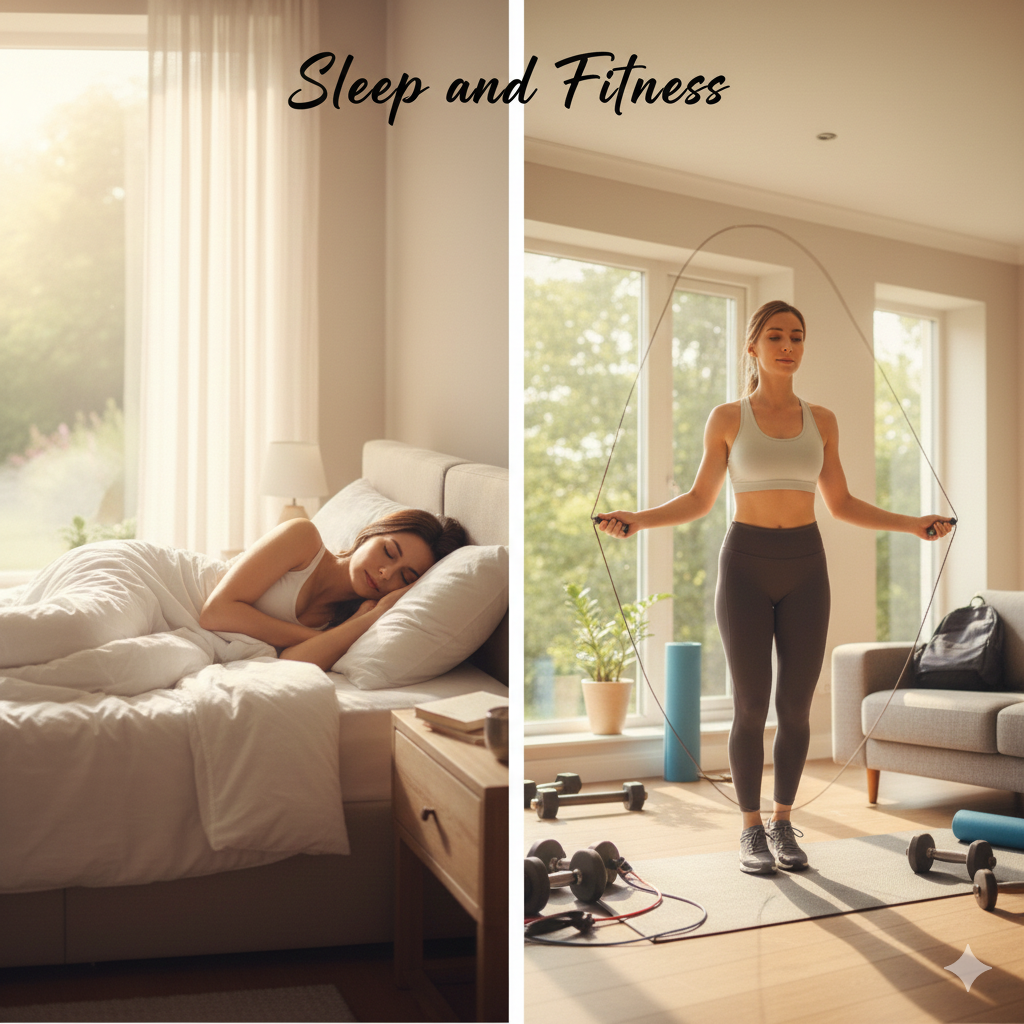
Fitness results are often attributed to training volume, nutrition, and motivation. Yet one factor quietly determines whether those inputs translate into real progress: sleep. When sleep is inadequate or fragmented, performance declines, recovery slows, appetite signals skew, and the body shifts toward stress physiology rather than adaptation. Understanding the connection between sleep and fitness is therefore not a lifestyle luxury; it is a strategic advantage for anyone aiming to build strength, improve endurance, or change body composition.
Understanding the Link Between Sleep and Physical Performance
Exercise is the stimulus; sleep is when the body converts that stimulus into measurable improvement. During the night, the nervous system recalibrates, muscles repair microscopic damage, and energy stores are restored. When sleep is restricted, the same workout can feel harder, technique becomes less consistent, and recovery demands multiply. Over time, the gap between effort and outcome widens, undermining both performance and adherence.
How Sleep Affects Strength, Endurance, and Reaction Time
Strength and power output depend on the efficiency of the central nervous system. Poor sleep reduces neural drive, coordination, and motor learning, making heavy lifts feel disproportionately taxing and increasing the likelihood of compensatory movement patterns. In practical terms, this can mean slower bar speed, reduced maximal force, and inconsistent execution—especially in complex lifts or high-skill movements.
Endurance performance is similarly sensitive. Sleep loss elevates perceived exertion, impairs pacing judgment, and can reduce glycogen replenishment, which is critical for sustained training. Athletes often describe this as “flat legs” or an unusual difficulty maintaining intensity despite unchanged conditioning. This is a central reason sleep and exercise performance are so closely linked: the body’s physiological capacity may remain intact, while the brain’s ability to coordinate and tolerate effort declines.
Reaction time and decision-making also deteriorate with insufficient sleep, affecting sports that require rapid responses, precision, and situational awareness. Even in the gym, slower reactions can degrade form under fatigue, increasing injury risk during dynamic movements or heavy sets. The result is not only reduced output but also a compromised margin of safety.
The Role of Deep and REM Sleep in Muscle Repair and Growth
Not all sleep is equal. Deep sleep (slow-wave sleep) is particularly associated with physical restoration. During these stages, tissue repair accelerates, inflammation is regulated, and the body shifts into a rebuilding mode conducive to adaptation. This is a major component of how sleep affects muscle recovery, because the microtrauma induced by resistance training needs an optimal hormonal and cellular environment to resolve and strengthen.
REM sleep, often discussed for its cognitive benefits, is also relevant for performance. Motor learning, emotional regulation, and the consolidation of movement patterns are supported during REM, which can indirectly enhance athletic execution and consistency. In other words, deep sleep helps rebuild the body, while REM helps refine the brain’s control over that body. Together, they underpin sleep and athletic performance more than most training plans acknowledge.
Sleep, Hormones, and Body Composition
Body composition is shaped by more than calories in and calories out. Sleep influences hunger, satiety, stress response, insulin sensitivity, and recovery capacity—all of which determine whether a nutrition plan is sustainable and effective. When sleep is routinely compromised, the body becomes more efficient at resisting fat loss and less efficient at building or preserving lean mass.
How Sleep Influences Fat Loss, Muscle Gain, and Metabolism
Sleep restriction can reduce insulin sensitivity, meaning the body handles carbohydrates less effectively and may store more energy as fat. It also tends to increase cravings for energy-dense foods, particularly those high in sugar and refined carbohydrates, making adherence to a structured plan more difficult. This is one reason sleep for weight loss is not merely supportive; it is often decisive.
For muscle gain, the issue is twofold. First, poor sleep can blunt training quality, reducing mechanical tension and total productive volume. Second, recovery resources become constrained: protein synthesis and tissue remodeling are less efficient, while catabolic signals rise. Over time, this can lead to a frustrating plateau where effort remains high but measurable growth slows.
Metabolism also suffers indirectly. When fatigue increases, non-exercise activity (daily movement, posture, spontaneous walking) often declines. Small reductions in this “background” activity can meaningfully affect energy balance across weeks and months. Thus, sleep quality and workout results are intertwined through both physiology and behavior.
Key Hormones Impacted by Sleep: Cortisol, Ghrelin, and Leptin
Several hormones affected by sleep shape fitness outcomes, but three stand out for their consistent influence on appetite, stress, and recovery.
- Cortisol: Often called the stress hormone, cortisol naturally fluctuates across the day. Insufficient sleep can raise baseline levels and disrupt the normal rhythm, which may impair recovery, increase water retention, and promote a catabolic environment. Elevated cortisol also tends to worsen sleep quality, creating a self-reinforcing loop.
- Ghrelin: Ghrelin stimulates appetite. Short sleep commonly increases ghrelin, making hunger feel more urgent and persistent. This shift can be especially problematic in cutting phases when dietary restraint is already challenging.
- Leptin: Leptin supports satiety and energy regulation. Sleep loss often reduces leptin, weakening the signal that you have eaten enough. The combined effect of higher ghrelin and lower leptin can make nutrition plans feel unusually difficult, even if macros and calories are well designed.
These hormonal changes do not eliminate progress, but they increase the cost of achieving it. With better sleep, appetite becomes more manageable, stress physiology calms, and recovery accelerates—allowing training and nutrition to work as intended.
Optimizing Sleep to Boost Your Workout Results
Improving sleep does not require perfection. It requires consistency, an environment that supports uninterrupted rest, and habits that reduce physiological arousal at night. Small changes—applied reliably—often produce outsized returns in performance, mood, and body composition.
Ideal Sleep Duration for Athletes and Active Individuals
The best sleep duration for athletes generally falls between 7 and 9 hours per night, with many highly active individuals performing best closer to 8–10 hours when training volume is high. The ideal range depends on intensity, stress levels, and individual variability, but a useful benchmark is this: if you need caffeine to feel functional, struggle to recover between sessions, or see declining performance, you may be under-slept even if you are technically hitting seven hours.
Quality matters as much as quantity. Fragmented sleep can reduce deep and REM stages even when total hours appear adequate. Prioritizing regular bed and wake times, minimizing late-night stimulation, and addressing environmental disruptions often improves restorative sleep without extending time in bed.
Pre- and Post-Workout Habits for Better Sleep Quality
Training can support sleep, but timing and intensity matter. Late-evening high-intensity workouts may elevate core temperature and sympathetic nervous system activity, delaying sleep onset for some individuals. If evening training is unavoidable, extending the cool-down, prioritizing nasal breathing, and finishing with low-intensity movement can help the body transition toward rest.
Post-workout nutrition also influences sleep. Under-fueling—especially after demanding sessions—can increase nighttime wakefulness and raise stress hormones. A balanced meal with protein and carbohydrates in the hours after training supports glycogen replenishment and recovery. Hydration should be sufficient but not excessive late in the evening to reduce sleep interruptions.
Additional habits that tend to improve sleep quality and workout results include:
- Morning light exposure: Bright light within the first hour of waking supports circadian alignment and improves nighttime sleepiness.
- Caffeine cut-off: For many people, avoiding caffeine 8–10 hours before bed meaningfully improves sleep depth.
- Evening wind-down: A short, consistent routine—dim lighting, low-stimulation activities, gentle stretching—signals the nervous system to downshift.
- Bedroom conditions: A cool, dark, quiet environment is strongly associated with better sleep continuity and restorative stages.
Common Sleep Problems That Sabotage Fitness Progress
Many fitness setbacks are misattributed to “lack of discipline” when the true constraint is poor recovery. Sleep problems often appear subtly at first—slower progress, lingering soreness, irritability—then escalate into stalled strength gains, recurring minor injuries, and a persistent sense of fatigue.
Overtraining, Insomnia, and Recovery Issues
Overtraining is not simply “training hard.” It is a mismatch between training stress and recovery capacity. When sleep is limited, the recovery budget shrinks, and previously tolerable programs can become excessive. Signs include falling performance, elevated resting heart rate, reduced motivation, persistent soreness, and increased susceptibility to illness.
Insomnia can also become intertwined with training habits. High-intensity sessions performed too close to bedtime, aggressive calorie deficits, or elevated life stress can make it harder to fall asleep or stay asleep. Athletes may respond by increasing training to “earn” sleep, which can worsen the problem. The better approach is to stabilize sleep first, then rebuild training volume with recovery in mind.
Recovery issues are not always dramatic; they often show up as chronic stiffness, nagging tendon discomfort, or an inability to hit usual numbers despite consistent programming. These are common indicators that sleep—and therefore restoration—is insufficient for the current workload.
Practical Strategies to Improve Sleep Hygiene and Performance
To improve sleep for better fitness, focus on the highest-impact behaviors that reduce arousal and support a stable circadian rhythm.
- Keep a fixed wake time: A consistent wake time anchors the body clock and often improves sleep onset naturally within one to two weeks.
- Protect the last hour before bed: Reduce bright light and high-stimulation content. If screen use is necessary, dim the display and avoid emotionally activating material.
- Manage training load: Insert deload weeks, vary intensity, and avoid stacking maximal sessions without adequate recovery. More is not better when sleep is unstable.
- Build a decompression routine: Light stretching, a warm shower, journaling, or breathing exercises can lower sympathetic activity and shorten sleep latency.
- Address the environment: Darkness, cool temperature, and noise control are not luxuries; they are recovery tools.
- Know when to seek help: Loud snoring, gasping, persistent daytime sleepiness, or chronic insomnia warrant medical evaluation. Sleep disorders can severely impair performance and health, regardless of training quality.
These strategies are most effective when applied consistently rather than intensely. A modest but stable routine often delivers better outcomes than sporadic “perfect” nights followed by disruption.
Conclusion
The relationship between sleep and fitness is not abstract; it is measurable in strength output, endurance capacity, coordination, appetite regulation, and the pace of recovery. Sleep shapes the hormonal environment that governs body composition and determines whether training stress becomes adaptation or exhaustion. By prioritizing adequate duration, protecting sleep quality, and adjusting training habits to support recovery, you create the conditions for sustained progress. In the long run, few interventions improve performance and physique as reliably as consistently restorative sleep.