
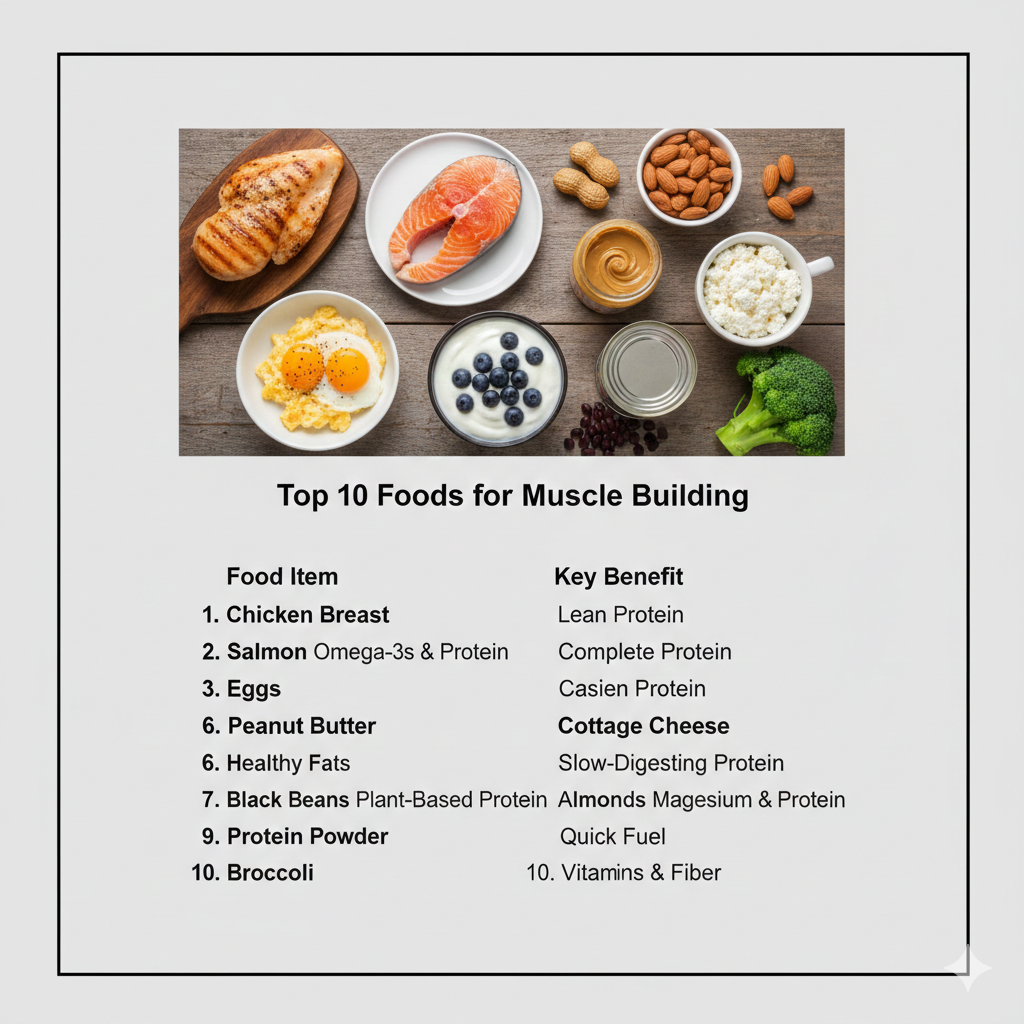
Building muscle is not simply a matter of lifting heavier weights. Hypertrophy depends on a consistent training stimulus paired with a nutritional strategy that supplies adequate energy, high-quality protein, and recovery-supporting micronutrients. The right muscle building foods help you train harder, repair damaged muscle tissue more efficiently, and maintain the calorie surplus often required for growth—without compromising overall health.
This guide breaks down the best foods for muscle growth and shows how to use them in a realistic muscle building diet plan, including practical meal ideas around workouts for stronger performance and faster recovery.
1. Understanding Muscle-Building Nutrition
1.1 How Nutrition Supports Muscle Growth and Recovery
Resistance training creates microscopic disruption in muscle fibers. Muscle growth occurs when the body repairs and reinforces those fibers, a process driven by muscle protein synthesis (MPS). Nutrition influences MPS in three primary ways: it provides amino acids (the building blocks of protein), supplies carbohydrates to restore glycogen and support training volume, and delivers fats and micronutrients that regulate hormones and inflammation.
In practice, a well-designed approach to lean muscle nutrition prioritizes:
- Consistent protein intake to provide essential amino acids, especially leucine, a key trigger for MPS.
- Adequate total calories to support growth, performance, and recovery.
- Carbohydrate availability to sustain intense training and replenish muscle glycogen.
- Micronutrient density (vitamins, minerals, antioxidants) to aid tissue repair and immune resilience.
1.2 Key Macronutrients: Protein, Carbs, and Healthy Fats for Muscle Gain
Muscle gain is most reliable when macronutrients are balanced with intention rather than guesswork:
- Protein: Central to hypertrophy. Favor complete proteins and spread servings across the day to repeatedly stimulate MPS.
- Carbohydrates: The preferred fuel for higher-intensity training. Carbs support training quality and recovery by replenishing glycogen, which is closely tied to performance.
- Healthy fats: Essential for hormone production and nutrient absorption. Include a mix of mono- and polyunsaturated fats, with emphasis on omega-3 sources for recovery support.
2. Top 10 Foods for Muscle Building
2.1 Lean Proteins: Chicken Breast, Turkey, and Lean Beef
Lean poultry and lean cuts of beef are foundational foods to build muscle mass because they deliver dense, high-quality protein with minimal added calories from fat (depending on the cut). Chicken breast and turkey are particularly useful during “lean bulk” phases when you want to increase protein without overshooting calories. Lean beef adds additional benefits, including iron, zinc, and creatine—nutrients linked to performance and strength.
2.2 Fatty Fish: Salmon, Tuna, and Omega-3 Power
Salmon and other fatty fish provide high-quality protein alongside omega-3 fatty acids (EPA and DHA). Omega-3s may support recovery by modulating inflammation and could enhance muscle protein synthesis in certain contexts. Tuna is a convenient, high-protein option with minimal fat, while salmon offers a more calorie-dense profile useful for hard gainers.
2.3 Eggs: Complete Protein and Muscle-Building Nutrients
Eggs are among the most practical high protein foods for muscle gain. They contain a complete amino acid profile and are naturally rich in micronutrients such as choline, selenium, and fat-soluble vitamins. The yolk also contributes beneficial fats and bioactive compounds, making whole eggs an efficient choice for breakfast or post-training meals.
2.4 Greek Yogurt and Cottage Cheese: High-Protein Dairy Options
Greek yogurt and cottage cheese combine protein density with versatility. Greek yogurt is typically higher in protein than standard yogurt and works well in smoothies, bowls, and sauces. Cottage cheese is rich in casein, a slower-digesting protein that can support overnight recovery—making it a strong choice as an evening snack within a muscle-focused routine.
2.5 Plant-Based Proteins: Lentils, Beans, and Tofu
Plant proteins can absolutely support muscle gain when total protein and amino acid variety are sufficient. Lentils and beans provide protein plus fiber and carbohydrates, helping with training fuel and appetite control. Tofu (and other soy foods) offers a high-quality plant protein with a robust amino acid profile. Rotating these sources adds dietary diversity and micronutrient breadth, which strengthens long-term adherence.
2.6 Quinoa and Whole Grains: Complex Carbs for Sustained Energy
Quinoa, oats, brown rice, and whole-grain breads deliver complex carbohydrates that help maintain training intensity. Quinoa is notable for offering more protein than many grains and a favorable micronutrient profile. Whole grains also provide magnesium and B vitamins, which support energy metabolism—an often overlooked driver of consistent training performance.
2.7 Nuts and Nut Butters: Calorie-Dense Muscle Fuel
Nuts and nut butters are invaluable for individuals who struggle to eat enough calories. They provide calorie density, healthy fats, and a meaningful protein contribution. Almonds, peanuts, walnuts, and mixed nut blends also supply minerals such as magnesium and zinc. When appetite is limited, a spoonful of nut butter in a smoothie or on toast can make a measurable difference.
2.8 Seeds: Chia, Flax, and Pumpkin Seeds for Extra Protein
Seeds offer a concentrated source of nutrients that complement a muscle-building menu. Chia and flax contribute fiber and omega-3 fats (ALA), while pumpkin seeds stand out for protein, magnesium, and zinc. Add them to yogurt, oatmeal, salads, or smoothies for an easy upgrade in texture and nutrient density.
2.9 Whey and Plant-Based Protein Powders for Convenience
While whole foods should anchor any plan, protein powders are practical for busy schedules and post-workout convenience. Whey protein is rich in leucine and digests quickly, making it a strong option after training. Plant-based blends (such as pea and rice) can also be effective, especially when formulated to provide a complete amino acid profile. For many lifters, powders are the simplest route to consistent daily protein totals and reliable high protein meal ideas.
2.10 Fruits and Vegetables: Antioxidants and Micronutrients for Recovery
Fruits and vegetables may not be “muscle foods” in the traditional sense, but they are essential for recovery and training consistency. Berries, citrus, leafy greens, bell peppers, and cruciferous vegetables provide antioxidants and micronutrients that support connective tissue health, immune function, and overall recovery capacity. They also improve meal quality and digestion, which matters when calorie intake rises.
3. How to Use These Foods for Maximum Muscle Gain
3.1 Sample Muscle-Building Meal Plan Using the Top 10 Foods
Below is a structured example of a one-day muscle building diet plan using the foods listed. Portions should be adjusted to your body size, training load, and calorie needs.
- Breakfast: 3–4 whole eggs scrambled with spinach and peppers; oatmeal topped with Greek yogurt and berries.
- Mid-morning snack: Cottage cheese with chia seeds and a banana; or a handful of mixed nuts if you need extra calories.
- Lunch: Grilled chicken breast or turkey; quinoa or brown rice; large salad with mixed vegetables and pumpkin seeds.
- Afternoon snack: Greek yogurt bowl with nut butter; or a protein shake if time is limited.
- Dinner: Salmon with roasted vegetables; whole grains on the side if training volume is high.
- Evening (optional): Cottage cheese with ground flaxseed for a slow-digesting protein source before sleep.
This approach combines high protein foods for muscle gain with performance-oriented carbohydrates and recovery-supportive fats, creating a robust template that can be repeated with ingredient swaps for variety.
3.2 Pre- and Post-Workout Meal Ideas for Strength and Recovery
Well-planned pre and post workout meals can improve training output and reduce recovery time. Aim for meals that are digestible, protein-inclusive, and carbohydrate-adequate, especially around demanding sessions.
Pre-workout (60–120 minutes before):
- Greek yogurt with berries and a drizzle of honey, plus a small handful of nuts.
- Turkey sandwich on whole-grain bread with fruit on the side.
- Oatmeal with whey or plant protein mixed in, topped with banana slices.
Post-workout (within ~1–2 hours):
- Whey or plant-based protein shake plus a banana or oats for fast, convenient recovery.
- Chicken breast or lean beef bowl with rice/quinoa and vegetables.
- Egg-based meal (omelet) with whole-grain toast and fruit.
These options emphasize protein plus carbohydrates to support MPS and restore glycogen—two pillars of effective recovery.
4. Practical Tips to Optimize Your Muscle-Building Diet
4.1 Ideal Protein Intake, Timing, and Portion Control
For most resistance-trained individuals, a practical target is 1.6–2.2 g of protein per kilogram of body weight per day. Distribute that intake across 3–5 protein-forward meals to stimulate MPS multiple times daily. As a rule of thumb, each main meal should contain a meaningful protein serving (often 25–45 g, depending on body size and total daily needs).
Portion control is less about restriction and more about precision. If you are not gaining, increase calories gradually—often by adding carbohydrate portions, calorie-dense fats (nuts, nut butters), or an additional snack. If you are gaining too quickly, reduce liquid calories and adjust starch portions before cutting protein.
4.2 Common Muscle-Building Nutrition Mistakes to Avoid
- Inconsistent protein intake: “High-protein days” followed by low-protein days undermine progress. Consistency drives adaptation.
- Under-fueling training: Avoid chronically low carbohydrates if performance is dropping. Training quality is a major determinant of hypertrophy.
- Overreliance on supplements: Powders help, but the most reliable results come from whole-food foundations and adequate total calories.
- Neglecting micronutrients and fiber: A diet that ignores fruits and vegetables can impair digestion, recovery, and long-term adherence.
- Unrealistic bulking tactics: Excessive calorie surpluses often lead to unnecessary fat gain. Incremental adjustments are more sustainable.
These muscle gain diet tips keep your nutrition aligned with training goals while supporting health and routine compliance.
Conclusion
The most effective nutrition strategy for hypertrophy is not built on gimmicks; it is built on repeatable choices. Prioritize a rotation of lean proteins, fatty fish, eggs, high-protein dairy, and plant-based staples. Add performance-focused carbohydrates from quinoa and whole grains, and use nuts, seeds, and protein powders to close any calorie or protein gaps. Finally, protect recovery with a wide range of fruits and vegetables.
When these muscle building foods are organized into a consistent routine—especially with smart pre and post workout meals—you create the nutritional environment where strength improves, recovery accelerates, and lean mass gains become more predictable.