
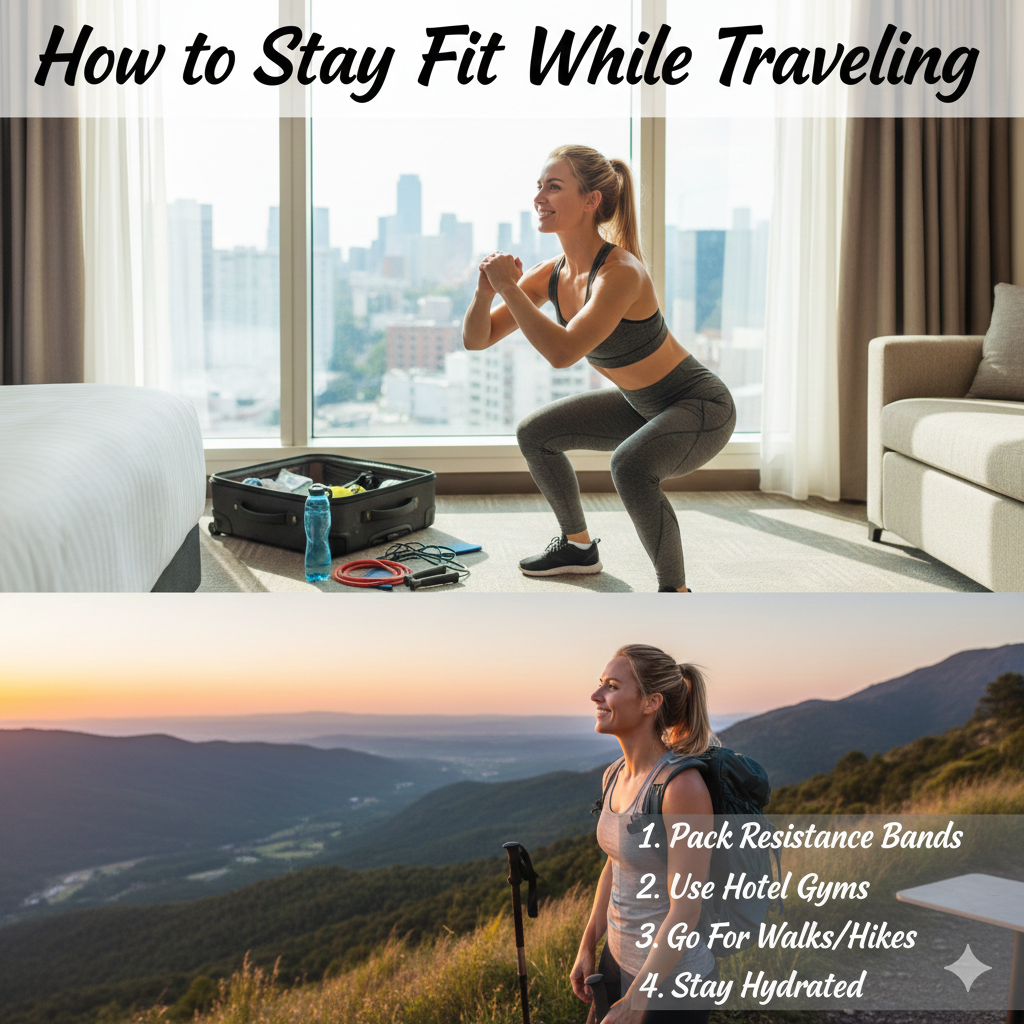
Travel has a way of disrupting even the most consistent routines. Long hours seated in transit, unfamiliar schedules, and convenient but calorie-dense foods can quickly erode momentum. The good news is that staying fit while traveling does not require perfection, a gym membership, or elaborate planning. With a few deliberate choices—strategic movement, simple no equipment workouts, and sound travel nutrition tips—you can maintain energy, manage stress, and return home feeling better than when you left.
How to Stay Fit While Traveling
Smart Planning: Build a Travel-Friendly Fitness Strategy
Set Realistic Fitness Goals Before Your Trip
The most reliable fitness tips for travelers begin before departure. Instead of trying to replicate your full home routine, decide what “success” looks like for this specific trip. A realistic target might be three 20-minute sessions, hitting a daily step range, or doing a brief mobility sequence every morning. These goals protect consistency without adding pressure, especially when work obligations, family plans, or time zone changes reduce your available bandwidth.
Clarify your intent and constraints in advance. Identify the likely pinch points—early meetings, late dinners, long tours—and anchor your plan to what is stable. Many travelers find it effective to schedule movement in the morning, before the day’s unpredictability begins. If you prefer evenings, commit to a minimum viable routine: ten minutes of bodyweight work or a brisk walk. A sustainable travel workout strategy is one you will actually execute.
Pack Lightweight Travel Workout Essentials
You can exercise while traveling with almost no gear, but a few compact items expand your options and keep friction low. Prioritize tools that are light, versatile, and easy to use in small spaces. Pack them where they are accessible, not buried under formalwear.
- Resistance band (loop or long band): Adds progressive resistance for rows, presses, and glute work without bulk.
- Mini band: Excellent for hip stability, glute activation, and quick lower-body circuits.
- Jump rope (optional): High-intensity cardio in a minimal footprint, suitable for patios or quiet outdoor areas.
- Lightweight training shoes: Comfortable enough for walking-heavy days and stable for short sessions.
- Collapsible water bottle: Makes hydration simpler during transit and long sightseeing blocks.
Even with zero equipment, you can build effective sessions. The objective of packing is not to complicate your routine; it is to remove excuses and preserve your healthy travel habits when circumstances change.
Staying Active on Travel Days (Flights, Trains, and Road Trips)
Simple Exercises You Can Do in Airports, Stations, and Rest Stops
Transit days often create the steepest drop in activity. Counteract this by treating movement as a series of short, low-impact “snacks” rather than one formal workout. In airports and stations, choose stairs over escalators, walk the perimeter of the terminal, and stand while taking calls. These small decisions accumulate into meaningful daily output.
During layovers or rest stops, a discreet micro-circuit can restore circulation and reduce fatigue. Aim for one to three rounds depending on time and space:
- Standing calf raises: 15–25 reps to stimulate lower-leg circulation.
- Chair or bench sit-to-stands: 10–15 reps, controlled tempo.
- Wall push-ups: 10–20 reps for upper-body activation.
- Glute squeezes: 10–15 slow contractions while standing or seated.
- Shoulder blade retractions: 10–15 reps to counter rounded posture.
On road trips, plan for movement breaks every 90–120 minutes when possible. Five minutes of brisk walking plus a short stretch can prevent the “arrive depleted” feeling and makes your next day more productive.
How to Reduce Stiffness and Jet Lag With Stretching and Walking
Stiffness and jet lag are often amplified by dehydration, long periods of immobility, and irregular sleep. The most effective countermeasure is consistent low-intensity movement paired with light mobility work. Walking—especially outdoors in daylight—supports circadian alignment and reduces the groggy, heavy sensation that follows long-haul travel.
Use a simple mobility sequence before boarding, after landing, and once more before bed on arrival day:
- Neck and upper-back mobility: Slow neck turns and gentle thoracic rotations.
- Hip flexor stretch: 30–45 seconds per side to offset prolonged sitting.
- Hamstring hinge: Soft knees, hinge at the hips, breathe slowly for 6–8 breaths.
- Ankle circles: 10–15 each direction to reduce lower-leg tightness.
Keep intensity modest when you are sleep-deprived. A long walk and a short hotel room workout are usually more beneficial than forcing high-intensity intervals that spike stress and impair recovery.
Easy Workouts You Can Do Anywhere (No Gym Needed)
Bodyweight Travel Workouts for Hotel Rooms and Small Spaces
A well-designed hotel room workout can be both efficient and challenging, even in tight quarters. Focus on fundamental movement patterns—squat, hinge, push, pull, core—using tempo, unilateral variations, and short rest periods to create progressive overload. This approach delivers results without equipment and fits neatly into a 15–25 minute window.
Hotel Room Circuit (20 minutes)
Complete 3–5 rounds. Rest 30–60 seconds between movements as needed.
- Squats or split squats: 10–15 reps (per side for split squats).
- Push-ups (incline on desk if needed): 8–15 reps.
- Hip hinge (good mornings) or glute bridge: 12–20 reps.
- Plank or dead bug: 30–45 seconds (or 8–12 controlled reps per side for dead bug).
- Suitcase carry (if space allows): Walk 30–60 seconds holding a loaded bag, switch hands halfway.
To intensify no equipment workouts, slow the lowering phase (three to four seconds), pause briefly at the bottom, or use unilateral versions such as single-leg glute bridges and split squats. If you packed a resistance band, add band rows anchored around a sturdy door hinge area (ensuring safety and stability) or perform banded lateral walks for hip strength.
Walking, Running, and Exploring: Turning Sightseeing Into Exercise
One of the most sustainable ways to stay fit while traveling is to reframe sightseeing as training. Cities are naturally walkable gyms: inclines, stairs, and varied terrain provide built-in conditioning. Instead of viewing exercise as separate from the trip, make movement the method of exploration.
Practical strategies include:
- Design “walking-first” itineraries: Group attractions by neighborhood and navigate on foot.
- Choose active transport: Walk to dinner, take public transit that requires short walks, or rent a bike where safe.
- Add a purposeful morning route: A 20–40 minute walk or easy run establishes momentum and improves appetite regulation.
- Use elevation intentionally: Seek scenic staircases, hillside viewpoints, and waterfront paths.
This approach delivers both physical and psychological benefits. You accumulate steps, improve cardiovascular capacity, and absorb the environment more deeply than you would from a taxi window. For many travelers, it becomes the most enjoyable form of exercise while traveling.
Eating Well on the Go: Nutrition Tips for Healthy Travel
How to Make Better Food Choices at Airports, Hotels, and Restaurants
Travel nutrition tips are most effective when they are flexible, not restrictive. The goal is to stabilize energy and support recovery, not to micromanage every meal. Start by prioritizing protein and fiber, which improve satiety and help prevent constant grazing on refined snacks.
In airports and stations, look for meals built around a clear protein source—eggs, yogurt, poultry, fish, beans, tofu—paired with produce. If options are limited, assemble a workable combination: a protein-rich snack plus fruit, or a salad with added protein and olive oil. At hotels, take advantage of simple staples such as eggs, Greek yogurt, fruit, oats, and nuts. These choices create a reliable baseline even when lunches and dinners are more indulgent.
At restaurants, a few subtle ordering habits preserve balance without diminishing enjoyment:
- Start with vegetables: A side salad or grilled vegetables improves meal quality immediately.
- Choose one indulgence, not five: Enjoy dessert or a cocktail, but keep the rest of the meal straightforward.
- Ask for sauces on the side: You retain flavor while controlling excess calories.
- Prioritize lean protein when possible: It supports muscle maintenance, especially if your training volume is lower.
Consistency comes from defaults. Establish two or three “go-to” travel meals that work across locations, and you will reduce decision fatigue while keeping your nutrition aligned with your goals.
Staying Hydrated and Avoiding Common Travel Food Traps
Hydration is a quiet determinant of performance and appetite. Flights and long days of walking increase fluid needs, yet many travelers unintentionally underdrink. Make water the easiest option: carry a bottle, refill whenever possible, and drink steadily rather than trying to compensate at night. If you sweat heavily or travel in hot climates, consider adding electrolytes—particularly if you experience headaches or fatigue.
Be mindful of common travel food traps that erode healthy travel habits:
- Liquid calories: Specialty coffees, juices, and alcohol can add substantial energy without satiety.
- “Snack drift”: Long days prompt grazing on pastries, chips, and sweets. Use planned protein snacks to stay anchored.
- Oversized portions: Restaurant servings may exceed needs. Split dishes, box half, or order an appetizer plus entrée salad.
- Low-protein breakfasts: Sugary starts often lead to cravings later. Add eggs, yogurt, or a protein-forward option.
None of this requires rigidity. It is simply a set of practical guardrails that preserve energy and help you feel better across consecutive travel days.
Conclusion
To stay fit while traveling, focus on what is controllable: modest planning, frequent low-intensity movement, and simple, repeatable routines. A brief travel workout in your room, purposeful walking that doubles as exploration, and sensible nutrition choices will carry you through busy itineraries without sacrificing health. When you treat fitness as a portable practice rather than a fixed location, you can remain active on vacation, protect your progress, and return home refreshed instead of drained.