
Strong relationships are not built on perfect compatibility; they are built on the capacity to stay present, listen deeply, and respond with care—especially when emotions run high. Meditation offers a practical way to cultivate those capacities. When applied with intention, meditation techniques for better relationships can shift patterns that otherwise feel automatic: defensiveness, reactivity, withdrawal, or the habit of assuming the worst. Over time, practice can transform how you communicate, how you regulate stress, and how safe your partner feels in your presence.
This article explores relationship-focused meditation in a grounded, actionable way. You will learn how mindfulness for relationships strengthens emotional clarity, how loving-kindness meditation for couples nurtures empathy, and how brief practices can be integrated into everyday conversations to reduce conflict and support healing.
Understanding Meditation for Healthier Relationships
What Is Relationship-Focused Meditation?
Relationship-focused meditation is any contemplative practice designed to improve the quality of your interactions with others. Unlike meditation pursued solely for personal calm, these approaches train skills that directly support intimacy and trust: noticing emotions before they escalate, listening without rehearsing a counterargument, and choosing a response aligned with your values rather than your triggers.
This category includes emotional awareness meditation, compassion-based practices, and structured relationship meditation exercises that you can do alone or with a partner. The aim is not to eliminate disagreement. It is to create a steadier inner environment so disagreement can be handled with dignity, clarity, and respect.
How Meditation Transforms Communication and Connection
Communication often fails for predictable reasons: we misread tone, personalize frustration, or speak from a flooded nervous system. Meditation to improve communication works by strengthening three pillars:
- Attention: you notice what is happening in real time—your partner’s words and your internal reactions.
- Regulation: you learn to pause, breathe, and avoid escalating language when you feel threatened or unheard.
- Perspective: you become less fused with your story and more curious about your partner’s experience.
With practice, you can recognize the moment you begin to harden, defend, or withdraw. That recognition creates space. In that space, you can ask a better question, soften your voice, or request a brief pause—small choices that compound into a more secure connection.
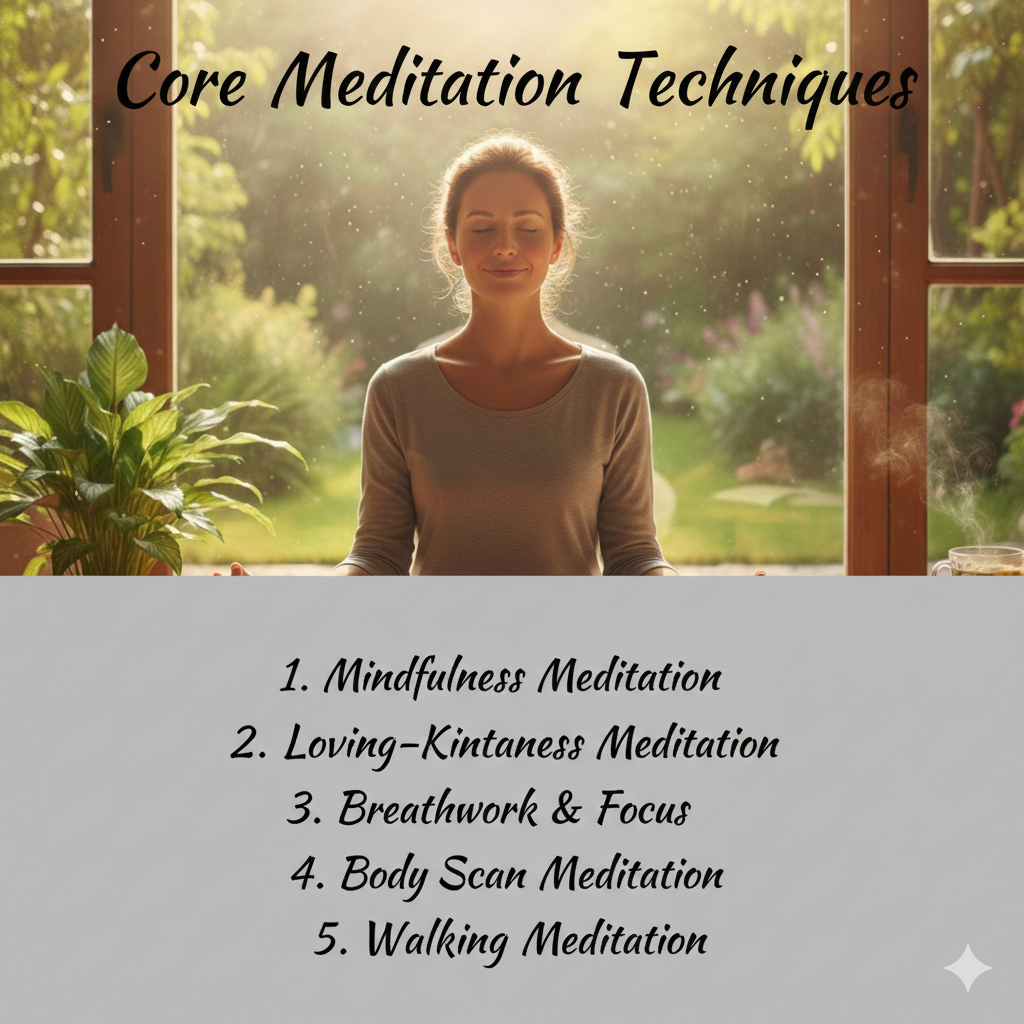
Core Meditation Techniques to Improve Relationships
Mindfulness Meditation for Emotional Awareness
Mindfulness for relationships begins with one essential skill: naming what you feel without becoming what you feel. Emotional awareness meditation helps you identify sensations, emotions, and impulses early—before they hijack your words.
Practice: “Name, Notice, Normalize” (8–10 minutes)
- Settle: Sit comfortably. Let your hands rest. Allow your gaze to soften or close your eyes.
- Anchor: Place attention on the breath for one minute, noticing inhales and exhales without forcing them.
- Name: Ask, “What is present right now?” Identify emotions with precise language (e.g., “disappointed,” “anxious,” “tender,” “irritated”).
- Notice: Locate where the emotion lives in the body—tight jaw, warmth in the chest, heaviness in the stomach. Observe without analysis.
- Normalize: Silently add, “This is a human experience.” This reduces shame and defensiveness.
- Choose: End by asking, “What response would protect connection?” Let that question guide your next interaction.
This technique is especially effective when you tend to argue about facts while the real issue is emotional—feeling unseen, disrespected, or unsafe. It brings the true content of the conversation to the surface and makes it easier to communicate with restraint.
Loving-Kindness (Metta) Meditation for Compassion and Empathy
Loving-kindness meditation for couples strengthens a relationship by training the mind to incline toward goodwill rather than suspicion. It does not deny conflict; it prevents conflict from eroding respect. Metta is particularly powerful when resentment has accumulated and you want to restore warmth without forcing instant forgiveness.
Practice: Partner-Directed Metta (10–12 minutes)
- Ground: Begin with a few natural breaths. Feel the contact of your body with the chair or floor.
- Generate warmth: Bring to mind someone who easily evokes appreciation (a mentor, a friend, a beloved relative). Notice the feeling of kindness.
- Offer phrases to yourself: Silently repeat: “May I be calm. May I be safe. May I be healthy. May I live with ease.” Adjust language to suit your beliefs.
- Offer phrases to your partner: Picture your partner’s face. Repeat: “May you be calm. May you be safe. May you be healthy. May you live with ease.”
- Include the relationship: Add: “May we understand each other. May we speak honestly and kindly. May we repair quickly.”
If you feel resistance, start smaller. You can offer kindness in a limited form—“May you be free from unnecessary suffering”—without pretending everything is fine. Over time, compassion becomes less performative and more embodied, reshaping how you interpret your partner’s stress and imperfections.
Practical Ways to Use Meditation in Everyday Interactions
Using Breath Awareness to Stay Calm During Conflict
Conflict rarely escalates because of the topic alone; it escalates because the nervous system enters a threat response. Breath awareness is a portable form of mindfulness to reduce conflict. It gives you an immediate method for lowering arousal so you can remain articulate and fair.
Practice: The 3-Breath Reset (30–60 seconds)
- Breath 1: Inhale naturally; exhale longer than you inhale. Silently label: “Slowing down.”
- Breath 2: Relax the jaw and shoulders on the exhale. Label: “Softening.”
- Breath 3: Ask internally: “What is my partner needing to feel right now—heard, respected, reassured?” Label: “Choosing connection.”
This is not avoidance. It is a micro-intervention that prevents impulsive language. With repetition, this simple tool becomes an instinctive pause—often enough to prevent a disagreement from turning into character assassination.
Boundary-friendly script: If you need time, pair the reset with clear language: “I want to handle this well. I need two minutes to settle, then I will come back and listen.” A brief pause protects dignity and supports true dialogue.
Guided Visualizations to Heal Past Relationship Wounds
Some tensions are not caused by the present conversation but by unprocessed memories—betrayal, chronic misunderstanding, or years of feeling dismissed. A guided meditation for relationship healing can help you revisit those experiences with safety and perspective. This is not a replacement for therapy, particularly when trauma is involved, but it can complement professional support by promoting integration rather than rumination.
Practice: “Repair and Release” Visualization (12–15 minutes)
- Create safety: Sit or lie down. Place one hand on the chest or abdomen. Take several slow breaths.
- Recall gently: Bring to mind a relationship moment that still has emotional charge. Keep it mild to moderate; avoid overwhelming material.
- Observe the story: See the scene as if watching from a slight distance. Notice what you felt then—fear, loneliness, anger—without re-living it.
- Offer the missing element: Imagine your present self entering the scene to provide what was needed: protection, words of clarity, a boundary, or reassurance.
- Imagined dialogue: Visualize saying one honest sentence you did not say at the time, in a calm voice.
- Release: Picture exhaling the residual tension as a color or heaviness leaving the body. Conclude with a phrase: “I can remember without remaining stuck.”
Used consistently, this exercise reduces the likelihood of importing old pain into new conversations. It also helps you approach repair from a steadier place—less driven by accusation, more oriented toward clarity and mutual responsibility.
Building a Sustainable Meditation Practice as a Couple
Simple Daily Meditation Routines for Partners
A sustainable couple meditation routine should be modest, predictable, and free of performance pressure. The goal is consistency, not intensity. Even five minutes a day can change the emotional climate of a home when it becomes a shared ritual.
Option A: Five-Minute Synchronization (daily)
- Sit facing each other or side by side.
- Breathe naturally and silently for two minutes.
- For two minutes, practice metta phrases directed toward each other.
- End with one minute of quiet, then share a single sentence: “Today I appreciate…”
Option B: Ten-Minute Evening Reset (3–5 times per week)
- Two minutes of breath awareness.
- Five minutes of mindfulness meditation for emotional awareness (each person privately notes what they are carrying).
- Three minutes of shared intention-setting: “How do we want to speak tomorrow when stress appears?”
These routines work because they train the nervous system to associate the relationship with steadiness. They also create a reliable space for gentle honesty, reducing the tendency to process everything only during conflict.
Overcoming Common Challenges When Meditating Together
Meditating with a partner can expose differences in temperament and expectation. Treat those differences as part of the practice rather than evidence you are doing it incorrectly.
- “We cannot focus at the same time.” Use flexible timing. Meditate together for three minutes and separately for seven. Consistency matters more than symmetry.
- “One of us is skeptical.” Frame it as attention training, not spirituality. Emphasize observable outcomes: fewer interruptions, calmer tone, faster repair.
- “It becomes another task to do perfectly.” Remove metrics. A successful session can include restlessness. The win is returning to the practice without criticism.
- “We tried during an argument and it felt forced.” Practice primarily outside conflict. Then use short tools—like the 3-Breath Reset—during tense moments.
- “Old wounds surface.” Slow down. Choose shorter sessions, focus on grounding, and consider professional support if painful material repeatedly overwhelms you.
The most effective relationship meditation exercises are those you will actually repeat. Protect the practice from becoming a referendum on the relationship. Let it be a neutral place where both of you learn to return—again and again—to clarity and care.
Conclusion
Relationships thrive when attention is trained, emotions are understood, and goodwill is intentionally cultivated. Mindfulness for relationships builds the capacity to recognize inner reactions before they become harmful words. Loving-kindness practice restores empathy when stress or resentment narrows your view. Breath awareness and guided visualization add practical tools for staying calm during conflict and supporting a guided meditation for relationship healing when the past still echoes in the present.
If you want measurable change, begin small and remain consistent. Choose one practice for two weeks—preferably a brief daily routine—and let the cumulative effect do its work. Over time, meditation becomes less of an activity and more of a shared language: a way of meeting each other with steadiness, honesty, and respect.