
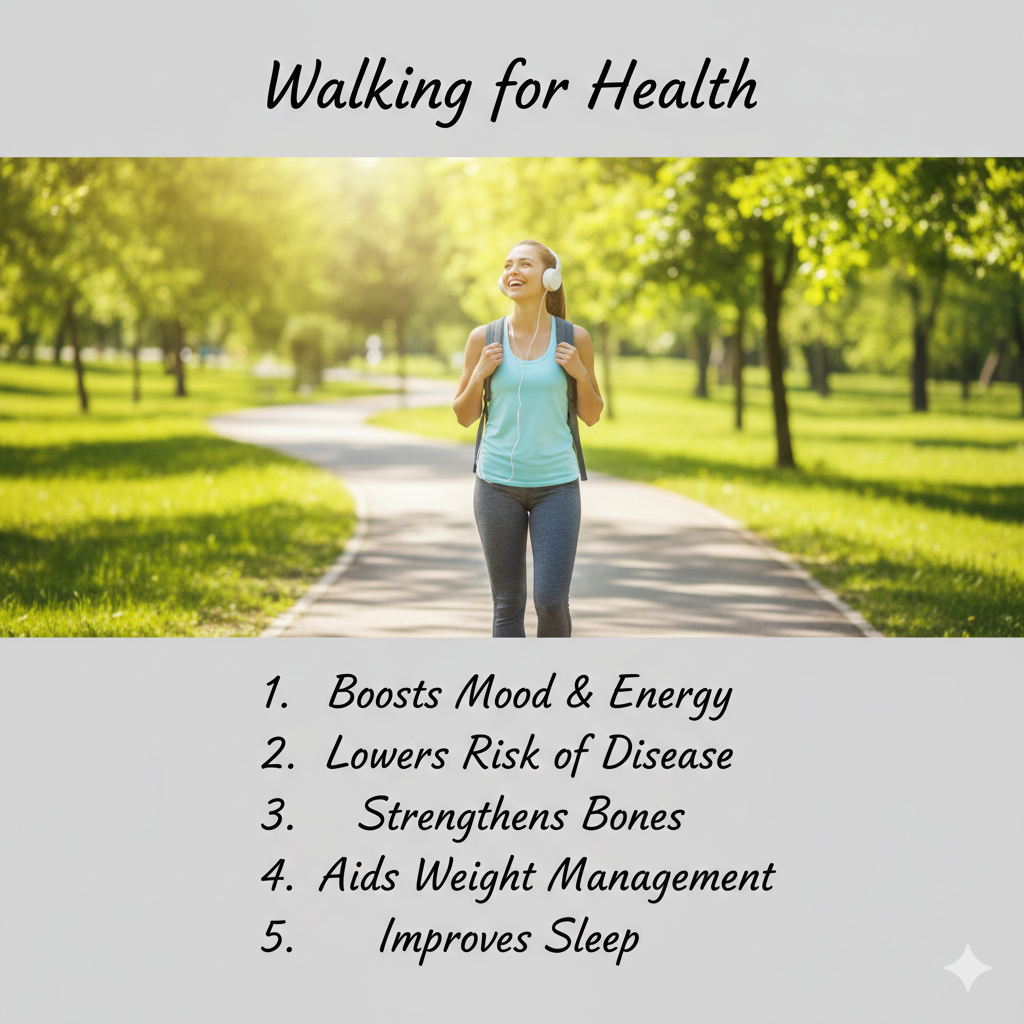
Walking is often underestimated because it is simple, familiar, and requires no special equipment. Yet simplicity is precisely its strength. A consistent walking practice can improve cardiovascular fitness, support body composition goals, strengthen bones and muscles, and enhance mental resilience. Whether your priority is walking for heart health, managing stress, or building a sustainable daily walking routine, this accessible movement can become one of the most effective investments you make in long-term wellbeing.
The Health Benefits of Walking
Why Walking Is One of the Best Exercises
Walking sits at the intersection of effectiveness and sustainability. It is low-impact, joint-friendly, and adaptable to nearly every fitness level, which makes adherence far more realistic than with programs that demand high intensity or specialized skills. It also integrates easily into daily life—commuting, errands, meetings, or post-dinner routines—turning health improvement into a practical habit rather than an occasional project.
From a physiological standpoint, walking elevates heart rate enough to stimulate cardiovascular adaptation while keeping recovery demands modest. That balance makes it suitable for beginners and experienced exercisers alike, and it pairs well with strength training or more vigorous workouts without overloading the body.
How Much Walking Do You Need for Health Benefits?
If you have ever asked, “how much should I walk to see results?” the most reliable answer is: enough to be consistent, and enough to progress gradually. Many health organizations recommend aiming for about 150 minutes of moderate activity per week, which could look like a brisk 30-minute walk on five days. If time is limited, shorter sessions still count; three 10-minute walks can provide meaningful benefits, especially when performed at a purposeful pace.
Intensity matters as well. A brisk walk—where conversation is possible but singing would be difficult—typically delivers strong cardiometabolic benefits. If you are already active, adding hills, intervals, or longer durations can increase training stimulus without requiring a change in exercise type.
Physical Health Benefits of Walking
Walking for Heart Health and Blood Pressure
Among the most documented walking benefits are improvements in cardiovascular health. Regular walking supports circulation, helps the heart work more efficiently, and can contribute to healthier blood pressure levels over time. A steady walking habit is associated with better lipid profiles as well, including improvements in HDL (“good”) cholesterol, particularly when walking is performed briskly and consistently.
Walking for heart health is also practical because it scales. For someone returning to movement after a sedentary period, even moderate increases in daily steps can reduce cardiovascular risk markers. As fitness improves, longer walks or structured brisk sessions can further enhance endurance and cardiac capacity.
Walking for Weight Loss, Muscle Tone, and Bone Strength
Walking can be an effective component of body composition change, especially when combined with sound nutrition. While no single exercise guarantees fat loss, walking for weight loss works by increasing daily energy expenditure and improving metabolic health. The key is consistency and progression—more minutes, a quicker pace, or terrain that demands greater effort.
Beyond weight management, walking stimulates the muscles of the legs, hips, and core. Over time, this can improve muscle tone, gait mechanics, and functional strength. Inclines and varied terrain further recruit the glutes and calves, offering a stronger training effect without complicated routines.
Walking is also a weight-bearing activity, which is beneficial for skeletal health. Regular impact at a modest level encourages bone remodeling and can help maintain bone density, particularly when paired with resistance training and adequate intake of calcium and vitamin D.
Mental and Emotional Benefits of Walking
Walking for Stress Relief, Anxiety, and Mood
The mental benefits of walking are as compelling as the physical ones. A walk provides a structured pause from screens, demands, and cognitive overload. Rhythmic movement can calm the nervous system, and time outdoors often amplifies the effect by providing natural light and a change of sensory input.
For many people, walking for stress relief becomes a reliable, repeatable tool. It can reduce perceived tension, improve emotional regulation, and offer a gentle pathway out of rumination. Social walking—meeting a friend for a loop around the neighborhood—adds the additional protective effects of connection and accountability.
How Walking Improves Sleep and Cognitive Function
Walking supports sleep through multiple pathways: it increases daytime energy expenditure, helps regulate circadian rhythms (especially when performed outdoors in morning light), and can reduce stress that interferes with falling asleep. A consistent walking schedule often leads to easier sleep onset and more restorative rest.
Cognitively, walking enhances blood flow to the brain and is associated with better attention, executive function, and memory over time. Many people also find that walking sparks creativity; the combination of steady movement and reduced distractions can make problem-solving feel more fluid.
How to Start and Maintain a Healthy Walking Routine
Tips for Beginners: Proper Form, Gear, and Safety
For walking for beginners, the priority is comfort and continuity. Start with manageable durations—10 to 20 minutes is sufficient—and build gradually. A few foundational practices improve efficiency and reduce the likelihood of aches:
- Posture: Stand tall with a relaxed gaze forward. Avoid leaning from the waist; think of lifting through the crown of the head.
- Stride: Aim for a natural step length. Overstriding can increase joint stress, especially at the knees and hips.
- Arm swing: Let arms move freely at your sides, elbows bent comfortably; this supports rhythm and momentum.
- Footwear: Choose supportive walking or running shoes with adequate cushioning and room in the toe box.
- Warm-up and cool-down: Begin with a slower pace for a few minutes, and end the same way. Gentle calf and hip stretches can help afterward.
Safety deserves equal attention. Walk in well-lit areas, stay visible in low light, and remain aware of traffic and cyclists. If you use headphones, keep volume low or leave one ear free. When temperatures are extreme, adjust timing and hydration accordingly.
How to Set Walking Goals and Track Your Progress
A sustainable daily walking routine is built on clear goals and simple feedback. Start with a baseline week to understand your current pattern—minutes walked, step count, or distance—then choose one measurable target to improve. Effective goals are specific and realistic, such as walking 20 minutes after lunch four days per week or increasing average daily steps by 1,000.
Tracking can be minimal and still effective. A phone app, smartwatch, or pedometer can quantify steps and time, but a paper log works just as well. Consider monitoring:
- Frequency: How many days per week you walk.
- Duration: Total minutes per session or per week.
- Intensity: A simple “talk test” or perceived exertion rating.
- Consistency cues: Time of day, location, or a habit trigger such as “after dinner.”
To maintain momentum, introduce variety. Alternate routes, add gentle hills, or incorporate intervals (for example, 1 minute brisk, 2 minutes easy, repeated several times). Small changes prevent plateaus and keep walking mentally engaging.
Conclusion
The benefits of walking for health extend far beyond basic fitness. Walking supports the heart, improves blood pressure, assists with weight management, strengthens the body, and offers meaningful psychological relief from stress and anxiety. It also improves sleep quality and cognitive performance, making it one of the most well-rounded forms of movement available.
Most importantly, walking is repeatable. With sensible goals, gradual progression, and attention to form and safety, a walking habit can evolve into a cornerstone of lifelong wellness—simple in practice, profound in impact.