
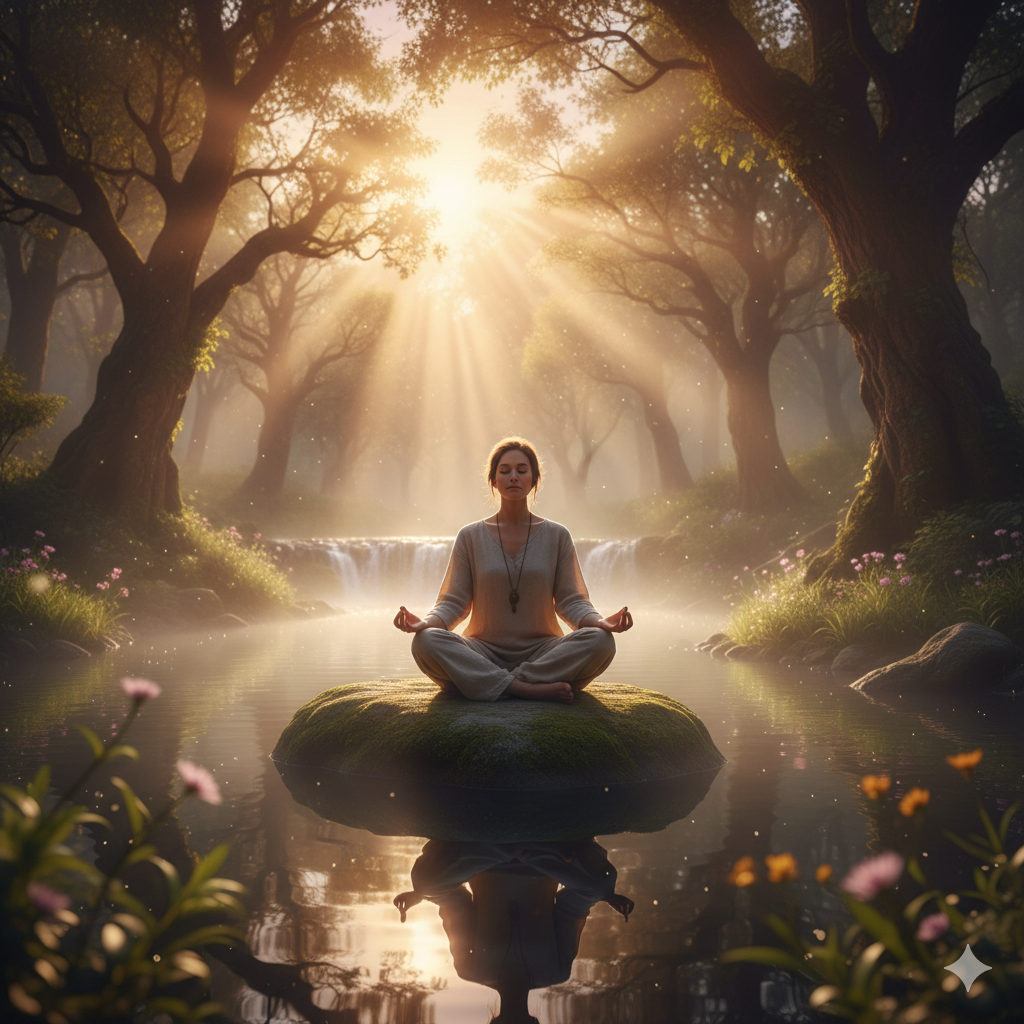
Inner peace is not the absence of difficulty; it is the ability to meet difficulty without being pulled into turmoil. For many people, that steadiness feels elusive—especially amid constant notifications, heavy workloads, and unresolved emotional tension. Meditation offers a practical pathway back to balance. With consistent practice, it can sharpen self-awareness, soften reactivity, and cultivate a quiet confidence that remains available even on challenging days.
What Is Inner Peace and How Can Meditation Help?
Understanding Inner Peace: Definition and Benefits
Inner peace is a stable sense of groundedness—a psychological and emotional calm that does not depend on circumstances being perfect. It is often characterized by clarity, patience, and a greater tolerance for uncertainty. Rather than suppressing emotions, inner peace allows you to experience them without being dominated by them.
The benefits are both subtle and far-reaching. People who develop greater inner calm often report improved decision-making, healthier relationships, and more consistent concentration. Many also experience reduced stress responses, better sleep quality, and increased emotional regulation. These outcomes align with widely discussed meditation benefits for mental health, including lowered perceived stress and enhanced resilience over time.
How Meditation Cultivates Lasting Inner Calm
Meditation trains attention. When attention is less scattered, the mind becomes less reactive. Instead of immediately believing every thought or being swept away by every feeling, you learn to observe internal events—thoughts, sensations, impulses—as passing phenomena.
This shift is foundational to how to find inner peace. Inner calm grows when you repeatedly return to a steady anchor, such as the breath, and practice meeting experience with curiosity rather than judgment. Over time, the nervous system begins to associate stillness with safety, and your baseline state becomes more settled. This is the essence of meditation for inner peace: not an escape from life, but a new relationship with it.
Preparing to Meditate for Inner Peace
Creating a Peaceful Meditation Space at Home
You do not need a dedicated room to meditate, but you do need a consistent cue that signals the mind to quiet down. Choose a place that feels neutral and uncluttered. If possible, reduce visual noise by clearing a small area—a chair beside a window, a corner of your bedroom, or a cushion near a bookshelf.
Support calm through simple details. Softer lighting, a comfortable temperature, and a stable seat are often more important than decorations. If sound is distracting, consider earplugs or gentle ambient noise. The goal is not to create a perfect sanctuary, but to remove unnecessary friction so you can focus on your practice.
Best Time, Posture, and Duration for Inner Peace Meditation
The best time to meditate is the time you can consistently protect. Morning practice often works well because it sets a tone before the day’s demands accumulate. Evening practice can be equally effective if you need to decompress and transition into rest. If your schedule is unpredictable, anchor your practice to a reliable habit—after brushing your teeth, before lunch, or immediately after returning home.
Posture should communicate wakeful ease. Sit upright on a chair with both feet grounded, or on a cushion with hips slightly elevated so the spine can lengthen naturally. Relax the shoulders, soften the jaw, and keep the hands resting comfortably. You may close your eyes or keep them slightly open with a lowered gaze.
For beginner meditation for calm, aim for 5–10 minutes daily. As your capacity strengthens, extend to 15–20 minutes. Consistency matters more than intensity; a modest daily session typically yields better results than occasional long practices.
Step-by-Step Guide: How to Meditate for Inner Peace
Simple Breathing Meditation for Inner Peace (Beginner-Friendly)
This breathing meditation for peace is designed to be accessible, structured, and effective. Use it whenever you want to settle the mind and reconnect with the present moment.
- Settle your body. Sit comfortably with an upright spine. Allow the shoulders to drop. Rest your hands on your thighs or in your lap.
- Choose a gentle focus point. Bring attention to the natural breath—at the nostrils, the chest, or the rise and fall of the abdomen.
- Breathe normally. Do not force slow breathing. Let the breath find its own rhythm and simply observe.
- Use a quiet mental label (optional). Silently note “in” on the inhale and “out” on the exhale. This can reduce drifting and keep attention steady.
- Work skillfully with distraction. When thoughts arise—planning, remembering, judging—acknowledge them briefly, then return to the breath without self-criticism.
- Close with intention. After your set time, take one deeper breath. Notice how your body feels. Open your eyes slowly and transition into your day with deliberate attention.
If you are learning how to meditate for inner peace, this technique is often the most reliable starting point because it trains attention and emotional steadiness at the same time.
Guided Visualization and Mantra Meditation for Deep Calm
Once basic breath awareness feels familiar, you may benefit from inner peace meditation techniques that engage the imagination or language centers of the mind. These practices can be especially helpful when anxiety is high or when the mind needs a more vivid anchor.
Guided visualization for inner calm:
- Sit comfortably and take three unhurried breaths.
- Imagine a place that evokes safety and ease—a quiet shoreline, a sunlit forest path, or a peaceful room.
- Engage your senses: notice textures, colors, temperature, and sounds.
- With each exhale, visualize releasing tension from the body—forehead, throat, chest, abdomen, and hands.
- If the mind wanders, gently return to one sensory detail (the sound of waves, the feeling of warm light).
Mantra meditation for deep calm:
- Choose a short phrase that feels stabilizing, such as “I am here,” “Let go,” or “Quiet strength.”
- Repeat the mantra softly in the mind in rhythm with the breath.
- When distractions arise, return to the mantra as you would return to the breath—patiently and without frustration.
Both approaches can function as guided meditation for inner calm even when practiced alone, because the structure guides attention toward steadiness. Over time, you may alternate techniques based on what your nervous system needs that day.
Overcoming Common Meditation Challenges
Dealing With Racing Thoughts, Restlessness, and Distraction
Racing thoughts do not mean meditation is failing; they often indicate you are finally noticing what was already happening. The skill is not to eliminate thought, but to change your relationship to it. When the mind accelerates, label the experience plainly—“thinking,” “worrying,” or “planning”—then return to your anchor.
For restlessness, adjust rather than endure. Check whether you are hungry, overstimulated, or sleep-deprived. Then refine your practice: shorten the session, open your eyes, or shift to a more active anchor such as counting breaths (inhale one, exhale one, up to ten, then restart). If distraction is external, use it as training: notice the sound, release the story about it, and return to the breath.
Most importantly, avoid harsh self-evaluation. Inner peace develops through repetition and repair—the repeated return to presence. That return is the practice.
Building a Consistent Meditation Routine for Inner Peace
Consistency is not a personality trait; it is a design choice. Begin by setting a minimum commitment that feels almost too easy—five minutes a day. Protect that time as you would protect a short meeting. This simple structure supports a sustainable daily meditation routine without triggering resistance.
Use practical cues and rewards. Meditate at the same time and place whenever possible, and keep your cushion or chair visible. Track sessions briefly—on a calendar or in a notes app—to create momentum. If you miss a day, resume the next day without negotiation; the goal is continuity, not perfection.
As the habit stabilizes, deepen it gradually. Extend the duration by a few minutes, incorporate occasional longer sessions, or explore guided recordings. The real measure of progress is not constant calm; it is increased capacity to return to calm.
Conclusion
Learning how to meditate for inner peace is a disciplined yet compassionate process. It begins with a simple choice: to pause, to breathe, and to observe your experience with greater honesty. Whether you practice through breath awareness, visualization, or mantra, meditation strengthens the ability to remain centered when life becomes loud.
Start modestly, practice consistently, and treat every return to the present as a success. Over time, meditation for inner peace becomes less of an activity and more of a way of meeting life—with clarity, stability, and quiet strength.