
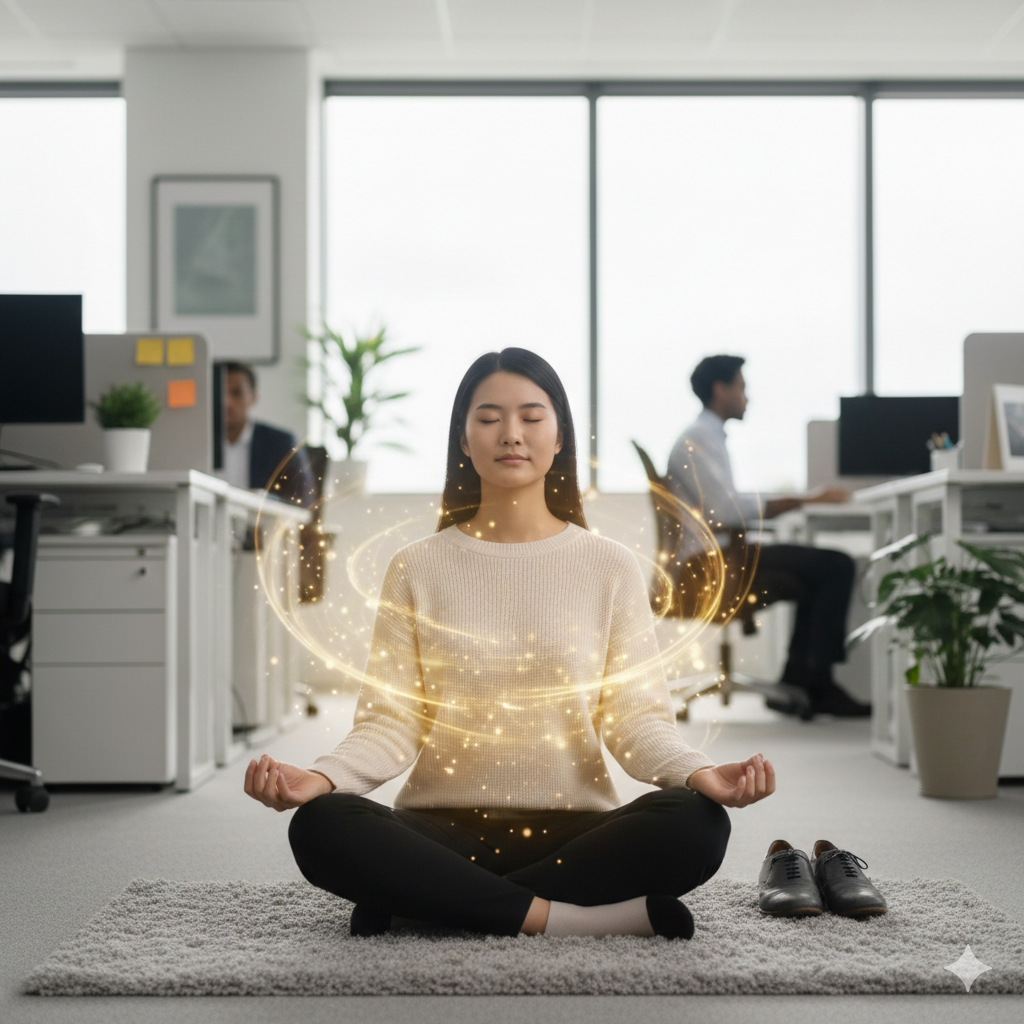
Training plans often emphasize sets, reps, mileage, and macros. Yet the quality of your attention—how you breathe, focus, and recover—can be just as decisive as the numbers on your program. Integrating meditation and fitness is not a soft add-on; it is a practical method for improving consistency, managing stress, and sharpening execution under fatigue. When you learn how to combine meditation and fitness, you build a routine that strengthens both performance and resilience.
Understanding the Power of Meditation in Fitness
What Is Meditation and Why It Belongs in Your Workout Plan
Meditation is a structured practice of training attention and awareness. Depending on the style, you may focus on the breath, body sensations, a phrase, or the present moment without judgment. In a fitness context, meditation for exercise functions like a mental warm-up and a recovery tool: it helps you notice tension, regulate arousal, and make deliberate choices rather than reacting to discomfort or distraction.
This is also where mindfulness in workouts becomes tangible. Instead of “pushing through” on autopilot, you learn to observe effort with clarity: the difference between productive intensity and compensatory strain, the moment your form deteriorates, or when anxiety hijacks pacing. For many people, fitness routine meditation improves adherence because training feels less like a battle and more like a skillful practice.
Key Mental and Physical Benefits of Combining Meditation and Exercise
The mental benefits of exercise are well established—improved mood, stress relief, and greater cognitive flexibility. Meditation can amplify these effects by creating a deliberate bridge between training stimulus and nervous system recovery. In practical terms, this combination can support:
- Sharper focus and execution: Better concentration during complex lifts, intervals, or technical drills, particularly when fatigue increases.
- Stress regulation: Improved ability to downshift after hard sessions, reducing the likelihood of carrying training stress into sleep and daily life.
- More accurate effort management: Stronger interoception (awareness of internal signals) can improve pacing and reduce impulsive overreaching.
- Enhanced recovery behaviors: A calmer post-session state supports hydration, mobility work, and sleep hygiene—often the true drivers of progress.
- Greater emotional resilience: Meditation for athletes is frequently used to handle pre-competition nerves, frustration, and the inevitable plateaus of long-term training.
Although meditation is not a substitute for a well-designed program, it can improve how you show up to the program—day after day, session after session.

Getting Started: Preparing to Add Meditation to Your Fitness Routine
How to Choose the Right Type of Meditation for Your Fitness Goals
The best meditation style is the one you will practice consistently and that matches your training demands. Consider the following options:
- Breath-focused meditation: Ideal for beginners and highly effective for controlling arousal. Useful if you want to improve composure before heavy lifts or hard intervals.
- Body scan: Excellent for recovery and for identifying tension patterns that affect movement quality. A strong option for strength athletes and runners with recurring tightness.
- Open-monitoring mindfulness: Training awareness of thoughts and sensations without attachment. Useful for endurance athletes who need steady attention over long efforts.
- Loving-kindness (metta): Often overlooked in fitness, but valuable for reducing harsh self-talk, improving motivation, and fostering patience during rehabilitation or slow progress.
- Visualization: Common in meditation for athletes. Effective for rehearsing technique, improving confidence, and refining pacing strategies when used with realism and detail.
If your goal is performance, choose a method that helps you regulate intensity and maintain technique. If your goal is longevity and well-being, prioritize downregulation practices that support recovery and sleep.
Best Times to Meditate: Before, During, or After Your Workout?
Timing matters because meditation can either energize or calm you depending on how you practice. Rather than looking for a single “perfect” time, match the approach to the role it plays in your session.
- Before training: Best for priming focus, setting intent, and reducing scattered attention. A brief practice is often enough and can be framed as how to meditate before workout without losing intensity.
- During training: Helpful when it’s woven into movement—such as mindful breathing during cardio or deliberate attention to bracing during strength work. This is mindfulness in workouts in its most practical form.
- After training: Ideal for recovery, emotional decompression, and transitioning out of “performance mode.” Post workout meditation can also reduce rumination and support better sleep.
If you are new to meditation, begin with short sessions after your workout. Once it becomes familiar, add a concise pre-session practice on days that require precision or high effort.
Practical Ways to Incorporate Meditation into Different Workouts
Simple Pre‑Workout and Post‑Workout Meditation Practices
Effective meditation around training does not require long sessions. The goal is consistency and relevance to the moment.
Pre-workout: 2–4 minutes of breath and intention
- Sit or stand comfortably, shoulders relaxed.
- Inhale through the nose for a count of four; exhale for a count of six. Repeat 6–10 cycles.
- On each exhale, soften the jaw, neck, and hands—common areas of unnecessary tension.
- Set one clear intention: “controlled tempo,” “steady pacing,” or “clean technique under fatigue.”
This approach answers how to meditate before workout in a way that supports performance rather than dampening readiness.
Post-workout: 5 minutes of downshift and body scan
- Lie down or sit with the spine supported.
- Breathe naturally and track the sensation of the breath at the nostrils or abdomen.
- Scan from feet to head, noticing areas of strain without trying to “fix” them.
- Finish with three longer exhales, letting your heart rate settle.
As a post workout meditation, this practice improves recovery quality by signaling safety to the nervous system and reducing the temptation to immediately rush into the next task.
Meditation Techniques for Cardio, Strength Training, and Yoga Sessions
Cardio: rhythm, breath, and nonjudgmental pacing
During steady-state cardio, use a simple anchor: the cadence of your steps, the sound of your breathing, or a repeated phrase such as “smooth and steady.” When discomfort rises, label it precisely—“heat,” “tightness,” “effort”—instead of globalizing it as “I can’t.” This subtle shift keeps attention clear and prevents the emotional amplification that often sabotages pacing.
For intervals, try a two-part approach: before the work bout, take one deliberate inhale-exhale and focus on the first 20 seconds only. During the recovery, relax the shoulders and lengthen the exhale. This style of meditation for exercise trains rapid transitions between intensity and calm—an underrated skill for endurance improvement.
Strength training: mindful bracing and set-by-set resets
Strength work rewards precision. Between sets, take 30–45 seconds to practice a micro-meditation: feel both feet on the floor, notice breath depth, and release unnecessary facial tension. Then mentally rehearse the next set with one technical cue—“ribcage down,” “drive through midfoot,” or “lock lats.”
During the lift, keep attention narrow. Choose one sensory marker such as the pressure of the bar in the hands or the tension around the torso. This is mindfulness in workouts applied to technique. It minimizes performance noise and supports consistent execution, particularly under heavy loads.
Yoga: deepen the meditative aspect without drifting
Yoga naturally blends movement and awareness, but it can still become mechanical. Treat transitions as part of the practice, not dead time. Use the exhale to soften into positions, and observe subtle compensations—gripping in the toes, holding the breath, collapsing through the shoulders. If your mind wanders, return to a single anchor: breath sound, sensation in the abdomen, or the contact points with the mat.
For a more explicit meditation finish, add two minutes of seated breathing after savasana. This reinforces the habit of ending sessions with intentional stillness rather than immediately switching contexts.
Tips, Tools, and Habit‑Building Strategies for Long‑Term Success
Overcoming Common Challenges When Meditating Around Workouts
Most obstacles are not philosophical; they are logistical and psychological. Address them directly:
- “I do not have time.” Use minimum-effective doses. Two minutes after training is enough to build continuity. Consistency matters more than duration.
- “Meditation makes me sleepy.” Reserve longer downregulating practices for after training or evenings. Before workouts, use shorter, upright breathing practices with slightly brisker inhales.
- “My mind is too busy.” A busy mind is the normal starting point, not a failure. Aim to notice distractions sooner and return to an anchor more often—that is the training effect.
- “I forget to do it.” Attach meditation to an existing cue: tying your shoes, filling your water bottle, or the first stretch after training. Habit stacking is more reliable than motivation.
- “I’m not sure it helps.” Evaluate with performance-relevant signals: steadier pacing, fewer form breakdowns, better sleep after hard sessions, and reduced pre-session anxiety.
If your training is already demanding, keep meditation simple. The goal is to support your program, not create another task that competes with recovery.
Apps, Tools, and Tracking Methods to Maintain a Consistent Practice
Tools should reduce friction and make progress visible. Choose only what you will actually use.
- Meditation apps: Use guided sessions for consistency, especially in the first month. Select short options (2–10 minutes) designed for focus, recovery, or sleep.
- Timers and breath pacing: A simple interval timer can cue inhale/exhale counts. This is helpful when you want structured regulation rather than open-ended sitting.
- Wearables: Heart rate and HRV trends can provide feedback on recovery behaviors. Avoid obsessing over daily fluctuations; look for patterns across weeks.
- Training log integration: Add one line to your workout notes: “Meditation: 3 min pre” or “5 min post.” Over time, correlate it with perceived exertion, mood, and sleep quality.
- Checklists: A simple habit tracker works well for fitness routine meditation because it turns an abstract practice into a concrete streak.
When you treat meditation as part of training hygiene—like warming up or mobility—it becomes easier to sustain and easier to justify.
Conclusion
Incorporating meditation into your fitness routine is less about transforming your personality and more about refining your attention. A brief pre-session practice can stabilize focus and reduce mental noise. Mindfulness in workouts can improve technique and pacing. Post workout meditation can accelerate the transition into recovery and support better sleep. Start small, match the method to the session, and track what changes in your performance and well-being. Over time, meditation and fitness become a unified practice—one that strengthens the body while training the mind to meet effort with clarity and composure.

Slither Arcade
Features
- Classic Gameplay: Grow your snake by eating apples while avoiding self-collision.
- Dynamic Difficulty: The game speed increases as you eat more food.
- Juicy Polish: Screen shakes on eating, pulsing food animations, and high-score tracking.
- Responsive Controls: Use Arrow keys, WASD, or swipe on touch devices/mouse.
- Visuals: Custom-generated stylized assets and a minimalist neon background.
How to play:
- Controls: Use Arrow Keys or WASD to change direction. On mobile, Swipe in the direction you want to turn.
- Objective: Eat the glowing red apples to grow and increase your score. The game ends if you collide with your own tail.
The snake wraps around the screen edges, allowing for strategic maneuvers! Enjoy your game.Controls Reminder: The golden apple slows time for 5 seconds