
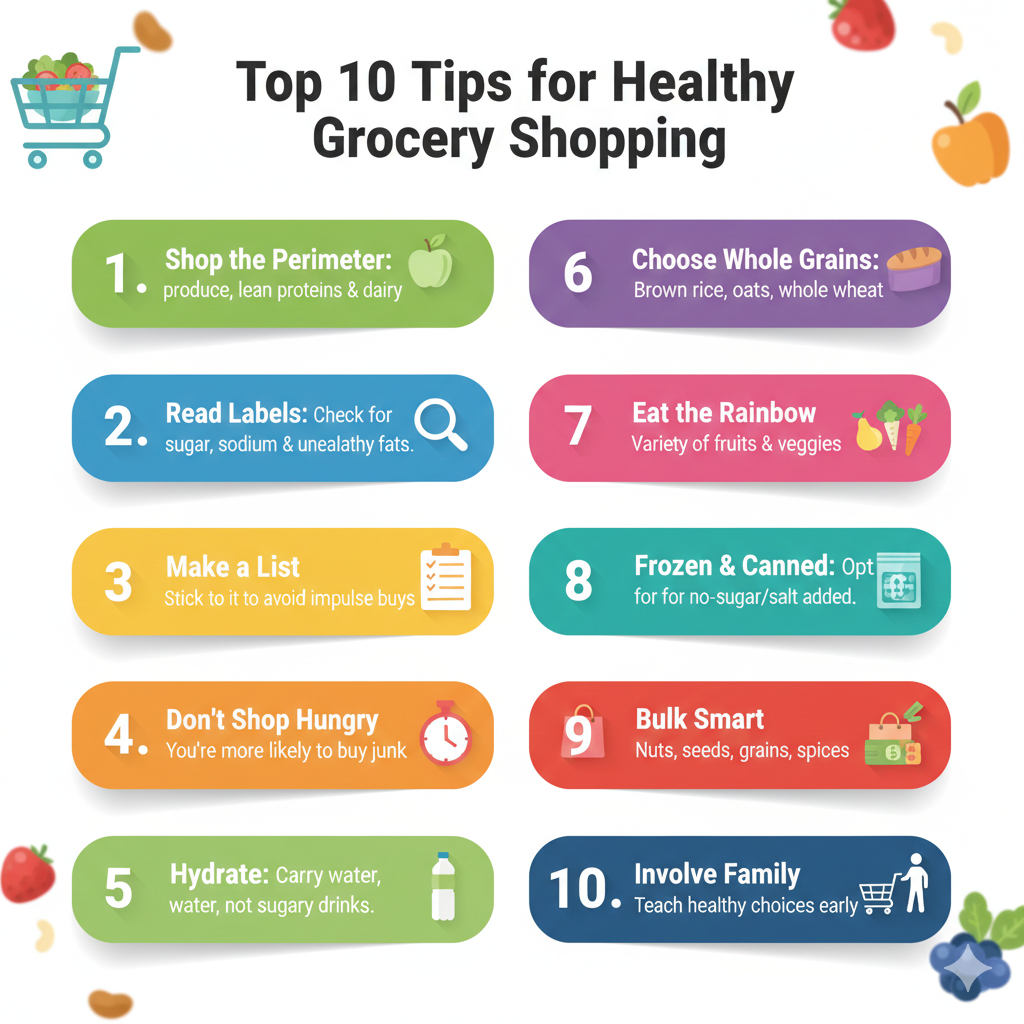
Healthy grocery shopping is not a matter of willpower alone; it is a system. The decisions you make before entering the store—what you plan, what you prioritize, and how you evaluate products—determine what ends up in your pantry and, ultimately, on your plate. With a practical strategy, you can build a healthy grocery list that supports your goals, protects your budget, and reduces the daily friction of deciding what to eat.
Below are ten actionable grocery shopping tips designed to help you choose nutritious foods consistently, read labels with confidence, and avoid the common traps that derail even the most motivated shoppers.
Smart Strategies for Healthy Grocery Shopping
https://www.teepublic.com/t-shirt/50453003-hedgehog?store_id=2851997
Understanding Your Health and Nutrition Goals
Tip 1: Shop with a clear nutritional “north star.” Before you reach for a cart, define the outcomes you are shopping for. Are you aiming to stabilize blood sugar, increase protein intake, improve heart health, manage weight, or support athletic performance? A simple goal such as “build meals around lean protein, high-fiber carbohydrates, and unsaturated fats” makes decisions faster and more coherent. This is the foundation of effective healthy supermarket shopping—you are not merely buying food; you are provisioning a plan.
Tip 2: Commit to a balanced plate framework. If you want a repeatable approach, use a composition rule for most meals: half non-starchy vegetables, a quarter protein, and a quarter high-fiber carbohydrates, plus a modest portion of healthy fats. This framework translates seamlessly into a clean eating grocery guide: vegetables, beans, whole grains, fish, poultry, eggs, plain dairy, nuts, seeds, and fruit become your default choices, while highly processed items become occasional additions rather than staples.
Identifying Your Dietary Needs and Restrictions
Tip 3: Treat restrictions as a planning tool, not a limitation. Allergies, intolerances, medical considerations, and ethical preferences should inform your shopping categories. If you are gluten-free, prioritize naturally gluten-free staples (rice, potatoes, oats labeled gluten-free, beans, lentils) rather than relying on specialty replacements for every item. If you are managing sodium, focus on minimally processed foods and keep low-sodium broths, no-salt-added canned goods, and herb-forward seasonings on hand. Clarity here reduces label fatigue and helps you keep meals satisfying.
https://www.teepublic.com/t-shirt/50508294-zen?store_id=2851997
Planning Ahead for a Healthy Grocery Trip
How to Create a Balanced, Healthy Grocery List
Tip 4: Build your list around meals, then fill in supportive staples. A strong healthy grocery list starts with 3–5 core meals you can rotate—two dinner options, one lunch template, one breakfast default, and one flexible snack strategy. Once those are defined, add ingredients that make execution easy: frozen vegetables for speed, canned beans for convenience, plain yogurt for versatility, and herbs or citrus to brighten flavors without excess salt or sugar. Shopping this way prevents random purchases that do not combine into real meals.
Tip 5: Adopt a “protein-first” planning habit. Protein anchors satiety and simplifies menu design. Choose 2–3 primary proteins for the week (for example: eggs, chicken, tofu, fish, lentils, Greek yogurt). Then add vegetables, grains, and sauces that pair well. This single decision reduces midweek takeout and supports better portion control without rigid dieting.
Budget-Friendly Tips for Healthy Grocery Shopping
Tip 6: Use price-smart staples to create budget-friendly healthy foods. Nutritious shopping does not require premium labels. Base your cart on economical, nutrient-dense options: beans, lentils, eggs, canned fish, seasonal produce, frozen fruit and vegetables, oats, brown rice, and plain yogurt. Store brands are often comparable in quality, especially for frozen produce, canned tomatoes, and whole grains. When possible, buy larger formats of staples you use weekly and portion them at home.
Tip 7: Plan for low-waste cooking to protect your budget. Waste is an invisible expense. Choose ingredients that can be used in multiple meals—spinach that works in salads and omelets, roasted vegetables that become grain bowls, or chicken that turns into soup. If you struggle to use fresh produce in time, shift part of your produce budget to frozen options, which are often picked at peak ripeness and can be just as nutritious.
Reading Labels and Choosing Nutritious Foods
How to Read Nutrition Labels for Better Choices
Tip 8: Learn how to read nutrition labels by focusing on what matters most. Marketing language on the front of a package is designed to sell; the nutrition panel is designed to inform. Start with the serving size, then scan these high-impact metrics:
- Added sugars: Aim lower, especially for foods you eat often (cereals, yogurt, sauces, drinks). Many “healthy” products hide significant added sugar.
- Sodium: Packaged foods can push sodium intake quickly. Compare similar items and choose the lower-sodium option when practical.
- Fiber: Higher fiber generally indicates a more filling, less refined product. Whole grains, beans, and minimally processed foods typically win here.
- Protein: Especially useful for snacks and breakfast items; it helps with satiety and meal structure.
- Ingredients list: Fewer is not always better, but clarity is. Look for recognizable ingredients and watch for multiple forms of sugar appearing throughout the list.
This method makes choosing nutritious foods more consistent and less emotional, even when options are overwhelming.
Healthy Substitutions for Everyday Grocery Items
Tip 9: Use strategic healthy food swaps that preserve satisfaction. Sustainable change rarely comes from removing everything enjoyable. Instead, replace common items with alternatives that improve nutrient density while keeping taste and convenience intact:
- Refined grains → whole grains (brown rice, quinoa, whole-wheat pasta) or a mix of half refined/half whole grain for an easier transition.
- Sugary yogurt → plain Greek yogurt with fruit, cinnamon, or a small drizzle of honey for controlled sweetness.
- Chips → popcorn, roasted chickpeas, or nuts in measured portions for crunch with more nutritional value.
- Creamy dressings → olive oil and vinegar, tahini-lemon, or yogurt-based dressings to reduce saturated fat while keeping richness.
- Soda and sweet drinks → sparkling water with citrus, unsweetened iced tea, or diluted juice to cut added sugars.
These substitutions act as quiet upgrades—small choices that compound over time without making eating feel punitive.
Navigating the Store for Maximum Health Benefits
Best Sections to Shop in the Grocery Store
Tip 10: Shop the perimeter with purpose, then enter the aisles selectively. Most stores place whole foods—produce, proteins, dairy, and often frozen staples—around the perimeter. This is not a perfect rule, but it is a useful baseline for healthy grocery shopping. Start with vegetables and fruit, move to proteins, choose minimally processed dairy or dairy alternatives, and then head into aisles only for targeted items such as beans, whole grains, canned fish, spices, and healthy oils. The goal is not to avoid aisles, but to avoid wandering.
Avoiding Unhealthy Impulse Buys and Marketing Traps
Impulse buys are rarely accidental; they are engineered. End-cap displays, checkout snacks, “limited-time” signage, and price promotions are designed to move ultra-processed items quickly. To protect your decisions, adopt a few disciplined habits: shop after a meal, keep your list visible, and set a rule that unplanned items must meet a clear standard (for example, “adds protein or fiber,” or “supports a planned meal”). If you enjoy treats, choose them deliberately and in appropriate portions rather than letting placement dictate your cart.
How to Meditate for a Positive Mindset
The Best Outdoor Sports for Summer
Top 5 Exercises for Heart Health
Conclusion
The most effective grocery shopping tips are the ones that reduce complexity. Define your nutrition goals, plan meals that fit your week, and write a list that reflects how you actually cook. Learn how to read nutrition labels so you can see past persuasive packaging, and rely on budget-friendly healthy foods that deliver consistent value. With these strategies, healthy supermarket shopping becomes less of a test and more of a routine—one that steadily improves what you eat, how you feel, and how confidently you stock your kitchen.
Celestial Stackmaster
Core Loop: Vertical block stacking with slicing physics.
Precision Rewards: “Perfect” drops snap into place with a glow effect.
Dynamic Difficulty: Block speed increases as you climb higher.
Atmospheric Visuals: A cosmic “Zenith” background with color-shifting fog that evolves with your score.
Responsive Controls: Fully playable on desktop (click) and mobile (tap).
Camera System: Dynamic camera that tracks your progress toward the stars.
How to Play
Objective: Stack blocks as high as possible without missing the tower.
Controls: Click or Tap anywhere to drop the moving block onto the stack.
Pro Tip: Align the block perfectly with the one below to keep its full size; otherwise, the overhanging part will be sliced off!