
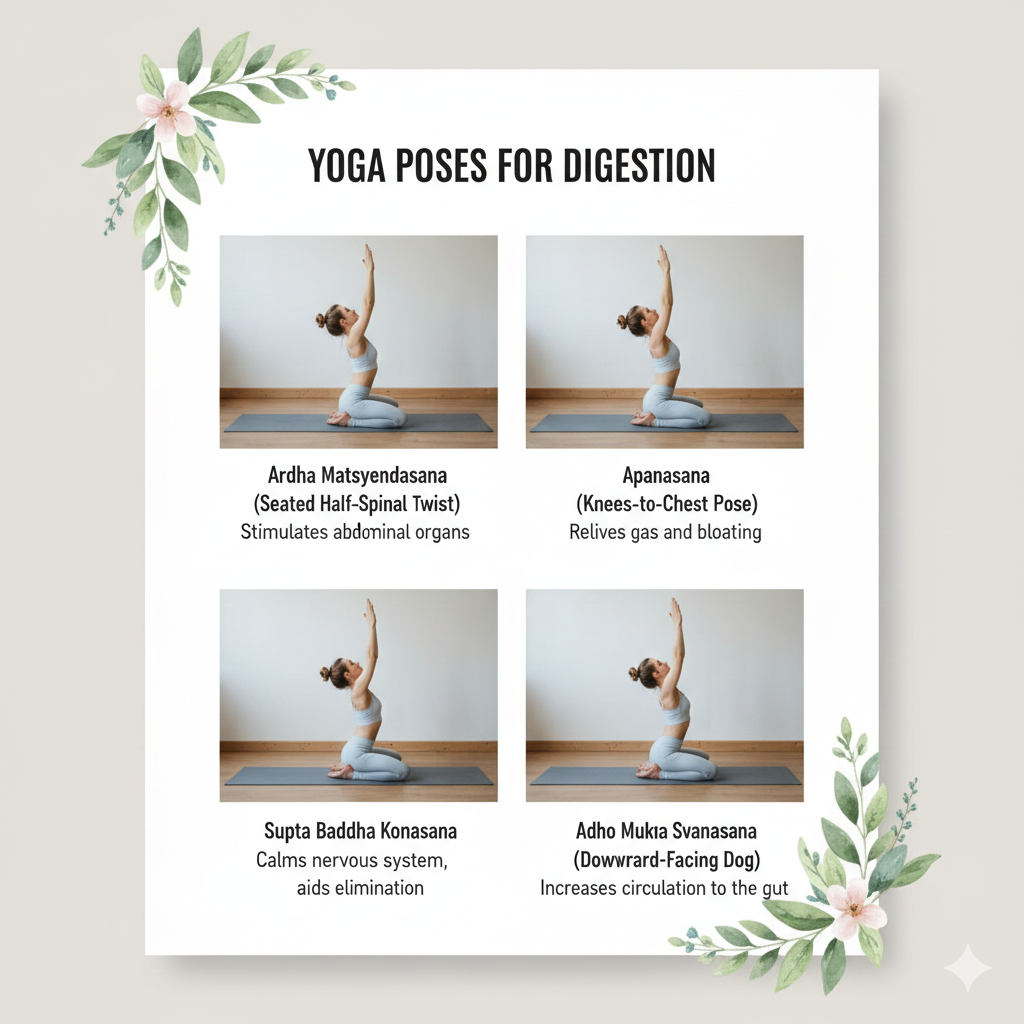
Poor digestion has a way of affecting everything—energy levels, mood, sleep quality, and even the willingness to eat. While nutrition, hydration, and stress management are foundational, yoga offers a uniquely practical tool: it combines gentle movement, targeted abdominal compression, and breath regulation to support the body’s natural digestive rhythm. The right postures can encourage motility, reduce tension in the belly, and provide natural relief from bloating, gas, and sluggish elimination. In this guide, you will learn the best yoga poses for digestion, including post-meal options, an energizing morning sequence, and safe practice principles for long-term gut health.
What Causes Poor Digestion and How Yoga Helps
Digestive discomfort rarely has a single cause. Modern routines often include prolonged sitting, hurried meals, irregular sleep, and chronic stress—each of which can disrupt the gut’s capacity to break down food efficiently. When the nervous system is locked in a “fight-or-flight” state, blood flow and energy are redirected away from digestion. Over time, this can translate into slower transit time, altered appetite signals, and increased sensitivity to gas and cramping. Yoga, especially when paired with slow breathing, helps shift the body toward a parasympathetic state—often called “rest and digest”—creating more favorable conditions for gastrointestinal function.
https://www.teepublic.com/t-shirt/50453002-penguin?store_id=2851997
Common Digestive Issues Yoga Can Ease
Yoga is not a replacement for medical care, but it can be a valuable adjunct for many everyday complaints. People often seek yoga for digestion when they experience:
- Bloating and gas: commonly linked to swallowing air, food intolerances, stress, or sluggish motility.
- Constipation: frequently influenced by inactivity, dehydration, low fiber intake, and pelvic-floor or abdominal tension.
- Post-meal heaviness: a sense of fullness that lingers, especially after large or late meals.
- Stress-related digestive upset: when anxiety amplifies gut sensitivity and discomfort.
In these contexts, gentle yoga for gut health can reduce muscular guarding around the abdomen, promote diaphragmatic breathing, and encourage movement through the intestines.
How Yoga Poses Support Gut Health and Bowel Movement
Different categories of poses work through complementary mechanisms. Twists create mild compression and release through the abdominal cavity, which can stimulate peristalsis—the wave-like contractions that move contents through the gut. Forward folds can soothe the nervous system and soften tension in the belly and hips. Supine and restorative shapes support circulation and relaxation, which is especially relevant when stress contributes to symptoms.
Additionally, breath-led movement improves coordination between the diaphragm and abdominal wall. This matters because shallow breathing can increase upper abdominal tension and perpetuate discomfort. When practiced consistently, a yoga routine for better digestion also counters the sedentary patterns that tend to slow intestinal transit.
Best Yoga Poses for Digestion Relief After Meals
After eating, the goal is not intensity; it is comfort and gentle stimulation. Avoid deep twists, strong core work, or inversions immediately following a heavy meal. For most people, a short sequence 20–60 minutes after eating—especially after lunch or dinner—offers the most pleasant results. If you are seeking yoga for bloating relief, emphasize slow breathing, longer holds, and positions that soften the abdominal wall.
Gentle Seated and Supine Poses to Soothe Bloating
1) Vajrasana (Thunderbolt Pose)
Kneel with the tops of the feet on the floor and sit back on the heels. Keep the spine upright and rest the hands on the thighs. This classic post-meal posture encourages calm breathing and supports digestive comfort without compressing the belly aggressively. Hold for 2–5 minutes.
2) Supta Baddha Konasana (Reclining Bound Angle Pose)
Lie on your back, bring the soles of the feet together, and allow the knees to open outward. Place one hand on the chest and one on the abdomen, and breathe slowly into the lower ribs. This pose reduces abdominal tension and can be a gentle natural remedy for digestive issues tied to stress. Hold for 2–4 minutes.
3) Apanasana (Knees-to-Chest Pose)
Lie on your back and draw the knees toward the chest, hands resting on shins. Keep the sacrum heavy and the shoulders relaxed. This position provides mild abdominal pressure that can ease gas and bloating. For more comfort, widen the knees slightly around the ribcage. Hold for 6–10 slow breaths.
4) Ananda Balasana (Happy Baby Pose)
From your back, bend the knees and hold the outer edges of the feet or shins, bringing knees toward the armpits. Maintain a long spine and relaxed jaw. The pelvic opening and gentle abdominal compression can help when you want poses for constipation that are not strenuous. Hold for 6–10 breaths.
Twists and Forward Folds to Stimulate Digestion
5) Jathara Parivartanasana (Supine Twist)
Lie on your back with arms extended in a T. Bring knees toward the chest and lower them to one side, keeping both shoulders grounded. Twists are often considered the signature yoga twists for digestion because they alternately compress and release the abdomen. Hold 6–8 breaths per side, moving slowly.
6) Ardha Matsyendrasana (Half Lord of the Fishes Pose)
Sit tall with one foot crossed outside the opposite knee and rotate gently toward the bent knee. Keep the twist upright rather than collapsing forward. After meals, limit the depth and avoid force. Hold 4–6 breaths per side to encourage circulation and motility.
7) Paschimottanasana (Seated Forward Fold)
Sit with legs extended and hinge at the hips, lengthening the spine before folding. Use a strap around the feet or bend knees to avoid strain. This forward fold can quiet the nervous system and soften the abdomen, making it helpful for stress-related digestive discomfort. Hold 6–10 breaths.
8) Balasana (Child’s Pose)
Kneel and fold forward with the torso resting on thighs or a bolster. Allow the breath to widen the back ribs and soften the belly. When bloating feels uncomfortable, Child’s Pose provides grounded support and gentle abdominal massage without effort. Hold 1–3 minutes.
Morning Yoga Poses to Boost Metabolism and Gut Health
Morning practice is an ideal time to build consistency. It also helps counter nighttime stagnation and sets a steady rhythm for appetite and elimination. A short flow can awaken the abdominal muscles, mobilize the spine, and support the “digestive fire” described in yogic traditions—without relying on intensity or fatigue.
Energizing Standing Poses for Digestive Fire
1) Tadasana with Breath (Mountain Pose)
Stand tall, feet grounded, and take 5–8 slow breaths while lengthening through the crown of the head. This simple beginning improves posture and diaphragmatic excursion, creating space for the organs before deeper movement.
2) Surya Namaskar (Sun Salutation) — Gentle Rounds
Perform 3–6 controlled rounds at a moderate pace, coordinating movement with breath. The sequence creates warmth and circulatory stimulation, which can encourage morning motility. Prioritize smooth transitions over speed, especially if you are practicing morning yoga for digestion on an empty stomach.
3) Utthita Trikonasana (Extended Triangle Pose)
Step wide, extend arms, and tilt into Triangle with a long spine. The lateral opening through the waist supports a sense of space around the abdomen, while the mild twist of the torso can gently stimulate digestive organs. Hold 4–6 breaths per side.
4) Parivrtta Trikonasana (Revolved Triangle Pose) — Light Version
Use blocks and keep the twist moderate. Revolved standing poses combine stability with rotational stimulation, which many people find helpful for sluggishness. Hold 3–5 breaths per side and avoid breath-holding.
Core-Strengthening Poses to Support Digestive Organs
Core work does not need to be aggressive to be effective. When practiced with control, it supports posture and intra-abdominal pressure management—both relevant to bowel regularity. If constipation is a concern, gentle, consistent engagement is often more beneficial than sporadic high-intensity effort.
5) Bhujangasana (Cobra Pose)
Lie prone, place hands under shoulders, and lift the chest while keeping the pelvis grounded. A mild backbend stimulates the front body and can counter the compressed posture of sitting, indirectly aiding digestive function. Hold 3–5 breaths for 2–3 rounds.
6) Setu Bandha Sarvangasana (Bridge Pose)
Lie on your back, feet hip-width apart, and lift the pelvis. Keep the ribs contained and lengthen the knees forward. Bridge supports circulation through the abdomen and pelvis and gently activates the core and glutes. Hold 5–8 breaths.
7) Navasana (Boat Pose) — Supported Option
Sit and lift shins parallel to the floor, hands behind thighs if needed. Maintain a long spine rather than collapsing. Light core activation can support abdominal tone and the mechanics of elimination. Hold 3–5 breaths, repeat 2–3 times.
8) Marjaryasana-Bitilasana (Cat–Cow)
Although not a traditional “core” pose, Cat–Cow creates rhythmic spinal flexion and extension that massages the abdominal contents and coordinates breath with movement—an excellent finishing tool in a morning sequence. Move for 6–10 slow cycles.
Safe Practice Tips and Routine for Digestive Yoga
The most effective yoga for digestion is the practice you can do regularly and safely. Digestive symptoms can fluctuate with hormones, stress, travel, and dietary changes, so a flexible routine is essential. Think in terms of gentle stimulation, breath-led pacing, and respect for timing around meals.
How to Sequence Yoga Poses for Optimal Digestion
Use this simple structure to build a yoga routine for better digestion. Adjust durations based on your energy level and symptoms.
- Arrival (2–3 minutes): Seated breathing or Tadasana with slow nasal breaths to settle the nervous system.
- Mobility (3–5 minutes): Cat–Cow, gentle side bends, or low lunges to reduce hip and abdominal tension.
- Stimulation (5–10 minutes): Choose 1–2 twists (supine or seated) and 1 forward fold. Keep intensity moderate and breath smooth.
- Soothing finish (3–6 minutes): Child’s Pose, Reclining Bound Angle, or Legs-up-the-Wall (if appropriate) to downshift stress and support rest-and-digest physiology.
For post-meal practice, keep the sequence primarily restorative—Thunderbolt, supine poses, and a mild supine twist are usually sufficient. For mornings, include 3–6 minutes of standing flow and a small amount of core engagement.
Safety Tips, Contraindications, and When to Avoid Poses
Although these poses are generally accessible, digestive discomfort can overlap with conditions that require caution. Use these guidelines to practice responsibly:
- Avoid intense practice immediately after eating: wait at least 2 hours after a large meal before deep twists, strong backbends, inversions, or vigorous flows.
- Modify twists for spinal or disc issues: keep twists upright, avoid force, and prioritize length in the spine over range of motion.
- Use caution with core work: if you have hernia, pelvic-floor dysfunction, or are recovering postpartum or post-surgery, seek individualized guidance.
- Be conservative with forward folds: hamstring tightness and lower-back sensitivity are common; bend knees and use props.
- Avoid breath retention and aggressive abdominal techniques: especially if you have high blood pressure, reflux, pregnancy, or anxiety-related symptoms.
- Seek medical evaluation for red flags: persistent or severe pain, unexplained weight loss, blood in stool, ongoing vomiting, fever, or sudden changes in bowel habits.
When in doubt, choose the gentlest option. The most effective poses for constipation and bloating are often the simplest—done slowly, with steady breathing, and repeated consistently.
Conclusion
Digestive health thrives on rhythm: regular movement, calm breathing, and a nervous system that feels safe. Yoga supports this rhythm by combining mild abdominal stimulation with stress reduction—two of the most common missing pieces in modern digestive complaints. Whether you need yoga for bloating relief after meals or a morning yoga for digestion routine to encourage daily regularity, the postures above offer a practical, equipment-light approach. Practice patiently, keep intensity appropriate to timing and symptoms, and prioritize consistency. Over time, these techniques can become a reliable, natural complement to broader lifestyle strategies for a healthier, more comfortable gut.
How to Stay Fit with Limited Equipment
How to Practice Mindful Gardening
How to Practice Mindful Listening

Celestial Stackmaster
Core Loop: Vertical block stacking with slicing physics.
Precision Rewards: “Perfect” drops snap into place with a glow effect.
Dynamic Difficulty: Block speed increases as you climb higher.
Atmospheric Visuals: A cosmic “Zenith” background with color-shifting fog that evolves with your score.
Responsive Controls: Fully playable on desktop (click) and mobile (tap).
Camera System: Dynamic camera that tracks your progress toward the stars.
How to Play
Objective: Stack blocks as high as possible without missing the tower.
Controls: Click or Tap anywhere to drop the moving block onto the stack.
Pro Tip: Align the block perfectly with the one below to keep its full size; otherwise, the overhanging part will be sliced off!