
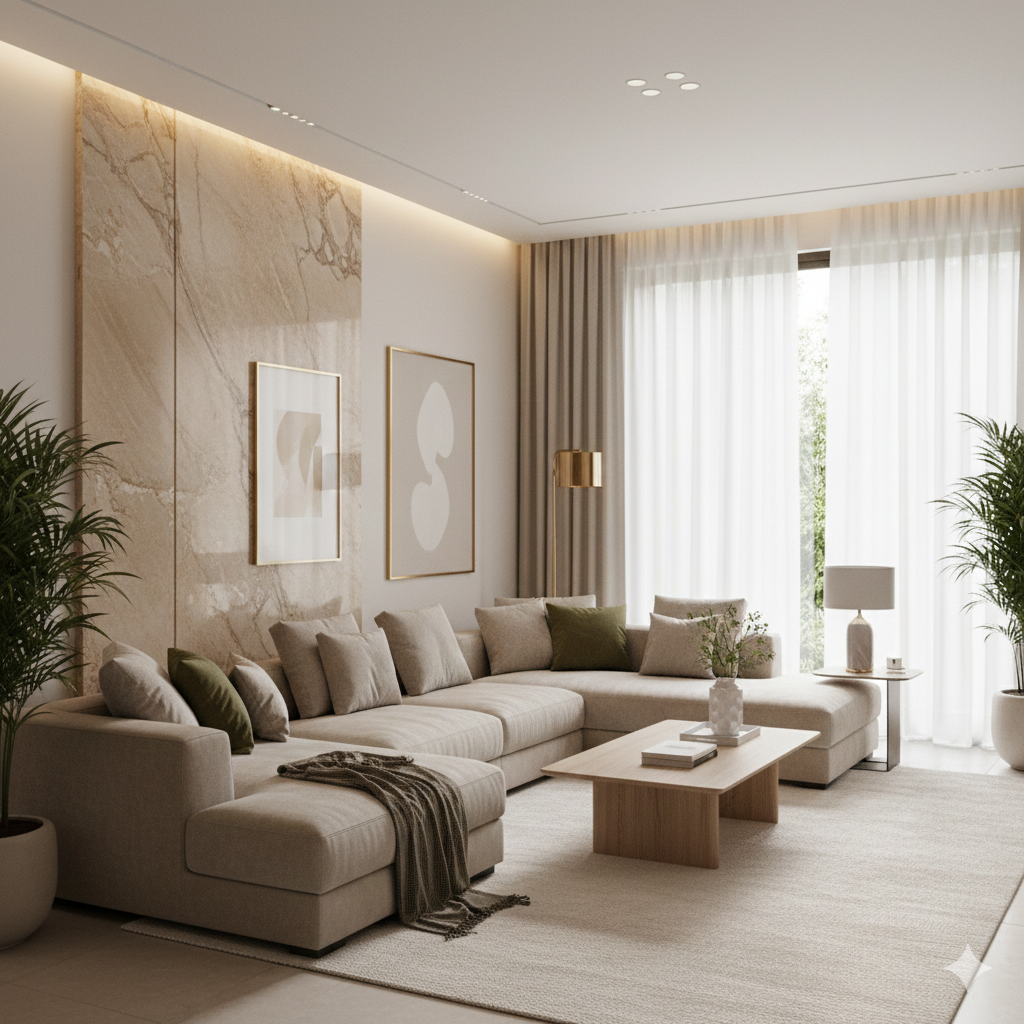
The evolution of interior design is more than a sequence of styles; it is a record of how societies have lived, worked, worshipped, and expressed identity within built environments. From the earliest interior aesthetics shaped by ritual and hierarchy to today’s responsive, wellness-oriented spaces, the history of interior design reveals a constant negotiation between function, comfort, technology, and taste. This interior design timeline is not linear. Ideas recur, materials evolve, and each era reframes what “good design” should accomplish.
The Evolution of Interior Design: Past, Present, and Future
The Roots of Interior Design: How It All Began
Ancient Civilizations and the Birth of Interior Aesthetics
Long before interior design was recognized as a discipline, ancient civilizations used interiors to signal power, cosmology, and social order. In Egypt, domestic and ceremonial spaces were composed with symmetry and symbolism. Wall paintings, carved reliefs, and carefully selected pigments transformed interior surfaces into narratives of divinity and governance. Furniture—stools, beds, and storage chests—was crafted with attention to proportion and ornament, often using precious woods and inlays that indicated status.
In Mesopotamia and Persia, interiors balanced defensible architecture with decorative richness, featuring patterned textiles, glazed tiles, and sophisticated spatial sequencing. Meanwhile, Greek and Roman homes advanced planning and comfort through courtyards, colonnades, and early environmental strategies. Romans refined interiors with mosaics, frescoes, hypocaust heating, and an understanding of circulation that separated public reception from private retreat. These early precedents established enduring principles: harmony, material expression, and the use of interior space as cultural communication.
https://www.teepublic.com/t-shirt/50453004-ele-and-butter?store_id=2851997
Across Asia, the interior became an instrument of philosophy. Chinese design traditions emphasized axial planning, hierarchy, and craftsmanship, while integrating screens, courtyards, and gardens to choreograph movement and sightlines. In Japan, restrained interiors shaped by timber construction, tatami proportions, and modularity expressed a disciplined minimalism centuries before the term existed. In each context, what we now call interior design emerged as a convergence of craft, climate response, and social meaning.
From Medieval Halls to Renaissance Palaces: Function Meets Art
The medieval interior was largely dictated by practicality, security, and communal life. Great halls in castles and manor houses concentrated daily activities—eating, governance, celebration—into a single, expansive volume. Interiors were insulated with tapestries and textiles that provided warmth while also functioning as movable décor. Ornament existed, but it often served heraldic or religious purposes, reinforcing lineage and doctrine.
As Europe entered the Renaissance, interiors shifted from fortified austerity to cultivated display. The rise of humanism elevated art and learning, and domestic spaces began to reflect intellectual ambition as well as wealth. Proportion, perspective, and classical motifs migrated indoors through coffered ceilings, frescoed walls, and carefully staged furniture arrangements. Palaces and townhouses became theaters of etiquette, where room sequences reinforced social ritual: antechambers for waiting, salons for conversation, and private studies for contemplation.
This period also refined the relationship between architecture and furnishing. Built-in elements, decorative woodwork, and curated collections of objects created cohesive environments rather than improvised rooms. In terms of the history of interior design, the Renaissance stands out for making aesthetics inseparable from spatial planning—an approach that would later reappear in many major interior design movements.
The Modern Era: Interior Design in the 20th Century
Art Deco, Mid-Century Modern, and the Rise of Design Movements
The 20th century compressed change at unprecedented speed, driven by industrialization, new materials, and shifting social structures. Art Nouveau’s organic lines gave way to Art Deco’s geometry and glamour, where lacquered surfaces, mirrored finishes, and stylized motifs expressed modernity with opulence. Deco interiors celebrated technological progress, yet retained a devotion to craftsmanship and theatricality—an important reminder that “modern” has never meant a single aesthetic.
How to Create a Fitness Vision Board
How to Create a Mindful Evening Routine
How to Stay Active in Small Spaces
The Best Fitness Challenges to Try
In parallel, modernism promoted clarity, function, and the honest expression of materials. The Bauhaus and related schools advanced a rational design language built on mass production, standardization, and form following purpose. Steel tubular furniture, open plans, and minimal ornament defined interiors that aspired to be universally legible. Yet modernism was not monolithic. Scandinavian design tempered austerity with warmth, introducing light woods, tactile textiles, and a human-centered scale that remains influential in modern interior design trends today.
Mid-century modern design, emerging after World War II, fused innovation with livability. Open living spaces, large glazing, and indoor-outdoor continuity reflected both technological optimism and new domestic patterns. Molded plastics, plywood experimentation, and modular storage systems brought flexibility to everyday life. These developments anchored a recognizable chapter in the interior design timeline, and their vocabulary continues to shape contemporary expectations of comfort and simplicity.
The Professionalization of Interior Design as a Career
As design became more complex, interior work evolved from decoration to a specialized profession. Early “decorators” often focused on furnishings and finishes, but the expanding scope of building systems—lighting, acoustics, ergonomics, and fire safety—demanded technical competence. Over the century, professional organizations, academic programs, and licensing frameworks emerged, formalizing standards and ethics.
This professionalization changed the nature of practice. Designers increasingly collaborated with architects, engineers, and manufacturers, balancing aesthetic intent with regulatory compliance and performance requirements. Commercial projects—hotels, offices, retail environments—further accelerated the discipline’s maturity, emphasizing brand identity, user behavior, and spatial efficiency. The modern interior designer became both strategist and curator, responsible for environments that must function, endure, and resonate.
How to Create a Sustainable Fitness Routine
The Best Outdoor Sports for Summer
Top 10 Tips for a Healthy Immune System
How to Meditate for a Positive Mindset
Interior Design Today: Trends Shaping Contemporary Spaces
Minimalism, Maximalism, and the Influence of Social Media
Contemporary interiors reflect a tension between restraint and expression. Minimalism, with its reduced palettes and emphasis on negative space, remains a dominant preference for those seeking calm and order. Its best examples are not sterile; they rely on nuanced proportions, layered textures, and deliberate lighting to create depth without clutter. In contrast, maximalism embraces abundance—pattern mixing, saturated color, collected objects, and eclectic references—transforming rooms into personal narratives.
Social media has amplified both impulses, accelerating the cycle of inspiration and imitation. Platforms have democratized access to design ideas, but they have also encouraged interiors optimized for photography rather than long-term living. This dynamic has shaped modern interior design trends: bold “statement” elements, rapidly changing palettes, and a renewed interest in vintage pieces that read as authentic on camera. The challenge for designers is to translate visual influence into spaces with lasting coherence, where style serves the realities of daily use.
https://www.teepublic.com/t-shirt/50453003-hedgehog?store_id=2851997
Another defining characteristic of the present is customization. Homeowners and brands alike expect interiors to reflect values, habits, and identity—whether through artisanal finishes, culturally specific references, or flexible layouts that support hybrid work. Today’s design culture is pluralistic, and that diversity is one of its greatest strengths.
Sustainable, Smart, and Wellness-Focused Interior Design
Sustainable interior design has moved from niche concern to central mandate. Clients increasingly evaluate interiors by lifecycle impact: responsible sourcing, durability, low-emission finishes, and circular strategies such as reuse and refurbishment. Materials tell a story now—reclaimed timber, recycled composites, natural plasters, and fabrics with transparent supply chains. Energy performance intersects with interiors as well, influencing window treatments, lighting strategies, and appliance selection.
At the same time, smart home design has expanded from novelty gadgets to integrated systems. Lighting scenes adapt to time of day, thermostats learn patterns, and security technologies become discreet architectural components. The most successful smart interiors are those where technology is quiet, interoperable, and human-centered, enhancing comfort without compromising privacy or aesthetic integrity.
Wellness-focused design further broadens the brief. Indoor air quality, acoustic comfort, circadian lighting, and ergonomic planning now shape many residential and workplace projects. Designers increasingly specify low-VOC materials, consider filtration and ventilation, and use spatial zoning to reduce stress. The result is an interior that does not merely look refined; it supports physical and psychological well-being. In this sense, the evolution of interior design has become a story about health as much as beauty.
The Future of Interior Design: Innovations and Emerging Concepts
Technology, AI, and Virtual Reality in Interior Design
The future of interior design will be defined by deeper integration of digital tools, particularly AI-assisted workflows and immersive visualization. AI can already accelerate early-stage planning by generating layout options, proposing material palettes, and analyzing constraints such as daylight access or circulation efficiency. Used responsibly, it can free designers to focus on higher-order decisions—concept, narrative, and the subtle choreography of experience.
Virtual reality and augmented reality are also reshaping how interiors are presented and approved. Clients can inhabit a proposed space before construction begins, reducing uncertainty and improving decision-making around scale, color, and lighting. For commercial projects, these tools can simulate user behavior, test wayfinding, and evaluate how design supports operational needs. As these technologies mature, they may become standard across the interior design timeline, much as CAD once replaced hand drafting.
However, technological sophistication will demand careful stewardship. Data security, accessibility, and ethical sourcing of digital content will matter. The designer’s role may expand into that of a mediator between human comfort and computational possibility—ensuring that innovation remains grounded in genuine utility.
Predicting Future Styles: Biophilic, Adaptive, and Inclusive Spaces
Among the most influential emerging concepts is biophilic design, which draws on the human affinity for nature to create restorative interiors. This approach extends beyond adding plants. It incorporates natural materials, fractal patterns, water elements, and spatial strategies that echo outdoor environments. Daylight becomes a design material; views are framed; textures and colors reference landscapes rather than trends. As urban density increases, biophilic principles will likely become a baseline expectation for both homes and workplaces.
Adaptability will also define future interiors. With lifestyles changing rapidly—remote work, multigenerational living, and fluctuating household needs—spaces must transform without constant renovation. Movable partitions, modular furniture, and flexible storage will support rooms that shift function across the day. This approach aligns with sustainability as well, reducing demolition and extending the useful life of interiors.
Inclusivity is poised to become a central measure of design quality. Beyond basic accessibility, inclusive interiors consider neurodiversity, sensory comfort, cultural nuance, and a wide range of body types and abilities. Lighting that avoids glare, acoustics that reduce fatigue, intuitive spatial layouts, and adjustable elements can make environments more welcoming for everyone. In the future of interior design, beauty will be inseparable from belonging.
Conclusion
The evolution of interior design reflects a continuous dialogue between society and space. Ancient interiors used symbolism and craft to express order; Renaissance rooms fused function with artistry; 20th-century design movements translated industrial progress into new forms; and today’s practice balances aesthetics with sustainability, technology, and well-being. Looking ahead, the most compelling interiors will not be defined solely by a recognizable style, but by their intelligence—how gracefully they adapt, how responsibly they are made, and how effectively they support human life. In tracing the history of interior design, one truth persists: the interior is never just a backdrop. It is a living framework for how we inhabit the world.
Slither Arcade
Features
- Classic Gameplay: Grow your snake by eating apples while avoiding self-collision.
- Dynamic Difficulty: The game speed increases as you eat more food.
- Juicy Polish: Screen shakes on eating, pulsing food animations, and high-score tracking.
- Responsive Controls: Use Arrow keys, WASD, or swipe on touch devices/mouse.
- Visuals: Custom-generated stylized assets and a minimalist neon background.
How to play:
- Controls: Use Arrow Keys or WASD to change direction. On mobile, Swipe in the direction you want to turn.
- Objective: Eat the glowing red apples to grow and increase your score. The game ends if you collide with your own tail.
The snake wraps around the screen edges, allowing for strategic maneuvers! Enjoy your game.Controls Reminder: The golden apple slows time for 5 seconds