
Budapest, the captivating capital of Hungary, is a city where history, culture, and contemporary life blend seamlessly. Divided by the Danube River into the hilly Buda and the vibrant Pest, it offers an extraordinary variety of experiences: grand architecture, thermal baths, refined gastronomy, and a distinctive Central European charm. This guide explores the essence of Budapest, from its iconic landmarks and rich past to its culinary scene and memorable activities.
Exploring the Beauty of Budapest
Iconic Landmarks to Visit
Budapest’s skyline is dominated by monumental buildings that reflect its former imperial stature. One of the city’s most emblematic sights is the Hungarian Parliament Building, a neo-Gothic masterpiece on the banks of the Danube. With its soaring spires, intricate façade, and imposing central dome, it is best appreciated from the opposite riverbank or from a river cruise at dusk, when its silhouette is illuminated against the night sky.
On the Buda side, Buda Castle crowns Castle Hill and offers a sweeping view over Pest. The castle complex, which houses the Hungarian National Gallery and the Budapest History Museum, is an excellent starting point to understand the city’s evolution. Nearby, the Matthias Church, with its colorful Zsolnay-tiled roof and elaborate interior, stands as a symbol of both religious heritage and national history. Stepping outside, the Fisherman’s Bastion provides a fairy-tale-like terrace with arcades and towers overlooking the river and Parliament.
In the heart of Pest, St. Stephen’s Basilica is another essential stop. Dedicated to Hungary’s first king, this grand basilica impresses with its majestic dome and richly decorated interior. Visitors can climb to the observation deck for 360-degree views of the city’s urban fabric. Not far away, the Andrássy Avenue, a UNESCO World Heritage site, stretches from the city center to Heroes’ Square, lined with elegant mansions, embassies, and cultural institutions, including the prestigious Hungarian State Opera House.
Heroes’ Square itself is a powerful symbol of Hungarian national identity. Its central Millennium Monument, flanked by statues of Hungarian kings and historical figures, commemorates the founding of the Hungarian state. Behind it lies City Park (Városliget), home to the picturesque Vajdahunyad Castle and the famed Szechenyi Thermal Bath, one of the largest medicinal bath complexes in Europe.
Scenic Views Along the Danube River
The Danube River is the lifeline of Budapest and the source of many of its most beautiful vistas. A walk along the Danube Promenade between the Chain Bridge and the Elisabeth Bridge reveals elegant hotels, grand buildings, and a constant interplay between the historical and the modern. On the Pest embankment, the poignant Shoes on the Danube Bank memorial honors the victims of World War II and serves as a powerful reminder of the city’s tumultuous past.
Budapest’s bridges contribute significantly to its visual charm. The Chain Bridge (Széchenyi Lánchíd), the city’s oldest permanent bridge, is a symbol of unity between Buda and Pest. At night, its lights reflect on the river, creating a mesmerizing scene. The Liberty Bridge, with its elegant green iron structure, and the Margaret Bridge, leading to the tranquil Margaret Island, further enrich the river’s aesthetic appeal.
For unbeatable views, a Danube river cruise at sunset or after dark is indispensable. The monuments on both riverbanks are illuminated, and the city’s architectural grandeur is revealed from a unique perspective. Alternatively, climbing to the Gellért Hill Citadel rewards visitors with one of Budapest’s most impressive panoramas, encompassing the Parliament, bridges, church spires, and the expanse of the Danube winding through the city.
The Rich History of Budapest
Key Historical Events
The history of Budapest is complex and layered, shaped by conquest, resilience, and cultural exchange. The area has been inhabited since Roman times, when the settlement of Aquincum served as an important frontier town of the Roman Empire. In the Middle Ages, Buda became a royal seat of the Kingdom of Hungary, enjoying periods of great prosperity, particularly during the reign of King Matthias Corvinus in the 15th century.
The Ottoman conquest in the 16th century marked a significant turning point. Buda fell to the Turks in 1541, and the city remained under Ottoman rule for more than 140 years. Many of Budapest’s thermal baths, such as Rudas and Király, trace their origins to this era, and some architectural and urban features still reveal Ottoman influences. The Habsburg Empire later reclaimed the territory, ushering in centuries of Austrian domination but also significant urban development.
The year 1873 was a milestone: the unification of Buda, Pest, and Óbuda officially created modern Budapest. This period coincided with the flourishing Austro-Hungarian Empire, bringing about extensive urban planning, grand boulevards, and monumental public buildings. However, the 20th century would subject the city to severe hardship. Both World War I and the subsequent Treaty of Trianon had profound political and demographic consequences.
During World War II, Budapest suffered heavy bombing, and the Jewish population experienced unimaginable persecution, culminating in the horrors of the Holocaust. The Siege of Budapest in 1944–45 left the city devastated. After the war, Hungary fell under Soviet influence, ushering in decades of communist rule. The 1956 Hungarian Revolution, which began as a student protest in Budapest, became a nationwide uprising demanding political reform. Although it was violently suppressed, it remains a defining moment of national pride and resistance.
The fall of communism in 1989 opened a new chapter. Budapest started to reinvent itself as a modern European capital while preserving its historical core. Since then, the city has experienced steady economic development and a growing profile as a cultural and tourism hub, attracting visitors eager to understand its past and experience its contemporary dynamism.
Architectural Styles and Influences
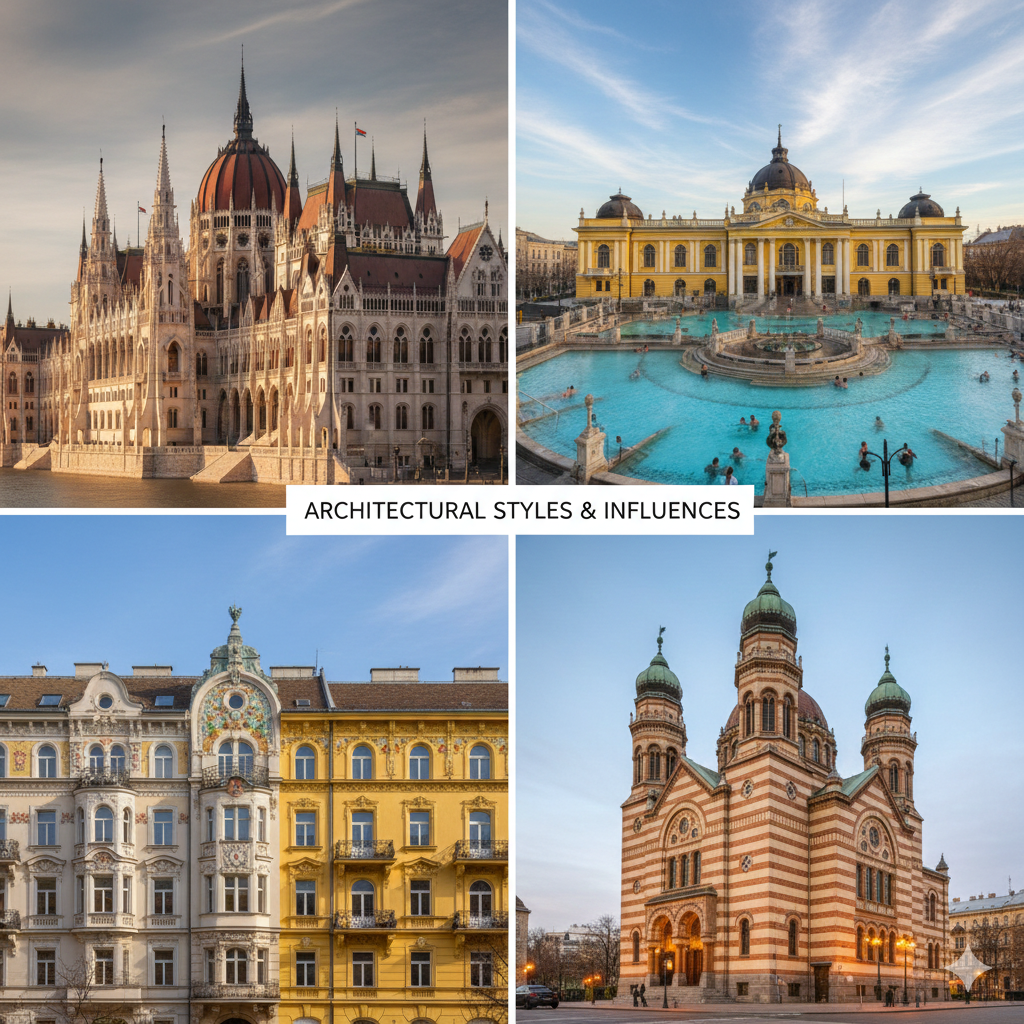
Budapest’s architectural landscape is remarkably diverse, reflecting the many epochs that have shaped the city. Roman ruins in Óbuda and Aquincum provide evidence of the earliest urban settlements. In the historic Buda Castle District, Gothic and Baroque elements can be seen side by side, as medieval structures were rebuilt and modified over the centuries.
In Pest, the predominant style is eclectic historicism from the late 19th century, combining neo-Renaissance, neo-Baroque, and neo-Gothic influences. The Hungarian Parliament Building exemplifies this eclectic approach, blending Gothic details with Renaissance and Baroque motifs. Along Andrássy Avenue, neo-Renaissance townhouses and palaces showcase the city’s late-19th-century prosperity.
Budapest also features notable Art Nouveau (Secessionist) architecture, with richly ornamented façades, organic forms, and decorative tilework. Buildings by architects such as Ödön Lechner, often referred to as the “Hungarian Gaudí,” incorporate national motifs and folk-inspired patterns, giving the city a distinctive version of Art Nouveau. The Geological Institute of Hungary and the Museum of Applied Arts are prime examples of this style.
Traces of Ottoman architecture survive in the form of domed bathhouses and remnants of mosques, particularly on the Buda side. The 20th century introduced more austere styles, including modernist and socialist realist structures, many of which still stand in contrast to the older, ornate buildings. In recent decades, contemporary architecture and adaptive reuse projects have rejuvenated former industrial sites and historic buildings, creating a dialogue between past and present throughout the cityscape.
Culinary Delights in Budapest
Traditional Dishes to Try
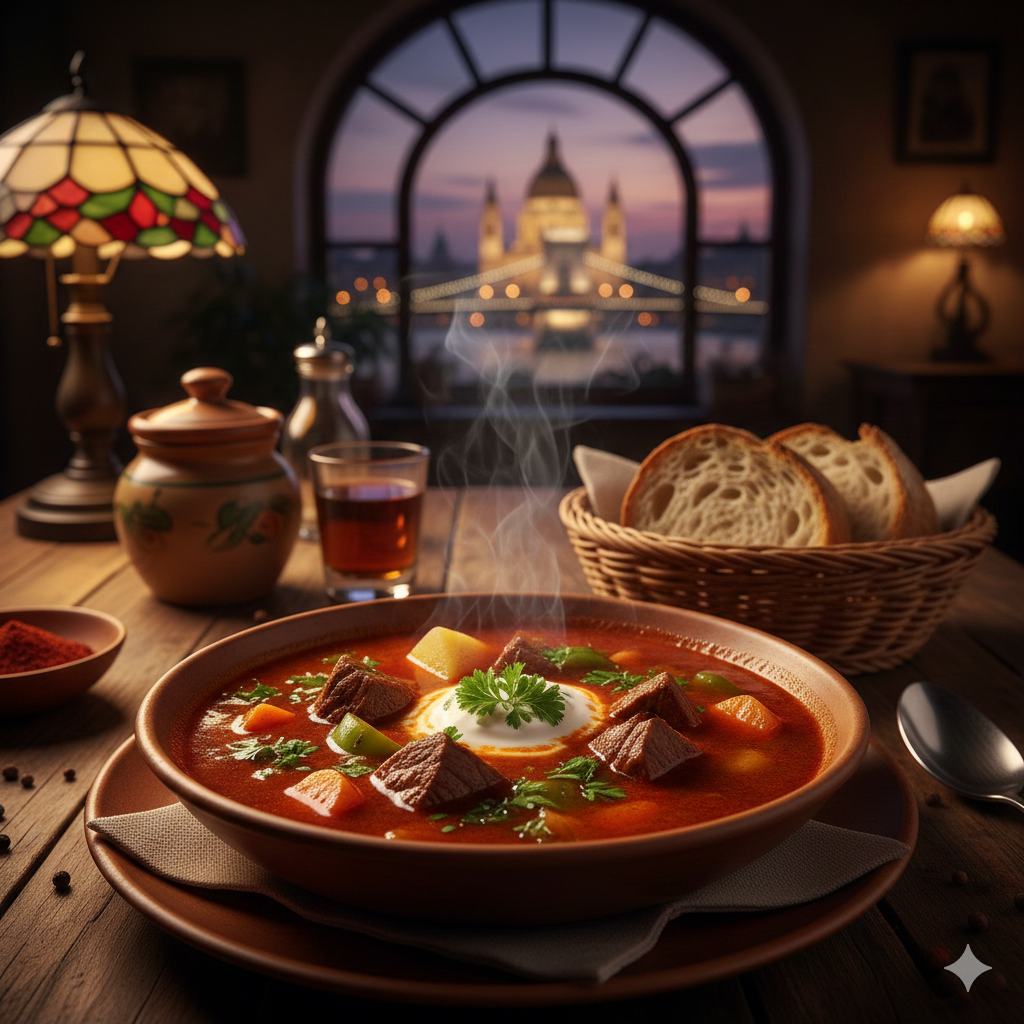
Hungarian cuisine is hearty, flavorful, and deeply rooted in local traditions. In Budapest, visitors can sample an impressive range of dishes that highlight regional ingredients and time-honored recipes. One of the most iconic is goulash (gulyás), a robust soup or stew made with beef, potatoes, vegetables, and generous amounts of paprika. Unlike the thicker stews often served abroad, authentic Hungarian goulash is typically lighter and more aromatic.
Another classic is pörkölt, a slow-cooked meat stew seasoned with onion and paprika, usually served with nokedli (Hungarian dumplings). Chicken paprikash (csirkepaprikás), featuring tender chicken in a creamy paprika sauce, is also a must-try, often accompanied by dumplings or noodles.
For those interested in street food or casual dining, lángos is a quintessential Hungarian specialty. This deep-fried flatbread is typically topped with sour cream and grated cheese, though modern variations introduce toppings like ham, sausages, or even sweet ingredients. It is especially popular at markets and food stalls.
Budapest also offers a variety of soups and seasonal dishes. Halászlé, a spicy fisherman’s soup, is prepared from freshwater fish and heavily seasoned with paprika. In winter, stuffed cabbage (töltött káposzta) is a comforting staple. For dessert, the city boasts a rich confectionery tradition: Dobos torte with its caramelized top, Eszterházy cake layered with walnut cream, and the warm, cinnamon-sugar coated kürtőskalács (chimney cake), often baked over open coals.
Best Restaurants and Cafés
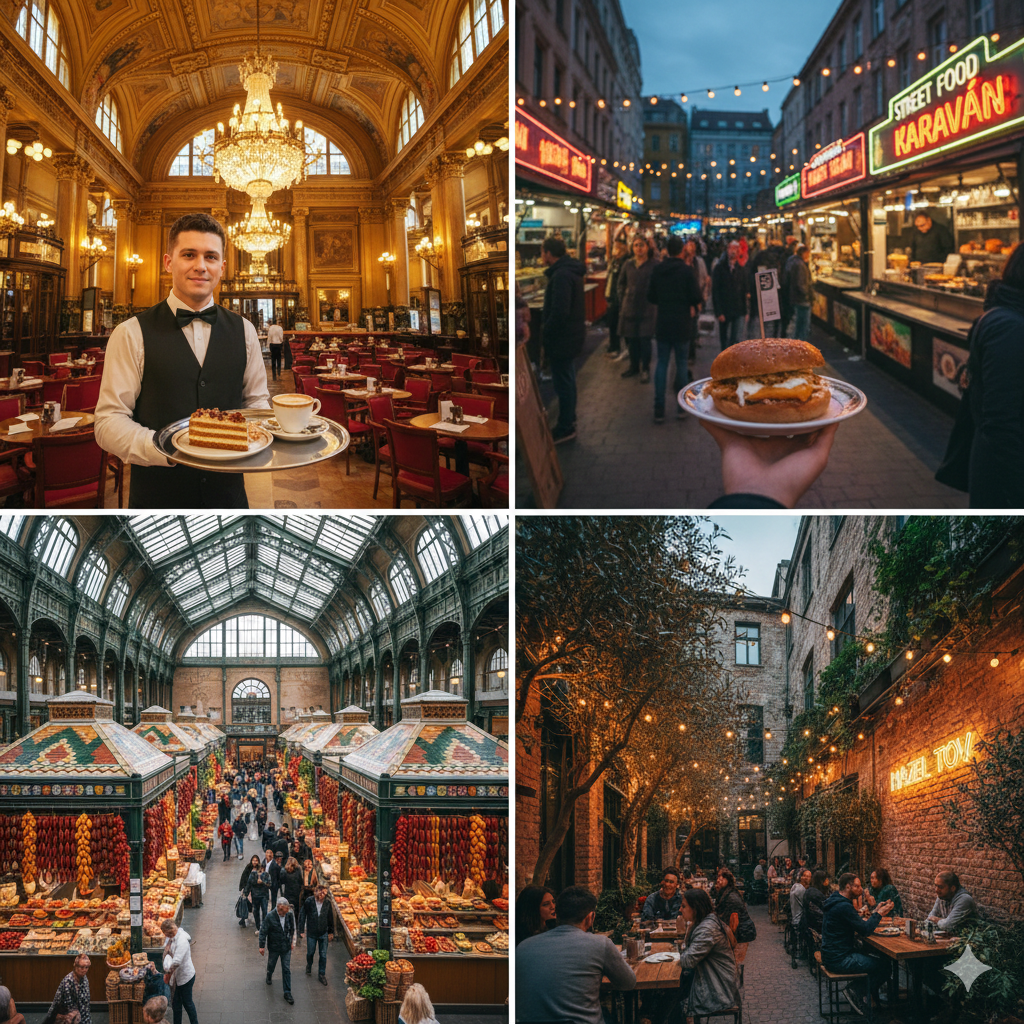
Budapest’s dining scene combines venerable institutions with innovative contemporary restaurants. Traditional establishments such as Gundel and Kiskakukk offer refined renditions of classic Hungarian dishes in elegant settings, making them suitable for those seeking a more formal gastronomic experience. Several places in the city have received international recognition, including Michelin-starred restaurants that reinterpret local ingredients in a modern, inventive manner.
For a more casual yet authentic experience, the Great Market Hall (Nagyvásárcsarnok) is an excellent starting point. Here, visitors can sample home-style cooking, purchase local produce, and explore stalls selling sausages, cheeses, and spices. The upper level of the market hosts food stands serving goulash, lángos, and other Hungarian specialties, making it both a culinary and cultural experience.
Budapest is also known for its historic café culture. Grand coffeehouses such as New York Café and Gerbeaud evoke the city’s Belle Époque era with opulent interiors, chandeliers, and marble columns. These cafés are ideal for tasting traditional pastries, sipping coffee, and absorbing the refined atmosphere. In addition, modern specialty coffee shops and artisanal bakeries have flourished across the city, particularly in districts VII and IX, catering to evolving tastes.
In the evening, the city’s famed ruin bars in the Jewish Quarter provide an unconventional setting for drinks and light meals. Located in formerly abandoned buildings and courtyards, these venues blend vintage furniture, street art, and eclectic décor. Many also serve creative bar food, local wines, and craft beers, offering an informal way to experience Budapest’s contemporary nightlife.
https://www.teepublic.com/t-shirt/50452998-penguin-otter?store_id=2851997
Things to Do in Budapest
Popular Activities and Tours
Budapest offers an extensive array of activities that appeal to different interests, from cultural exploration to relaxation. A visit to a thermal bath is almost obligatory. The Szechenyi Thermal Bath in City Park, with its outdoor pools and grand neo-Baroque architecture, is one of the most popular choices. Another notable option is the Gellért Thermal Bath, renowned for its Art Nouveau interior, mosaics, and elegant pools. These baths combine wellness with history, as many draw on centuries-old bathing traditions.
Guided city tours provide an efficient overview of the main attractions and historical background. Walking tours in the Buda Castle District, the Jewish Quarter, or along Andrássy Avenue are especially insightful, often incorporating local stories and lesser-known details. For a different perspective, river cruises on the Danube, whether daytime or evening, highlight the city’s architectural splendor.
Cultural enthusiasts will find abundant opportunities in Budapest’s museums and galleries. The Hungarian National Museum offers an in-depth overview of the country’s history, while the Museum of Fine Arts and the Hungarian National Gallery present extensive art collections. Music lovers can attend concerts at the Hungarian State Opera House or the Palace of Arts (Müpa), where classical performances, operas, and contemporary events are regularly held.
For those who enjoy active exploration, Budapest’s many parks and green spaces, such as Margaret Island and the Buda Hills, offer walking paths, cycling routes, and panoramic viewpoints. The city’s well-developed public transport system, including trams, metro lines, and buses, makes it easy to reach different districts and discover their distinct characters.
Unique Experiences and Local Tips
Beyond the well-known attractions, Budapest provides numerous distinctive experiences that reveal more nuanced aspects of local life. One of these is exploring the city’s ruin pubs, particularly Szimpla Kert, which pioneered the concept. Visiting during the early evening allows you to appreciate the eclectic design and relaxed atmosphere before the nightlife becomes more intense.
To gain insight into the city’s recent history, consider visiting the House of Terror Museum, which documents the fascist and communist regimes in Hungary. The Dohány Street Synagogue, the largest synagogue in Europe, and the surrounding Jewish Quarter also offer a powerful combination of cultural heritage and contemporary urban life, with synagogues, memorials, galleries, and trendy venues side by side.
For a more local experience, wander through less touristic neighborhoods such as Újlipótváros or certain parts of District IX, where you can find independent shops, wine bars, and authentic restaurants. Visiting Budapest’s smaller markets, like the Hold Street Market, reveals everyday culinary habits and provides opportunities to taste regional specialties in a more intimate setting.
Practical tips can enhance your stay considerably. Budapest’s public transport is efficient and affordable; purchasing a travel card or pass is recommended if you plan to move frequently across the city. Many attractions offer discounted or combined tickets, and the Budapest Card can be cost-effective, granting access to public transport and certain museums. While English is widely spoken in tourist areas, learning a few basic Hungarian phrases is appreciated and can facilitate interactions. Finally, keep in mind that tipping in restaurants and bars is customary, typically around 10–15% of the bill, unless a service charge is already included.
Budapest rewards visitors who look beyond the surface. By combining major landmarks with quieter streets, popular activities with local discoveries, you can experience the city’s many layers in a meaningful way.
In conclusion, Budapest is a city of striking contrasts and enduring elegance. Its imposing architecture, poignant history, and vibrant cultural life create a multifaceted destination where every district tells a different story. From strolling along the Danube and admiring centuries-old buildings to relaxing in thermal baths and savoring rich Hungarian cuisine, the city offers a wealth of experiences for curious travelers. Whether you are visiting for a brief stay or an extended journey, Budapest invites you to delve deeper, explore thoughtfully, and leave with a lasting appreciation of its unique character.
Holiday in London: Travel Guide, and Top Attractions
Yoga for Beginners: A Step-by-Step Guide
How to Create a Fitness Vision Board
Top 5 Superfoods for Brain Power
Zoo-doku