What Is EDM (Electronic Dance Music)?
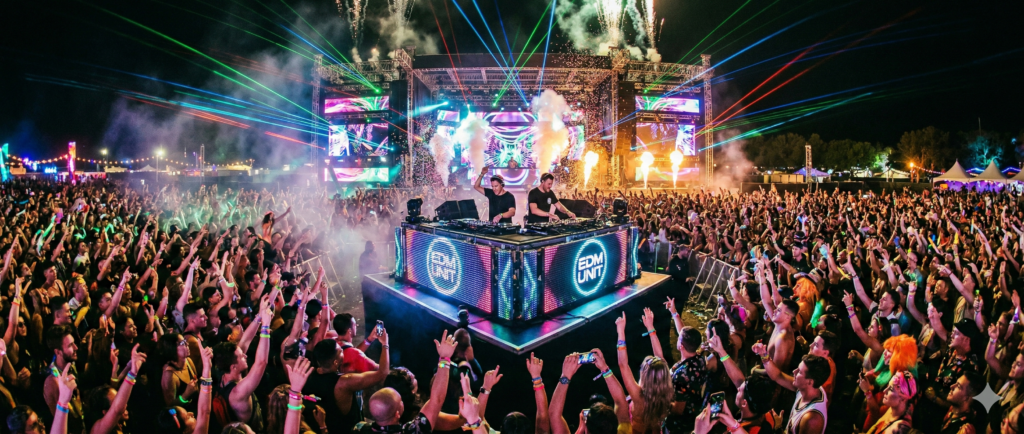
Electronic Dance Music (EDM) has exploded from underground clubs and warehouses into global stadiums and mainstream charts. Today, it’s not just a musical style—it’s a culture, an industry, and a powerful influence on pop, hip-hop, and even rock.
This guide breaks down what EDM is, where it comes from, the main genres, how it’s made, and where the scene is heading.
Definition and Core Characteristics of EDM
EDM, or Electronic Dance Music, is a broad term for a wide range of electronic music styles designed primarily for dancing—especially in clubs, festivals, and raves.
At its core, EDM is defined by:
-
Electronic sound sources Synthesizers, drum machines, samplers, and digital audio workstations (DAWs) are central to EDM. Most elements are created or heavily processed with electronic tools rather than recorded as “live” instruments.
-
Strong, consistent rhythms EDM is built around a steady beat, usually 4/4 time, with a clear kick drum on each beat (the classic “four-on-the-floor” in many genres). This makes it easy to dance and mix.
-
Repetitive, evolving structures Instead of traditional verse–chorus structures, many EDM tracks use loops and gradual changes:
-
Intros and outros designed for DJ mixing
-
Build-ups that increase tension
-
Drops that release energy with powerful drums and bass
-
Breakdowns that strip the track down to melodies, pads, or vocals
-
Tempo ranges Typical BPM (beats per minute) ranges:
-
House: ~120–130 BPM
-
Techno: ~125–140 BPM
-
Trance: ~130–145 BPM
-
Dubstep: ~140 BPM (often half-time feel)
-
Drum & Bass: ~170–180 BPM
These tempo zones help define the feel and energy of each subgenre.
-
Emphasis on sound design and production Sound selection, synthesis, effects, and mixing are as important as melody or harmony. The “sound” of a track—its textures, bass weight, and impact—is often the main attraction.
In short, EDM is less about sing-along lyrics and more about groove, energy, and sonic experience, whether on a massive festival stage or in headphones.
Brief History and Evolution of Electronic Dance Music
EDM has deep roots that go back decades. It didn’t appear overnight; it evolved from several scenes and technologies.
1970s: Foundations and early experiments
-
Disco laid the groundwork with extended dance mixes and club culture.
-
Pioneers like Kraftwerk, Giorgio Moroder, and Jean-Michel Jarre used synths and drum machines to create early electronic music with a danceable pulse.
1980s: Birth of house and techno
-
Chicago House: DJs and producers like Frankie Knuckles, Larry Heard, and Marshall Jefferson began making drum-machine driven tracks with soulful vocals and repetitive grooves. This became house music.
-
Detroit Techno: Artists like Juan Atkins, Derrick May, and Kevin Saunderson fused funk, electro, and futuristic synths, birthing techno.
-
Acid House: The squelchy sound of the Roland TB-303 defined the acid house movement, which spread from Chicago to the UK and Europe.
Late 1980s–1990s: Rave culture and genre explosion
-
UK and Europe embraced raves—large, often illegal parties with DJs, lasers, and all-night dancing.
-
New genres emerged:
-
Trance in Germany and Europe
-
Jungle and Drum & Bass in the UK
-
Hardcore, Gabber, and other high-BPM styles
-
Club culture solidified in cities like London, Berlin, Amsterdam, and Ibiza.
2000s: Global expansion and mainstream crossover
-
Superclubs and festivals grew, while digital production tools became more affordable.
-
Artists like Daft Punk, The Chemical Brothers, and Fatboy Slim brought electronic music to wider audiences.
-
Trance and progressive house filled huge arenas, especially in Europe.
2010s: The “EDM boom”
-
In North America, “EDM” became a mainstream term.
-
Artists like Avicii, Calvin Harris, Skrillex, Swedish House Mafia, David Guetta, and Martin Garrix took club music to pop radio.
-
Massive festivals like Tomorrowland, Ultra, and Electric Daisy Carnival drew hundreds of thousands of fans.
-
Big-room drops, festival anthems, and vocal collaborations with pop stars defined this era.
2020s and beyond: Diversification and hybrid sounds
-
EDM now blends seamlessly with pop, hip-hop, K-pop, Latin, and more.
-
Underground scenes continue innovating with melodic techno, experimental bass, and niche subgenres.
-
Live streaming, virtual festivals, and AI tools are influencing how EDM is made and experienced.
Main EDM Genres and Subgenres
EDM is an umbrella term. Under it sits a huge ecosystem of genres, each with its own sound, tempo, and culture.
House, Techno, Trance, and Progressive EDM
These are some of the most foundational and influential EDM styles.
House
-
Origin: Chicago, early 1980s
-
Tempo: ~120–130 BPM
-
Key traits: Four-on-the-floor kick drums, funky or soulful basslines, vocal samples or full vocal performances, warm, danceable grooves
-
Substyles: Deep House, Tech House, Electro House.
Techno
-
Origin: Detroit, mid-1980s
-
Tempo: ~125–140 BPM
-
Key traits: Repetitive, driving rhythms, emphasis on percussion and mechanical or futuristic sounds, minimal melodies, focused on groove and atmosphere
-
Substyles: Minimal Techno, Industrial Techno, Melodic Techno.
Trance
-
Origin: Germany and Europe, early 1990s
-
Tempo: ~130–145 BPM
-
Key traits: Long build-ups and euphoric breakdowns, arpeggiated synth lines and big, emotional chords, extended, hypnotic arrangements
-
Substyles: Uplifting / Anthem Trance, Psytrance, Progressive Trance.
Progressive EDM (Progressive House & Progressive Trance)
“Progressive” generally refers to tracks that evolve gradually over time, layering new elements and shifting atmospheres.
-
Progressive House: Smooth, melodic, and often emotional; popularized by artists like Eric Prydz, Sasha, and John Digweed.
-
Progressive Trance: Combines trance’s hypnotic vibe with gradual builds.
Bass Music, Dubstep, Trap, Future Bass, and Other Emerging Styles
While house, techno, and trance emphasize steady grooves, bass-oriented genres focus more on heavy low-end, rhythmic complexity, and sound design.
Dubstep
-
Origin: UK, early 2000s
-
Tempo: ~140 BPM (often half-time feel)
-
Key traits: Deep sub-bass lines, sparse, half-time drum patterns, heavy use of wobbling, growling, or distorted bass sounds
-
Substyles: Brostep, Riddim, Deep Dubstep.
Trap (EDM Trap)
(Not to be confused with original Southern hip-hop trap, though related.)
-
Tempo: ~140 BPM (half-time) or ~70 BPM
-
Key traits: 808 kick and sub-bass, rapid hi-hats, snare rolls, brass stabs, vocal chops, and big festival drops
Future Bass
-
Tempo: Usually ~135–160 BPM (often felt at half-time)
-
Key traits: Lush, detuned synth chords, punchy, sidechained drums, emotional, melodic drops
Other Notable Bass & EDM Styles
-
Drum & Bass (D&B): Fast breakbeats, deep basslines, and complex rhythms. Tempo: ~170–180 BPM.
-
Bass House: Combines house grooves with heavy, wobbling basslines.
-
Hardstyle: Distorted kicks, euphoric melodies, and intense build-ups. Tempo: ~140–150 BPM.
How EDM Is Produced and Performed
Behind every EDM track is a mix of creativity and technology.
Essential EDM Production Tools, Software, and Techniques
Modern EDM production is almost entirely digital, centered around a DAW (Digital Audio Workstation).
-
DAWs (Digital Audio Workstations): Common choices include Ableton Live, FL Studio, Logic Pro, Cubase, Studio One.
-
Synthesizers: Software (and sometimes hardware) synths generate the core sounds: Serum, Massive X, Sylenth1, Diva, Pigments, Vital.
-
Drum machines and sample libraries: Sample packs tailored to specific genres (house, techno, dubstep, etc.).
-
Effects and processing: EQ, compression, reverb, delay, saturation, distortion, filters, and sidechain compression (crucial for a “pumping” feel).
Typical EDM production workflow
-
Idea and sound selection
-
Arrangement
-
Sound design
-
Mixing
-
Mastering
DJing, Live Sets, and the Role of EDM Producers on Stage
EDM is as much about live experience as it is about studio work.
-
DJing: DJs select, blend, and manipulate tracks to create a continuous musical journey. Tools include CDJs and DJ mixers, DJ controllers, and turntables. Core skills include beatmatching, EQing Transitions, Phrasing, and reading the crowd.
-
Live Sets and Hybrid Performances: Some artists use drum machines, synths, samplers, and laptops on stage to trigger loops and modify effects in real time.
EDM Culture, Festivals, and the Future of Electronic Dance Music
Global EDM Festivals, Rave Culture, and Dance Music Communities
EDM has grown into a global culture with its own fashion, values, and rituals.
-
Global EDM festivals: Major festivals host tens or hundreds of thousands of fans: Tomorrowland (Belgium), Ultra Music Festival (Miami), Electric Daisy Carnival (EDC) (Las Vegas).
-
Rave culture and values: Often emphasize community, inclusion, and PLUR (Peace, Love, Unity, Respect). It’s also important to acknowledge health and safety concerns and commercialization tensions.
-
Local scenes and online communities: EDM thrives in clubs and smaller venues, and on online platforms like SoundCloud, Spotify, YouTube, and Discord servers.
Current Trends, Popular Artists, and the Future of EDM
-
Current trends: Genre-blending and crossovers (hip-hop, pop, K-pop, Latin, Afrobeats); melodic and emotional sounds; tech-house and minimal grooves resurgence; bass innovation; digital-first careers (TikTok).
-
Popular artists and key figures: Martin Garrix, David Guetta, Calvin Harris, Fisher, John Summit, Peggy Gou, Charlotte de Witte, Amelie Lens, Skrillex, Excision, Illenium.
The future of EDM
Factors defining the future include technology and tools (AI-assisted production, VR/AR, spatial audio), sustainability and event design, hybrid events and online presence, and cultural cross-pollination.
Conclusion
EDM, or Electronic Dance Music, is far more than a single genre. It’s a constantly evolving ecosystem of sounds, scenes, and cultures built around electronic production and the shared experience of dance.
Whether you’re a casual listener, an aspiring producer, or a dedicated raver, understanding the foundations helps you appreciate just how rich and diverse the world of electronic dance music really is.
https://www.teepublic.com/t-shirt/50348400-kitty?store_id=2851997
Crystal Collector
Combat Protocol
WASD – Move
Mouse – Look around
Left Click – Fire Weapon
R – Reload
Eliminate all hostile units in the sector!
(Works better on computer)