What is techno? The Ultimate Guide to Music, Subgenres, and Detroit Origins
Techno is a genre of electronic dance music (EDM) built for the dancefloor: repetitive, hypnotic, and driven by rhythm. Unlike pop-heavy EDM, techno focuses on groove, texture, and atmosphere rather than vocals or traditional song structures.
Born in the mid-1980s in Detroit, techno has evolved into a global movement. This guide breaks down where it came from, how to identify it, and the subgenres that define the modern scene.
The Origins of Techno: From Detroit to the World
Techno’s story is rooted in Detroit, Michigan—a city defined by its industrial landscape and a rich legacy of Black music.
1. The Detroit Context
In the 1980s, young Black producers began experimenting with a futuristic, mechanical sound that reflected the city’s post-industrial environment. They fused the legacy of Motown soul and funk with European electronic imports like Kraftwerk and Giorgio Moroder.
2. The Belleville Three
Three high school friends are credited as the architects of the genre:
Juan Atkins (“The Originator”): Defined the early electro-techno sound.
-
Derrick May (“The Innovator”): Infused the music with emotional, orchestral energy.
-
Kevin Saunderson (“The Elevator”): Brought techno to a global audience with more accessible, house-leaning tracks.
3. Global Expansion
While born in the US, techno exploded in Europe. After the fall of the Berlin Wall in 1989, Berlin became the genre’s spiritual home, with legendary clubs like Tresor connecting Detroit artists to German audiences. Today, it is a massive cultural force in South America, Georgia, and the UK.
Core Characteristics: The Sound of the Machine
Techno is designed to be functional—it is music made specifically for the club and the sound system.
-
Tempo: Usually ranges from 120–135 BPM, though industrial styles can reach 150 BPM.
-
The 4/4 Rhythm: Built around a steady, punchy kick drum on every beat (the “four-on-the-floor”).
-
Structure: Tracks are long (6–10 minutes) with gradual builds. There are rarely “choruses”; instead, the music evolves through subtle automation and modulation.
-
Iconic Gear: The sound is defined by classic hardware like the Roland TR-909 drum machine and the TB-303 synthesizer.
Main Techno Subgenres
Minimal & Dub Techno
-
Minimal: Strips the music to its bare essentials, focusing on tiny micro-changes in the groove. (Artists: Richie Hawtin, Robert Hood)
-
Dub: Merges techno with Jamaican dub aesthetics—think heavy reverb, echoing chords, and deep atmospheres. (Artists: Basic Channel, Deepchord)
Industrial & Acid Techno
-
Industrial: Dark, aggressive, and distorted. It draws from metallic textures and raw energy. (Artists: Paula Temple, Perc)
-
Acid: Centered on the “squelchy,” liquid sound of the Roland TB-303. (Artists: Hardfloor, Charlotte de Witte)
Melodic Techno
-
Melodic: Features lush synth leads and cinematic arpeggios. It is often more emotional and accessible. (Artists: Tale Of Us, Stephan Bodzin)
How to Experience Techno Culture
Iconic Clubs and Festivals
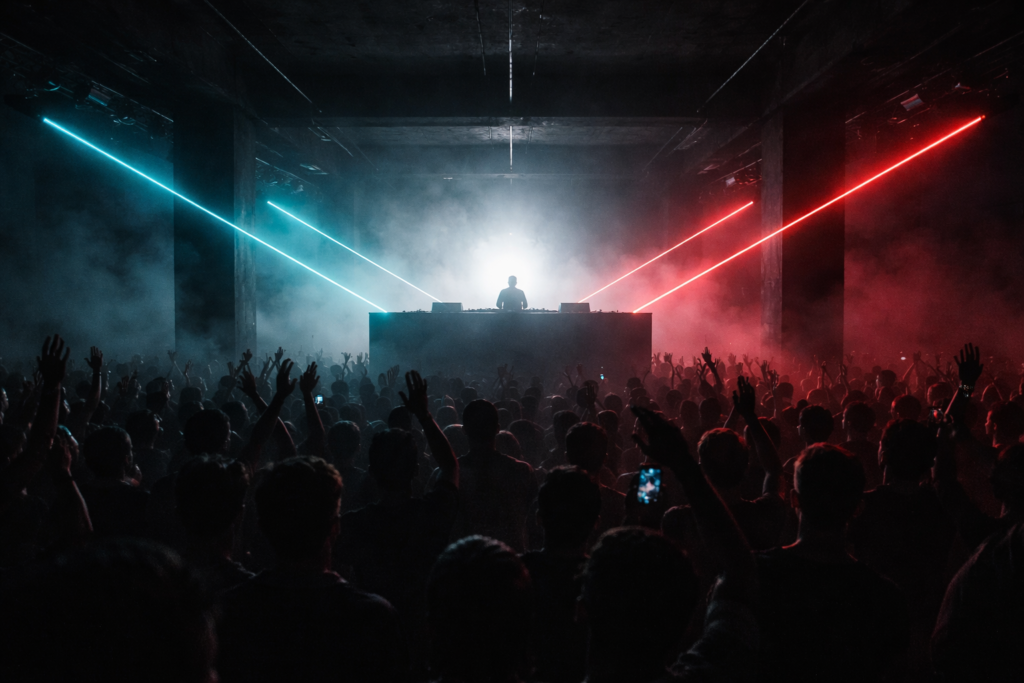
Techno is best experienced on a high-end sound system. Famous “shrines” of the genre include Berghain (Berlin), Fabric (London), and Bassiani (Tbilisi). If you prefer the outdoors, festivals like Awakenings (Netherlands) and Movement (Detroit) offer the world’s best lineups.
Getting Started with Production
You don’t need a factory full of gear to start. Modern producers use:
-
DAWs: Ableton Live or FL Studio.
-
Sound Design: Plugins like Serum or Diva for bass and leads.
-
The Formula: Focus on a powerful kick-and-bass relationship and use EQ to carve out space for repetitive, evolving motifs.
Conclusion
Techno is a vast universe that rewards deep listening. From the soulful futurism of Detroit to the gritty warehouses of London, it remains a music of the future. Whether you are losing yourself on a dark dancefloor or producing your first loop, techno offers endless depth to explore.
Explore the labels, follow the DJs, and—most importantly—find a proper sound system.
EDM:The Complete Guide to Electronic Dance Music, Genres
Athens Travel Guide: Top Attractions, Acropolis, & Best Time to Visit
Interior Design Trends That Will Define Modern Homes
Crystal Collector
Combat Protocol
WASD – Move
Mouse – Look around
Left Click – Fire Weapon
R – Reload
Eliminate all hostile units in the sector!
(Works better on computer)