
Dubrovnik Travel Guide: Explore the Pearl of the Adriatic’s History & Beauty
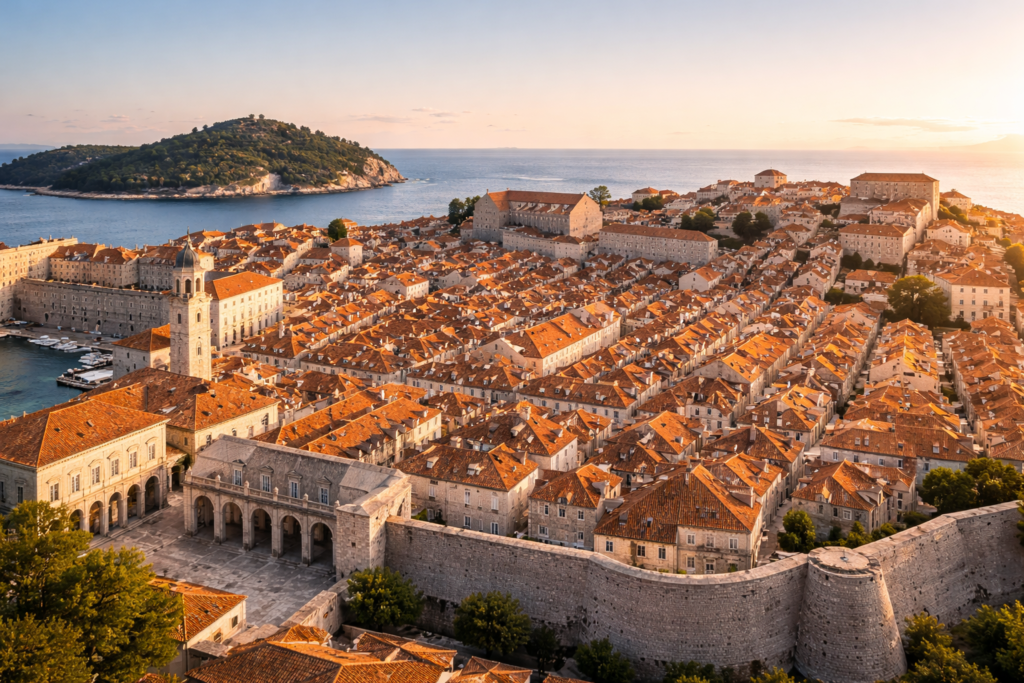
Dubrovnik, often referred to as the “Pearl of the Adriatic,” is a city where medieval architecture, crystalline seas, and a sophisticated cultural scene blend seamlessly. Enclosed within imposing stone walls, its UNESCO-listed Old Town offers a rare opportunity to walk through centuries of layered history while enjoying modern comforts and refined gastronomy. This guide explores Dubrovnik’s rich past, its most emblematic sights, memorable experiences, and essential tips to help you plan a rewarding and well-structured stay.
Discovering Dubrovnik’s Rich History
The Origins of Dubrovnik
The origins of Dubrovnik date back to late antiquity, when refugees from the nearby Roman city of Epidaurum (present-day Cavtat) fled Slavic incursions and sought safety on a rocky islet known as Laus. Over time, this early settlement expanded and gradually merged with the Slavic community that had formed on the mainland, creating a unique urban entity that would eventually become Dubrovnik, or Ragusa as it was once known.
By the Middle Ages, Dubrovnik had developed into a fortified maritime city-state. Its strategic position along key Adriatic trade routes enabled it to flourish as a commercial hub linking the Mediterranean with the Balkans and Central Europe. Maritime prowess, coupled with prudent diplomacy, laid the foundation for the city’s prosperity and political autonomy.
The Republic of Ragusa, as it came to be called, distinguished itself through progressive policies and a strong legal framework. Notably, it abolished the slave trade as early as 1416, centuries before many other European powers. The city’s merchants, shipbuilders, and scholars contributed to an environment of cultural sophistication that is still visible today in its churches, palaces, and public squares.
Key Historical Events that Shaped the City
Several pivotal events have left a lasting imprint on Dubrovnik’s urban landscape and collective memory. A devastating earthquake in 1667 destroyed much of the city, including many of its Gothic and Renaissance buildings. The subsequent reconstruction, largely in the Baroque style, granted Dubrovnik the harmonious and coherent aesthetic that now characterizes the Old Town.
Politically, Dubrovnik’s history reflects a delicate balancing act. The Republic maintained its independence for centuries by negotiating with powerful neighbors such as Venice and the Ottoman Empire. Through skilful diplomacy and payment of tributes, Dubrovnik preserved its autonomy and navigated turbulent regional politics until the arrival of Napoleon’s forces.
In 1808, the Republic of Ragusa was dissolved under French rule, marking the end of its independence. The city later became part of the Austro-Hungarian Empire and, in the twentieth century, was incorporated into Yugoslavia. The Croatian War of Independence in the 1990s brought renewed hardship; Dubrovnik endured a siege and shelling that damaged many historical structures. Extensive restoration efforts, supported by UNESCO and the international community, have since meticulously repaired these scars, returning the city to its former splendor while preserving visible reminders of its resilience.
Top Attractions to Visit in Dubrovnik
The Iconic City Walls
The medieval city walls are Dubrovnik’s most emblematic feature and a non-negotiable inclusion on any itinerary. Stretching nearly two kilometers around the Old Town, these fortifications, complete with towers, bastions, and gates, offer extraordinary panoramic views over terracotta rooftops, the Adriatic Sea, and nearby islands.
Walking the walls typically takes one to two hours, depending on how often you pause to admire the vistas and capture photographs. Early morning or late afternoon are ideal times to avoid both intense sunlight and peak visitor numbers. Along the route, you will encounter landmarks such as the Minceta Tower, a monumental round bastion offering one of the city’s most celebrated viewpoints, and the Bokar Fortress, which once protected Dubrovnik’s harbor.
From above, the city’s distinctive urban plan unfolds clearly: narrow limestone streets, hidden courtyards, and small squares reveal the careful planning of a former republic that valued both defense and civic life. The walls also highlight Dubrovnik’s relationship with the sea, as you observe the contrast between the sheer cliffs and the serene cobalt waters below.
Must-See Museums and Cultural Sites
Beyond its dramatic walls, Dubrovnik hosts a range of museums and cultural institutions that delve into its maritime, artistic, and everyday history. The Rector’s Palace, once the seat of the Republic’s government and the residence of the elected Rector, now serves as a museum showcasing period furniture, portraits, and artefacts that illustrate the city-state’s political and social evolution.
The Maritime Museum, located within the St. John Fortress, provides a fascinating look at Dubrovnik’s naval dominance. Ship models, navigational instruments, and historical documents testify to the skill and reach of its merchant fleet. For visitors interested in broader historical context, the Cultural History Museum and the Ethnographic Museum reveal details about traditional crafts, costumes, and domestic life in the surrounding region.
Religious architecture also plays a central role in Dubrovnik’s cultural landscape. The Cathedral of the Assumption houses an impressive treasury containing relics and liturgical silver, while the Franciscan Monastery boasts one of Europe’s oldest working pharmacies, founded in the fourteenth century. Step into these spaces not only to admire their art and architecture but also to appreciate how faith and learning shaped daily life in the historic republic.
Best Activities and Experiences in Dubrovnik
Exploring the Adriatic Sea
The Adriatic Sea is integral to Dubrovnik’s identity, and exploring it adds an essential dimension to your visit. Boat excursions to the nearby Elafiti Islands—such as Koločep, Lopud, and Šipan—offer an escape from the bustle of the Old Town. These islands are renowned for tranquil beaches, verdant landscapes, and a slower rhythm of life, ideal for swimming, walking, and leisurely lunches by the water.
Sea kayaking is another engaging way to experience Dubrovnik from a different perspective. Tours often depart from Pile Gate or the small harbor near the Old Town and circle the city walls and Lokrum Island. Paddling beneath imposing fortifications while learning about the city’s maritime defenses provides both physical activity and cultural insight.
For visitors seeking a more relaxed experience, sunset cruises along the coastline allow you to admire Dubrovnik’s skyline as it gradually illuminates in the evening. The interplay of stone, sea, and sky during dusk creates an atmosphere that many travelers consider one of their most enduring memories of the city.
Walking Tours and Local Cuisine
Within Dubrovnik’s labyrinth of alleys and stairways, guided walking tours can enrich your understanding of the city’s multilayered past. Specialized tours focus on themes ranging from medieval trade routes to film locations used in popular television series. A knowledgeable guide can point out subtle details that are easy to miss, such as heraldic symbols on facades, discreet chapels, or remnants of earlier architectural styles hidden within later renovations.
Gastronomy is another highlight of any stay in Dubrovnik. The city’s culinary tradition draws on fresh Adriatic seafood, seasonal vegetables, and high-quality olive oil. Classic dishes include grilled fish, octopus salad, and black risotto made with cuttlefish ink. Meat lovers will appreciate “pašticada,” a slow-cooked beef specialty typically served with gnocchi, while local cheeses and cured meats pair well with Dalmatian wines.
To fully appreciate the regional flavors, consider joining a food-focused walking tour or visiting a traditional konoba, the local term for a tavern. Here, menus often emphasize simple yet refined recipes handed down through generations. Sampling local wines from the Pelješac Peninsula or the island of Korčula, accompanied by a knowledgeable sommelier or host, offers insight into Croatia’s underrated but increasingly acclaimed viticulture.
Practical Tips for Visiting Dubrovnik
Best Time to Visit
Choosing the right time to visit Dubrovnik has a significant impact on your experience. The peak season, from late June to August, offers warm weather, lively nightlife, and a full calendar of cultural events, including the renowned Dubrovnik Summer Festival. However, this period also attracts the highest number of visitors and cruise ships, resulting in crowded streets and higher prices.
For many travelers, late spring (May to early June) and early autumn (September to October) provide the optimal balance. During these shoulder seasons, the climate remains pleasantly warm, sea temperatures are suitable for swimming, and the Old Town is more manageable to explore. Sightseeing is more comfortable, restaurant reservations are easier to secure, and accommodation options tend to be more competitively priced.
Winter in Dubrovnik is quieter, with fewer tourists and a more local atmosphere. While some seasonal businesses close, the city’s monuments, museums, and main restaurants generally remain open. The cooler temperatures and occasional rain make this period less suitable for beach holidays but attractive for those seeking a calm, culturally oriented stay without crowds.
https://www.teepublic.com/t-shirt/52373912-roses?store_id=2851997
Holiday in London: Travel Guide, and Top Attractions
Athens Travel Guide: Top Attractions, Acropolis, & Best Time to Visit
Guide to Interior Design Trends : Inspired by Nature
Accommodation Options for Every Budget
Dubrovnik offers a wide spectrum of accommodation, ranging from upscale hotels with sea views to modest guesthouses in residential neighborhoods. Luxury travelers can choose from five-star hotels along the Lapad Peninsula or near the Old Town, many featuring private beaches, spa facilities, and refined dining options. These properties often provide exceptional views of the Adriatic and convenient access to the historic center.
Mid-range options include boutique hotels and well-appointed apartments within walking distance of the city walls. Staying just outside the Old Town can offer better value while still keeping major sights close at hand. Many visitors appreciate the flexibility and space provided by self-catered apartments, especially if they plan a longer stay or travel with family.
Budget-conscious travelers will find hostels, simple rooms in private homes, and guesthouses in districts such as Gruž or further along the coast. These areas are connected to the Old Town by frequent buses, making it easy to commute while benefiting from lower nightly rates. When selecting accommodation, consider factors such as proximity to public transport, the number of stairs involved—since Dubrovnik is built on steep terrain—and the availability of air conditioning during the warmer months.
With careful planning and an understanding of Dubrovnik’s unique rhythm, you can tailor your stay to your own preferences and budget.
Dubrovnik is far more than a picturesque backdrop; it is a city shaped by centuries of maritime commerce, diplomacy, and cultural exchange. From its formidable walls and evocative museums to its shimmering coastline and sophisticated cuisine, every aspect reflects a long tradition of resilience and refinement. By exploring its historical foundations, discovering its major attractions, engaging in meaningful activities, and preparing with practical considerations in mind, you will experience Dubrovnik not merely as a destination, but as a living, breathing testament to the Adriatic’s enduring allure.
An image portraying the picturesque city of Dubrovnik in Croatia. Visualize the ancient stone walls contrasted with red-tiled rooftops, overlooking the vibrant blue Adriatic Sea. The scene is busy with life as people wander around the quaint cobblestone streets, exploring local shops and cafes. The city’s unique blend of Gothic, Renaissance, and Baroque architecture adds to its charm. The image is set in the bright daylight, illuminating the city’s features in warm, radiant light. The image to be realised in an aspect ratio of 21:9, resolution is 1k, in jpeg format.
Crystal Collector
Combat Protocol
WASD – Move
Mouse – Look around
Left Click – Fire Weapon
R – Reload
Eliminate all hostile units in the sector!
(Works better on computer)