
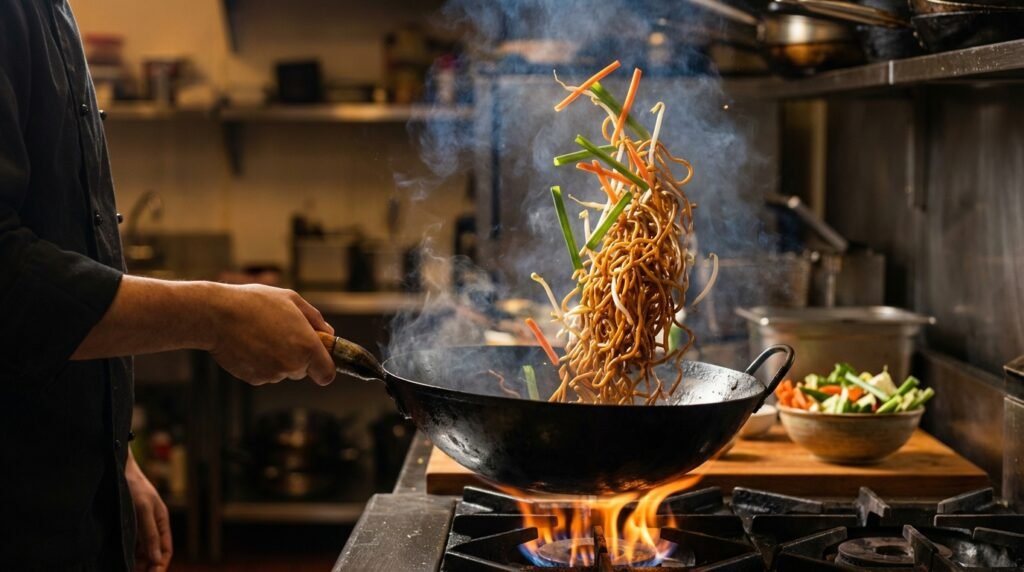
Master the art of authentic Chow Mein at home. Learn the differences between crispy Hong Kong-style and soft stir-fried noodles, explore essential ingredients like lo mein egg noodles and bok choy, and follow our step-by-step guide for restaurant-quality results every time.
Chow Mein is more than a beloved takeout classic; it is a dish that encapsulates history, migration, and the art of wok cooking in one plate of glistening noodles. From bustling Cantonese street stalls to modern home kitchens, this stir-fried noodle dish has evolved into countless forms while retaining its essential character: chewy noodles, crisp vegetables, and a deeply savory sauce. Whether you are exploring the history of Chow Mein or searching for an authentic Chow Mein recipe to recreate at home, understanding its roots and techniques will transform your cooking.
What is Chow Mein?
At its core, Chow Mein is a Chinese stir-fried noodle dish made with wheat-based egg noodles, vegetables, and often a protein such as chicken, beef, pork, shrimp, or tofu. The name derives from the Taishanese and Cantonese words for “stir-fried noodles” (炒麵, chǎo miàn). Unlike soups or braised noodle dishes, Chow Mein is defined by its dry, glossy texture, intense wok aroma, and the interplay between tender noodles and crisp vegetables.
In Chinese culinary tradition, Chow Mein occupies a middle ground between fast street food and home-style comfort. It is quick to prepare, yet relies on precise heat control, thoughtful preparation of ingredients, and a balanced sauce. Over time, as Chinese communities spread across the globe, different types of Chow Mein emerged, adapting to local tastes and ingredients while preserving its fundamental identity.
History and Origins of Chow Mein
The history of Chow Mein begins in Southern China, particularly in Guangdong (Canton) and the coastal regions where wheat and noodles were common and street vendors popularized quick stir-fried dishes. The term “Chow Mein” became widely known through Cantonese-speaking migrants in the 19th and early 20th centuries, many of whom originated from the Taishan region. These migrants brought with them familiar dishes that could be adapted easily to their new environments.
In China, stir-fried noodles had existed for centuries, but the dish that would become internationally recognized as Chow Mein crystallized during the late Qing dynasty and early Republican era, when urbanization and teahouse culture flourished. Noodle dishes that could be cooked to order over high heat became highly desirable in dense urban centers. Chow Mein, with its rapid cooking technique and ability to incorporate leftovers, fit perfectly into this landscape.
As Chinese immigrants settled in North America, Europe, Southeast Asia, and beyond, Chow Mein was often among the first Chinese dishes to gain popularity with non-Chinese diners. In Western countries in particular, it became a symbol of Chinese-American cuisine—sometimes heavily adapted to local palates with thicker sauces, more vegetables, and less intense wok char. Despite regional reinterpretations, the core concept of stir-fried wheat noodles remained the thread connecting all versions of Chow Mein.
The Ultimate Guide to Music, Subgenres, and Detroit Origins
Different Types of Chow Mein
Chow Mein is not a single, rigid recipe. Instead, it encompasses a family of dishes that vary in texture, cooking method, and garnishes. Understanding the primary types of Chow Mein will help you choose or design the style that best suits your taste.
1. Crispy Chow Mein (Hong Kong-style)
In this version, par-cooked egg noodles are pan-fried or deep-fried until the bottom forms a crisp, golden cake while the top remains slightly tender. A glossy sauce with meat and vegetables is then ladled over the nest of noodles. The result is a contrast of crunchy and soft textures. This style is especially popular in Hong Kong and Cantonese restaurants.
2. Soft Chow Mein
Soft Chow Mein features fully stir-fried noodles that remain supple rather than crisp. The noodles are either parboiled or pre-steamed, then tossed in a wok with vegetables, aromatics, and sauce. This is the style most people recognize as homemade Chow Mein, ideal for quick weeknight dinners.
https://www.teepublic.com/t-shirt/51544748-basketball?store_id=2851997
3. Cantonese vs. Americanized Chow Mein
Traditional Cantonese Chow Mein emphasizes light seasoning, distinct vegetable textures, and the fragrance of the wok. Sauces are balanced and not overly thick. In many Western adaptations, sauces may be sweeter, darker, and more generous, often thickened with cornstarch. The noodles may be softer, and the dish can be loaded with vegetables and meat to suit local expectations of a complete one-plate meal.
4. Stir-Fried Noodles vs. “Chop Suey” Style
In some regions, “Chow Mein” has historically referred to a stir-fry of vegetables and meat served over crunchy fried noodles, closer to what might be called “chop suey on noodles.” Contemporary understanding tends to distinguish these, but remnants of this older usage persist in certain restaurant menus abroad.
How to Make Authentic Chow Mein at Home
Cooking Chow Mein at home is entirely achievable with a few key techniques and the right ingredients. A successful authentic Chow Mein recipe captures the essence of restaurant-quality noodles: springy texture, balanced seasoning, and a gentle smoky aroma. Preparation is crucial, as the actual stir-frying process happens very quickly.
Essential Ingredients for Chow Mein
The heart of excellent Chow Mein ingredients lies in freshness and proper noodle selection. While regional variations are numerous, the following components are fundamental to most versions.
1. Noodles
Use fresh or dried egg noodles labeled “Chow Mein,” “stir-fry noodles,” or “lo mein / Hong Kong-style egg noodles.” They should be thin to medium in width and made from wheat. If egg noodles are unavailable, thin wheat noodles (such as Chinese wheat noodles or even some types of ramen without seasoning packets) can be used with careful cooking to maintain chewiness.
2. Aromatics
Garlic, ginger, and scallions (spring onions) form the aromatic base. They provide warmth, pungency, and a recognizable Chinese flavor profile. White pepper is often added to lend subtle heat without overpowering the other flavors.
3. Vegetables
Common vegetables include:
- Shredded cabbage or napa cabbage
- Carrots cut into matchsticks
- Bean sprouts
- Bell peppers, snow peas, or Chinese chives
- Onions, sliced thinly
These vegetables should be cut into uniform, bite-sized pieces to cook rapidly and evenly.
4. Protein (Optional)
While vegan Chow Mein omits animal proteins, many traditional recipes include:
- Thinly sliced chicken thigh or breast
- Beef flank or sirloin, sliced across the grain
- Pork loin or char siu (Chinese barbeque pork)
- Shrimp, cleaned and deveined
- Firm tofu or seitan for plant-based versions
5. Sauce Components
An effective Chow Mein sauce balances salt, umami, a hint of sweetness, and subtle acidity. Typical ingredients include:
- Light soy sauce for salt and depth
- Dark soy sauce for color and a richer flavor
- Oyster sauce or vegetarian stir-fry sauce
- Sesame oil for aroma (used sparingly)
- Sugar or a touch of honey to round the flavors
- Shaoxing wine or dry sherry for complexity (optional)
- Cornstarch for light thickening, if needed
6. Oil
A neutral, high smoke-point oil is essential for proper stir-frying: peanut, canola, sunflower, or grapeseed oil are common choices. Avoid strongly flavored oils that may burn or mask the delicate flavors of the dish.
Step-by-Step Cooking Instructions
The process of cooking Chow Mein successfully is as much about organization as it is about heat. Prepare every ingredient in advance—this practice, known as “mise en place,” is particularly crucial for stir-fries.
1. Prepare the Noodles
- Cook the noodles according to package instructions, but slightly undercook them so they remain firm. Usually, this means boiling for 1–2 minutes less than indicated.
- Drain immediately and rinse briefly under cold water to halt cooking and remove excess starch.
- Toss the noodles with a teaspoon of oil to prevent sticking and set aside to dry slightly.
2. Mix the Sauce
- In a small bowl, combine light soy sauce, a little dark soy sauce, oyster (or vegetarian) sauce, a pinch of sugar, a splash of Shaoxing wine (if using), and a small amount of water or stock.
- Taste and adjust: the sauce should be slightly stronger than you want the final dish to taste, as it will be distributed across noodles and vegetables.
- Optional: add a teaspoon of cornstarch and whisk until smooth if you prefer a lightly thickened coating on the noodles.
3. Prepare Vegetables and Protein
- Slice all vegetables into uniform thin strips or shreds to ensure quick, even cooking.
- If using meat, slice it very thinly against the grain. Marinate briefly with a little soy sauce, oil, and cornstarch to keep it tender.
- Pat tofu or plant-based proteins dry and cut them into small, even pieces.
4. Stir-Fry the Protein
- Heat a wok or large, heavy skillet over high heat until just smoking.
- Add oil, swirl to coat, then add the protein in a single layer.
- Allow it to sear briefly without moving, then stir-fry until mostly cooked. Remove from the wok and set aside.
5. Stir-Fry Vegetables and Aromatics
- Reheat the wok and add a bit more oil if needed.
- Add garlic, ginger, and the white parts of the scallions; stir-fry just until fragrant, taking care not to burn them.
- Add harder vegetables (carrots, cabbage, onions) first, stir-frying until slightly tender but still crisp.
- Follow with more delicate vegetables (bean sprouts, leafy greens), cooking briefly.
6. Combine Noodles, Sauce, and Protein
- Add the drained noodles to the wok, gently loosening them with chopsticks or tongs.
- Pour the prepared sauce around the edges of the wok so it sizzles and reduces slightly.
- Return the cooked protein to the wok.
- Stir-fry everything together over high heat, tossing continuously until the noodles are evenly coated, heated through, and any excess sauce has been absorbed.
- Finish with a drizzle of sesame oil and the green parts of the scallions.
7. Serve Immediately
Transfer the Chow Mein to warm plates or a large serving platter. The noodles should be glossy, the vegetables vibrant, and the aroma inviting. Chow Mein is best eaten fresh, as the texture deteriorates upon standing.
Variations of Chow Mein Around the World
As Chinese diaspora communities established themselves around the globe, Chow Mein became a canvas for regional tastes and ingredient availability. Exploring these variations not only broadens your repertoire of homemade Chow Mein but also reveals the dish’s remarkable adaptability.
Regional Differences in Chow Mein Recipes
1. Chinese Regional Styles
- Cantonese/Hong Kong Chow Mein: Typically uses thin egg noodles, with a balance of meat, seafood, and vegetables. The flavor profile is clean but savory, often featuring light soy sauce, oyster sauce, and Shaoxing wine.
- Shanghai-Inspired Stir-Fried Noodles: Though technically distinct, some versions resemble Chow Mein, with thicker noodles and more robust seasoning, including dark soy sauce for a deep, caramelized color.
- Street-Style Chow Mein: Often simpler and spicier depending on the province, sometimes incorporating chili oil, preserved vegetables, or pickled elements.
2. North American Chow Mein
In the United States and Canada, Chow Mein evolved in different directions:
- East Coast Style: Frequently uses crispy fried noodles topped with a saucy stir-fry of vegetables and meat, almost like a gravy. The noodles may be very thin and extremely crunchy.
- West Coast and Chinese-American Restaurants: More often serve a soft Chow Mein with stir-fried noodles, generous vegetables, and a relatively thick, savory-sweet sauce. Celery, onions, and bean sprouts are common.
3. United Kingdom and Europe
In the UK and parts of Europe, Chow Mein has become a takeaway staple. Recipes may feature thicker egg noodles, a pronounced soy flavor, and sometimes additions such as curry powder, chili sauce, or local vegetables. Chicken Chow Mein is particularly popular, often with a noticeably sweet undertone.
4. Southeast Asia
In Malaysia, Singapore, and Indonesia, Chow Mein-style dishes coexist with local noodle traditions. Ingredients such as sambal, kecap manis (sweet soy sauce), and local greens may appear. While these dishes may not always be labeled “Chow Mein,” they reflect the same principle of stir-fried wheat noodles with a localized flavor palette.
Vegetarian and Vegan Chow Mein Options
Demand for vegan Chow Mein and vegetarian adaptations has grown significantly, and the dish lends itself naturally to plant-based cooking. With careful selection of sauces and proteins, you can achieve a deeply satisfying result without animal products.
1. Plant-Based Proteins
- Tofu: Firm or extra-firm tofu, pressed to remove excess moisture, then pan-fried until golden. It absorbs the sauce beautifully and provides a pleasant contrast in texture.
- Tempeh: Thinly sliced tempeh offers a nutty flavor and a more substantial bite.
- Seitan or Plant-Based “Meats”: These can mimic the texture of chicken or beef and work well in Chow Mein, especially when marinated briefly.
2. Sauce Adjustments
To maintain authenticity while keeping the dish vegan:
- Replace oyster sauce with mushroom-based vegetarian stir-fry sauce or a rich mushroom soy sauce.
- Use light and dark soy sauce that is certified vegan.
- Add depth with vegetable stock, fermented bean paste (doubanjiang or similar, if suitable), or finely chopped dried mushrooms.
3. Vegetable-Focused Combinations
Vegetarian and vegan Chow Mein can emphasize seasonal produce:
- Spring: asparagus tips, sugar snap peas, young carrots.
- Summer: bell peppers, baby corn, Chinese greens.
- Autumn/Winter: savoy cabbage, shiitake mushrooms, bok choy.
By increasing the variety and volume of vegetables, the dish remains hearty and nutritionally balanced.
Tips and Tricks for the Best Chow Mein
Achieving restaurant-quality Chow Mein at home requires attention to detail as much as it does a solid recipe. Practical Chow Mein tips can help you avoid common pitfalls and elevate the final dish.
Common Mistakes to Avoid
1. Overcooking the Noodles
Mushy noodles are the most frequent misstep. Always undercook them slightly during boiling; they will finish cooking in the wok. Rinse them quickly to stop the cooking process, particularly if you are not stir-frying them immediately.
2. Crowding the Wok
Overloading the wok with too many ingredients at once lowers the temperature dramatically, causing steaming instead of searing. If you are making a large batch, cook in stages and combine at the end.
3. Inadequate Heat
Proper Chow Mein demands high heat to develop the characteristic wok aroma and to keep vegetables crisp. Preheat the wok until very hot before adding oil and ingredients. A heavy skillet can substitute, but the principle of high heat remains essential.
4. Disorganized Preparation
Attempting to chop vegetables or measure sauce ingredients while the wok is on the heat almost guarantees overcooked elements and uneven flavors. Prepare everything in advance—sauce mixed, aromatics chopped, vegetables sliced, protein marinated—before you start cooking.
5. Overly Salty or Unbalanced Sauce
Multiple salty components (soy sauces, oyster sauce, stock) can make the dish harsh. Always taste your sauce and adjust with water, a pinch of sugar, or a squeeze of lime or rice vinegar if needed. Balance is crucial to an appealing final dish.
6. Excessive Sauce Volume
Chow Mein is not meant to be soupy. Use just enough sauce to coat the noodles lightly. If there is liquid pooling at the bottom of the wok, continue stir-frying over high heat until it reduces and clings to the noodles.
Pairing Chow Mein with Other Dishes
Although Chow Mein can function as a complete one-dish meal, thoughtful pairings enhance the dining experience and create a more rounded menu.
1. Classic Companions
- Dumplings or Potstickers: Their juicy filling and crisp bottoms provide a textural contrast to the noodles.
- Spring Rolls: Light, crunchy rolls—fresh or fried—offer complementary flavors and an additional vegetable component.
- Hot and Sour or Wonton Soup: A modest bowl of soup works well as a starter, balancing the richness of the stir-fried noodles.
2. Vegetable Side Dishes
- Stir-Fried Greens: Dishes such as gai lan with garlic, sautéed bok choy, or spinach with ginger emphasize freshness and provide nutritional balance.
- Cucumber Salad or Pickled Vegetables: Lightly pickled cucumbers, radishes, or cabbage add acidity and crunch to cut through the richness of the Chow Mein.
3. Protein-Focused Accompaniments
- Roast Meats: Cantonese roast duck, char siu, or soy-braised chicken pair beautifully with plainer versions of Chow Mein.
- Steamed Fish: A delicate steamed fish with ginger and scallions serves as a refined counterpart to a more robust noodle dish.
4. Beverage Pairings
Tea is the traditional accompaniment: jasmine, oolong, or pu-erh help cleanse the palate between bites. For those serving wine, light, aromatic whites or low-tannin reds complement the savory, umami profile without overwhelming it.
Conclusion
Chow Mein’s enduring appeal lies in its balance of simplicity and sophistication. At first glance, it is merely stir-fried noodles; more deeply considered, it is a culinary expression shaped by centuries of Chinese cooking and decades of global adaptation. By understanding the history of Chow Mein, recognizing the different styles across regions, and mastering essential techniques, you can move beyond basic takeout imitations to produce a truly compelling dish at home.
Whether you choose a traditional Cantonese version, a crisp Hong Kong-style noodle nest, or a fully plant-based interpretation, the principles remain constant: high heat, precise preparation, and thoughtful seasoning. Armed with these insights and methods, your next plate of Chow Mein can be both authentic and distinctly your own—an inviting intersection of heritage, technique, and personal taste.
Sashimi vs. Sushi: Everything You Need to Know About Sashimi
Top 5 Supplements for Muscle Recovery
The Ultimate Sushi Guide: History, Popular Types, and Recipes
#KungPaoChicken, #SichuanCuisine, #AuthenticRecipes, #StirFry, #ChineseFood, #HomeCooking, #HealthyEating, #SpicyFood, #FoodHistory, #CookingTips, #WeeknightDinner, #AsianCuisine, #RecipeGuide, #CulinaryArts, #FoodPhotography
MyPuzzle
(some of the Games work better on PC)
Zoo-Doku
Crystal Collector
Combat Protocol
WASD – Move
Mouse – Look around
Left Click – Fire Weapon
R – Reload
Eliminate all hostile units in the sector!
(Works better on computer)