
The Afrobeats Manifesto: From Lagos Backstreets to Global Dominance
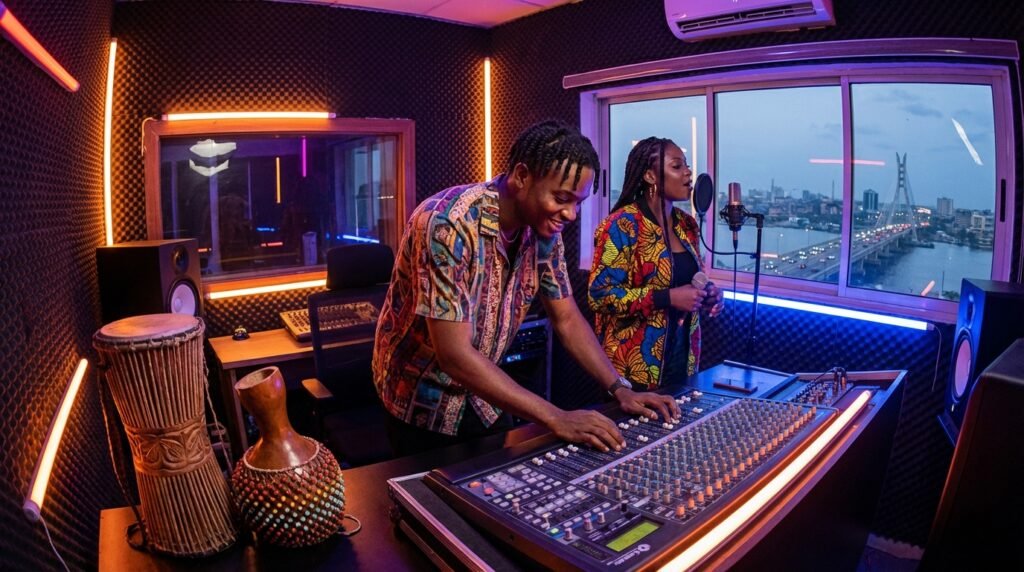
In the mid-2000s, if you walked through the bustling markets of Lagos or the high-energy neighborhoods of Accra, the air was thick with a new sound. It wasn’t the traditional Highlife of the 60s, nor was it the American Hip-Hop that dominated the radio. It was something hybrid, something electric, and something uniquely African.
Fast forward to 2026, and Afrobeats is no longer a “niche” or “world music” category. It is the primary engine of global pop culture. This is the story of how a rhythmic revolution conquered the world.
I. The Great Clarification: Afrobeat vs. Afrobeats
To understand the present, we must respect the past. The most common mistake made by global listeners is using these terms interchangeably.
The Ancestor: Afrobeat (Singular)
Created in the late 1960s by the legendary Fela Kuti and his drummer Tony Allen, Afrobeat was more than music; it was a resistance movement.
-
The Sound: Heavy jazz influence, complex polyrhythms, and long, hypnotic horn sections.
-
The Message: Militant and political. Fela used his “Kalakuta Republic” as a base to criticize government corruption and post-colonial struggle.
-
The Structure: A single track could last 25 minutes, designed for a trance-like experience in a club called The Shrine.
The Evolution: Afrobeats (Plural)
“Afrobeats” (with the ‘s’) is a 21st-century umbrella term coined largely in the UK by DJ Abrantee to categorize the new wave of West African pop.
-
The Sound: High-gloss production, 3-minute song lengths, and heavy digital processing.
-
The Message: Celebration, romance, “hustle” culture, and luxury.
-
The Structure: Built for the club, the car, and the TikTok loop.
II. The Anatomy of a Hit: Technical Deep-Dive
Why does Afrobeats make you move your hips even if you don’t understand a word of the lyrics? It’s a mathematical certainty built into the production.
1. The “Log Drum” and the Amapiano Fusion
While Afrobeats started with West African percussion, the 2020s saw a massive infusion of Amapiano from South Africa. The secret weapon? The Log Drum. This isn’t a traditional wooden drum, but a synthesized, percussive bass sound that hits with a hollow, punchy “thud.”
-
The Impact: It created a mid-tempo groove that allows for more intricate dancing than the high-speed EDM of previous years.
2. The Multi-Lingual Hook
Afrobeats is the ultimate linguistic “stew.” An artist like Wizkid or Burna Boy will seamlessly pivot between:
-
English: For global accessibility.
-
Pidgin: The “lingua franca” of West Africa, giving the track street credibility and soul.
-
Indigenous Languages (Yoruba, Igbo, Twi, Ga): Providing a melodic texture that feels ancestral and grounded.
3. The Syncopated Kick
Unlike American Pop, which often lands on a rigid “four-on-the-floor” beat, Afrobeats utilizes syncopation. The kick drum often skips the expected beat, creating a “rolling” sensation that mirrors the traditional Yoruba Dun-Dun (talking drum) rhythms.
![A cinematic wide shot of a sunset over the Lagos skyline, featuring the iconic Third Mainland Bridge, with the warm orange glow reflecting off the Atlantic Ocean, symbolizing the rising dawn of African global influence.]
III. The Three Kings: Architects of the Modern Era
While hundreds of artists contribute to the scene, three names defined the “Golden Era” that forced the Western world to pay attention.
1. Wizkid: The Starboy
Wizkid is the “cool” factor of the genre. His 2020 album Made In Lagos shifted the genre away from aggressive club beats toward a sophisticated, saxophone-heavy “Afro-Fusion” sound. He proved that Afrobeats could be “chill,” smooth, and high-fashion.
2. Davido: The Hitmaker
If Wizkid is the smooth operator, Davido is the high-energy engine. With hits like Fall and If, Davido mastered the “pon-pon” sound—a minimalistic, synth-heavy production style that became the blueprint for dozens of other artists. His influence lies in his ability to create “stadium anthems” that work in a Nigerian wedding just as well as a London arena.
3. Burna Boy: The African Giant
Burna Boy brought the soul and the “Afro-Fusion.” Influenced heavily by Fela Kuti and Neneh Cherry, Burna’s music often carries more weight, tackling themes of Pan-Africanism and Black identity. His Grammy-winning album Twice as Tall solidified the genre’s critical acclaim, moving it beyond “dance music” into the realm of “prestige art.”
IV. The Digital Catalyst: How Social Media Broke the Walls
In previous decades, an artist needed a massive record label and a radio plugger to go global. In the 2020s, Afrobeats used TikTok and Instagram to bypass the gatekeepers.
The “Challenge” Culture
Songs like CKay’s Love Nwantiti didn’t become global hits through traditional marketing. They exploded because creators in Southeast Asia, Latin America, and Europe created dance challenges.
-
The democratization of rhythm: Because Afrobeats is inherently rhythmic, it is the perfect “sound” for the 15-second video era.
-
Visual Language: The “Legwork” (Zanku) or “Shaku Shaku” dances became universal visual shorthand for “cool.”
V. The Business of the Beat: Major Labels Move In
The shift from “local” to “global” can be measured by the influx of capital.
-
Universal, Sony, and Warner: Between 2018 and 2024, all three major music groups opened headquarters in Lagos and Johannesburg.
-
Publishing Rights: As Western artists (like Drake, Beyoncé, and Ed Sheeran) began “sampling” African rhythms, the value of African music catalogs skyrocketed.
The Beyoncé Effect
The 2019 project The Lion King: The Gift was a turning point. By curating a project that featured Yemi Alade, Mr Eazi, Tiwa Savage, and Wizkid, Beyoncé didn’t just “feature” African artists—she validated them for a mainstream American audience that had previously been hesitant to embrace non-English music.
VI. The Aesthetics: Fashion and Visual Identity
You cannot separate the sound of Afrobeats from the look. The music videos are masterclasses in Afrofuturism.
-
Luxury Meets Tradition: Seeing an artist in a $5,000 Gucci jacket paired with traditional coral beads or an Aso-Oke cap sends a message of “Contemporary African Royalty.”
-
Color Palettes: Afrobeats visuals moved away from the gritty “urban” filters of 2000s Hip-Hop, embracing saturated oranges, deep teals, and vibrant yellows that reflect the West African landscape.
![A high-fashion editorial photo of a group of African youth in a mix of traditional textiles and futuristic streetwear, standing in front of a colorful, mural-covered wall in a bustling urban market.]
VII. The Future: Where Do We Go From Here?
As we look toward the 2030s, the genre is splintering into fascinating sub-genres:
-
Alté: An alternative, “indie” take on Afrobeats that is more experimental, lo-fi, and moody.
-
Afro-Swing: A UK-born hybrid that blends British rap cadences with West African melodies.
-
Afro-Gospel: Bringing the rhythm into the church, creating some of the most streamed tracks on the continent.
The New Vanguard
While the “Big Three” still reign, a new generation is taking the mantle:
-
Rema: Incorporating “Afrorave” and Indian-inspired melodies (Calm Down).
-
Asake: Blending Fuji music (a traditional Yoruba genre) with Amapiano log drums, creating a “street-pop” sound that has dominated the 2024-2025 charts.
-
Tems: Whose haunting, soulful vocals have made her the most sought-after collaborator in the world.
- https://orenga.myspreadshop.com/bottle+of+red+wine-A6691ab489142ae1660f44310?productType=31&sellable=oNZjbrVOA3H7zqA90owj-31-32&appearance=1
- https://www.teepublic.com/t-shirt/51544745-gold-soccer-ball?store_id=2851997
- EDM:The Complete Guide to Electronic Dance Music, Genres
- What Is Trance? Understanding the Genre and Its Origins
- Indie :The Ultimate Guide to Independent Music, Games, and Film
- The Rise of Jazz Music
- The Ultimate Guide to the Funk, History, and Culture
- The Ultimate Guide to the Groove, History, and Culture
- The Benefits of Dance for Physical Health
- The Concrete Jungle Dream: Your Ultimate Guide to New York City in 2025 🗽✨
Conclusion: A Borderless Sound
Afrobeats is no longer an “export.” It is a shared global language. It represents a shift in the world’s cultural axis—moving away from a purely Western perspective toward a more rhythmic, diverse, and vibrant global identity.
When you press play on an Afrobeats track, you aren’t just listening to a song. You are participating in a historical movement that has reclaimed the African narrative through the most powerful tool known to man: The Groove.
- Afrobeats guide
- What is Afrobeats
- Afrobeats music genre
- West African music
Artist & Track Specifics (Long-Tail/Targeted)
- Burnaboy African Giant
- Wizkid Essence Tems
- Davido Fall
- Asake Amapiano
- Rema Calm Down
Definitional & Historical (Informational Intent)
- Afrobeat vs Afrobeats difference
- Fela Kuti Afrobeat
- Origins of Afrobeats
- Highlife music history
Cultural & Industry Trends (Emerging/Viral)
- Afrobeats dance challenges
- Amapiano fusion
- Log drum sound
- Nigerian Pidgin in music
- Global music trends 2026
Crystal Collector
Combat Protocol
WASD – Move
Mouse – Look around
Left Click – Fire Weapon
R – Reload
Eliminate all hostile units in the sector!
(Works better on computer)