
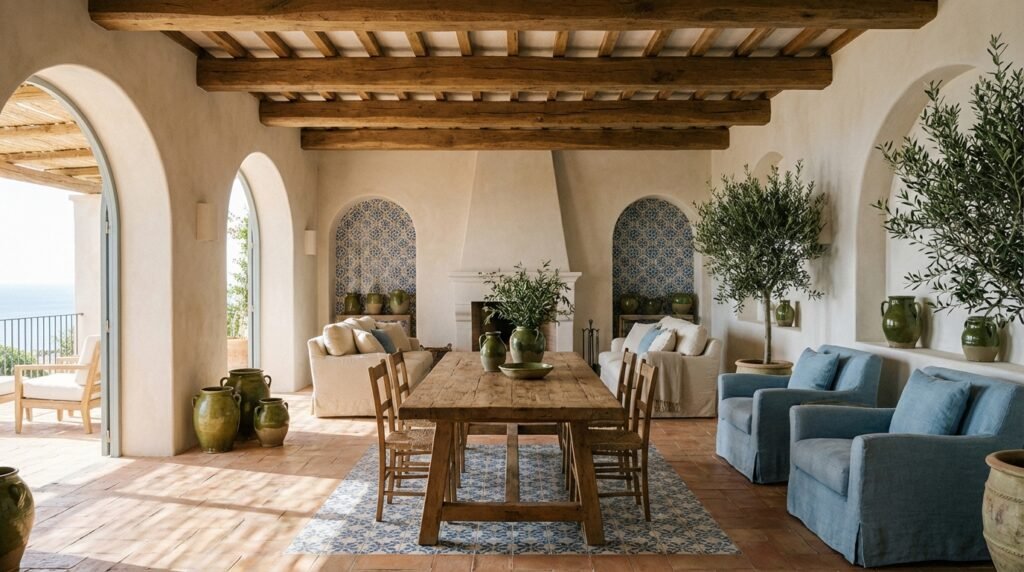
Mediterranean interior design is often described as effortless, yet its appeal is anything but accidental. Rooted in the architecture and lifestyles of Spain, Italy, Greece, and the coastal regions surrounding the Mediterranean Sea, this approach to interiors prioritizes natural light, tactile materials, and a sense of lived-in comfort. The result is a home that feels warm and inviting—layered with patina, grounded in craftsmanship, and quietly refined.
What Is Mediterranean Interior Design?
Mediterranean interior design is a style defined by sun-washed color, organic textures, and an architectural sensibility that blurs the line between indoors and out. Rather than relying on fleeting trends, it draws from regional building traditions: plastered walls, stone floors, timber beams, arched thresholds, and hand-finished surfaces. It is a decorating language that values authenticity and ease, creating spaces that feel welcoming, resilient, and beautifully imperfect.
Key Characteristics of Mediterranean Style Homes
Mediterranean style homes typically emphasize architectural presence. Arches, niches, and softly rounded edges introduce a sculptural quality that feels both historic and relaxed. Walls are often finished in textured plaster—limewash, stucco, or tadelakt-inspired treatments—so light can dance across subtle variations.
Flooring leans toward natural materials: terracotta, stone, wide-plank wood, and patterned tile. Furnishings tend to be substantial without feeling heavy, often crafted from solid wood, wrought iron, or woven fibers. Decorative accents—ceramics, carved wood, vintage brass, and artisanal textiles—add depth while keeping the overall mood unpretentious.
Mediterranean vs Coastal vs Boho: What’s the Difference?
These styles share a love of light and natural materials, but their signatures differ. Mediterranean style decor is architectural first: it celebrates plaster, stone, arches, and a palette shaped by sun and earth. Coastal interiors, by contrast, are typically brighter and crisper, with more whites, airy blues, and a lighter visual weight—often fewer ornate details and less emphasis on age-worn finishes.
Boho design is more eclectic and globally layered, mixing patterns and eras with a freeform sensibility. Mediterranean interiors can certainly be layered, but they generally feel more cohesive and regionally grounded. Where boho might prioritize maximal pattern play, Mediterranean design favors restrained richness—texture over noise, craftsmanship over novelty.
Core Elements of Mediterranean Interior Design
The enduring charm of Mediterranean interiors comes from a disciplined set of fundamentals. When these are in place, the look feels natural rather than themed. Focus on color, material authenticity, and tactile contrast, and the space will begin to read as Mediterranean even with modern furnishings.
Color Palettes Inspired by Sea, Sky, and Sun
A well-chosen Mediterranean color palette balances warmth with freshness. Sunbaked neutrals—chalky white, cream, sand, and stone—create an inviting foundation. From there, introduce sea and sky notes in measured doses: Aegean blue, deep cobalt, muted aquamarine, and weathered navy. Earth tones such as terracotta, rust, ochre, and olive green bring the grounding warmth that keeps the scheme from feeling cold.
For a timeless result, treat bold hues as accents rather than full-room saturation. Blue works beautifully on tile, painted furniture, or textiles. Terracotta appears naturally in pottery, floors, and linens. Metallics should feel aged and soft—antiqued brass and blackened iron rather than high-shine finishes.
Natural Materials: Stone, Wood, and Textured Plaster
Natural materials interior design is central to Mediterranean spaces because it creates visual depth without relying on excessive decoration. Stone introduces permanence and coolness, especially in floors, hearths, and accent walls. Wood brings warmth and familiarity, whether through exposed beams, rustic cabinetry, or a generously scaled dining table.
Textured plaster is the quiet hero. It adds a handmade character that paint alone rarely achieves, and it pairs well with both traditional and modern Mediterranean home styling. Even small interventions—limewash in a hallway, a plaster-finish fireplace surround, or a gently imperfect feature wall—can transform a room’s atmosphere.
How to Create a Warm, Inviting Mediterranean Living Space
To craft warm inviting spaces, prioritize comfort, light, and touchable surfaces. Mediterranean interiors feel hospitable because they are designed for daily life—long meals, relaxed conversation, and rooms that age gracefully. Start with a few high-impact decisions: a grounded palette, layered textiles, and a deliberate mix of refined and rustic elements.
Mediterranean Living Room Ideas for Cozy Everyday Comfort
The best Mediterranean living room ideas begin with a strong architectural anchor. If you have a fireplace, frame it as a focal point with plaster, stone, or tile. If you do not, create a similar sense of weight with a substantial coffee table in wood or stone, or a built-in niche that displays ceramics and books.
Choose seating that encourages lingering. A deep sofa in linen, cotton, or performance fabric provides softness, while accent chairs in leather, woven cane, or wood add texture. Layer in textiles with restraint: a wool or flatweave rug, linen curtains that filter light, and pillows in subtle stripes or artisan patterns. Avoid overly glossy surfaces; Mediterranean style decor is at its best when matte, tactile, and quietly complex.
Lighting should be warm and varied. Combine ambient light with table lamps and wall sconces—especially iron, ceramic, or alabaster-inspired fixtures. Candles and lanterns can add evening intimacy without looking staged. Finally, incorporate greenery: olive trees, rosemary, or leafy plants in terracotta pots reinforce the indoor-outdoor spirit central to Mediterranean interior design.
Mediterranean Kitchen and Dining Room Design Tips
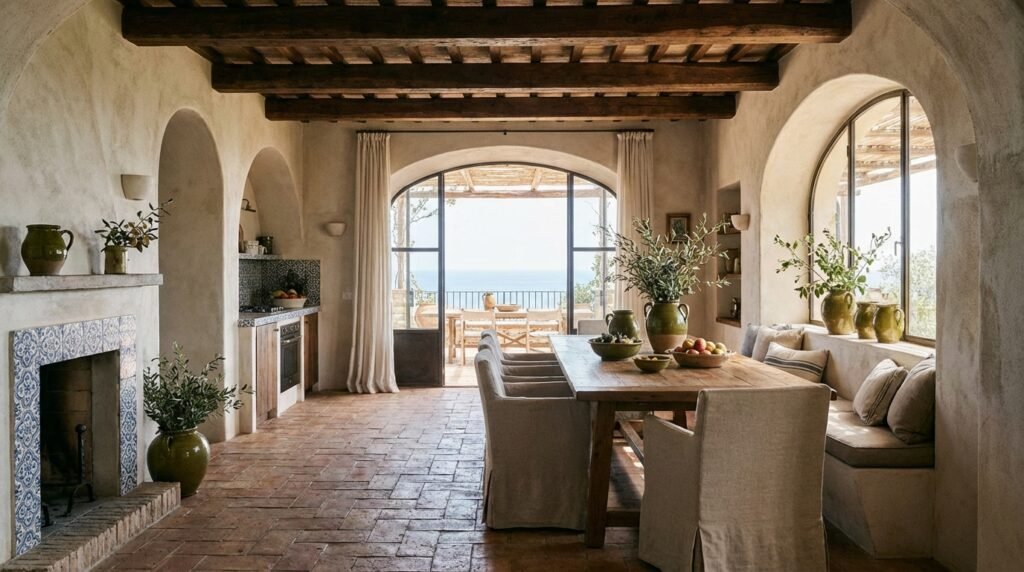
Mediterranean kitchen design favors practicality with an artisanal edge. Cabinetry can be clean-lined, but it should feel grounded—think warm woods, painted finishes with character, or a mix of closed storage and open shelves for ceramics. Countertops in natural stone or stone-look surfaces bring the right sense of permanence, while textured tile backsplashes—zellige, encaustic patterns, or handmade subway tile—add nuanced shine.
For dining areas, invest in a table that can carry the room. A sturdy wood table, preferably with visible grain and a generous scale, becomes the social center. Pair it with mixed seating—wood chairs, woven seats, or a bench—to keep the arrangement relaxed rather than formal. Use table linens in linen or cotton, and choose dinnerware with a handcrafted feel: glazed ceramics, simple stoneware, and vintage glass.
Color is often most effective here in concentrated moments: a painted pantry door in muted blue, terracotta-toned tile, or a cluster of patterned bowls on open shelving. The aim is richness without clutter, so every visible piece should contribute texture, heritage, or function.
Bringing Mediterranean Style Into Modern Homes
A modern Mediterranean home does not require ornate detailing or old-world heaviness. In contemporary architecture—open plans, large windows, minimal trim—the style translates through materials, proportions, and a curated approach to decoration. Think of it as Mediterranean restraint: fewer objects, better textures, and warmer finishes.
Modern Mediterranean Decor Ideas on a Budget
Budget-friendly Mediterranean home decorating starts with surface choices and selective upgrades. Paint is powerful: choose warm whites or creamy neutrals, and consider a limewash-style finish for subtle movement. Replace overly cool light bulbs with warm color temperatures to soften the entire home, especially in the evening.
Textiles offer a high-impact, lower-cost route to authenticity. Linen curtains, woven rugs, and simple striped cushions suggest Mediterranean ease without heavy renovation. Vintage and secondhand markets are also valuable sources for aged brass, ceramic vessels, carved wood frames, and woven baskets—elements that immediately add depth and patina.
When possible, upgrade one “touch point” at a time. Swap cabinet hardware for antiqued brass or iron. Introduce a statement pendant in ceramic or wrought iron. Add a terracotta planter or two. These edits, while modest, shift the mood toward Mediterranean style decor without requiring structural changes.
Small-Space Mediterranean Design Tips for Apartments and Condos
In compact homes, Mediterranean interior design thrives when it emphasizes light, texture, and purposeful restraint. Start with a cohesive palette—warm white walls, sand-toned upholstery, and one or two accent colors such as deep blue or olive. This keeps the space airy while still delivering the warmth associated with southern European interiors.
Choose furniture with visual breathing room. A sofa with raised legs, a round dining table, or armless chairs can make an apartment feel more open. Use mirrors to amplify daylight and highlight plaster-like wall finishes. For storage, woven baskets and lidded ceramic jars keep essentials accessible while contributing to the room’s material story.
Add Mediterranean character through details that do not consume square footage: an arched mirror, a small niche-style shelf, textured pottery, or a patterned tile tray on a coffee table. Even in a studio, these elements can evoke place and atmosphere, creating warm inviting spaces that feel calm rather than crowded.
Conclusion
Mediterranean interior design endures because it is more than a visual aesthetic; it is a philosophy of comfort, craftsmanship, and light. By grounding your rooms in a thoughtful Mediterranean color palette, prioritizing stone, wood, and textured plaster, and layering decor with restraint, you can create interiors that feel welcoming and deeply livable. Whether you are shaping a full modern Mediterranean home or simply refining one room with Mediterranean living room ideas and practical Mediterranean kitchen design updates, the most successful results come from authenticity—materials that age well, colors that glow warmly, and spaces designed for everyday pleasure.
Crystal Collector
Combat Protocol
WASD – Move
Mouse – Look around
Left Click – Fire Weapon
R – Reload
Eliminate all hostile units in the sector!
(Works better on computer)