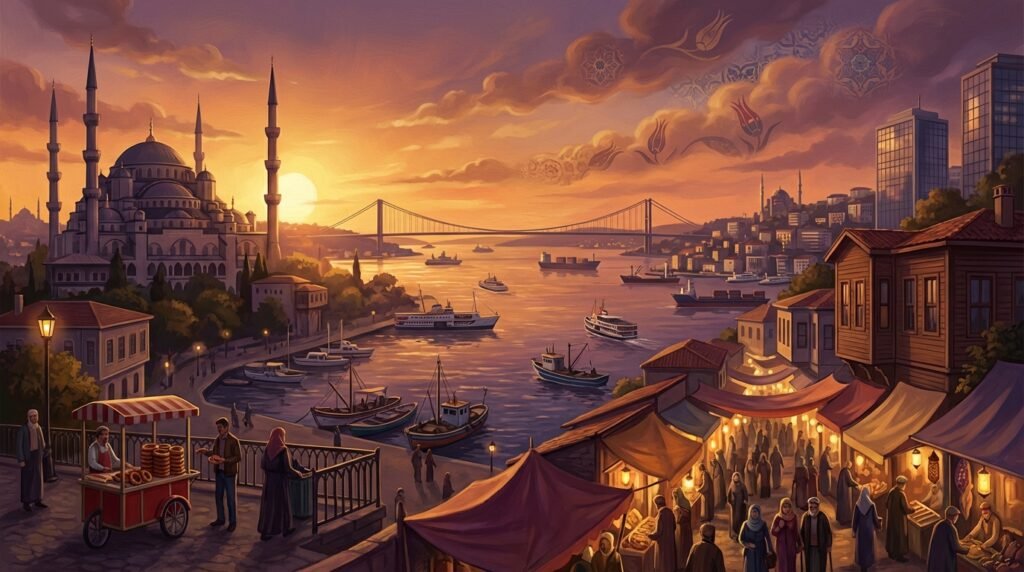
Istanbul is a city where continents meet, empires overlap and centuries of history coexist with a vibrant contemporary life. Straddling Europe and Asia across the Bosphorus Strait, it offers an exceptional blend of heritage, architecture, gastronomy and culture. Whether you are planning your first visit or deepening a long-standing fascination, understanding Istanbul’s past and present will transform your experience of the city.
Discovering the History of Istanbul
Key Historical Events Shaping the City
Istanbul’s story begins long before it was known by its current name. Founded as Byzantium around the 7th century BCE by Greek colonists from Megara, it occupied a strategic peninsula overlooking vital sea routes. This early settlement’s location would determine its destiny: every major power in the region coveted control of this gateway between the Black Sea and the Mediterranean.
The city’s first transformative moment arrived in 330 CE, when Emperor Constantine the Great chose Byzantium as the new capital of the Roman Empire. Renamed Constantinople, it became “New Rome,” a political and religious center that rivaled any city in the ancient world. This era saw the construction of monumental churches, palaces and defensive walls, some of which still shape Istanbul’s skyline.
In 395 CE, the Roman Empire split into East and West, and Constantinople became the capital of the Eastern Roman, or Byzantine, Empire. For more than a millennium, it stood as a bastion of Christianity, trade and scholarship. The city endured sieges, internal conflict and religious controversies, yet remained a powerful maritime and commercial hub. Events such as the Fourth Crusade in 1204, when Crusader forces sacked Constantinople, left deep scars but did not extinguish its importance.
The city’s second great turning point came on 29 May 1453, when Sultan Mehmed II conquered Constantinople after a dramatic siege. This event marked the end of the Byzantine Empire and the beginning of a new Ottoman era. Renamed Istanbul in common usage, the city became the capital of the Ottoman Empire, which expanded across three continents. Under Ottoman rule, the skyline filled with grand mosques, bazaars and bridges, while diverse communities—Muslim, Christian, Jewish and others—contributed to a rich urban tapestry.
The 19th century brought modernization and reform as the Ottoman Empire attempted to adapt to a rapidly changing world. Western-style architecture, new administrative buildings and transport infrastructure reshaped parts of the city. Following the First World War and the dissolution of the empire, the Republic of Turkey was founded in 1923 under Mustafa Kemal Atatürk. Although Ankara became the new political capital, Istanbul remained Turkey’s cultural and economic heart, evolving into a cosmopolitan metropolis that preserves its layered history.
Famous Historical Landmarks
Istanbul’s landmarks testify to its role as a crossroads of civilizations. At the top of most itineraries stands Hagia Sophia, originally built as a Byzantine cathedral in the 6th century under Emperor Justinian. Its soaring dome, intricate mosaics and massive piers embodied imperial ambition. Over time, it became an Ottoman mosque and later a museum, before once again serving as a mosque. Visiting Hagia Sophia offers a rare opportunity to stand in a space that has served as a spiritual focal point for both Christianity and Islam.
Directly opposite lies the Blue Mosque (Sultan Ahmed Mosque), completed in the early 17th century. Famous for its graceful cascade of domes and six slender minarets, it is named for the thousands of blue Iznik tiles that line its interior. The mosque remains an active place of worship, and visitors quickly sense how religious life and tourism intersect in the historic core of Istanbul.
The Topkapi Palace complex showcases four centuries of Ottoman imperial life. Overlooking the Bosphorus and Golden Horn, it includes opulent courtyards, state rooms, pavilions and the renowned Harem section. Exhibits display Ottoman treasures, including ceremonial weapons, robes, calligraphy and religious relics. Wandering through its gardens and chambers reveals how power, aesthetics and ceremony converged at the heart of the empire.
Nearby, the Basilica Cistern offers a completely different atmosphere. This underground reservoir, built in the 6th century, is supported by hundreds of columns illuminated in soft light. The echoing space, elevated walkways and enigmatic Medusa-head column bases create an evocative environment that reflects the engineering prowess of the Byzantines.
Further afield, the City Walls of Theodosius, stretching across the landward side of the old city, once protected Constantinople from numerous sieges. Portions of these massive fortifications still stand and can be explored on foot, offering panoramic views and insight into the city’s defensive strategies. Together, these landmarks form a tangible narrative of Istanbul’s complex and enduring history.
Best Attractions to Visit in Istanbul
Iconic Sites You Can’t Miss
For first-time visitors, certain attractions are almost obligatory. The Historic Peninsula (Sultanahmet) concentrates many of Istanbul’s most celebrated monuments. In addition to Hagia Sophia, the Blue Mosque and Topkapi Palace, the area includes the Hippodrome, once the social and sporting center of Byzantine Constantinople. Today, you can see the Egyptian Obelisk, Serpent Column and Walled Obelisk, remnants of a chariot-racing arena that once held tens of thousands.
No exploration of Istanbul is complete without a visit to the Grand Bazaar (Kapalıçarşı), one of the world’s oldest and largest covered markets. With thousands of shops arranged along labyrinthine lanes, it offers carpets, ceramics, jewelry, textiles, spices and antiques. Beyond shopping, the bazaar provides a window into traditional commerce, craftsmanship and bargaining culture. Nearby, the Spice Bazaar (Mısır Çarşısı) tempts visitors with colorful displays of herbs, teas, dried fruits, nuts and sweets, infusing the air with intoxicating aromas.
On the waterfront, a cruise along the Bosphorus reveals another dimension of Istanbul. From the deck of a ferry or private boat, you can admire Ottoman palaces such as Dolmabahçe and Beylerbeyi, elegant wooden mansions (yalıs), waterside mosques and the city’s modern bridges connecting Europe and Asia. The shifting perspectives along the strait illustrate how Istanbul’s geography shapes its identity.
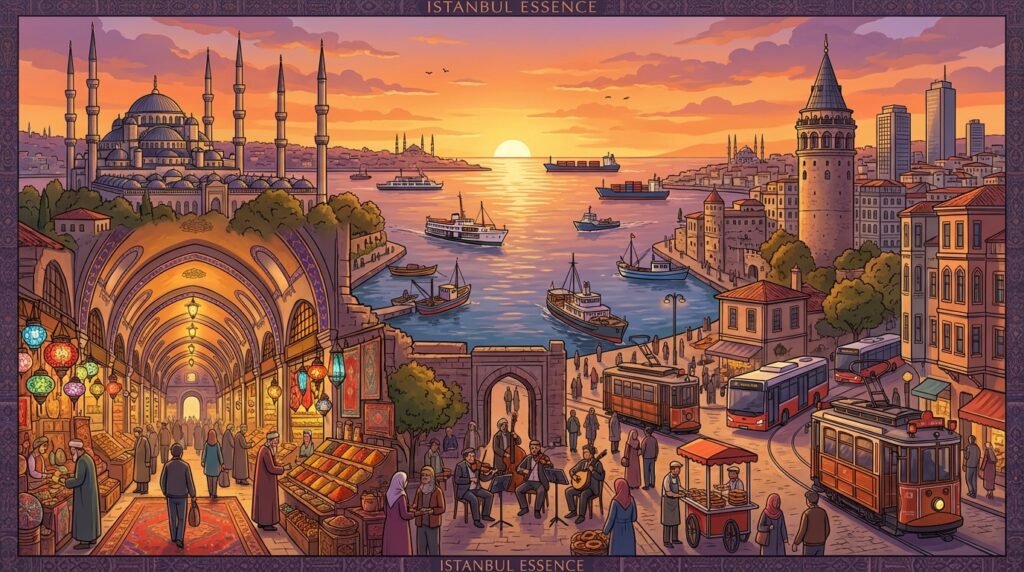
Modern districts also deserve attention. Taksim Square and Istiklal Avenue form a lively artery lined with shops, galleries, churches, consulates and cafés. A historic tram runs along the pedestrian street, which comes alive in the evenings with street musicians and bustling crowds. The nearby Galata Tower, originally built by the Genoese in the 14th century, offers sweeping views over the city’s rooftops, waterways and monuments.
Hidden Gems of the City
Beyond the main sights, Istanbul rewards curiosity with quieter, less publicized places. On the Asian side, the neighborhood of Kadıköy combines a vibrant food market, independent boutiques, bookshops and intimate cafés. Strolling through its backstreets provides a sense of everyday life far from the tourist core, while the seaside promenade is ideal for sunset walks.
The adjacent district of Moda is particularly appealing for those who enjoy a relaxed, creative atmosphere. Tree-lined streets, small parks and seafront terraces make it a favorite among locals. From here, you can watch ferries cross the Bosphorus, an essential ritual for understanding Istanbul’s maritime character.
On the European side, the neighborhoods of Balat and Fener showcase colorful houses, steep cobbled streets and a layered multicultural history. These former Greek and Jewish quarters are filled with historic churches, synagogues and schools. Exploring them offers a more intimate perspective on the city’s diverse past and ongoing urban revitalization.
Another lesser-known site is the Chora Church (Kariye Mosque), renowned for its exquisite Byzantine mosaics and frescoes depicting biblical scenes. Although it has gone through various phases of restoration and functional changes, it remains one of the finest examples of late Byzantine art. Visiting Chora provides a more contemplative experience than the busier central monuments.
For a tranquil escape, the Princes’ Islands in the Sea of Marmara are easily accessible by ferry. The largest, Büyükada, is notable for its car-free streets (transport is by bicycle or electric vehicles), historic mansions and pine forests. A day trip there offers clean air, coastal views and a chance to see a different pace of life within the greater Istanbul region.
Holiday in London: Travel Guide, and Top Attractions
Athens Travel Guide: Top Attractions, Acropolis, & Best Time to Visit
Mykonos Travel Guide: Windmills, Whitewashed, and Hidden Gems
Venice Travel Guide: Top Attractions and Hidden Gems
Monaco Travel Guide: Top Attractions & Best Time to Visit
Puglia: A Sun-Drenched Odyssey Through Italy’s Secret South 🇮🇹
Exploring Istanbul’s Rich Culture
Culinary Delights and Traditional Cuisine
Istanbul’s cuisine reflects centuries of migration, trade and imperial patronage. Meals often begin with a variety of meze—small plates that may include stuffed vine leaves, eggplant salads, yogurt-based dips, marinated seafood and seasonal vegetables. Sharing meze at a traditional meyhane (tavern) is not only about food; it is a social ritual accompanied by conversation and, frequently, live music.
Hearty main dishes range from grilled meats such as kebap and köfte (meatballs) to slow-cooked stews and oven-baked casseroles. Street food, however, is where Istanbul’s culinary character truly shines. Vendors sell simit (sesame-crusted bread rings), balık ekmek (fish sandwiches) along the waterfront, and roasted chestnuts and corn in busy squares. In the mornings, locals often pair simit with cheese, olives and tea, illustrating how simple ingredients can create satisfying meals.
Seafood plays a central role, especially in neighborhoods along the Bosphorus such as Ortaköy, Arnavutköy and Kumkapı. Fresh fish, calamari and shrimp are served grilled or fried, usually accompanied by seasonal salads and local white wines or rakı, an anise-flavored spirit associated with leisurely dinners.
Desserts reflect both Ottoman court traditions and regional influences. Baklava, layered with nuts and syrup, is perhaps the most famous, but künefe (cheese-filled pastry), lokma (fried dough balls) and milk-based puddings like kazandibi and sütlaç are equally beloved. No culinary exploration would be complete without sampling Turkish coffee, served in small cups with grounds settling at the bottom, and strong black tea poured from a double teapot, a constant presence in homes, offices and cafés.
Festivals and Cultural Events
Istanbul’s cultural calendar is dense and diverse, reflecting its role as a regional arts center. The Istanbul Film Festival, held annually in spring, attracts international and local filmmakers, offering screenings, retrospectives and panel discussions. It is one of many events organized by the Istanbul Foundation for Culture and Arts (IKSV), which also hosts the Istanbul Music Festival and Istanbul Jazz Festival, drawing renowned performers from around the world.
Art enthusiasts should consider visiting during the Istanbul Biennial, a major contemporary art exhibition that transforms galleries, warehouses and historic buildings into venues for experimental works. The event highlights Istanbul’s role in global artistic conversations and frequently engages with the city’s urban fabric and social dynamics.
Religious and national celebrations also shape the city’s rhythm. During Ramadan, evenings come alive as families and friends gather for iftar (the meal breaking the fast). Public spaces often host illuminated decorations, food stalls and cultural activities. National holidays such as Republic Day on 29 October bring parades, concerts and fireworks, particularly around Taksim and along the Bosphorus.
Smaller neighborhood festivals, book fairs, design weeks and craft markets occur throughout the year, often highlighting specific districts or themes. Monitoring local event listings before your trip can help you align your visit with concerts, exhibitions or street festivals that match your interests, adding a deeper cultural layer to your stay.
Practical Travel Tips for Visiting Istanbul
Transportation Options in the City
Navigating Istanbul may seem daunting due to its vast size, but the city offers an extensive and improving public transport network. The metro system connects major hubs, including the airport terminals, while tram lines are particularly convenient for reaching tourist areas. For example, the T1 tram links Kabataş with the Historic Peninsula, passing close to many key attractions.
Ferries are not only practical but also one of the most scenic ways to travel. Regular services cross between the European and Asian shores, connecting districts such as Eminönü, Karaköy, Beşiktaş, Üsküdar and Kadıköy. The journeys often take less time than crossing the bridges by road during peak traffic, and they provide exceptional vantage points over the city.
The Marmaray rail line runs underneath the Bosphorus, offering a rapid connection between continents and linking with suburban trains. Additionally, Metrobüs (bus rapid transit) routes follow dedicated lanes along key corridors, helping bypass congestion on the main roads. Standard municipal buses fill gaps in the network, though they can be crowded at rush hour.
To use public transport efficiently, purchasing an Istanbulkart is highly recommended. This rechargeable smart card can be used on buses, trams, metros, ferries and some funiculars, providing discounted fares and simplifying transfers. Taxis and ride-hailing services are widely available, but travelers should ensure meters are used and be prepared for heavy traffic during busy periods.
Central areas of Istanbul are best experienced on foot, particularly districts like Sultanahmet, Galata, Karaköy and Cihangir. That said, the city’s steep hills and occasional uneven pavements call for comfortable footwear. Planning your daily itinerary geographically helps minimize unnecessary journeys across the city and makes your time more productive.
Best Times to Visit and Weather Considerations
Istanbul has a transitional climate influenced by both the Mediterranean and the Black Sea, which means weather can be changeable. The most favorable periods for tourism are generally spring (April to June) and autumn (September to early November). During these months, temperatures are usually mild, humidity is more manageable and outdoor exploration is comfortable. Blossoming trees and longer daylight hours in spring, as well as warm, golden light in autumn, enhance the city’s visual appeal.
Summers, particularly in July and August, can be hot and humid, with temperatures often exceeding 30°C (86°F). Coastal breezes along the Bosphorus and Marmara help, but crowded attractions and strong sun may make midday sightseeing tiring. If you visit in summer, scheduling indoor visits—museums, mosques, palaces—for the hottest hours and focusing on outdoor areas in the early morning and late afternoon provides a more pleasant rhythm.
Winters are generally cool and damp. Temperatures frequently hover around 5–10°C (41–50°F), with occasional snowfall that can transform the city into a picturesque, if slippery, landscape. While some days can be gray and rainy, winter has advantages: thinner crowds, lower accommodation prices and a more intimate feel at popular sites. Proper clothing—a waterproof jacket, layers and sturdy footwear—is essential if you travel during this season.
https://www.teepublic.com/t-shirt/51544755-tennis-sport?store_id=2851997
Public holidays, school vacations and major festivals affect crowd levels and pricing. Religious holidays such as Eid (Ramazan Bayramı and Kurban Bayramı) can lead to busy transport routes as residents visit family in other regions, while some businesses may close temporarily. Checking the Turkish holiday calendar and major event schedules before finalizing your dates helps you avoid surprises and optimize your visit.
Regardless of the season, Istanbul’s microclimates mean conditions can vary between districts and can shift quickly. Keeping a light layer or compact umbrella in your bag and staying flexible with your daily plans ensures you can adapt to the city’s changing moods.
Istanbul rewards those who engage with both its past and present. From Byzantine basilicas and Ottoman palaces to contemporary art spaces and lively neighborhoods, each district contributes a distinct chapter to the city’s ongoing story. By understanding its historical foundations, exploring beyond the main sights, immersing yourself in local cuisine and culture, and preparing with practical travel knowledge, you will be well positioned to experience Istanbul in a meaningful and memorable way.

CrystalCollector
Combat Protocol
WASD – Move
Mouse – Look around
Left Click – Fire Weapon
R – Reload
Eliminate all hostile units in the sector!
(Works better on computer)