
Cappadocia Travel Guide: Hot Air Balloons, Fairy Chimneys, and Underground Cities
Cappadocia is one of those rare destinations where geography, history, and culture converge to create a landscape that feels almost otherworldly. Carved by volcanic activity, sculpted by erosion, and shaped by centuries of human habitation, this region in central Türkiye offers a travel experience that is both visually striking and deeply evocative. From its iconic hot air balloons floating over surreal rock formations to its underground cities and rock-cut churches, Cappadocia invites visitors to slow down, wander, and absorb its timeless atmosphere.
https://www.teepublic.com/t-shirt/51540595-crystal?store_id=2851997
Overview of Cappadocia
Geographic Location and Unique Landscape
Cappadocia lies in the heart of central Anatolia, primarily within the modern Turkish provinces of Nevşehir, Kayseri, Aksaray, and Niğde. Positioned on a high plateau over 1,000 meters above sea level and framed by extinct volcanoes such as Mount Erciyes and Mount Hasan, it possesses a climate and topography distinct from many other regions of Türkiye. The semi-arid environment, combined with harsh winters and hot summers, has played a crucial role in shaping the terrain.
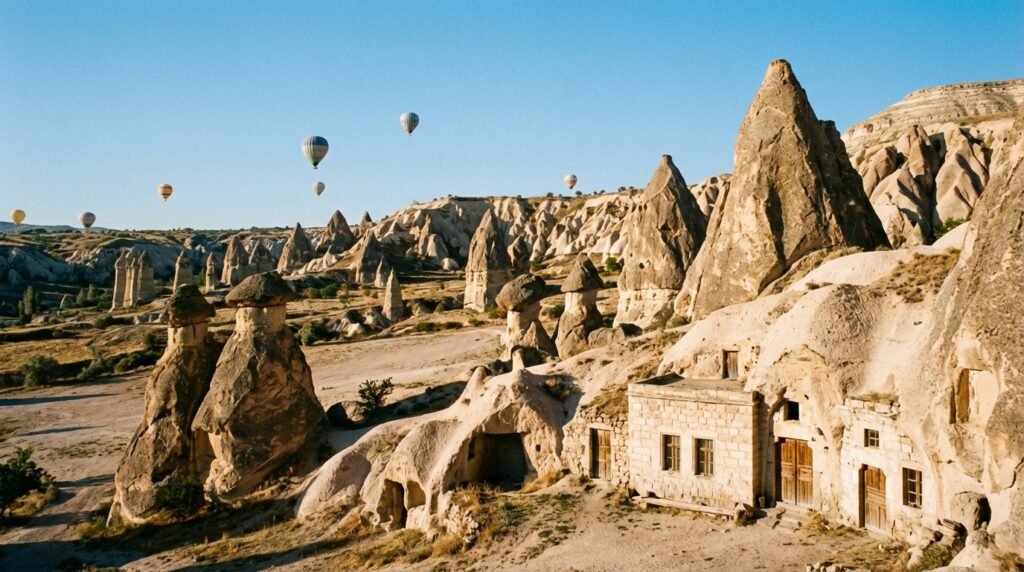
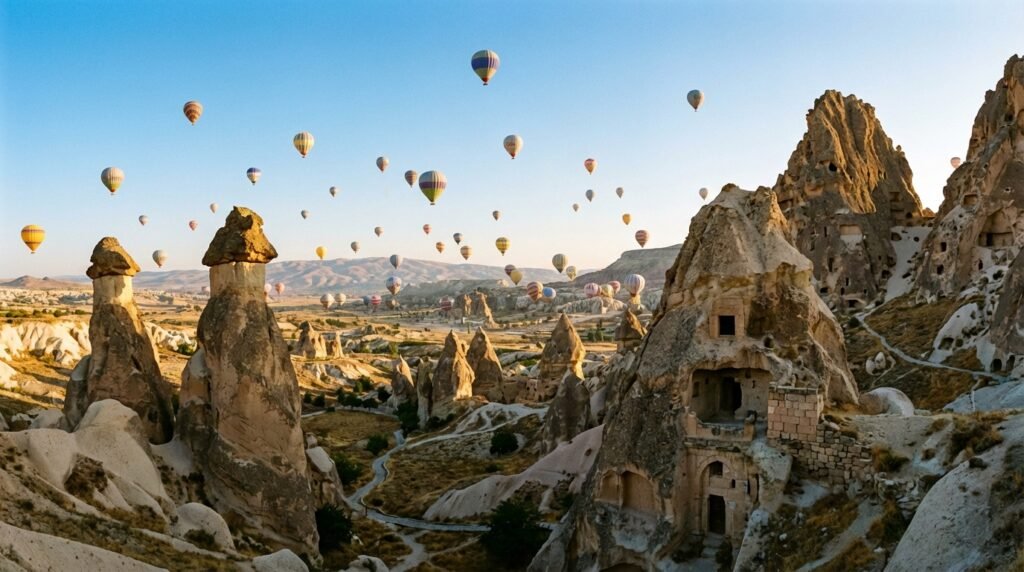
The region’s signature landscape is the result of millions of years of volcanic eruptions and subsequent erosion. Thick layers of soft tuff — compacted volcanic ash — were covered by harder basalt. Wind, rain, and temperature fluctuations slowly eroded the softer rock while the harder layers acted as protective caps, creating the famous conical formations known as “fairy chimneys.” These mushroom-shaped pillars, valleys of undulating rock, and honeycombed cliffs give Cappadocia its unmistakable silhouette, especially striking at sunrise and sunset.
Beyond the fairy chimneys, Cappadocia’s terrain is defined by deep canyons, fertile valleys, and extensive cave systems. Over time, humans have carved homes, churches, monasteries, pigeon houses, and even entire subterranean cities into the soft stone, integrating themselves into the geology in a remarkably harmonious way. This interplay between natural forces and human ingenuity is at the core of what makes the region so compelling.
Historical Significance and Cultural Heritage
Cappadocia’s history stretches back to the Bronze Age and the Hittite Empire, when it served as a vital corridor between the eastern and western parts of Anatolia. Its strategic location along the Silk Road later made it a crossroads of commerce and culture for Persians, Romans, Byzantines, Seljuks, and Ottomans. Each civilization left layers of cultural and architectural heritage, turning the region into an open-air archive of Anatolian history.
From the early Christian period onward, Cappadocia became a refuge and spiritual center. The soft rock facilitated the creation of cave churches, chapels, and monastic complexes, many adorned with frescoes depicting scenes from the Bible and lives of saints. During times of persecution or invasion, the region’s inhabitants retreated into multi-level underground cities—such as Derinkuyu and Kaymakli—equipped with storage rooms, ventilation shafts, wineries, and chapels.
Today, Cappadocia’s cultural fabric is a blend of this ancient heritage and contemporary Anatolian life. Traditional stone houses, handicrafts like pottery from Avanos, and local cuisine coexist with boutique cave hotels and modern tourism infrastructure. The UNESCO World Heritage status of the Göreme National Park and the Rock Sites of Cappadocia underscores the global importance of preserving this unique cultural landscape.
Top Attractions in Cappadocia
The Fairy Chimneys of Pasabag
Pasabag, also known as Monks Valley, is one of the most emblematic sites in Cappadocia. Located near the town of Avanos and close to Zelve, it is particularly famous for its extraordinary concentration of fairy chimneys. These formations often feature multiple rock caps stacked on top of each other, giving them a dramatic and almost sculptural appearance.
Historically, Pasabag was a place of seclusion for hermit monks, some of whom retreated into small rooms carved into the chimneys themselves. One of the most notable hermits associated with the valley is Saint Simeon, whose name is often linked with the local history of asceticism. Visitors can still explore the interior of some of these chimneys, climbing into narrow cells and chapels that convey a sense of the isolation once sought here.
For travelers, Pasabag offers well-marked paths and viewpoints ideal for photography and quiet contemplation. The valley is at its most atmospheric in the early morning or late afternoon, when slanting light accentuates the textures and colors of the rock. While it is a popular attraction, there are still corners where one can step away from the crowds and appreciate the geological wonders in relative tranquility.
Goreme Open-Air Museum
The Göreme Open-Air Museum is the cultural heart of Cappadocia and one of the region’s most significant monastic complexes. Situated just outside the town of Göreme, this UNESCO World Heritage Site encompasses a cluster of rock-cut churches, chapels, and refectories dating primarily from the 10th to 12th centuries. Hewn into the volcanic tuff, these structures form a compact yet richly layered snapshot of medieval Christian monastic life in Anatolia.
The churches within the complex—such as the Dark Church (Karanlık Kilise), Apple Church (Elmalı Kilise), and Snake Church (Yılanlı Kilise)—are renowned for their remarkably well-preserved frescoes. These vivid paintings depict Christ Pantocrator, the Virgin Mary, apostles, saints, and biblical narratives, often framed by intricate geometric motifs. The Dark Church, in particular, has retained its intense colors thanks to the minimal natural light entering the chamber, making it one of the finest examples of Byzantine mural art in the region.
Beyond the religious structures, the site includes communal dining halls, kitchens, and living quarters, illustrating the daily routines of the monks who once lived here. Visitors can follow a clear circuit that guides them through the main chapels and viewpoints. To fully appreciate the iconography and historical context, it is advisable to allow several hours and, if possible, hire a licensed guide or use an audio guide.
Activities to Experience in Cappadocia
Hot Air Balloon Rides
Hot air ballooning in Cappadocia has become synonymous with the region’s identity and is often cited as one of the most memorable balloon experiences in the world. At dawn, dozens—sometimes over a hundred—balloons lift off from designated launch sites, drifting over valleys like Göreme, Love Valley, and Rose Valley. As the sun rises, the light gradually reveals the contours of the fairy chimneys, vineyards, and villages, creating a panoramic spectacle.
Flights typically last between 60 and 90 minutes, depending on the package and weather conditions. Reputable operators prioritize safety, employing experienced pilots and adhering to strict aviation regulations. Standard flights involve shared baskets, while deluxe or private options offer more space and customized experiences. Most tours include hotel transfers, a light pre-flight snack, and a simple post-landing ceremony.
Because balloon rides are highly weather-dependent, cancellations can occur at short notice due to wind or visibility concerns. For this reason, travelers should schedule their flight for the first available morning in Cappadocia, leaving room for rescheduling if conditions are not favorable. Advance booking, especially during peak seasons, is essential, as capacity is limited and demand is high.
Hiking Trails and Nature Walks
While hot air balloons provide a dramatic bird’s-eye view, hiking in Cappadocia allows travelers to engage intimately with the landscape. The region is traversed by a network of trails that wind through valleys, vineyards, orchards, and rock formations, offering both leisurely walks and more demanding treks.
Popular routes include the Rose and Red Valleys, known for their layered rock in subtle shades of pink and crimson, which become especially luminous at sunset. Pigeon Valley, connecting Göreme and Uçhisar, is a relatively gentle walk featuring carved pigeon houses and sweeping views of the surrounding countryside. Ihlara Valley, a bit farther afield, offers a verdant canyon with a river running along its floor and numerous rock-cut churches scattered along the cliffs.
Most trails are accessible without technical equipment, but sturdy walking shoes, sun protection, and sufficient water are essential, particularly in the warmer months. Signage can be inconsistent in some areas, so using a reliable offline map or hiring a local guide is advisable for longer routes. Hiking in Cappadocia is not only a way to appreciate its geological variety but also a chance to encounter rural life, from small farms to traditional stone houses that still shape the living culture of the region.
Travel Tips for Visiting Cappadocia
Best Time to Visit and Weather Considerations
Cappadocia is a year-round destination, but seasonal differences significantly influence the experience. Spring (April to June) and autumn (September to early November) are widely considered the most favorable periods to visit. During these months, daytime temperatures are generally mild, skies are relatively clear, and the valleys are at their most photogenic, with blooming wildflowers in spring and warm hues in autumn.
Summer (July and August) brings hot, dry weather, with midday temperatures often exceeding 30°C. Early mornings and evenings remain pleasant, making them ideal for hot air balloon rides and outdoor exploration, but midday hikes can be taxing. Winter (December to March) can be cold, with occasional snowfall transforming the landscape into a serene, white panorama. While some activities may be limited and balloon flights more frequently canceled, winter offers a quieter atmosphere and a unique visual contrast.
Weather plays a crucial role in determining whether hot air balloons can fly, so flexibility is important. Travelers should monitor forecasts, be prepared for cool pre-dawn temperatures even in summer, and pack layered clothing to adapt to fluctuations between day and night. A windproof jacket, comfortable walking shoes, and sun protection are essential for most of the year.
Accommodation Options and Dining Recommendations
Cappadocia offers a wide range of accommodation, from authentic cave hotels to contemporary boutique properties and budget-friendly guesthouses. Staying in a cave hotel is a quintessential experience, as many have been carved into the rock and sensitively restored, combining traditional architecture with modern comfort. Towns such as Göreme, Uçhisar, Ürgüp, and Ortahisar are among the most popular bases, each with distinct atmospheres and viewpoints.
Göreme is central, lively, and convenient for first-time visitors, with easy access to tour operators, restaurants, and the Göreme Open-Air Museum. Uçhisar, crowned by its imposing rock castle, offers more elevated views and a quieter ambiance. Ürgüp and Ortahisar provide a balance between local life and tourism, often appealing to those seeking a slightly less crowded environment while still enjoying quality services.
The regional cuisine reflects Anatolian traditions, emphasizing slow-cooked meats, fresh vegetables, and locally produced wines. A signature dish is the pottery kebab (testi kebabı), where meat and vegetables are cooked in a sealed clay pot, then dramatically opened at the table. Other specialties include manti (Turkish dumplings), lentil soups, mezes, and various grilled dishes. Many restaurants also highlight local wines, as Cappadocia’s volcanic soil and climate support vineyards producing distinctive varietals.
For a satisfying culinary experience, visitors should seek out establishments that emphasize regional ingredients and traditional recipes rather than solely tourist-oriented menus. Making dinner reservations is advisable during high season, particularly at renowned cave restaurants and rooftops with sunset views over the valleys and fairy chimneys.
Thoughtful planning—choosing the right season, allocating time for both iconic sights and quieter hikes, and selecting accommodation that suits your travel style—will greatly enhance a journey to Cappadocia. This is a destination that rewards lingering, careful observation, and a willingness to explore beyond the most photographed viewpoints.
In conclusion, Cappadocia stands out not merely as a picturesque backdrop for hot air balloons, but as a complex cultural landscape shaped by geological forces and centuries of human adaptation. Its fairy chimneys, rock-hewn churches, and underground cities offer tangible connections to different eras, while its valleys and plateaus invite exploration and reflection. Whether approached as a short escape or as a central highlight of a longer journey through Türkiye, Cappadocia captivates the senses and leaves visitors with a lasting impression of a place where nature and history are inseparably intertwined.
Monaco Travel Guide: Top Attractions & Best Time to Visit
Puglia: A Sun-Drenched Odyssey Through Italy’s Secret South 🇮🇹
Santorini Travel Guide: Top Attractions, Oia & Best Time to Visit
London Unveiled: The Ultimate Guide to Your 2025 Dream Holiday 🇬🇧✨
Istanbul Travel Guide: A Journey Through History, Culture, and Modern Life
CrystalCollector
Combat Protocol
WASD – Move
Mouse – Look around
Left Click – Fire Weapon
R – Reload
Eliminate all hostile units in the sector!
(Works better on computer)