
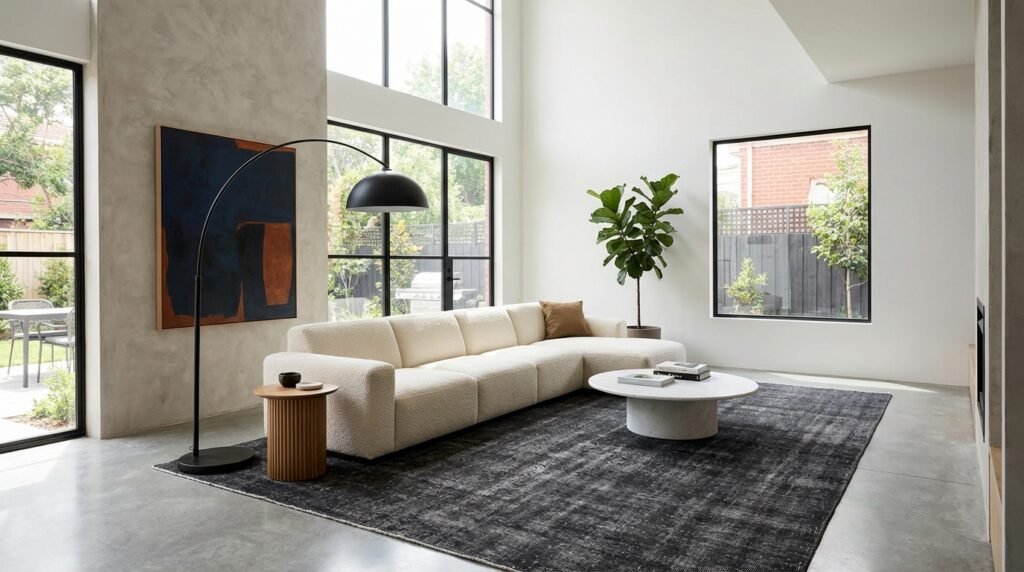
Contemporary interior design is often misunderstood as a synonym for “modern,” yet it is a distinct, evolving approach that reflects how people live today. Rather than adhering to a single historical movement, the contemporary interior style borrows selectively from multiple influences—minimalism, mid-century modern, Scandinavian restraint, even industrial accents—then refines them into spaces that feel current, comfortable, and intentional. The result is a home that reads as sophisticated without appearing rigid, and curated without feeling over-styled.
What Is Contemporary Interior Design?
Defining Contemporary Interior Design Style
Contemporary interior design is best defined as a “now” aesthetic: a design language shaped by present-day tastes, technologies, and lifestyles. It favors clean lines, visual clarity, and a measured use of texture and contrast. While it often leans minimal, contemporary design is not sterile; it is warm when layered properly, especially through tactile materials and carefully scaled furnishings.
In practice, contemporary home decor emphasizes edited spaces, open sightlines, and a balance between function and elegance. Architectural details—such as large windows, streamlined trim, or open-plan layouts—are celebrated rather than disguised. Decorative choices tend to be purposeful: fewer objects, higher impact, and better proportion.
Contemporary vs. Modern Interior Design: Key Differences
The confusion around contemporary vs modern design is understandable because they share a preference for simplicity. However, the distinction is meaningful:
- Modern design typically refers to a specific period and set of movements (roughly early-to-mid 20th century), with recognizable hallmarks such as mid-century silhouettes, organic forms, and iconic materials.
- Contemporary design is fluid and responsive, shifting as tastes change. It can incorporate modern pieces, but it is not limited to them.
Many homeowners naturally end up with modern contemporary interiors: spaces that use modern foundations—clean-lined furniture, honest materials—then update the look with today’s preferred palettes, lighting, and styling conventions.
Core Elements of Contemporary Interior Design
Color Palettes, Materials, and Textures
A refined contemporary color palette typically begins with neutrals: warm whites, soft greiges, taupes, charcoal, and muted stone tones. These hues create visual calm and allow textures to do the heavy lifting. Accents arrive through controlled contrast—often black, deep olive, ink blue, or a saturated earth tone used sparingly for depth.
Materials are selected for authenticity and tactile presence. Popular choices include:
- Natural wood (often light to medium tones) for warmth and balance.
- Stone and stone-look surfaces for quiet luxury and permanence.
- Metal accents in blackened steel, brushed nickel, or warm brass—typically used with restraint.
- Glass to maintain lightness, especially in lighting, tables, and partitions.
Texture is essential to prevent minimalism from turning flat. Bouclé, wool, linen, leather, ribbed wood, matte ceramics, and microcement finishes are all contemporary design elements that add dimension without introducing visual clutter.
Furniture, Lighting, and Layout Principles
Contemporary furniture is defined by clean silhouettes, thoughtful proportions, and comfort-forward engineering. Curves often appear in moderation—rounded sofas, sculptural chairs, arched mirrors—softening the geometry of the room while maintaining a disciplined look.
Lighting is treated as both utility and architecture. Layering is key:
- Ambient lighting provides overall illumination (recessed lights, ceiling fixtures).
- Task lighting supports function (reading lamps, under-cabinet lighting).
- Accent lighting adds mood and emphasis (wall washers, picture lights, LED strips).
Layout principles favor airflow and clarity. Instead of filling every corner, contemporary interiors prioritize negative space, clear pathways, and a focal point—often a fireplace wall, an artwork vignette, a feature pendant, or a panoramic window. This is where contemporary home decor feels most “designed”: it is as much about what you omit as what you add.
How to Create a Contemporary Interior in Your Home
Room-by-Room Contemporary Design Ideas
Living Room
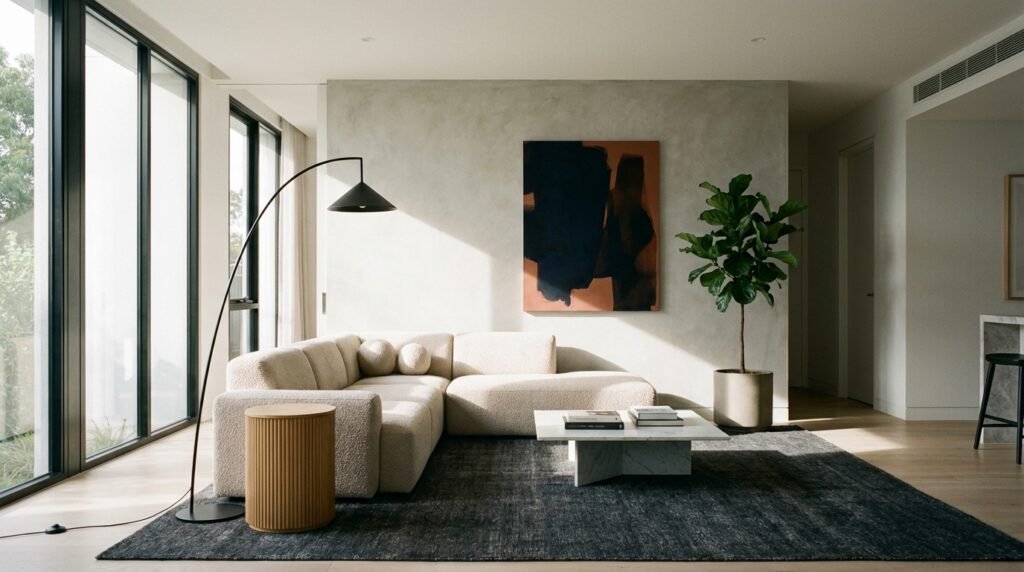
For many homeowners, the living area is the best starting point for contemporary living room ideas. Begin with a grounded seating arrangement: a tailored sofa, one or two sculptural accent chairs, and a coffee table that introduces a contrasting material (wood with stone, metal with glass). Keep styling selective—one large artwork often reads more contemporary than multiple small pieces.
- Choose a low-profile rug with subtle patterning to anchor the seating zone.
- Add texture through cushions and throws rather than busy décor.
- Use a statement floor lamp or oversized pendant to create a deliberate focal point.
Kitchen
Contemporary kitchens emphasize streamlined cabinetry, integrated storage, and uncluttered countertops. Flat-panel or subtly detailed doors, minimal hardware, and cohesive surfaces deliver the signature clarity of the contemporary interior style.
- Consider a waterfall island edge for a crisp architectural line.
- Introduce warmth with wood stools or open shelving used sparingly.
- Layer lighting: recessed for general use, pendants for presence, under-cabinet for precision.
Dining Room
A contemporary dining space benefits from one sculptural gesture: a chandelier with strong form, a substantial table, or a large piece of art. Keep surrounding elements quiet to preserve impact.
- Opt for slim-profile chairs with comfortable upholstery.
- Use a simple centerpiece—ceramic vessel, branch arrangement, or a single bowl—rather than multiple accessories.
Bedroom
Contemporary bedrooms feel serene and layered. Prioritize a strong headboard shape, quality bedding, and softly diffused lighting. A restrained palette does not mean bland; it invites nuance through textiles and tone-on-tone variation.
- Install bedside sconces to free up nightstand space.
- Choose a rug that extends beyond the bed for a tailored, hotel-like proportion.
- Limit décor to a few intentional pieces—art, a mirror, a well-crafted bench.
Bathroom
Contemporary bathrooms rely on clean surfaces, floating vanities, and refined contrasts. Matte black fixtures, ribbed glass, large-format tile, and integrated niches are contemporary design elements that offer both style and practicality.
- Use consistent metal finishes for a cohesive look.
- Incorporate warm lighting at the mirror to soften the space.
- Keep visible items minimal by improving storage and using uniform containers.
Entryway
A contemporary entry sets the tone with disciplined simplicity. A console with strong lines, a single artwork, and a mirror can create an elegant first impression while staying functional.
- Add a concealed catch-all solution to prevent clutter.
- Use a runner with texture rather than heavy pattern.
Budget-Friendly Tips for a Contemporary Makeover
A contemporary home makeover does not require a full renovation. Strategic updates can shift the entire mood of a home:
- Edit first, then purchase. Removing visual noise is the most cost-effective contemporary upgrade. Keep surfaces purposeful and allow breathing room.
- Upgrade lighting before furniture. A well-chosen pendant, linear chandelier, or sculptural floor lamp can modernize a space immediately.
- Standardize finishes. Replace mismatched hardware and fixtures with a consistent finish (matte black, brushed nickel, or warm brass) for instant cohesion.
- Refresh paint with precision. Choose a soft neutral base and add one anchoring contrast—charcoal doors, a deep accent wall, or black window trim where appropriate.
- Invest in textiles for depth. A substantial rug, linen drapery, or textured bedding can make a room feel quietly luxurious without structural changes.
- Use large-scale art prints. One oversized piece often looks more contemporary than many small frames and can be achieved affordably with high-quality prints.
Above all, prioritize proportion. Contemporary spaces look expensive when furniture is correctly scaled, curtains are properly hung, and layouts feel deliberate.
Common Mistakes and FAQ About Contemporary Interiors
Mistakes to Avoid in Contemporary Interior Design
- Confusing “minimal” with “empty.” Contemporary rooms need warmth—layered textures, soft lighting, and comfortable seating—to avoid feeling impersonal.
- Overusing trends. Because contemporary style evolves, it is easy to chase novelty. Anchor the space with timeless basics, then incorporate trends through easily changeable items.
- Ignoring texture. A neutral palette without tactile variation can appear flat. Mix matte and sheen, smooth and nubby, soft and structured.
- Cluttered surfaces. Too many accessories undermine the clean clarity that defines contemporary home decor. Curate décor like a gallery: fewer pieces, better placement.
- Inconsistent finishes. Random metals and competing woods can make a space feel disjointed. Limit the number of finishes and repeat them intentionally.
- Poor lighting temperature. Harsh or mismatched bulbs can ruin an otherwise refined room. Use consistent color temperature (often warm to neutral warm) and layer light sources.
Contemporary Interior Design FAQs
- Is contemporary interior design always neutral?
- Not necessarily. Neutrals are common because they highlight form and texture, but contemporary spaces can include color—often as controlled accents or rich, grounded tones used in a disciplined way.
- Can I mix contemporary and traditional pieces?
- Yes. The key is editing and proportion. A contemporary room can accommodate a traditional cabinet or antique mirror if the surrounding elements remain clean-lined and the palette feels cohesive.
- What are the most recognizable contemporary design elements?
- Clean silhouettes, thoughtful negative space, layered lighting, tactile textiles, restrained ornamentation, and a balanced interplay of natural and refined materials.
- How do I make a small room feel contemporary?
- Use fewer, better-scaled pieces; choose leggy furniture to maintain visual lightness; keep the palette consistent; and rely on mirrors and layered lighting to expand the sense of space.
- How does contemporary vs modern design affect furniture choices?
- Modern furniture tends to follow recognizable historical cues (such as mid-century forms), while contemporary furniture is shaped by current preferences—often softer minimalism, subtle curves, and performance fabrics designed for everyday life.
Contemporary interior design is ultimately an exercise in precision: a home shaped by clarity, comfort, and a calm visual hierarchy. When you focus on proportion, texture, and purposeful restraint, contemporary home decor becomes less about following a strict rulebook and more about creating spaces that feel current and quietly confident. With a cohesive contemporary color palette, layered lighting, and curated furnishings, you can build an interior that remains adaptable as trends shift—without sacrificing character or warmth.
https://www.teepublic.com/t-shirt/52374105-duck?store_id=2851997
Contemporary Interior Design: What It Really Means
Classic Interior Design Ideas That Stand the Test of Time
Mediterranean Interior Design for Warm, Inviting Spaces
Japandi Interior Design: Where Japan Meets Scandinavia
Industrial Interior Design Ideas with Urban Charm
CrystalCollector
Combat Protocol
WASD – Move
Mouse – Look around
Left Click – Fire Weapon
R – Reload
Eliminate all hostile units in the sector!
(Works better on computer)