
Enchiladas are among the most beloved dishes in Mexican cuisine, offering a perfect balance of flavor, texture, and comfort. Whether filled with tender chicken, vibrant vegetables, or hearty beans, they embody everything people seek in a satisfying meal: warmth, depth of flavor, and versatility. This guide explores the history of enchiladas, the main types you can prepare, and an easy enchilada recipe you can master at home—complete with practical tips for consistently excellent results.
Introduction to Enchiladas
History and Origins of Enchiladas
The origins of enchiladas can be traced back to pre-Hispanic Mesoamerica. Indigenous peoples were already using corn to make tortillas long before European contact, filling and rolling them around simple ingredients such as fish, beans, or chili sauces. These early versions were humble yet deeply flavorful, demonstrating the central role of maize in the region’s culinary and cultural identity.
With the arrival of the Spanish, new ingredients—including cheese, pork, chicken, and various spices—joined existing native staples. Over time, these influences merged, and the modern concept of the enchilada (literally “seasoned with chile”) emerged: a tortilla rolled or folded around a filling and bathed in a rich chili-based sauce. Regional interpretations proliferated across Mexico, each reflecting local ingredients, traditions, and levels of heat.
From simple street food sold by vendors to elaborate dishes served at celebrations, authentic enchiladas evolved into a culinary symbol of Mexico’s blending of indigenous and European heritage. Today, they remain an essential part of festive tables and everyday family meals alike.
Popularity of Enchiladas Around the World
As Mexican cuisine gained prominence internationally, enchiladas quickly became one of its most recognizable dishes. Migrant communities carried traditional recipes to the United States and beyond, where they adapted to local tastes and ingredient availability. The result is a wide spectrum of styles, from classic Mexican enchiladas prepared with handmade tortillas and house-made sauces to simplified versions designed for busy home cooks seeking an easy enchilada recipe.
In North America, chicken enchiladas in particular have become staples of weeknight cooking and restaurant menus. Across Europe and Asia, chefs reinterpret enchiladas with regional flavors, sometimes incorporating local cheeses, vegetables, or even fusion sauces. Despite these variations, the key idea remains constant: rolled tortillas encasing a flavorful filling, generously covered with sauce and baked until hot and fragrant.
This global popularity has encouraged home cooks to explore both traditional and modern versions—from rich, cheese-laden platters to lighter, healthy enchilada options featuring whole grains, legumes, and an abundance of vegetables.
Types of Enchiladas
Classic Chicken Enchiladas
Chicken enchiladas are arguably the most widely known variation. Their appeal lies in their balance of protein, mild flavor, and the ability to absorb seasonings beautifully. Poached, roasted, or rotisserie chicken can all be used, resulting in an adaptable enchiladas recipe suitable for a range of skill levels and time constraints.
Traditional Mexican enchiladas often feature shredded chicken enveloped in corn tortillas and covered with either a red chili sauce (enchiladas rojas) or a green tomatillo sauce (enchiladas verdes). The chicken is typically seasoned with onions, garlic, and spices such as cumin or oregano. Cheese—often a mild, melting variety like Oaxaca or Chihuahua—is sometimes added to the filling or used as a topping that melts into the sauce.
For many households, homemade enchiladas filled with chicken are a reliable crowd-pleaser. They can be prepared ahead of time, refrigerated, and baked just before serving, making them ideal for gatherings, potlucks, and family dinners.
Vegetarian Enchiladas Variations
Vegetarian enchiladas have grown in popularity as more people seek plant-forward meals without sacrificing flavor or satisfaction. The structure of the dish makes it easy to replace meat with vegetables, legumes, or plant-based proteins while retaining the essence of authentic enchiladas.
Common fillings include sautéed peppers, onions, zucchini, and mushrooms, often combined with black beans or pinto beans for added substance. Sweet potato, spinach, and corn are also excellent choices, offering color, texture, and nutritional value. A well-seasoned vegetable filling paired with a robust chili or tomatillo sauce results in vegetarian enchiladas that can rival their meat-based counterparts.
To create healthy enchilada options, many cooks use whole-grain or corn tortillas, minimize added cheese, and highlight fresh toppings like shredded lettuce, radishes, avocado, and cilantro. These variations deliver a satisfying meal with generous fiber, vitamins, and plant-based protein, demonstrating that Mexican enchiladas can be both indulgent and wholesome.
How to Make Enchiladas at Home
Ingredients Needed for Enchiladas
Preparing homemade enchiladas does not require advanced techniques, but choosing quality ingredients makes a significant difference. The following list covers the essentials for a classic chicken version and indicates simple substitutions for vegetarian enchiladas.
- Tortillas: Corn tortillas are traditional and provide the most authentic texture and flavor. Flour tortillas can be used for a softer, more flexible result, especially in an easy enchilada recipe aimed at beginners.
- Protein or vegetable filling:
- Shredded cooked chicken (poached, roasted, or from a rotisserie bird).
- For a vegetarian alternative: black beans, pinto beans, lentils, sautéed vegetables, or a combination.
- Cheese: A good melting cheese such as Monterey Jack, mild cheddar, or a Mexican blend. For a more authentic profile, seek Oaxaca or Chihuahua cheese.
- Enchilada sauce:
- Red sauce made with dried chilies, tomatoes, garlic, and spices (for classic red Mexican enchiladas).
- Green sauce made with tomatillos, green chilies, onions, and cilantro.
- High-quality canned or jarred sauces work well when time is limited.
- Aromatics and seasonings: Onion, garlic, ground cumin, dried oregano, salt, and black pepper.
- Cooking fat: Neutral oil (such as vegetable or canola) for softening tortillas and sautéing fillings.
- Optional additions:
- Corn kernels, diced bell peppers, or spinach for added nutrition.
- Fresh cilantro, lime wedges, and chopped scallions for garnish.
- Plain yogurt or sour cream for serving.
Step-by-Step Cooking Instructions
The following method outlines a straightforward, reliable approach suitable for both chicken and vegetarian enchiladas. Adjust fillings and sauce according to your preferences.
- Prepare the filling.
- In a skillet, warm a tablespoon of oil over medium heat.
- Sauté finely chopped onion until translucent, then add minced garlic and cook briefly until fragrant.
- For chicken enchiladas, add shredded cooked chicken, season with cumin, oregano, salt, and pepper, and stir until well combined and heated through.
- For vegetarian enchiladas, add drained beans and any diced vegetables you like. Sauté until the vegetables are tender but not mushy. Adjust seasoning.
- Remove from heat and let the filling cool slightly. Fold in a portion of grated cheese if desired.
- Warm the sauce.
- In a small saucepan, gently heat your red or green enchilada sauce. Warm sauce coats tortillas more evenly and improves the overall texture.
- Soften the tortillas.
- To prevent cracking, lightly warm tortillas before filling them. You may:
- Briefly heat them in a dry skillet until pliable, or
- Wrap them in a damp towel and microwave for 20–30 seconds.
- To prevent cracking, lightly warm tortillas before filling them. You may:
- Assemble the enchiladas.
- Preheat your oven to 375°F (190°C).
- Spread a thin layer of sauce over the bottom of a baking dish to prevent sticking.
- Working one tortilla at a time, lightly coat it in sauce (either by dipping or spooning a small amount over it), then place it on a plate.
- Add a line of filling down the center, sprinkle with cheese if using, and roll it snugly.
- Place the rolled tortilla seam-side down in the baking dish. Repeat until the dish is filled.
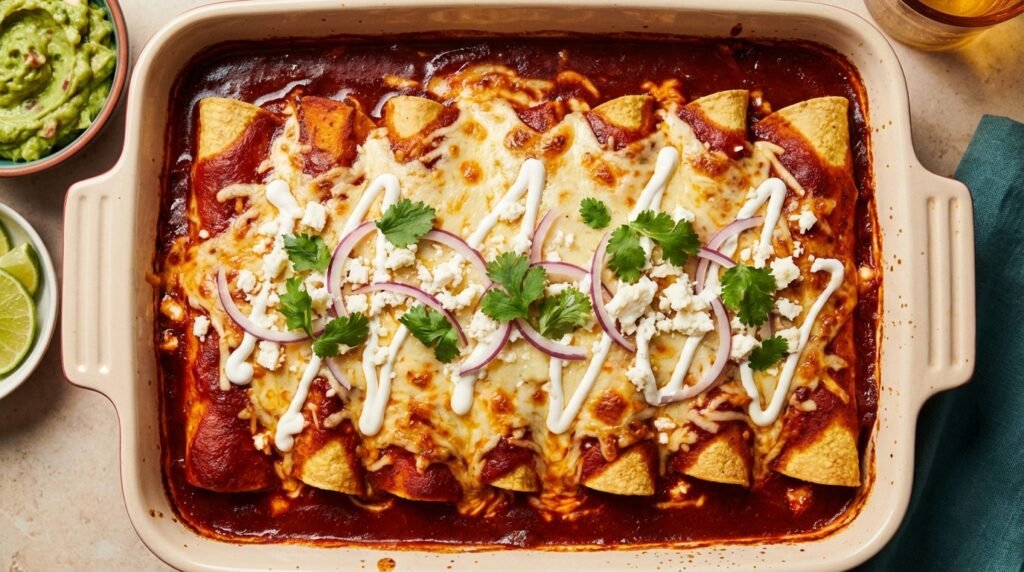
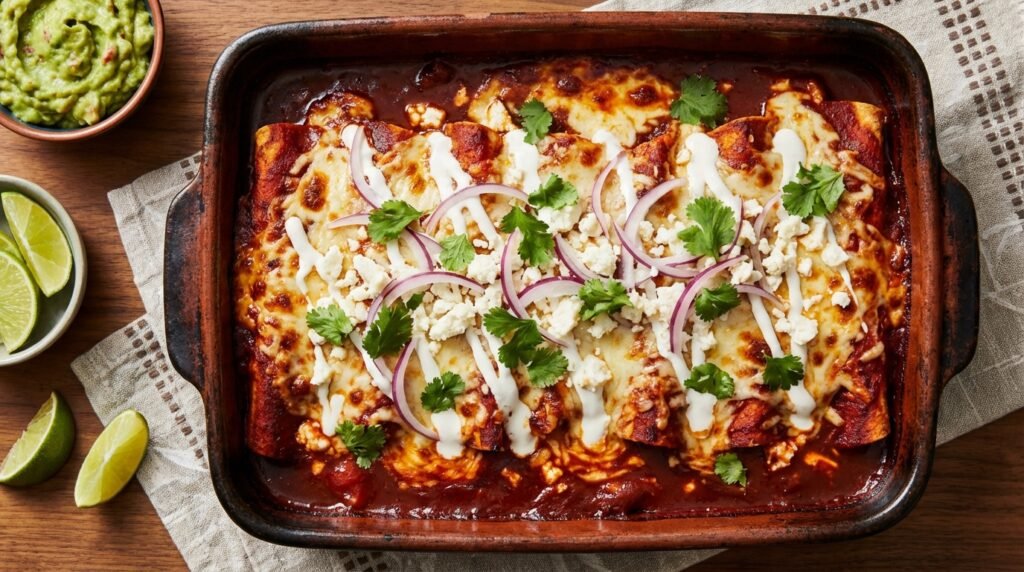
- Top with sauce and cheese.
- Pour remaining sauce evenly over the rolled tortillas, ensuring they are well covered to maintain moisture.
- Sprinkle additional cheese over the top for a golden, bubbling finish.
- Bake.
- Cover the dish loosely with foil and bake for 15–20 minutes, until the sauce is bubbling.
- Remove the foil and bake an additional 5–10 minutes, allowing the cheese to melt and lightly brown.
- Rest and garnish.
- Let the enchiladas rest for several minutes before serving so the filling can settle.
- Garnish with chopped cilantro, sliced scallions, avocado, or a drizzle of yogurt or sour cream as desired.
This method provides a reliable base; once mastered, you can easily modify it to create new variations of homemade enchiladas tailored to your taste and dietary needs.
Tips for Perfect Enchiladas
Common Mistakes to Avoid
Even an experienced cook can encounter challenges when preparing enchiladas. Observing a few principles will significantly improve the final result.
- Using dry, cracking tortillas: Corn tortillas are prone to tearing when cold. Always warm them until pliable. If they still crack, brush them lightly with oil or briefly pass them through hot oil to increase flexibility.
- Overfilling the tortillas: Excessive filling causes the tortillas to split and the dish to lose structure. Use a modest amount per tortilla and rely on the sauce and accompaniments to create a satisfying meal.
- Insufficient sauce: The hallmark of excellent Mexican enchiladas is a generous, well-seasoned sauce. An under-sauced dish will be dry and less flavorful. Ensure the tortillas are coated and the baking dish contains enough sauce to bubble around them.
- Overbaking: Prolonged baking can toughen tortillas and dry out the filling. Bake only until the sauce is hot and the cheese is melted and lightly golden.
- Neglecting seasoning: Both the filling and the sauce require appropriate seasoning. Taste and adjust salt, acidity (with lime or a splash of vinegar), and heat level before assembling.
- Relying solely on cheese for flavor: Cheese should complement, not dominate. Focus on well-seasoned fillings and sauces rather than using excessive cheese to compensate.
Serving Suggestions and Pairings
Thoughtful accompaniments elevate enchiladas from a simple baked dish to a complete, restaurant-quality meal. Strategic pairings also allow you to create lighter or more indulgent menus according to the occasion.
- Classic sides: Serve enchiladas with Mexican-style rice, refried or whole beans, and a small salad of lettuce, tomato, and radish. These sides absorb the sauce and create a satisfying yet balanced plate.
- Fresh elements: To counterbalance the richness of the sauce and cheese, include fresh toppings such as chopped cilantro, diced onion, sliced jalapeños, or a squeeze of lime. A simple cabbage slaw with a light vinaigrette offers crunch and acidity.
- Salsas and condiments: Pair your enchiladas with red or green salsa, pico de gallo, or a smoky chipotle sauce. For those who prefer milder flavors, plain yogurt or sour cream adds creaminess and tempers heat.
- Beverage pairings: Light beers, crisp white wines, or sparkling water with lime complement the spice and richness. For a non-alcoholic option, aguas frescas (such as hibiscus or lime) provide a refreshing contrast.
- Nutritional balance: For healthy enchilada options, emphasize vegetable sides, limit added cheese, and consider baking with less oil. A plate dominated by colorful vegetables and lean protein can be both nourishing and deeply satisfying.
By paying attention to accompaniments, you transform a simple pan of enchiladas into a thoughtfully composed meal that appeals to a wide variety of diners.
Conclusion
Enchiladas embody the richness and adaptability of Mexican cuisine. From their ancient roots in Mesoamerican food traditions to their global popularity today, they have evolved into a dish that welcomes endless creativity. Classic chicken enchiladas, robust vegetarian variations, and lighter, health-conscious interpretations all share the same essential structure, making it easy to customize them to personal tastes and dietary requirements.
With high-quality ingredients, a reliable technique, and a few practical enchilada cooking tips, you can produce homemade enchiladas that rival those served in restaurants. Whether you prefer a deeply spiced red sauce, a tangy green tomatillo base, or a contemporary twist with seasonal vegetables, the principles remain consistent: well-seasoned fillings, properly handled tortillas, and a generous, flavorful sauce.
https://www.teepublic.com/t-shirt/53246542-yoga?store_id=2851997
Master the basic method once, then experiment. Over time, you will develop your own signature enchiladas recipe—one that reflects your culinary style while honoring the enduring appeal of this classic Mexican dish.
The Secrets to Enchilada Success
-
The Tortilla Trick: To prevent your corn tortillas from tearing or turning into “mush,” briefly flash-fry them in a little oil (a technique called pasadas por aceite) before dipping them in the sauce. This creates a light barrier that helps them hold their shape.
-
Sauce is King: Whether you choose a tangy Verde (tomatillo) or a smoky Roja (dried chili), ensure your sauce is warm before assembly. Cold sauce won’t penetrate the tortillas properly, leading to an uneven bake.
-
Don’t Overstuff: It’s tempting to pack in the chicken or beans, but a smaller amount of filling allows for a tighter roll, ensuring every bite has the perfect ratio of tortilla, filling, and sauce.
-
Resting Period: Much like a lasagna, let your enchiladas sit for 5–10 minutes after taking them out of the oven. This allows the sauce to thicken slightly and the flavors to meld, making them much easier to serve.
- The Ultimate Udon Guide: History, Regional Types, and Recipes.
- Pad Thai: The Ultimate Guide to Thailand’s National Noodle Dish
- The Perfect Quesadilla Guide: History, Authentic Recipes, and Tips
- The Ultimate Burrito Guide: History, Authentic Recipes, and Top U.S. Spots
- The Ultimate Guide to Authentic Tacos: History, Recipes, and Global Culture
My Puzzle
Zoodoku