
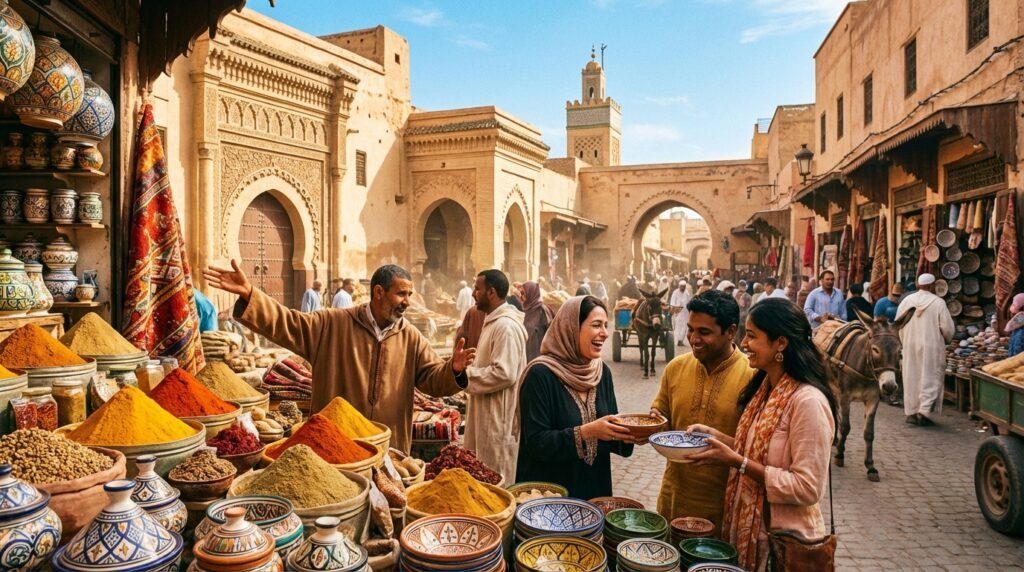
Marrakech, often called the “Red City” for its ochre-hued walls and buildings, is one of Morocco’s most captivating destinations. A crossroads between Africa, Europe, and the Middle East, it offers a compelling blend of history, culture, and sensory experiences. From its bustling souks and serene gardens to its rich culinary traditions, Marrakech rewards travelers who take the time to explore beyond the surface.
Overview of Marrakech
Historical Significance
Founded in the 11th century by the Almoravid dynasty, Marrakech quickly developed into a political, religious, and commercial hub. Its strategic location on ancient caravan routes connecting sub-Saharan Africa to the Mediterranean facilitated flourishing trade in gold, spices, textiles, and manuscripts. Over the centuries, various dynasties—including the Almohads, Saadians, and Alaouites—left their mark on the city’s architecture, urban fabric, and intellectual life.
The old city, or Medina, encapsulates this layered past. Enclosed by fortified walls punctuated by monumental gates, it is a UNESCO World Heritage Site that retains its medieval street pattern. Historical landmarks such as the Saadian Tombs, El Badi Palace, and the Ben Youssef Madrasa testify to Marrakech’s role as a center of Islamic learning and artistic innovation. Strolling through its narrow alleys reveals intricately carved stucco, zellig tilework, and cedar-wood ceilings, all emblematic of Moroccan craftsmanship.
Cultural Diversity
Marrakech’s identity has been shaped by a mosaic of influences. Arab, Amazigh (Berber), Andalusian, Jewish, and sub-Saharan African communities have long coexisted here, each contributing to the city’s distinctive character. This diversity is reflected in languages spoken—Arabic, Tamazight, and French being the most common—as well as in music, clothing, and religious traditions.
The city’s public spaces embody this cultural richness. On the famed Jemaa el-Fna square, storytellers, musicians, acrobats, and traditional healers share the stage, perpetuating ancient oral and performance traditions. Nearby neighborhoods host historic synagogues and mellahs (Jewish quarters), while artisan workshops preserve time-honored techniques in metalwork, leathercraft, and textile production. This coexistence of heritage and contemporary life makes Marrakech a dynamic cultural laboratory rather than a static museum.
Top Attractions in Marrakech
The Majorelle Garden
The Majorelle Garden (Jardin Majorelle) is one of Marrakech’s most iconic and tranquil spaces. Created in the 1920s and 1930s by French painter Jacques Majorelle, the garden was later carefully restored by fashion designer Yves Saint Laurent and his partner Pierre Bergé. It is renowned for its striking use of cobalt blue—now known as “Majorelle blue”—which contrasts sharply with the lush greenery and bright ceramics scattered throughout the grounds.
The garden is more than a simple botanical collection. It is a carefully composed work of art where exotic plants—cacti, bamboo, bougainvillea, palm trees, and water lilies—are arranged to create a series of intimate vistas. Shady paths, trickling fountains, and reflective pools provide respite from the city’s intensity. Within the complex, the Berber Museum offers an insightful overview of Amazigh culture with displays of jewelry, textiles, and traditional artifacts, enriching the visit with historical context.
To fully appreciate the serenity of the Majorelle Garden, it is advisable to visit early in the morning or late in the afternoon when the light is soft and crowds are thinner. Allow enough time not only for photography but also for quiet contemplation; the garden rewards those who slow their pace and observe details often missed in a quick tour.
Koutoubia Mosque
The Koutoubia Mosque is Marrakech’s most prominent religious monument and a defining feature of its skyline. Built in the 12th century under the Almohad dynasty, the mosque’s 77-meter minaret served as a model for other landmark towers such as the Giralda of Seville and the Hassan Tower in Rabat. Clad in warm sandstone and adorned with delicate arches and geometric motifs, the structure exemplifies classical Moroccan-Andalusian architecture.
While non-Muslims cannot enter the prayer hall itself, the mosque’s exterior and its surrounding gardens are accessible and well worth exploring. From the adjacent park, visitors enjoy unobstructed views of the minaret framed by orange trees and rose beds, with the Atlas Mountains occasionally visible in the distance on clear days. At sunset, the stone façade takes on a deeper hue, and the call to prayer resonates across the city, offering a powerful sense of place.
The Koutoubia’s location near Jemaa el-Fna makes it an ideal starting point for exploring the historic center. Its minaret also serves as a practical landmark for orienting oneself within the often labyrinthine streets of the Medina, an invaluable aid for first-time visitors navigating the city on foot.
Local Cuisine and Dining Experiences
Must-Try Dishes
Marrakech’s culinary scene is rooted in Moroccan tradition yet open to innovation. Dining here is an immersion in aromatic spices, slow-cooked dishes, and shared plates designed for conviviality. Several specialties are particularly emblematic of the city and should not be missed.
Tagine, perhaps the most iconic dish, is both the name of the earthenware pot and the stew cooked within it. In Marrakech, you will find variations such as lamb with prunes and almonds, chicken with preserved lemons and olives, or vegetable tagines infused with saffron and ginger. The slow cooking method yields tender meat and deeply layered flavors.
Couscous is traditionally served on Fridays, following the midday prayer, though many restaurants offer it daily. Finely rolled semolina is steamed multiple times for a light, airy texture, then topped with vegetables, chickpeas, and meat or served vegetarian. The broth, scented with cumin and coriander, is often served separately to be added to taste.
For lighter meals or street-food experiences, brochettes (skewered and grilled meats), harira (a hearty tomato and lentil soup), and b’stilla (a flaky pastry filled with spiced pigeon or chicken, almonds, and cinnamon) are excellent options. To finish, try pastilla au lait or simple seasonal fruits, accompanied by the ubiquitous mint tea, served sweet and poured from a height to create a light foam.
Best Restaurants in Marrakech
The city offers a broad spectrum of dining experiences, from humble food stalls to refined rooftop terraces. While specific names and reputations evolve over time, several types of establishments are consistently rewarding for visitors seeking quality Moroccan cuisine in Marrakech.
Traditional riads—historic houses converted into guesthouses—often feature intimate dining rooms or courtyard tables. Many offer set menus highlighting local dishes prepared with seasonal ingredients. These venues provide an atmospheric introduction to Moroccan hospitality, with personalized service and carefully curated menus.
In the Medina and around Jemaa el-Fna, numerous restaurants specialize in classic Moroccan fare served on terraces overlooking the bustling square. These are ideal for watching the transformation of the square from daytime market to nocturnal open-air dining hall. When choosing among them, prioritize establishments that emphasize fresh ingredients, transparent kitchen practices, and clearly indicated prices.
Beyond the old city, the Guéliz and Hivernage districts host contemporary restaurants and bistros that blend Moroccan flavors with international techniques. Here, you will find creative takes on tagine, refined tasting menus, and elegant wine lists showcasing Moroccan vineyards. For travelers seeking vegetarian or vegan options, several modern eateries cater specifically to plant-based diets while incorporating local spices and produce.
Tips for Traveling to Marrakech
Best Time to Visit
Marrakech has a semi-arid climate, characterized by hot summers, mild winters, and significant temperature variations between day and night. Selecting the right travel period can greatly enhance your experience of the city’s outdoor attractions and markets.
Spring (March to May) is often considered the most pleasant season. Temperatures are warm but not oppressive, and gardens such as the Majorelle and the Menara are in full bloom. This is an excellent time for combining urban exploration with excursions into the nearby Atlas Mountains.
Autumn (September to November) offers similarly comfortable conditions, with gradually cooling days and clear skies. Both spring and autumn attract a high number of visitors, so advance reservations for accommodation and popular attractions are advisable.
During summer, daytime temperatures can exceed 40°C (104°F), which can be challenging for those unaccustomed to heat. If you travel during this period, plan activities for early morning and late afternoon, allowing for midday rest in shaded riads or air-conditioned spaces. Winter is generally mild, though nights can be surprisingly cold, particularly in traditional buildings without central heating. The clear winter light, however, can be rewarding for photography and sightseeing.
Cappadocia Travel Guide: Fairy Chimneys, and Underground Cities
Istanbul Travel Guide: A Journey Through History, Culture, and Modern Life
Ultimate Hvar Island Travel Guide: In Croatia
Ultimate Kotor, Montenegro Travel Guide
Dubrovnik Travel Guide: Explore the Pearl of the Adriatic’s Beauty
Mykonos Travel Guide: Windmills, Whitewashed, and Hidden Gems
Santorini Travel Guide: Top Attractions, Oia & Best Time to Visit
https://www.teepublic.com/t-shirt/50549697-slow-sloth?store_id=2851997
Safety and Local Customs
Marrakech is generally safe for travelers, but, as in any busy urban destination, basic precautions are important. Petty crime such as pickpocketing can occur, especially in crowded areas like markets and public squares. Keep valuables secure, use money belts or interior pockets, and avoid displaying large sums of cash or expensive jewelry.
Transportation safety also deserves attention. When using taxis, agree on fares beforehand if there is no meter, or insist on the meter being used. For official tours and excursions, rely on reputable agencies or recommendations from your accommodation rather than ad hoc offers from unlicensed guides.
Respect for local customs will significantly enrich your stay. Morocco is a predominantly Muslim country, and Marrakech remains conservative in many neighborhoods. Modest clothing—covering shoulders and knees—is advisable, particularly in the Medina and religious sites. While non-Muslims cannot enter active mosques, they are welcome in most other historical monuments and museums; always follow posted guidelines and staff instructions.
Public displays of affection should be discreet, and it is courteous to ask permission before photographing individuals, especially artisans, women, and religious figures. Negotiation is part of the culture in souks, but bargaining should remain friendly and respectful. Offering tea is a sign of hospitality rather than an obligation to purchase, though it is polite to show genuine interest if you accept.
Finally, familiarizing yourself with a few basic phrases in Moroccan Arabic or French—such as greetings and expressions of thanks—can open doors and foster goodwill. Locals often appreciate the effort, and simple politeness goes a long way toward creating meaningful interactions.
Conclusion
Marrakech is a city of contrasts: vibrant yet contemplative, deeply traditional yet increasingly cosmopolitan. Its historic monuments, gardens, and markets tell the story of centuries of exchange between cultures, while its cuisine and artistic life reflect a living heritage in constant evolution. By understanding the city’s historical significance, engaging respectfully with its cultural diversity, and planning your visit with care, you can experience Marrakech not merely as a picturesque destination but as a complex, inspiring place that lingers in memory long after you depart.
Video Game
https://narmerstore.org/fun-zone/ https://open.spotify.com/artist/4w7vAFPSwyed1DSuhdU7fU?si=goIRyz8iToOUl5sSy-Pqhg http://itunes.apple.com/album/id1798135097?ls=1& http://itunes.apple.com/album/id/1798135097 http://itunes.apple.com/album/id1801497633?ls=1&app=itunes