
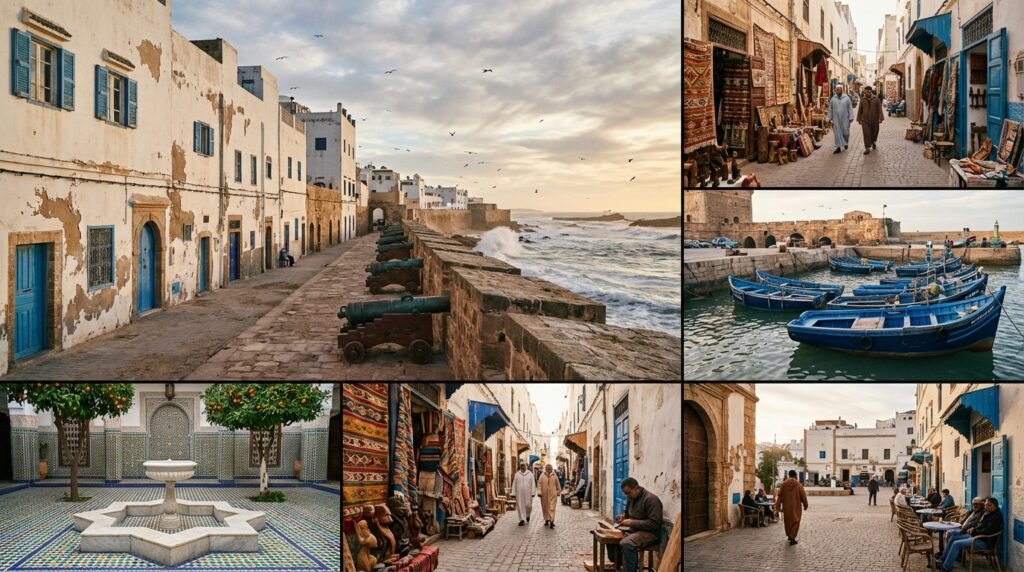
Essaouira, an Atlantic coastal city on Morocco’s western shore, combines maritime charm, centuries of history, and a relaxed atmosphere that is increasingly rare in popular tourist destinations. Its whitewashed walls, blue shutters, and windswept ramparts offer a striking contrast to the vibrant medinas of Marrakech or Fes. Whether you are planning a short escape or a longer cultural stay, Essaouira rewards visitors with a compelling blend of heritage, gastronomy, and outdoor activities.
Discover Essaouira: A Coastal Gem of Morocco
Overview of Essaouira’s Rich History
Essaouira’s history is inseparable from the Atlantic Ocean. Long before it became a fortified port, the bay served as a strategic anchorage for Phoenician traders. Archaeological findings indicate that as early as the 7th century BCE, seafarers stopped here to trade purple dye and other precious goods. Centuries later, under Carthaginian and Roman influence, the region grew as a commercial hub linking Africa to Europe.
The city’s defining chapter, however, began in the 18th century. Sultan Sidi Mohammed ben Abdallah commissioned a French military architect to design a new fortified port city called Mogador, intended to channel trade between sub-Saharan Africa, Morocco, and Europe. The resulting urban plan combined Moroccan traditions with European military engineering, visible today in the bastions, grid-like streets, and fortified sea walls that characterise the old town.
Over the following centuries, Essaouira became a critical node in the trans-Saharan trade routes, exporting goods such as sugar, spices, textiles, and, later, argan oil. Jewish, Muslim, and European merchants settled in the port, turning it into a bustling commercial centre. Although the city’s economic importance declined with the rise of other ports, its architectural and cultural legacy endured, eventually earning the Medina of Essaouira a well-deserved place on the UNESCO World Heritage list.
The Unique Blend of Cultures in Essaouira
Essaouira’s identity is shaped by a remarkable confluence of influences. Berber, Arab, Jewish, and European communities all contributed to its urban fabric, musical traditions, and artisanal expertise. This interplay of cultures is visible in the architecture: synagogues stand near mosques; Portuguese ramparts encircle Moroccan riads; and narrow alleys reveal hints of Andalusian and French design.
Music is another powerful expression of this diversity. Essaouira is a key centre for Gnawa culture, a spiritual and musical tradition with roots in sub-Saharan Africa. Each year, the city hosts the renowned Gnaoua and World Music Festival, drawing international artists who perform alongside Gnawa maâlems (masters) in open-air venues and intimate courtyards. Jazz, rock, and world music mingle with hypnotic rhythms, illustrating the city’s capacity to bridge cultures.
Religious coexistence has long been part of Essaouira’s narrative. Historically, the city was home to one of Morocco’s largest Jewish communities, whose merchants played a crucial role in international trade. Today, restored synagogues, discreet cemeteries, and preserved quarters bear witness to that heritage. The result is a cosmopolitan yet serene atmosphere, where visitors sense a lived history of exchange and tolerance rather than a museum-like reconstruction.
Top Attractions in Essaouira
Exploring the Historic Medina
The Medina of Essaouira is compact, walkable, and surprisingly calm compared to other Moroccan cities, making it ideal for slow exploration. Its straight, intersecting streets are unusual in Morocco and reflect the 18th-century European military design commissioned by the sultan. This layout simplifies navigation, allowing visitors to wander without the constant fear of getting lost in a maze of alleys.
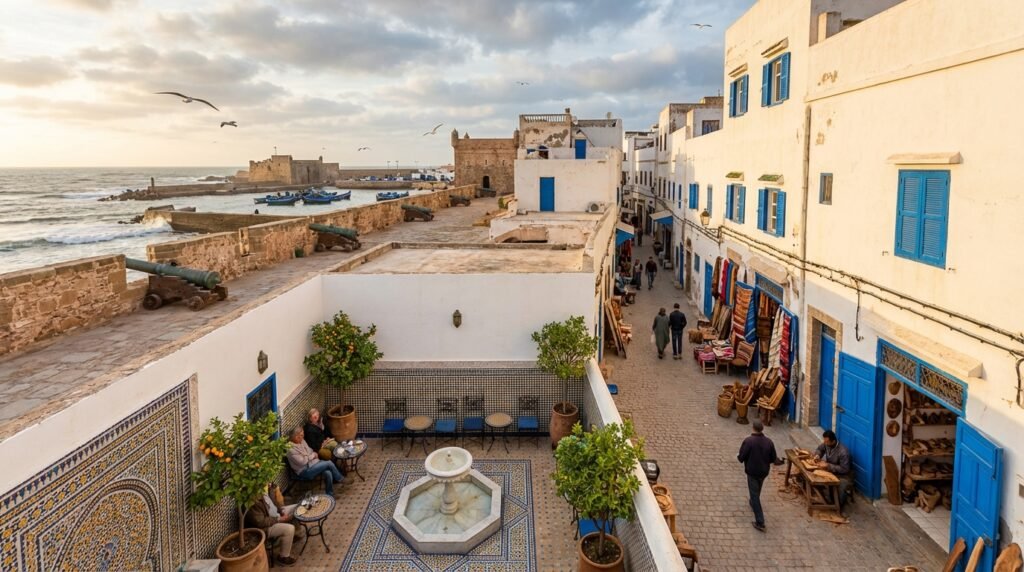
Entering through one of the imposing gates, such as Bab Marrakech or Bab Doukkala, you encounter a cityscape of whitewashed houses framed by cobalt blue doors and windows. Small, family-run grocery shops sit beside artisan workshops that produce wood inlay, leather goods, and textiles. The absence of aggressive touting in much of the medina contributes to a more contemplative experience, where you can browse at your own pace.
Several landmarks deserve particular attention. The central square, Place Moulay Hassan, serves as a gathering point overlooking the port and is bordered by cafés with panoramic terraces. Close by, you will find narrow lanes leading to former Jewish quarters, modest yet evocative synagogues, and restored riads that now operate as guesthouses or cultural spaces. Take time to explore the side streets, where everyday life unfolds in small markets, bakeries, and neighborhood mosques.
Visiting the Iconic Skala de la Ville
The Skala de la Ville is Essaouira’s most emblematic fortification, stretching along the ocean-facing side of the medina. Built in the 18th century to protect the port from maritime attacks, this impressive sea wall is lined with bronze cannons, many of which still point toward the Atlantic. From here, the views are spectacular: waves crash against the rocks below, seagulls wheel overhead, and the silhouettes of the Purpuraires Islands appear on the horizon.
Walking along the ramparts offers a tangible sense of the city’s maritime past. The fortified bastions, or “borjs”, were designed to house artillery and serve as lookout points. Today, they provide excellent vantage points for photography, particularly at sunset when the sky turns amber and the city’s white facades glow softly. The combination of stone, sea spray, and wind gives the Skala a rugged, dramatic character.
At the foot of the Skala, artisans’ workshops occupy former storage rooms carved into the ramparts. Here, craftsmen specialise in thuya wood marquetry, an Essaouira hallmark. Intricately carved boxes, furniture, chess sets, and decorative objects showcase the region’s woodworking tradition, often combined with lemonwood, ebony, and mother-of-pearl. Exploring these workshops not only offers a chance to purchase authentic souvenirs, but also to observe ancestral techniques still practiced today.
Local Cuisine: A Taste of Essaouira
Must-Try Dishes and Street Food
Essaouira’s culinary identity is shaped by its coastal location and multicultural heritage. Seafood naturally occupies a central place on local menus. Freshly caught sardines are grilled simply with salt, cumin, and lemon, often served with bread and a basic tomato salad. More elaborate dishes include fish tagines with preserved lemons, olives, and seasonal vegetables simmered slowly in earthenware pots, allowing the ingredients to meld into deeply aromatic sauces.
Beyond fish, you will find a rich array of Moroccan classics with a local twist. Couscous, typically served on Fridays, may come with a medley of root vegetables and tender meat, subtly perfumed with saffron and ginger. Harira, a hearty tomato and lentil soup, provides comfort on breezier evenings, especially during the cooler months when Atlantic winds pick up.
Street food plays a crucial role in Essaouira’s everyday life. In and around the medina, vendors sell msemen (layered, pan-fried flatbread) and beghrir (spongy semolina pancakes) in the morning, often accompanied by honey or amlou, a rich spread made from almonds, argan oil, and honey. Later in the day, you might encounter stalls preparing freshly fried fish, seasoned snails in aromatic broth, or skewers of spiced meat grilled over charcoal. These modest snacks offer a flavorful and affordable way to experience local tastes while wandering through the city.
Popular Restaurants and Cafés
Essaouira’s restaurant scene is diverse, ranging from traditional Moroccan eateries to contemporary fusion establishments. Around the port, informal seafood stalls allow you to choose from an array of freshly caught fish, which is then grilled to order. Although simple in appearance, these places are often where you will find some of the freshest and most authentic seafood in the city.
Within the medina and around Place Moulay Hassan, numerous restaurants occupy restored riads and historic buildings. Many offer rooftop terraces with expansive views over the ocean or the old town. Menus typically include classic tagines, couscous dishes, and grilled meats, alongside vegetarian options and lighter fare. Some establishments experiment with Mediterranean or French influences, integrating local ingredients such as argan oil, preserved lemons, and fresh herbs into modern recipes.
The café culture in Essaouira is particularly pleasant thanks to the city’s mild climate and ocean breezes. Street-side cafés and tea rooms invite you to sit outdoors and observe the steady rhythm of daily life. Traditional Moroccan mint tea, served in ornate glasses, is ubiquitous, but you will also find espresso, fresh juices, and pastries. Spending time in these cafés provides a welcome pause between visits, as well as an opportunity to absorb the city’s leisurely tempo.
Best Activities to Experience in Essaouira
Windsurfing and Kitesurfing Adventures
Essaouira is renowned for its consistent winds, making it one of Morocco’s premier destinations for windsurfing and kitesurfing. The wide bay, with its long sandy beach and relatively shallow waters, offers ideal conditions for both beginners and experienced riders. Steady trade winds blow most of the year, particularly strong from spring to autumn, creating a natural playground for water sports enthusiasts.
Several reputable surf schools and rental centres line the beachfront. They provide equipment, safety gear, and lessons adapted to varying skill levels. Novices can start with basic instruction on wind control, board balance, and self-rescue techniques, usually in the calmer zones of the bay. More advanced practitioners can venture further out, taking advantage of stronger winds and more challenging waves.
For those who prefer less wind-dependent activities, the beach also lends itself to stand-up paddleboarding, traditional surfing, and horseback or camel rides along the shoreline. Watching the colourful kites dance across the sky at sunset is an experience in itself, even if you choose to remain on the sand. The combination of sport, scenery, and sea air contributes to the city’s reputation as a destination that balances culture with outdoor adventure.https://orenga.myspreadshop.com/black+panther+next+to+a+brand+new+white+piano-A668cca629142ae16600b2055?productType=815&sellable=ybqmEGqw7lCwLQZJjpbR-815-9&appearance=1
Traditional Craft Markets and Souks
Essaouira’s markets and souks are integral to the city’s character and offer insight into local craftsmanship. Compared with larger Moroccan cities, the atmosphere here is more relaxed, which allows for slower, more thoughtful exploration. The main souks fan out from the medina’s central streets, each area specialising in different goods, from produce and spices to textiles and handicrafts.
One of Essaouira’s most distinctive crafts is thuya wood marquetry. Artisans transform locally sourced wood into boxes, trays, decorative panels, and furniture, often inlaid with citron wood, mother-of-pearl, or other contrasting materials. Visiting these workshops provides a chance to observe the meticulous work involved, as well as to purchase high-quality pieces directly from the makers. When selecting items, it is advisable to pay attention to finishing details and to ask about the origin of the wood to ensure authenticity and sustainability.
https://www.teepublic.com/t-shirt/50453001-pet?store_id=2851997
In addition to woodwork, the city’s markets showcase Berber jewellery, handwoven rugs, leather goods, and a wide selection of argan oil products. Women’s cooperatives in the surrounding region produce culinary and cosmetic argan oils using traditional methods. Many stalls and boutiques in Essaouira sell these oils, often accompanied by information about their production. Spices, teas, and preserved olives further enrich the sensory experience of the souk, with their colours and aromas adding depth to the visit.
Bargaining is part of the buying process, yet the tone in Essaouira’s markets tends to be less insistent than in some other Moroccan cities. Engaging respectfully with vendors, asking questions about their crafts, and negotiating with patience often leads to more meaningful exchanges and fair prices for both parties.
essaouira-travel-guide-coastal-morocco/
Essaouira travel guide
Essaouira stands out as a city where time seems to slow down. Its fortified walls, Atlantic vistas, and multicultural heritage create an environment that is both stimulating and soothing. Visitors can move seamlessly from exploring historic ramparts to sampling seafood at the port, from browsing artisan workshops to harnessing the wind on a kitesurfing board.
Whether you are drawn by architecture, gastronomy, music, or outdoor pursuits, Essaouira offers an experience that feels authentic rather than staged. Its modest scale, walkable streets, and welcoming atmosphere make it accessible to a wide range of travellers, from solo visitors and couples to families. For anyone seeking a coastal destination in Morocco that combines culture, history, and natural beauty, Essaouira remains an exceptional choice.
https://narmerstore.org/ Video Game https://narmerstore.org/fun-zone/ https://open.spotify.com/artist/4w7vAFPSwyed1DSuhdU7fU?si=goIRyz8iToOUl5sSy-Pqhg http://itunes.apple.com/album/id1798135097?ls=1& http://itunes.apple.com/album/id/1798135097 http://itunes.apple.com/album/id1801497633?ls=1&app=itunes
CrystalCollector
Combat Protocol
WASD – Move
Mouse – Look around
Left Click – Fire Weapon
R – Reload
Eliminate all hostile units in the sector!
(Works better on computer)
———————————————————————————