
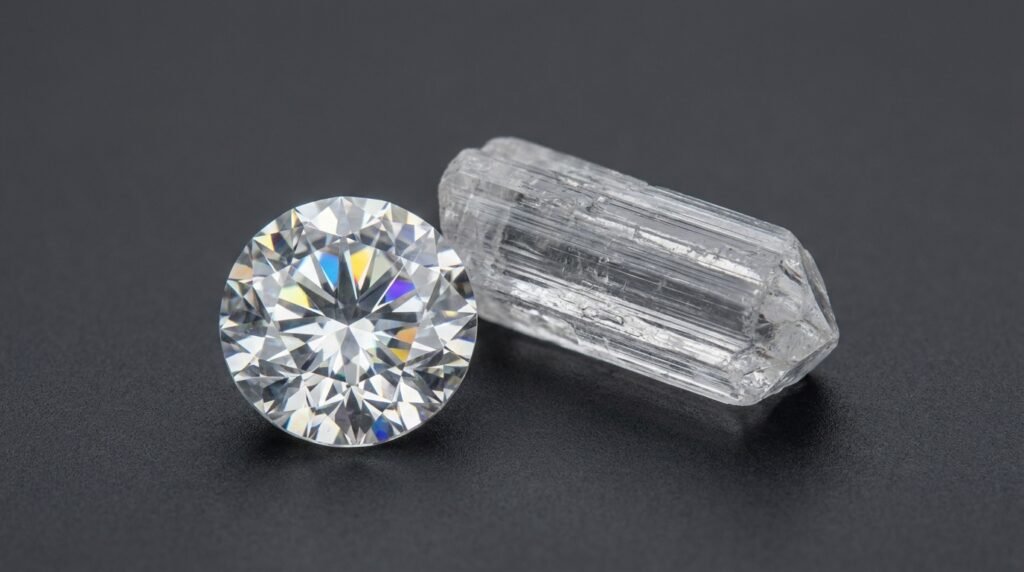
Among the rarest and most captivating gemstones in the mineral kingdom, achroite occupies a singular position. Known as the colorless variety of tourmaline, this transparent gem has long fascinated collectors, gemologists, and jewelers alike. Its name derives from the Greek word achromos, meaning \”without color,\” a fitting description for a stone that achieves beauty not through vibrant hues but through its exceptional clarity and brilliant optical properties. While tourmaline is celebrated for its remarkable chromatic diversity, the complete absence of color in achroite is, paradoxically, what makes it so extraordinary.
Despite its relative obscurity compared to more commercially recognized gemstones, achroite holds significant appeal in high-end jewelry and the world of mineral collecting. Understanding its origins, characteristics, and value requires a nuanced appreciation of gemology and the geological processes that give rise to such pristine crystalline formations. This guide offers a thorough exploration of achroite — from its formation deep within the earth to its place in contemporary jewelry design.
What Is Achroite? Understanding the Colorless Tourmaline
Achroite is a member of the tourmaline group, one of the most chemically complex mineral families in existence. Tourmalines are boron silicate minerals that incorporate a wide range of elements — including aluminum, iron, magnesium, lithium, and manganese — into their crystal structure. This chemical variability is precisely what produces the stunning spectrum of colors for which tourmaline is renowned. When virtually all chromophoric elements are absent or present in negligible concentrations, the result is achroite: a gemstone of pure, water-clear transparency.
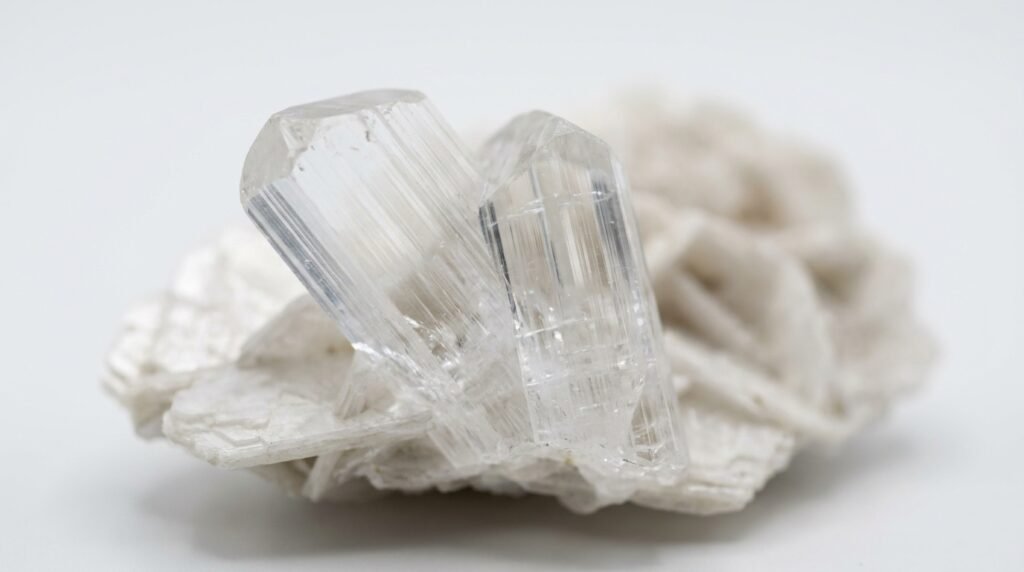
The mineral belongs to the elbaite species of tourmaline, the same species responsible for the vivid pinks of rubellite and the electric blues of Paraíba tourmaline. Its crystal system is trigonal, forming elongated prismatic crystals with characteristic vertical striations. When faceted, achroite exhibits a vitreous luster and a refractive index ranging between 1.614 and 1.666, giving cut stones a lively, glass-like brilliance.
Chemical Composition and Crystal Structure
The general chemical formula for elbaite tourmaline — the species to which achroite belongs — is Na(Li1.5Al1.5)Al6(Si6O18)(BO3)3(OH)3(OH). What distinguishes achroite from its colored counterparts is not a distinct chemical formula, but rather the absence of transition metal impurities such as iron, manganese, or copper that typically impart color. The resulting crystal is optically pure, with minimal inclusions and exceptional transparency when gem-quality specimens are found.
Tourmaline crystals are also known for their piezoelectric and pyroelectric properties — meaning they generate an electrical charge when subjected to mechanical pressure or changes in temperature. These properties, while not directly relevant to achroite’s use as a gemstone, underscore the unique physical nature of the mineral family to which it belongs.
How Achroite Differs from Other Colorless Gemstones
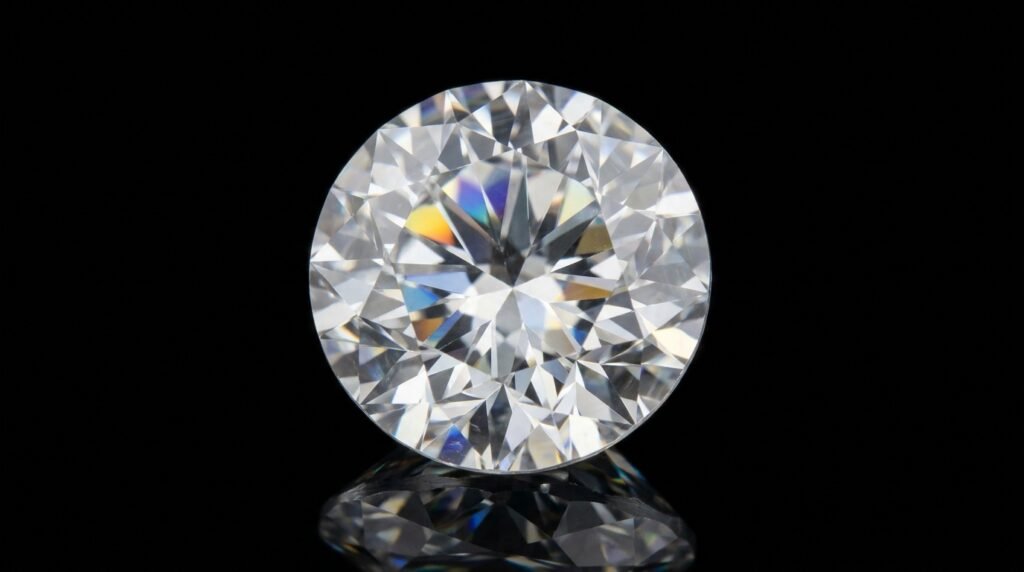
At first glance, achroite might be mistaken for rock crystal (colorless quartz), white topaz, or even diamond. However, several distinguishing characteristics set it apart. Its birefringence — the splitting of light into two rays as it passes through the crystal — is stronger than that of quartz, and its pleochroism, while subtle in colorless specimens, can occasionally be observed under specific lighting conditions. Additionally, the characteristic striations along the prism faces of tourmaline crystals provide a reliable identification feature when examining rough material.
From a gemological standpoint, achroite’s specific gravity of approximately 3.06 and its hardness of 7 to 7.5 on the Mohs scale place it in a reliable range for durable gemstone use, though it remains softer than sapphire or diamond. Its optical dispersion, while not as high as diamond, contributes to the subtle fire observed in well-cut specimens.
Geographic Origins and Mining Locations
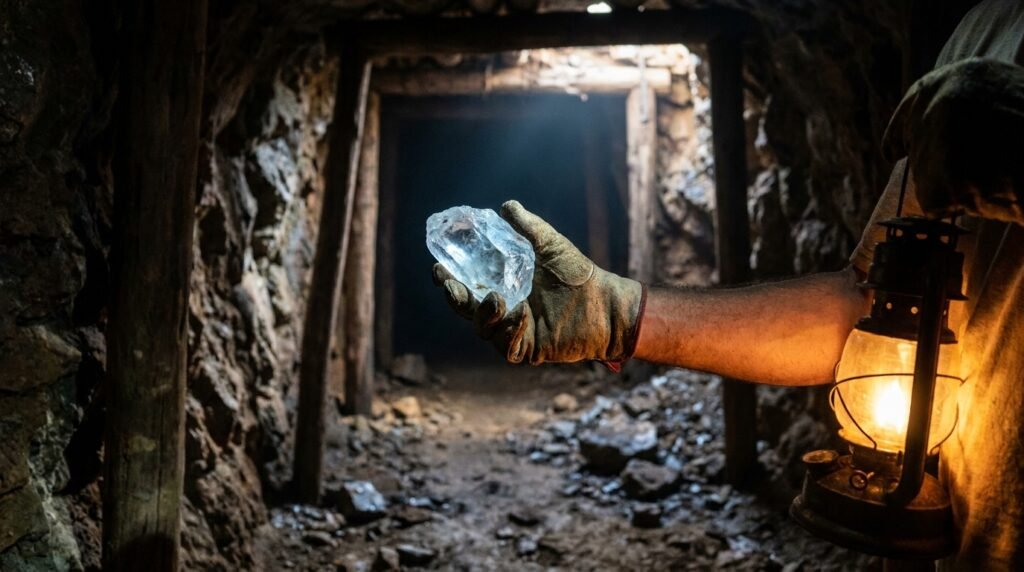
Achroite is found in pegmatite deposits — coarse-grained igneous rocks that crystallize slowly from magma, allowing minerals to grow into large, well-formed crystals. These geological environments provide the ideal conditions for tourmaline formation, offering the necessary concentrations of boron, silica, and alkali elements. The rarity of achroite is directly tied to the precise geochemical conditions required to produce a tourmaline entirely devoid of color-inducing impurities.
Brazil remains one of the most prolific sources of fine tourmalines globally, and achroite specimens have been recovered from the gem-bearing pegmatites of Minas Gerais. The state’s complex geology has yielded an extraordinary diversity of tourmaline varieties, and colorless material, though uncommon, is documented among the region’s gem production. Similarly, pegmatite deposits in Afghanistan — particularly those in the Nuristan and Kunar provinces — have produced notable achroite crystals alongside the region’s celebrated pink and green tourmalines.
Notable Deposits Around the World
Madagascar has emerged as an increasingly important source of fine elbaite tourmalines, including colorless specimens of gem quality. The island nation’s pegmatite fields have attracted significant gemological attention in recent decades. Pakistan, particularly the Gilgit-Baltistan region, has also yielded colorless tourmaline material, often associated with aquamarine and other pegmatite-hosted gemstones.
Historically, some of the earliest recognized achroite specimens came from Elba, the Italian island that also lent its name to the elbaite species. While production from this location is now largely historical rather than commercial, the island’s geological legacy remains significant in the annals of mineralogy. California’s San Diego County, known for its world-class tourmaline mines at Pala and Mesa Grande, has produced colorless tourmaline material as well, though such specimens are far less frequently encountered than the region’s prized pink and green stones.
Rarity and Availability in the Gem Trade
Within the global gem trade, achroite is considered a rarity. It does not appear with any regularity in mainstream jewelry retail and is primarily found through specialist gem dealers, mineral shows, and auction houses. The combination of its natural scarcity and limited consumer awareness means that high-quality faceted achroite stones command attention and respect among knowledgeable collectors. Eye-clean specimens above two carats are genuinely uncommon, and exceptionally clear stones of larger size are considered significant finds.
Gemological Properties and Quality Evaluation
Evaluating achroite follows the same fundamental criteria applied to other colored gemstones: clarity, cut, carat weight, and — in the case of a colorless stone — the degree of optical purity. Unlike colored gemstones where hue, saturation, and tone are primary value drivers, achroite is assessed primarily on the basis of its transparency and freedom from inclusions, since any visible flaw or subtle color tint diminishes the stone’s defining characteristic.
Gem-quality achroite should be entirely free from visible inclusions to the naked eye. Internal fractures, growth tubes, or needle-like inclusions — all relatively common in tourmaline — reduce both the aesthetic appeal and the market value of colorless material significantly. Because the stone’s beauty relies on its pellucid clarity, even minor imperfections that might be tolerated or even valued in colored tourmalines become detractors in achroite.
Cutting and Fashioning Achroite
The cutting of achroite presents specific challenges that demand skill and experience. Tourmaline has a distinct optical axis along which color appears most concentrated — a consideration that, while less critical in a colorless stone, still affects how light interacts with the finished gem. Lapidaries typically orient the table of the stone perpendicular to the optical axis to maximize brilliance and avoid the slight gray or smoky tone that can appear when the stone is viewed down the c-axis.
Brilliant cuts — including round brilliants and modified cushion or oval forms — are frequently employed to maximize the stone’s light return. Step cuts, such as the emerald cut, emphasize clarity and create a mirror-like interior, lending achroite an elegant, refined appearance well suited to sophisticated jewelry settings. Custom cuts that exploit the natural elongated habit of tourmaline crystals are also used by artisan lapidaries seeking to showcase unusual or fine rough material.
Treatments and Enhancements
Achroite is generally not subjected to the heat treatments commonly applied to colored tourmalines to improve or alter their color. Since the stone’s value derives from its inherent lack of color, heat treatment is irrelevant to its primary characteristic. However, clarity enhancement through fracture filling is a practice that should be disclosed and considered when evaluating any tourmaline, including colorless specimens. Reputable dealers and gemological laboratories — such as the Gemological Institute of America (GIA) or the Gübelin Gem Lab — can provide certification confirming the natural, untreated status of a stone, which is particularly important for investment-grade specimens.
Achroite in Jewelry Design and Collecting
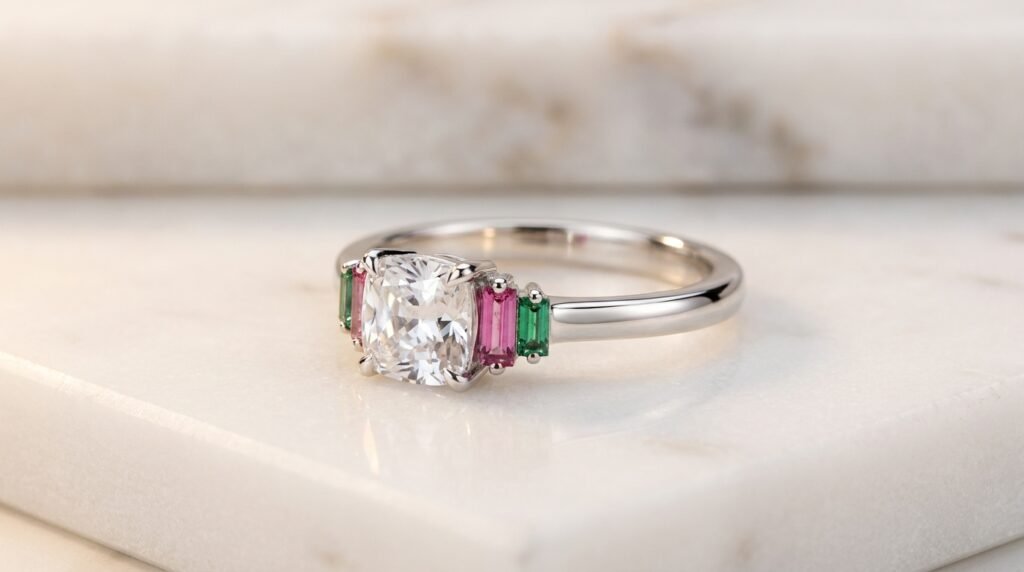
Though rarely featured in mass-market jewelry, achroite has found a devoted audience among designers who prize unusual and intellectually compelling gemstones. Its visual subtlety — a brilliance derived entirely from form and light rather than color — makes it particularly well-suited to minimalist and contemporary jewelry aesthetics. Set in platinum or white gold, a well-cut achroite can serve as an elegant centerpiece or accent stone that rewards close examination without demanding immediate attention.
https://www.teepublic.com/t-shirt/50088650-classic-car?store_id=2851997
Several independent jewelry designers working in the luxury segment have incorporated achroite into bespoke pieces, often pairing it with colored tourmalines to create contrast through the juxtaposition of vibrant chromatic varieties against the stone’s transparent clarity. This approach highlights the thematic richness of the tourmaline group — a mineral family that spans almost the entire visible spectrum while simultaneously offering the pristine absence of color in its rarest form.
For mineral collectors and gem connoisseurs, fine achroite crystals in their natural, uncut form represent compelling additions to any tourmaline collection. A well-formed, undamaged crystal exhibiting perfect clarity and lustrous prism faces is a mineralogical specimen of genuine scientific and aesthetic value. Such pieces, particularly those associated with aesthetically pleasing matrix or found in association with other pegmatite minerals such as lepidolite or cleavelandite, are actively sought by serious collectors and can achieve notable prices at mineralogical auctions.
The gemstone also carries metaphysical associations in the tradition of crystal healing and lapidary lore, where it is attributed with properties of clarity of thought, purification, and balance. While these claims fall outside the scope of scientific inquiry, they have contributed to a broader cultural awareness of achroite among those drawn to the symbolic dimensions of gemstones.
Conclusion
Achroite is a gemstone that demands a particular kind of appreciation — one that recognizes beauty in restraint, rarity in simplicity, and value in what is absent rather than what is present. As the colorless expression of one of mineralogy’s most complex and diverse families, it stands as a testament to the extraordinary precision of geological processes and the nuanced discernment required to truly understand and evaluate gemstones.
Whether encountered as a faceted gem in a fine jewelry setting, as a pristine crystal specimen in a collector’s cabinet, or as a subject of gemological study, achroite rewards the attention of those willing to look beyond conventional markers of value. Its rarity, optical elegance, and mineralogical significance ensure that it will remain a gemstone of enduring interest to connoisseurs, designers, and scientists for generations to come.
CrystalCollector
Combat Protocol
WASD – Move
Mouse – Look around
Left Click – Fire Weapon
R – Reload
Eliminate all hostile units in the sector!
(Works better on computer)