
Few foods capture the spirit of everyday indulgence as perfectly as the hot dog. Simple yet endlessly adaptable, it has evolved from humble sausage to an iconic American food served everywhere from ballparks to fine-dining restaurants. Understanding hot dog history, regional styles, and modern techniques for cooking and garnishing turns this casual staple into a genuinely rewarding culinary subject.
This guide explores where the hot dog came from, how it spread and diversified, and how to craft a truly memorable version at home, complete with inspired toppings and pairings.
History and Origins of the Hot Dog
The Birth of the Hot Dog: From Sausages to Street Foods
The story of the hot dog begins long before the modern bun-and-sausage combination appeared in the United States. Sausages themselves are ancient, with documented roots in Mesopotamia and classical Greece, where meats were finely chopped, seasoned, and encased as a means of preservation. Over centuries, European regions developed distinctive sausage styles, from German bratwurst to Austrian frankfurters, each with unique spice blends and smoking techniques.
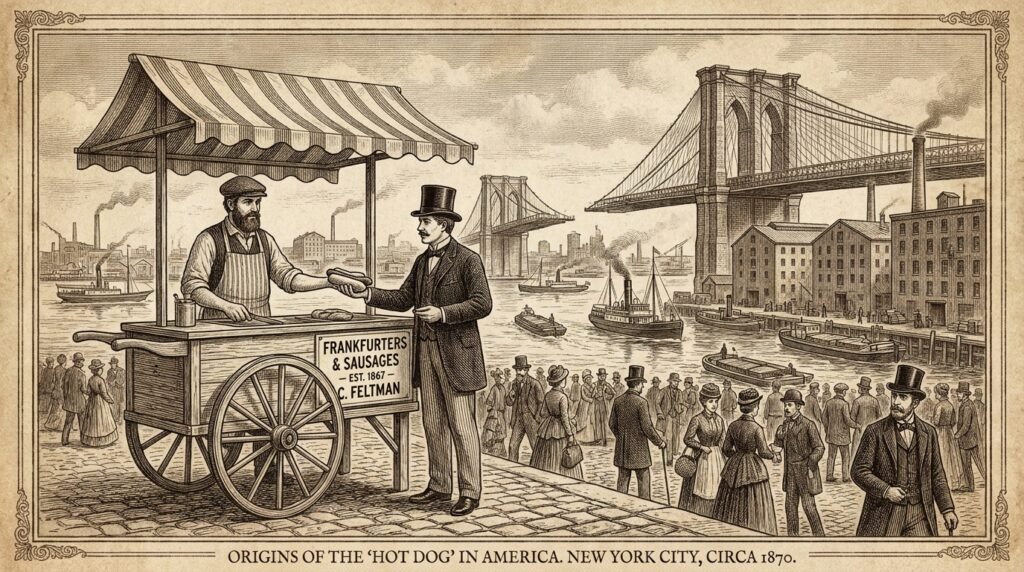
The modern hot dog’s closest ancestor is widely associated with Frankfurt, Germany, where pork-and-beef sausages known as “frankfurters” became popular in the 15th century. Vienna (Wien), Austria, also claims credit, lending its name to the “wiener.” German immigrants carried these sausage traditions to the United States in the 19th century, selling them from pushcarts and stands in bustling urban centers.
The defining innovation that turned sausages into hot dogs was the combination of a soft roll with a handheld sausage. While the exact origin story is disputed, a consistent theme emerges: vendors needed a practical way to serve sausages that allowed customers to eat as they walked. Buns or sliced rolls solved this problem, transforming sausages from plate-based meals into portable street foods and laying the groundwork for what would become the hot dog.
Cultural Influence: How the Hot Dog Became Iconic in America
The hot dog rose to prominence at a moment when American cities were growing rapidly and street foods were becoming a vital part of urban life. Coney Island in New York is often regarded as the cradle of commercial hot dog culture. In the late 19th and early 20th centuries, vendors sold inexpensive frankfurters in buns to crowds enjoying the boardwalk, amusement parks, and seaside attractions. The affordability and convenience resonated with both working-class families and tourists.
By the early 1900s, hot dogs had cemented their place in American leisure culture. They became a fixture at baseball games, fairs, and public celebrations, eventually intertwining with national identity. The association with Independence Day cookouts, backyard barbecues, and sporting events reinforced their status as quintessentially American.
Industrialization also played a role in hot dog history. Mass production and efficient distribution systems allowed hot dogs to be sold cheaply in supermarkets and concession stands across the country. This accessibility helped create a shared culinary experience: from New York street carts to Midwestern ballparks, the hot dog became a common denominator of American food culture.
Over time, immigrant communities and regional preferences shaped distinct styles, showcasing how a simple base can be adapted to different tastes. This evolution from European sausage tradition to an iconic American food underscores the hot dog’s remarkable cultural flexibility.
Different Types of Hot Dogs
Regional Varieties: Chicago vs. New York Style
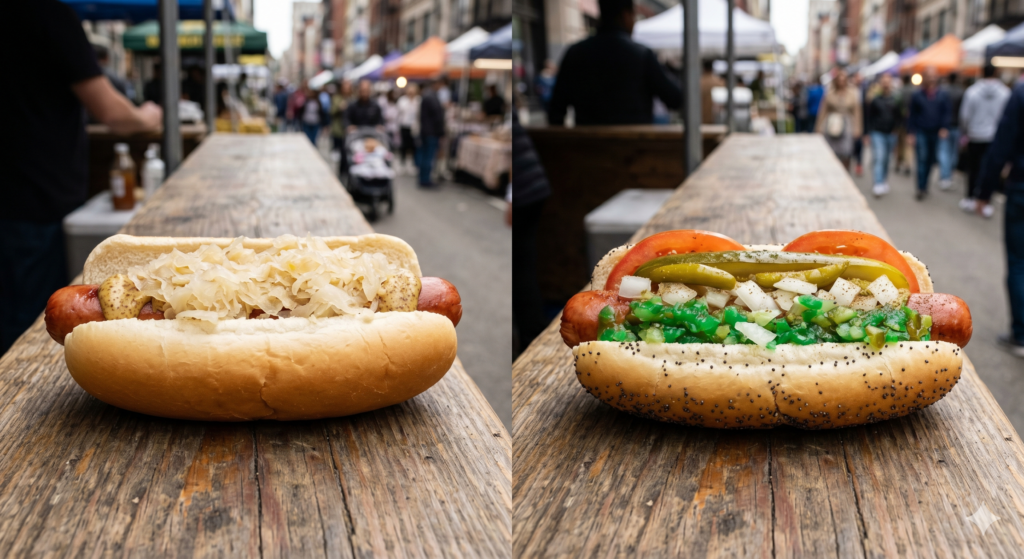
Among the many types of hot dogs in the United States, two stand out as archetypes: the Chicago style hot dog and the New York style hot dog. Both start with a beef frank, yet they express radically different philosophies about seasoning, texture, and presentation.
Chicago Style Hot Dog
A Chicago style hot dog is a complex, layered composition often described as being “dragged through the garden.” It typically features:
- A steamed, all-beef frankfurter
- A steamed poppy seed bun
- Yellow mustard
- Bright green sweet pickle relish
- Chopped white onions
- Tomato wedges
- A dill pickle spear
- Sport peppers
- A sprinkling of celery salt
The result is a hot dog with bold contrasts: sharp, salty, sweet, and spicy flavors layered over a soft bun and snappy sausage. Notably, Chicago tradition strongly discourages ketchup, arguing that it overwhelms the carefully balanced condiment lineup.
New York Style Hot Dog
In contrast, the New York style hot dog embraces minimalism and tang. Commonly sold from street carts, this hot dog usually includes:
- A boiled or simmered beef frank
- A plain, soft hot dog bun
- Yellow mustard as the default condiment
- Optional sauerkraut
- Optional onion sauce, gently cooked with tomato and spices
This configuration highlights acidity and umami, creating a clean, straightforward bite. The hot dog’s simplicity reflects the fast pace of New York street life: quick to assemble, easy to eat, and intensely familiar.
Both styles illustrate how regional traditions and local ingredients shape types of hot dogs, proving that even a modest dish can become a marker of place and identity.
Gourmet Hot Dogs: Innovations and Trends
In recent years, chefs and home cooks have reimagined the hot dog as a platform for creativity, giving rise to a flourishing world of gourmet hot dog recipes. Rather than abandoning tradition, these versions often pay homage to classic forms while elevating ingredients and techniques.
Artisanal Sausages
Higher-end hot dogs frequently begin with premium sausages made from carefully sourced meats. Options include:
- Grass-fed beef franks with natural casings for enhanced snap
- Pork or veal hot dogs seasoned with nuanced spice blends
- Poultry-based options like turkey or chicken sausages with herbs
- Plant-based sausages crafted from legumes, grains, or mycoprotein
These variations broaden the appeal of gourmet hot dogs to more health-conscious and vegetarian diners without sacrificing flavor.
Inventive Toppings and Global Influences
Modern hot dog bars often feature toppings inspired by global cuisines, such as:
- Korean-style hot dogs with kimchi, gochujang mayo, and sesame seeds
- Mexican-influenced versions with pico de gallo, crema, jalapeños, and cotija cheese
- Mediterranean toppings like tzatziki, cucumbers, olives, and feta
- Gourmet combinations using caramelized onions, truffle aioli, gruyère, or roasted peppers
These innovations reflect a broader trend in contemporary cooking: taking a familiar base and layering it with global flavors to create something both recognizable and novel.
https://www.teepublic.com/t-shirt/50082231-cyber-child-with-dog?store_id=2851997
Buns and Presentation
Gourmet interpretations also pay attention to the bun. Bakers produce enriched brioche rolls, pretzel buns, or even charcoal-infused breads to add texture and visual appeal. Some chefs split and griddle the buns in butter, creating a crisp, golden surface that supports more elaborate toppings.
The overall effect is transformative. What begins as a simple street food becomes a thoughtfully composed dish, suitable for gastropubs, food trucks, and elevated home entertaining alike.
How to Make the Perfect Hot Dog at Home
Essential Ingredients and Tools
Crafting a standout homemade hot dog starts with careful selection of ingredients and a few basic tools. Attention to these details delivers flavor, texture, and consistency that rival—or surpass—many commercial versions.
Choosing the Sausage
- Meat blend: All-beef franks are classic, offering deep flavor and a firm bite. Pork or mixed-meat sausages provide a slightly softer, juicier texture. For lighter options, look for poultry-based franks from reputable producers.
- Casing: Natural casings deliver the characteristic “snap” when bitten. Skinless hot dogs are milder in texture and easier to cook evenly, often favored for children or very soft buns.
- Quality indicators: Short ingredient lists, clear labeling of meat sources, and minimal fillers suggest higher quality. Avoid products with excessive additives, as these can dull flavor and texture.
- Top 5 Superfoods for Brain Power
Selecting the Bun
- Structure: A good bun must be soft yet resilient enough to hold condiments without collapsing.
- Flavor: Classic white buns offer neutrality, while potato and brioche rolls add subtle sweetness. Whole-grain buns introduce nuttier notes and additional fiber.
- Size: The bun should correspond closely to the length and width of the sausage to ensure balanced bites.
- Pad Thai: The Ultimate Guide to Thailand’s National Noodle Dish
Key Tools
- A reliable grill or grill pan for charring
- A pot for boiling or simmering, if you prefer gentler cooking
- Tongs for turning sausages without piercing them
- A small steamer basket or microwave-safe cover for warming buns
- Sharp knife and cutting board for precise topping preparation
With these elements in place, perfect hot dog cooking becomes less about improvisation and more about controlled technique.
Step-by-Step Cooking Methods: Grilling, Boiling, and More
Different cooking methods highlight different qualities in a hot dog. Experimenting with a few approaches will help you determine your preferred balance of juiciness, smokiness, and texture.
The Ultimate Nacho Guide: History, Classic Recipes, and Pro Tips for Perfect Layers
Grilling
Grilling remains the most celebrated way to prepare hot dogs, prized for its char and subtle smokiness.
- Preheat the grill to medium heat. Excessively high heat can split casings and cause flare-ups.
- Lightly oil the grates to prevent sticking.
- Place hot dogs perpendicular to the grates for clear grill marks.
- Cook for 5–7 minutes, turning every 1–2 minutes until evenly browned and lightly blistered.
- During the final minute, place buns on the grill, cut side down, just until warmed and slightly toasted.
The result is a caramelized exterior with a juicy interior, ideal for robust toppings.
Boiling or Simmering
Boiling is straightforward and produces a tender, uniformly heated sausage.
- Fill a pot with enough water to fully submerge the hot dogs.
- Bring to a gentle boil, then reduce to a simmer.
- Add hot dogs and cook for 4–6 minutes, until heated through.
- Remove with tongs and pat lightly with a paper towel to remove excess moisture.
For additional flavor, you may replace part of the water with broth, beer, or aromatics such as onion and bay leaf. Keep the heat moderate to prevent the casing from bursting.
Pan-Searing
Pan-searing offers convenience and excellent browning without an outdoor grill.
- Heat a skillet over medium heat and add a small amount of neutral oil or butter.
- Place hot dogs in the pan and cook, turning occasionally, for 6–8 minutes.
- For extra color, increase heat briefly at the end, watching closely to avoid scorching.
This method produces a rich, caramelized surface and is well suited to gourmet hot dog recipes with more luxurious toppings.
Oven-Roasting
Oven-roasting is efficient for feeding a crowd.
- Preheat the oven to around 400°F (200°C).
- Arrange hot dogs on a parchment-lined baking sheet.
- Roast for 10–12 minutes, shaking or turning once midway for even browning.
This technique maintains moisture while developing light blistering on the casing.
Warming and Steaming Buns
Regardless of method, do not overlook the bun. A cold, dense bun can undermine otherwise perfect hot dog cooking.
- Steam buns briefly over simmering water for a soft, pillowy texture.
- Toast or griddle buns in a pan with a small amount of butter for added flavor and structure.
By mastering these methods, you can adapt your approach to suit different occasions, from quick weeknight dinners to elaborate gatherings.
Hot Dog Toppings and Pairings
Classic Toppings: Mustard, Ketchup, and Beyond
Toppings transform hot dogs from simple sausages in buns into finely tuned compositions. While debates about ketchup versus mustard may be perennial, a thoughtful approach to condiments and garnishes will consistently yield superior results.
Essential Condiments
- Mustard: Yellow mustard is the archetypal choice, offering sharp acidity and vivid color. Dijon and whole-grain mustards lend complexity, while honey mustard provides gentle sweetness for those who prefer milder heat.
- Ketchup: Despite regional objections, ketchup remains popular, especially among children. Its sweetness works best when balanced with tangy or spicy elements such as pickles, onions, or jalapeños.
- Mayonnaise-based sauces: Flavored mayonnaises, aioli, or yogurt-based dressings can add creaminess that complements grilled or pan-seared hot dogs.
Pickled and Fermented Elements
- Relish: Traditional sweet pickle relish adds crunch and bright sweetness, a staple in many American styles.
- Sauerkraut: Fermented cabbage delivers acidity and depth, pairing particularly well with mustard and robust beef franks.
- Pickles and peppers: Dill pickles, pickled jalapeños, and sport peppers introduce bracing, salty notes that cut through richness.
Fresh Components
- Onions: Raw white or red onions offer sharpness and texture. Diced finely, they distribute flavor without overpowering each bite.
- Tomatoes and lettuce: Slices of tomato and shredded lettuce bring freshness and color, key to styles such as the Chicago dog.
- Herbs: Chives, scallions, or cilantro can elevate a hot dog from casual snack to composed dish with minimal effort.
Cooked Toppings
- Caramelized onions: Slowly cooked onions contribute deep sweetness and subtle smokiness, ideal for gourmet hot dogs.
- Chili: Hearty chili transforms a hot dog into a more substantial meal, especially when topped with shredded cheese and chopped onions.
- Grilled vegetables: Peppers, mushrooms, and zucchini add complexity and can support Mediterranean or vegetarian-inspired flavor profiles.
The most successful hot dog toppings combine contrasting tastes and textures—creamy and crunchy, acidic and rich—to create a balanced, satisfying bite.
Best Sides and Drinks to Serve with Hot Dogs
Complementary sides and beverages complete the hot dog experience, turning a simple sandwich into a well-rounded meal. Thoughtful pairings can enhance both flavor and enjoyment, whether at a casual picnic or a carefully planned gathering.
Classic Sides
- French fries: Crisp, salted fries remain a natural partner, echoing the indulgent character of hot dogs.
- Potato salad: Creamy or vinegar-based potato salads offer a cool, substantial counterpoint to the hot, savory sausage.
- Coleslaw: Tangy slaw, particularly with a vinegar-forward dressing, cleanses the palate and pairs well with rich toppings such as chili or cheese.
- Baked beans: Slightly sweet, slow-cooked beans harmonize with grilled flavors and contribute additional depth.
- Corn on the cob: Grilled or boiled corn provides a seasonal element, especially in summer cookouts.
Lighter Accompaniments
- Green salads: Simple salads with bright vinaigrettes help balance richer hot dog combinations.
- Fresh fruit: Watermelon, berries, or citrus segments introduce refreshing sweetness, particularly appropriate in warm weather.
- Pickle platters: An assortment of pickled vegetables adds crunch and acidity, enhancing savory notes in the hot dog itself.
Beverage Pairings
- Beer: Light lagers, pilsners, and wheat beers are versatile choices. Their carbonation and mild bitterness cut through fat and salt without overwhelming delicate toppings.
- Wine: Crisp white wines such as Riesling or Sauvignon Blanc complement acidity in mustard and pickles. For red wine, choose lighter-bodied options like Beaujolais or a chilled Pinot Noir.
- Non-alcoholic options: Sparkling water with citrus, iced tea, and classic sodas pair comfortably with hot dogs, especially when serving families.
- Craft sodas and shrubs: Drinks with herbal or fruit-forward profiles can echo or contrast with gourmet hot dog recipes in engaging ways.
When assembling a hot dog menu, aim for variety in texture, temperature, and flavor. A mix of crunchy and creamy sides, along with both refreshing and robust beverages, ensures that guests can customize their experience to their preferences.
Conclusion
The hot dog’s journey from Old World sausages to an iconic American food illustrates how culinary traditions adapt, migrate, and flourish. Today’s landscape encompasses everything from minimalist New York street dogs and elaborately garnished Chicago style hot dogs to refined, globally influenced gourmet hot dog recipes.
By understanding different types of hot dogs, mastering a few reliable cooking methods, and selecting thoughtful toppings and pairings, any home cook can transform a familiar staple into a refined, satisfying meal. Whether you are preparing quick homemade hot dogs for a weeknight dinner or designing a carefully curated menu for guests, the hot dog offers a versatile, rewarding canvas for creativity.
- The Journey: Traces how European sausage traditions (Frankfurt and Vienna) immigrated to America, transformed into a portable street food on Coney Island, and cemented themselves into the fabric of American leisure culture.
- The Great Debate: Explores the minimalist, sauerkraut-and-mustard New York style versus the maximalist, “dragged through the garden” Chicago style (and its strict anti-ketchup rule).
- Modern Innovation: Covers the rise of gourmet hot dog bars featuring artisanal meats, plant-based alternatives, brioche/pretzel buns, and globally inspired toppings like kimchi or truffle aioli.
- The Technique: Breaks down the science of perfect preparation at home—balancing snap and juiciness via grilling, pan-searing, or oven-roasting, without ever ignoring the importance of a properly steamed or griddled bun.
#HotDogs, #FoodHistory, #GrillingSeason, #ComfortFood, #ChicagoStyle, #NewYorkStyle, #GourmetCooking, #SummerBBQ, #CulinaryTraditions, #HomeChefs
Celestial Stackmaster
Core Loop: Vertical block stacking with slicing physics.
Precision Rewards: “Perfect” drops snap into place with a glow effect.
Dynamic Difficulty: Block speed increases as you climb higher.
Atmospheric Visuals: A cosmic “Zenith” background with color-shifting fog that evolves with your score.
Responsive Controls: Fully playable on desktop (click) and mobile (tap).
Camera System: Dynamic camera that tracks your progress toward the stars.
How to Play
Objective: Stack blocks as high as possible without missing the tower.
Controls: Click or Tap anywhere to drop the moving block onto the stack.
Pro Tip: Align the block perfectly with the one below to keep its full size; otherwise, the overhanging part will be sliced off!