
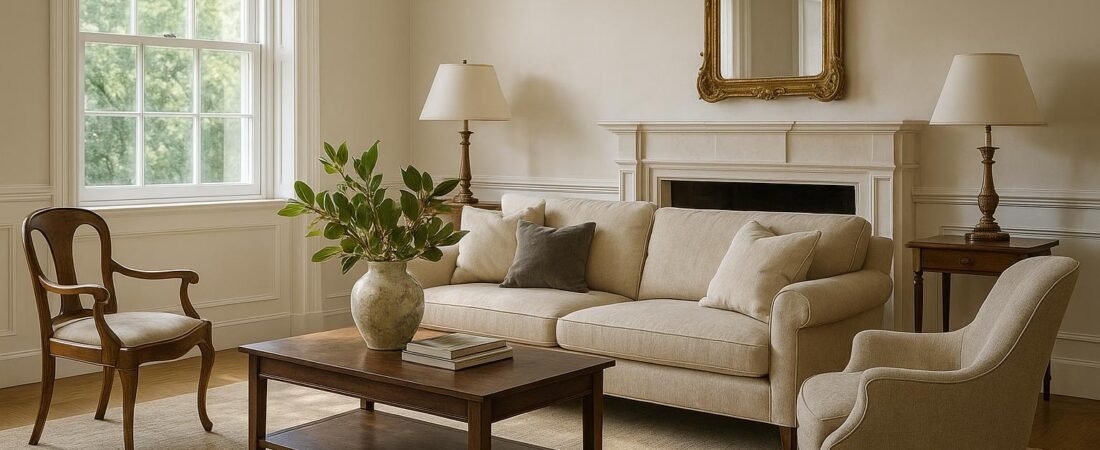
Timeless Interior Design Ideas That Never Go Out of Style
Truly timeless interiors don’t shout for attention. They feel calm, collected, and comfortable year after year, even as trends come and go. In 2026, the rooms designers keep returning to share the same DNA: quality materials, neutral foundations, natural texture, classic proportions, and a thoughtful mix of old and new.
If you’re ready to create a home that still looks good in a decade, not just next season, these timeless interior design ideas will help you build a space that lasts.
1. Decorate for the House, Not the Year
Timeless design always starts with the architecture. Instead of forcing a look you saw on social media, let your home’s bones guide your choices.
- Read the architecture: Is your home traditional, mid-century, farmhouse, or contemporary? Echo those lines in your furniture, lighting, and finishes so everything feels cohesive.
- Respect proportions: Don’t fight the room. High ceilings can handle larger fixtures and taller furniture; lower ceilings call for lower, more horizontal pieces.
- Work with existing trim and details: Original moldings, paneling, and built-ins are assets. Highlight them with thoughtful paint colors and lighting rather than covering them up with trends.
When you “decorate for the house,” your rooms feel grounded and intentional, which is the essence of timeless style.
2. Use a Neutral Foundation
The most enduring interiors rely on a calm, neutral base that can adapt as your taste evolves. That doesn’t mean boring; it means flexible.
- Choose soft, layered neutrals: Whites, creams, taupes, oatmeal, warm grays, and greige are ideal for walls, large sofas, and major rugs.
- Think long-term for big investments: Keep large, expensive items like sofas, built-ins, and flooring neutral so you can change accents without starting over.
- Warm over stark: Today’s “forever” rooms lean warm and inviting, not cold or sterile. Off-whites and greige feel softer and age better than pure, bright white in most homes.
A neutral foundation gives your home a cohesive backdrop so you can bring in color, art, and collections without visual chaos.
3. Add Natural Materials for Lasting Warmth
Natural materials are the backbone of timeless interior design. They add depth, warmth, and a sense of permanence you don’t get from synthetic finishes alone.
- Wood: Hardwood floors, wood beams, and solid wood furniture never go out of style. In 2026, slightly darker stains and natural finishes are especially enduring.
- Stone and marble: Marble countertops, stone fireplaces, and stone tile bring a classic, grounded feel that still looks current decades later.
- Textiles: Linen, cotton, wool, and leather age beautifully and gain character over time.
- Metal: Brass, bronze, blackened steel, and nickel fixtures patinate and soften with age, which aligns perfectly with a timeless look.
If you’re unsure where to invest, start with the “touch points” you use every day: flooring, countertops, dining tables, and key upholstery pieces.
4. Layer Texture Before You Layer Color
Timeless rooms feel rich and inviting because of texture, not because every surface is a different color. Designers are increasingly prioritizing tactile variety over bold palettes.
- Combine smooth and rough: Pair a sleek stone coffee table with a chunky wool rug, or a linen sofa with a nubby throw and woven basket.
- Use natural fibers: Jute, sisal, seagrass, rattan, and cane add instant warmth without competing with your color scheme.
- Layer window treatments: Simple, lined drapes over shades or blinds add softness and depth to a room.
- Mix subtle finishes: Matte walls, satin wood, and aged metal create quiet contrast that feels interesting but never busy.
Think of texture as your primary decorating tool; color becomes the supporting detail, not the main event.
5. Choose Classic Patterns Over Novelty Prints
Certain patterns have endured for centuries because they play well with everything. They’re your safest path to adding visual interest that still feels timeless in 10 or 20 years.
- Stripes: From ticking to wide cabana, stripes work in nearly every style and room.
- Plaids and checks: Ideal for upholstery, pillows, and throws, especially in more traditional or cottage-style spaces.
- Florals and botanicals: Choose more naturalistic, less cartoonish prints in restrained color palettes.
- Herringbone and subtle geometrics: Timeless for wood floors, tile layouts, and tailored textiles.
Use bold, highly specific prints sparingly, often on items that are easy to change, like accent pillows or small ottomans.
6. Invest in High-Quality, Simple Furniture
The “buy less, buy better” mindset is central to creating a timeless interior. Well-made, comfortable pieces outlast fast-moving style cycles and look better as they age.
- Prioritize comfort and structure: A well-proportioned sofa with a classic silhouette (think straight or gently rolled arms, tailored cushions) will never feel dated.
- Choose simple lines: Avoid overly ornate fads or hyper-minimalist pieces. Aim for clean, balanced shapes that support many styles.
- Spend where it matters: Sofas, dining chairs, beds, and frequently used tables are worth the investment. Accent decor can be more budget-friendly.
- Neutral upholstery, character in details: Keep the main fabric subdued, but add interest with piping, tufting, or subtle pattern in smaller doses.
High-quality furniture in classic shapes becomes the backbone of your home, allowing you to refresh the look with far smaller changes over time.
7. Mix Old and New for Character
One of the strongest signals of timeless design today is a layered mix of vintage and modern pieces. A room where everything is brand new tends to feel flat and temporary.
- Add at least one older piece per room: A vintage chest, an antique side table, an heirloom mirror, or an aged rug instantly gives the space depth.
- Embrace patina: Worn wood edges, softened leather, and aged metals add soul. They make a room feel lived-in rather than staged.
- Pair with modern simplicity: Offset ornate or traditional pieces with clean-lined sofas, streamlined lighting, or contemporary art.
- Shop sustainably: Antique and vintage finds align with the “buy less, buy better” approach and reduce environmental impact.
This high-low, old-new balance keeps your home from feeling stuck in a single era and makes it more resilient to shifting trends.
8. Use Symmetry and Balance to Calm the Room
Timeless interiors almost always rely on a strong sense of order. Symmetry and balance give the eye a place to rest and make rooms feel composed.
- Anchor a focal point: Arrange seating around a fireplace, a large window, or a console with artwork to establish a clear center of gravity.
- Use pairs: Matching table lamps, twin chairs, or a pair of sconces instantly bring classic harmony to a space.
- Balance visual weight: If you have a heavy piece (like a dark bookcase) on one side of the room, offset it with something substantial on the other side.
- Keep pathways clear: Good circulation is part of good design. Avoid cluttering the center of the room with too many small items.
Perfect symmetry isn’t required, but aiming for balance in size, height, and color across the room keeps your design timeless and serene.
9. Include Built-Ins and Architectural Details
Built-ins and trim work are having a resurgence in 2026—and for good reason. They look like they belong to the house rather than to a particular trend cycle.
- Built-in shelving: Flanking a fireplace, surrounding a window, or lining a hallway, built-ins offer both storage and display without feeling temporary.
- Moldings and paneling: Wainscoting, picture-frame molding, beadboard, and simple panel details add structure and sophistication.
- Window seats and niches: Integrated seating and nooks make the most of awkward spaces while adding charm.
- Consistent trim: Repeating the same style of baseboards, casings, and doors throughout the home ties everything together visually.
Well-executed architectural details make even a newer home feel rooted and substantial, which is key to a lasting aesthetic.
10. Keep Technology Visually Quiet
Timeless rooms prioritize human comfort and conversation, not screens. Today’s best interiors integrate technology in subtle ways rather than letting it dominate.
- Downplay the TV: Mount it on a dark wall, frame it with shelving, or place it in a cabinet or armoire when possible.
- Hide cords and devices: Use cord covers, in-furniture cable management, and baskets or cabinets to conceal routers and chargers.
- Choose classic lighting: Wall sconces, reading lamps, and overhead fixtures in enduring styles keep rooms warm and welcoming even as tech evolves.
- Keep “quiet zones”: Consider at least one screen-light space in your home—like a reading corner or formal living area—to preserve that timeless, restful quality.
The less your decor revolves around specific gadgets, the longer your space will feel current.
11. Use Trends as Accents, Not Foundations
Timeless design doesn’t ignore trends; it edits them. The goal is to keep your room’s backbone classic while you experiment in low-commitment ways.
- Keep the core simple: Walls, floors, built-ins, and large furniture should be classic and largely neutral.
- Play with accents: Try current colors, shapes, or motifs in pillows, throws, small art, candles, or tabletop decor.
- Test before committing: If you love a bold color or pattern, start with a small accessory or a paint swatch wall rather than a full renovation.
- Rotate seasonally: Swap in textured throws in fall and lighter linens in summer; this keeps your home feeling fresh without constant redecorating.
This strategy lets your home evolve with you while its essential structure remains stable and timeless.
12. Putting It All Together: A Timeless Room Formula
To make this practical, here’s a simple blueprint you can adapt to nearly any room:
- Start with architecture: Identify your focal point and respect the room’s proportions.
- Set a neutral base: Choose wall and large furniture colors in warm neutrals.
- Add natural materials: Include wood, stone, and one or two natural textiles.
- Layer texture: Mix at least three textures—rug, upholstery, drapes, wood, or baskets.
- Introduce classic patterns: Add stripes, checks, or a subtle floral in small doses.
- Mix old and new: Bring in at least one vintage or antique piece.
- Check for balance: Use pairs or visual symmetry to calm the layout.
- Edit tech: Soften or conceal screens and visible cords.
- Accent with trends: Update decor seasonally with smaller, easy-to-change items.
Conclusion: A Home That Ages Gracefully
Timeless interior design isn’t about following a strict style rulebook. It’s about creating a home that feels welcoming, authentic, and quietly beautiful—no matter what year it is. When you prioritize quality materials, neutral foundations, layered texture, and a thoughtful mix of old and new, your rooms naturally resist the “dated” look.
Start with one space. Edit