
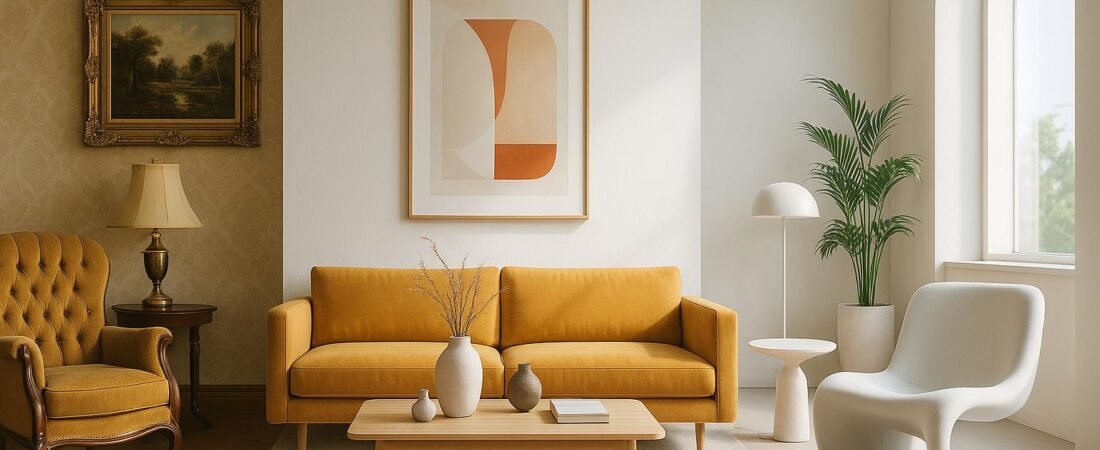
The Evolution of Interior Design: Past, Present, and Future
Interior design has never been just about “making things look nice.” From ornate palaces in ancient civilizations to flexible, tech-enabled homes in 2026, interiors have always mirrored how we live, what we value, and the tools we have to shape our spaces.
Today, the discipline has shifted from architecture-led decoration for elites to a professional, research-driven field focused on functionality, wellness, sustainability, and user experience. Understanding how we got here makes it easier to design spaces that feel both timeless and future-ready.
From Palaces to Parlors: How Interior Design Began
Ancient Civilizations: Power, Ritual, and Symbolism
The earliest interiors were inseparable from architecture and social hierarchy. In places like ancient Egypt, India, Greece, and Rome, interior spaces conveyed status, spirituality, and cultural identity:
- Egypt: Carved stone, painted walls, and inlaid furniture signaled wealth and echoed religious beliefs about the afterlife.
- Greece and Rome: Courtyards, mosaics, frescoes, and columns defined homes of the elite, blending art, politics, and daily life.
- India and other early cultures: Intricate carvings, textiles, and ornamentation often reflected religious stories and regional craftsmanship.
These interiors were handcrafted, symbolic, and tightly linked to class. There were no “interior designers” yet—only architects, artisans, and craftspeople working directly for rulers and wealthy patrons.
Pre-Industrial Eras: Craftsmanship and Class Distinction
Through the medieval and early modern periods, interiors continued to reflect power, religion, and craft:
- Castles and manor houses: Heavy timber, tapestries for insulation, and heraldic motifs emphasized protection and lineage.
- Religious spaces: Stained glass, carved stone, and elaborate altars showed how design could shape emotional and spiritual experience.
- Urban homes and guild halls: Skilled joinery, cabinetry, and decorative plasterwork showcased the rise of specialist crafts.
Still, design decisions were driven more by availability of materials and status than by concepts like ergonomics, mental health, or sustainability. Beauty and symbolism were paramount; comfort and function were secondary.
The Industrial Revolution: When Interiors Went Mainstream
Mass Production Changes Everything
The Industrial Revolution radically transformed interior design. New manufacturing processes brought affordable furniture, textiles, and finishes to a much wider audience. This had several major effects:
- Access: Middle-class households could now buy coordinated furniture and décor, not just handmade one-offs.
- Standardization: Designs became repeatable; ornament and patterns could be produced quickly, not painstakingly carved or woven.
- New materials: Steel, glass, and later plastics entered everyday interiors, enabling lighter structures and new forms.
At the same time, early critics began to push back against over-ornamented, machine-printed interiors. This tension set the stage for the major design movements of the 20th century.
20th-Century Shifts: From Ornament to Function
Art Deco: Glamour, Geometry, and Modernity
In the early 20th century, Art Deco captured the optimism of the machine age. Interiors were bold and glamorous, with:
- Geometric patterns and streamlined forms
- Lacquered finishes, chrome, and glass
- Rich colors and luxurious materials like marble and exotic woods
Art Deco celebrated modern life while still feeling decorative and theatrical. It paved the way for cleaner lines and a more explicit focus on function.
Modernism: “Form Follows Function”
Modernism, influenced by movements like the Bauhaus, pushed interior design toward clarity and utility. Key principles included:
- Simplicity: Clean lines, minimal ornamentation, and open plans.
- Honest materials: Exposed concrete, steel, glass, and simple woods.
- Function first: Furniture and layouts designed to support everyday life efficiently.
This era marks a crucial shift: interiors were now being planned around how people lived, not just how spaces looked. Function and ergonomics entered the conversation more seriously.
Mid-Century Modern: Livable, Human-Scaled Design
Mid-century modern design brought warmth to Modernism. Designers embraced:
- Organic shapes and tapered legs
- Natural woods alongside manufactured materials
- Open plans that linked living, dining, and outdoor spaces
These interiors were still streamlined, but more playful and comfortable. They showed that functional design could be both approachable and visually appealing—an idea that remains highly influential today.
Late 20th Century to Today: Personalization and Global Influence
Postmodernism: Mixing Styles and Breaking Rules
By the late 20th century, designers and homeowners had grown tired of strict rules. Postmodernism challenged simplicity and purity, embracing:
- Eclectic mixes of historical styles
- Bold colors, patterns, and unexpected forms
- Humor, irony, and playful references
Design became more personal and expressive, signaling that interiors could be narrative-rich and individual, not just functional or minimalist.
Minimalism and the Rise of “Less, But Better”
Minimalism then reintroduced restraint—this time as a conscious choice. Interiors focused on:
- Decluttered spaces and clear sightlines
- Neutral palettes and simple forms
- Fewer, higher-quality objects
However, many minimalist spaces felt cold or impersonal. This led to a new phase: warm minimalism, which keeps the simplicity but layers in texture, natural light, and tactile materials to create calm yet welcoming environments.
Global Mixing and Custom Craftsmanship
Globalization and digital media accelerated the exchange of design ideas. The result:
- Interiors that blend Scandinavian, Japanese, Mediterranean, and other influences.
- Renewed appreciation for artisanal work—handmade tiles, custom cabinetry, local crafts.
- Highly personalized spaces that reflect individual values, hobbies, and cultural identities.
Interior design is now less about following a single style and more about curating a meaningful, coherent mix that supports how people actually live.
The Present: Functionality, Wellness, and Sustainability at the Center
Simplicity and Flexibility as Everyday Priorities
In 2026, contemporary interiors are guided by a clear set of priorities:
- Functionality: Every element should serve a purpose, from concealed storage to multipurpose furniture.
- Flexibility: Rooms adapt to multiple uses: home office by day, family space by night; guest room that doubles as a studio.
- Ergonomics: Seating, lighting, and layouts are chosen to support comfort and long-term health, especially with more time spent at home.
- Balanced aesthetics: Visual harmony is important, but not at the expense of usability.
Designers increasingly start with the question: What does this space need to do for its users, and how should it feel? Style supports that answer, rather than dictating it.
Sustainability as a Baseline, Not a Bonus
Sustainable interior design has moved from niche to non-negotiable. Homeowners and professionals now consider:
- Material choices: Recycled, rapidly renewable, locally sourced, or certified sustainable materials.
- Lifecycle thinking: Durability, repairability, and how products can be reused, upcycled, or responsibly disposed of.
- Energy efficiency: LED lighting, smart thermostats, efficient appliances, and better insulation to reduce environmental impact.
- Reuse and vintage: Incorporating pre-loved furniture and architectural salvage to reduce waste and add character.
In many projects, sustainability isn’t called out as a special feature—it’s simply the default expectation.
Biophilic Design and Human-Centered Spaces
Biophilic design—bringing nature into interiors—is now mainstream, driven by growing awareness of its health benefits. Elements commonly used include:
- Natural light, outdoor views, and operable windows
- Indoor plants, green walls, and courtyard gardens
- Organic textures: wood, stone, natural fibers, and earthy colors
More broadly, human-centered design focuses on how spaces support physical and mental well-being:
- Acoustic comfort (sound absorption, quiet zones)
- Lighting tuned for circadian rhythms (brightness and color temperature changes)
- Spaces for rest, focus, social connection, and movement
- Inclusive design for people of different ages and abilities
Post-pandemic, the home is expected to be a sanctuary, a workplace, and a social hub—sometimes all at once. Interiors are being designed intentionally for that complexity.
Technology-Driven Design: How We Plan and Experience Interiors Today
3D Visualization, AR/VR, and Online Collaboration
Technology has profoundly changed how interior design is practiced and experienced:
- 3D modeling and rendering: Designers create photorealistic images and walkthroughs so clients can “see” their future spaces before a single wall is painted.
- AR and VR tools: Virtual reality headsets and augmented reality apps allow users to explore layouts, test furniture placement, and visualize finishes at full scale.
- Online platforms: Remote consultations, digital mood boards, and shared project dashboards make design more accessible and collaborative.
This digital layer reduces guesswork, speeds up decision-making, and helps align expectations early in the process.
The Emergence of AI-Assisted Interior Design
Artificial intelligence is beginning to play a notable role in the design workflow, particularly by:
- Generating layout options based on room dimensions and functional needs
- Suggesting color palettes and material combinations that align with user preferences
- Analyzing images to identify styles and recommend similar products
- Automating parts of documentation and specification
AI doesn’t replace human creativity or judgment; it accelerates exploration and frees designers to focus on nuance—like emotional impact, storytelling, and subtle details that algorithms can’t yet fully grasp.
The Future of Interior Design: Smarter, Healthier, More Inclusive
Smart Home Integration and Adaptive Spaces
The next era of interior design will be defined by spaces that are not just beautiful and functional, but also responsive. Key directions include:
- Integrated smart systems: Lighting, climate control, security, and shading working together seamlessly, controlled by voice, app, or automation.
- Adaptive environments: Rooms that adjust lighting, temperature, and even acoustics based on time of day, occupancy, or activity.
- Modular layouts: Moveable walls, transformable furniture, and flexible storage that allow spaces to evolve as needs change.
The goal: interiors that feel intuitive, anticipate user needs, and reduce friction in everyday life.
Deeper Focus on Wellness and Mental Health
Wellness-centered design will move beyond plants and ergonomic chairs to more holistic strategies, such as:
- Neuro-inclusive design: Spaces that consider sensory sensitivities, with options for low-stimulus areas, soft lighting, and reduced visual clutter.
- Stress reduction: Layouts that minimize noise and crowding, incorporate calming views, and provide clear wayfinding.
- Spaces for recovery: Dedicated nooks or rooms for meditation, stretching, reading, or quiet solo time.
As research on the built environment and mental health grows, interior design will increasingly be guided by evidence-based strategies, not just aesthetic preferences.