
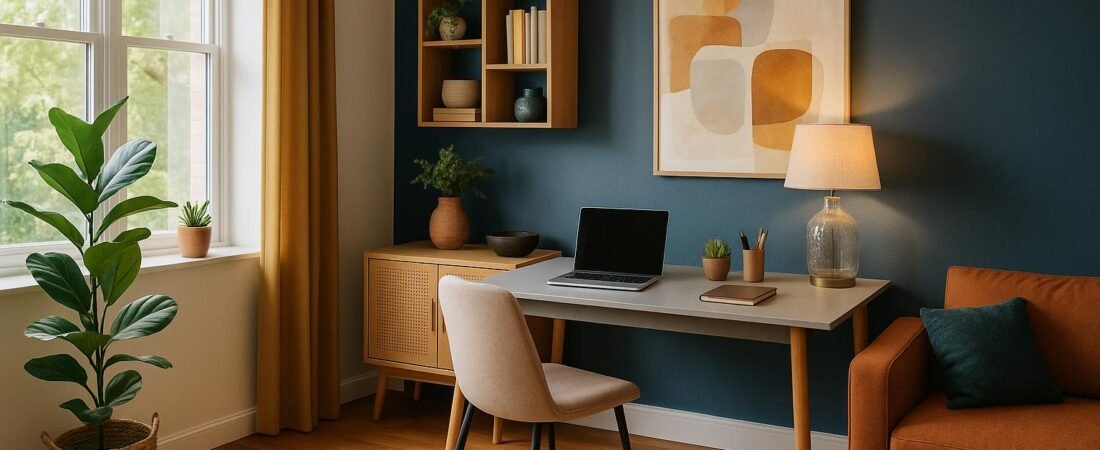
How Interior Design Influences Mood and Productivity
Interior design isn’t just about aesthetics. The way a room is lit, colored, furnished, and organized directly shapes how you feel and how well you can think, focus, and get things done. Good design reduces mental “friction,” supports your natural rhythms, and quietly nudges you into the right state for the task at hand—whether that’s deep work, restful sleep, or creative brainstorming.
In this article, we’ll look at what current research says about how interior design influences mood and productivity, and then translate those findings into practical, evidence-based design tips you can use at home or in the workplace.
Why Your Environment Affects How You Think and Feel
From an environmental psychology perspective, your brain is constantly processing signals from your surroundings: light, color, noise, crowding, patterns, and even how easy it is to move through a space. Each of these elements affects:
- Mood – whether you feel calm, tense, uplifted, or drained
- Stress levels – how “on alert” your nervous system is
- Attention and focus – how much mental effort tasks require
- Productivity – how efficiently and comfortably you can work
The most consistent findings from research point to a small group of powerful design levers: lighting, color, layout and flow, room shape, natural elements, acoustics, and clutter. Adjusting these intentionally turns a space from merely “nice-looking” into a genuine tool that supports your daily life.
Lighting: The Single Most Powerful Design Tool
Lighting is the factor most strongly and consistently linked with mood, alertness, and productivity. Light tells your body when to wake up, when to wind down, and how alert you should feel throughout the day.
How Light Affects Mood and Performance
Studies repeatedly show that:
- Natural daylight improves mood, reduces fatigue, and supports better sleep through healthier circadian rhythms.
- Bright, well-distributed light boosts alertness and task performance, especially for detailed or mentally demanding work.
- Harsh, flickering, or overly cool artificial light can increase eye strain, headaches, and stress.
- Low light levels in the evening support relaxation and signal the body to prepare for sleep.
Practical Lighting Tips
To design for better mood and productivity:
- Maximize daylight: Place desks or work surfaces near windows. Use light window treatments that diffuse rather than block natural light.
- Layer your lighting: Combine ambient lighting (ceiling lights), task lighting (desk or reading lamps), and accent lighting (wall sconces or floor lamps). This lets you tune the environment to the activity and time of day.
- Use warmer light in the evening: In bedrooms and living areas, favor warm white bulbs (around 2700–3000K) to support relaxation.
- Control glare: Position screens perpendicular to windows when possible, and use shades or blinds to soften direct sun.
- Invest in quality fixtures: Flicker-free LED bulbs with good color rendering (CRI 90+) are easier on the eyes over long periods.
Think of light as the “tempo setter” for a room. If you change nothing else, improving the lighting often brings the biggest boost in how a space feels and functions.
Color: Setting the Emotional Tone of a Room
Color doesn’t just change how a room looks; it changes how it feels and what it’s best suited for. While personal and cultural differences matter, a few patterns show up consistently across research.
How Color Influences Mood and Task Performance
- Cooler tones (blues, soft greens): Commonly associated with calm, stability, and reduced anxiety. These shades are often linked with better focus and sustained attention.
- Warmer and brighter colors (yellows, oranges, some reds): Often feel energizing and stimulating. They can support creativity and social interaction but may be overwhelming in excess.
- Neutrals (whites, greys, beiges): Provide a low-stimulation backdrop that can make a space feel open and clean. Too much stark white or grey, however, may feel sterile or flat without texture and accents.
Color Strategy by Room Function
- Bedrooms and relaxation spaces: Opt for softer, muted tones—dusty blues, sage greens, warm neutrals. The goal is to reduce arousal and visual tension.
- Home offices and study areas: Use a calm base (cool or neutral) with limited, intentional color accents. For example, a soft grey-blue wall with a few warm, energetic accent pieces can balance focus and motivation.
- Creative and collaborative spaces: Introduce more saturated or warm hues in smaller doses—art, textiles, or a single accent wall can elevate energy without overwhelming the senses.
- Kitchens and dining rooms: Warmer tones can encourage sociability and appetite, but keeping the overall palette controlled helps avoid visual clutter.
The most effective approach is to match color intensity to task intensity: calmer, less saturated colors for focus and rest; bolder accents where energy and interaction are desired.
Layout, Flow, and the Mental Cost of Clutter
How a room is arranged has a major impact on stress and concentration. Two elements matter most: spatial flow and visual clutter.
Why Layout Matters for Mood and Focus
Research links open, well-organized spaces with lower stress and better productivity, while cramped or chaotic environments increase cognitive load. When your brain has to work harder to navigate a space—dodging obstacles, hunting for items, or processing lots of competing stimuli—less mental energy is left for your actual tasks.
Good layouts tend to:
- Make movement intuitive, with clear paths and minimal obstacles
- Offer clear sightlines so you can see what you need without scanning a crowded room
- Support specific activities with logical zoning (work, rest, storage, socializing)
- Reduce crowding and “stuffiness,” which are consistently linked to higher stress
Designing for Spatial Flow
Simple layout improvements can dramatically change how a space feels:
- Clarify the main path: Ensure there’s an obvious, unobstructed route through the room. Pull furniture slightly away from doorways and walkways.
- Create zones: Use rugs, lighting, or furniture placement to define clear areas for work, leisure, dining, or sleep. Zoning helps your brain associate each area with a particular mental mode.
- Face the right way: In home offices, position your desk so you have a balanced view—ideally facing a window or an open area instead of a blank wall, but without constant distractions behind your screen.
- Edit furniture: Fewer, better-chosen pieces that fit the scale of the room often reduce stress and improve usability.
Clutter and Visual Complexity
Clutter isn’t just a housekeeping issue; it’s a cognitive one. Every object in view demands a small amount of attention. High visual complexity—crowded shelves, piles of paper, busy surfaces—forces your brain to continuously filter out irrelevant information.
To reduce visual noise:
- Keep most surfaces clear, with only a few meaningful or functional items out.
- Use closed storage (cabinets, drawers, boxes) for items you don’t need to see daily.
- Organize open shelves with consistent container types and spacing to reduce “visual chatter.”
- Regularly audit your space: remove decor or furniture that no longer serves a functional or emotional purpose.
Think of decluttering as upgrading your mental bandwidth. A calmer visual field means more capacity for focus and creativity.
Room Shape and the Subtle Power of Curves
Beyond layout, emerging research suggests that the actual shape of a room can influence mood and creativity. In controlled experiments, people exposed to curved room geometries reported more positive emotions and showed higher creative output than those in standard rectangular rooms.
Most of us can’t change the architecture of our homes or offices, but we can introduce curved elements that soften the feel of a space:
- Choose rounded or oval tables instead of strictly rectangular ones where possible.
- Incorporate curved backs on chairs and sofas, or arched headboards.
- Use circular rugs, mirrors, or light fixtures to visually break up rigid lines.
- Soften hard corners with plants, floor lamps, or tall, rounded decor.
Curves can make a room feel more inviting and less formal, which may be especially helpful in creative workspaces, lounges, and collaborative areas.
Biophilic Design: Why Natural Elements Calm the Mind
Biophilic design is the practice of integrating nature into the built environment. Research consistently shows that contact with natural elements—plants, wood, stone, water, and views of greenery—supports stress reduction, emotional restoration, and improved concentration.
Benefits of Natural Elements Indoors
- Lower stress: Views of nature and indoor plants are associated with reduced physiological stress markers and improved mood.
- Attention restoration: Nature provides “soft fascination”—interest without overload—allowing the brain’s directed attention systems to recover.
- Greater comfort and satisfaction: People reliably report feeling better and more satisfied in spaces with visible natural materials and greenery.
Simple Ways to Add Nature to Your Space
- Introduce plants: Start with low-maintenance species (snake plants, pothos, ZZ plants) near work areas and living spaces.
- Use natural materials: Incorporate wood, stone, rattan, linen, and wool in furniture, flooring, and textiles.
- Maximize views: Arrange seating or desks to capture views of trees, sky, or gardens where possible.
- Use nature-inspired imagery: If real views aren’t an option, use artwork, photography, or murals featuring natural scenes.
- Play with natural light and shadow: Sheer curtains, textured walls, and layered lighting can echo the varied quality of light found outdoors.
Even small biophilic touches—a plant on the desk, a wooden side table, a landscape print—can help a space feel more grounded and less sterile.
Acoustics: Designing for Focus and Calm
Sound is often the invisible saboteur of mood and productivity. Noise, echo, and constant low-level interruptions all raise stress and make sustained focus harder.
How Sound Impacts Mental Load
- Unpredictable noise (voices, traffic, sudden sounds) is particularly distracting and stressful.
- Reverberant spaces (hard floors, bare walls, minimal textiles) amplify sound, making even normal conversation feel intrusive.
- Continuous background noise can accumulate fatigue over a workday, even when you don’t consciously notice it.
Improving Acoustics in Everyday Spaces
You don’t need professional studio treatment to create calmer, more focused soundscapes. Try:
- Add soft materials: Rugs, curtains, upholstered furniture, and fabric wall hangings absorb sound and reduce echo.
- Use bookshelves strategically: Filled shelves along a wall can act as effective sound diffusers.
- Zone noisy and quiet areas: Separate work or study zones from high-traffic, social areas whenever possible.
- Introduce consistent background sound: For some tasks, gentle white noise, soft instrumental music, or nature sounds can mask disruptive noises.
Thoughtful acoustic design is particularly important in open-plan offices and shared homes where multiple people work or study concurrently.
Furniture, Ergonomics, and the Indirect Path to Productivity
Furniture and ergonomics don’t directly change