
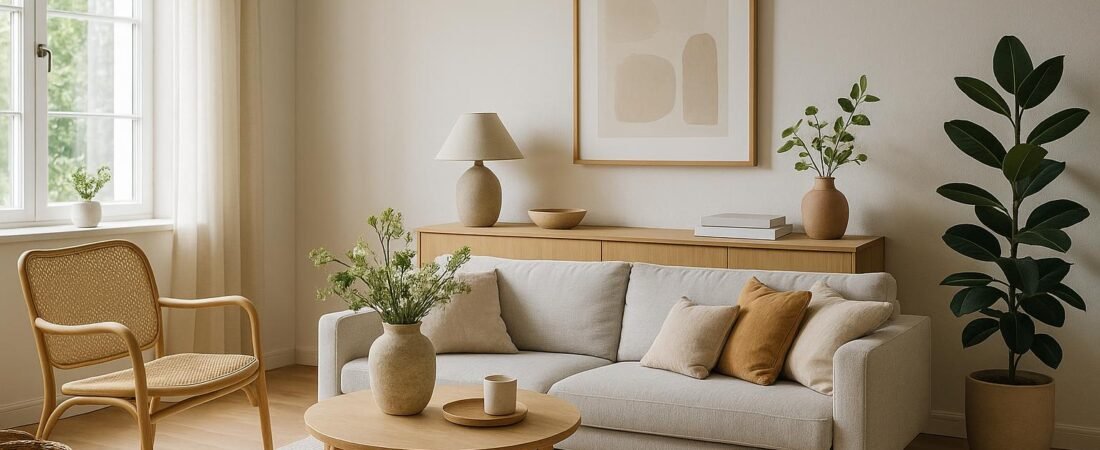
Scandinavian Interior Design: Clean, Cozy, and Functional in 2026
Scandinavian interior design has always been about more than a look. It’s a way of living that blends clarity, comfort, and practicality. In 2026, this beloved style is evolving: the all-white, ultra-minimal interiors of a few years ago are giving way to something warmer, softer, and more tactile.
Think of it as warm minimalism: the same clean lines and clutter-free spaces, but with creamier neutrals, layered textiles, and pieces that feel deeply useful as well as beautiful. If you love spaces that are calm yet inviting, this updated Scandinavian style is one of the most relevant design directions to follow.
The Core of Scandinavian Design: Simple, Calm, and Purposeful
Clean Lines and Clutter-Free Layouts
At its heart, Scandinavian design is still about visual clarity. Rooms are planned around a few strong lines and plenty of open space. Surfaces are mostly clear. Storage is built-in or cleverly concealed. Every object is there for a reason.
This isn’t just about aesthetics. A clutter-free layout supports how you move through your home and how you feel in it. The goal is a calm backdrop where your daily life takes center stage.
Light as a Design Tool
Nordic countries have long, dark winters, so natural light is treated as a precious material. Windows are left as open as possible, with sheer or lightweight curtains rather than heavy drapes. Mirrors, pale walls, and softly reflective surfaces bounce light around a room.
Artificial lighting is layered and gentle: ceiling lighting, floor lamps, table lamps, and wall sconces work together to create even, cozy illumination rather than one harsh overhead source.
Natural Materials and Honest Craftsmanship
Scandinavian interiors favor materials that feel grounded and authentic: wood, wool, linen, leather, stone, ceramic. The preference is for finishes that show their natural variation—grains in the wood, slight irregularities in handmade pottery, subtle texture in woven fabrics.
This connection to nature is one reason the style rarely feels sterile, even in very minimal rooms. You see and feel the materiality of each piece, which makes spaces more human and more soothing.
Function First, Always
Perhaps the most defining trait of Scandinavian interior design is its commitment to function. Furniture is designed to be used daily, not just admired. A sofa is comfortable, a dining table is durable, storage is accessible. Form follows use, not the other way around.
This is especially relevant for smaller or urban homes. Multifunctional pieces, smart storage, and flexible layouts are all typical of Nordic interiors and translate perfectly to compact living.
What’s New in 2026: Warm Minimalism and Softer Shapes
From Cool White to Warm Neutral
The biggest evolution is in color. The crisp white-and-gray palette that once dominated Scandinavian design is softening. In 2026, interiors are leaning into:
- Warm whites and creams instead of stark gallery white
- Beige, greige, and taupe as versatile bases
- Clay, terracotta, and sand for earthy depth
- Olive and sage greens for a subtle, natural accent
- Dusty pinks and muted rusts as gentle color highlights
These tones keep interiors light and airy, but introduce a sense of warmth and comfort that the cooler palettes often lacked.
Richer Wood Tones and Expressive Grain
Blonde woods are still present, but they’re increasingly joined by richer species like oak, walnut, and teak. Visible grain, knots, and variations are part of the appeal. Rather than aiming for a perfectly uniform finish, designers are celebrating the individuality of each board or plank.
In practice, this means:
- Walnut or oak dining tables with honest, matte finishes
- Teak sideboards that add depth to light rooms
- Wooden floors in warm, mid-tone stains instead of icy pale gray
Layered Textures: Cozy Without the Clutter
Texture has become a key tool for creating coziness within a minimalist framework. Multiple current guides highlight the increase in layered, tactile materials, including:
- Wool and sheepskin throws or seat covers
- Linen curtains, bedding, and cushion covers
- Bouclé and nubby weaves on armchairs and sofas
- Velvet cushions or accent chairs for a soft sheen
- Chunky knit blankets and woven wool rugs
Instead of filling shelves with décor, the warmth comes from what you sit on, touch, and walk across every day.
Softer, More Organic Forms
Another notable shift is in silhouette. Where earlier Scandinavian interiors could feel quite rectilinear, 2026 is embracing rounded and organic forms to balance the clean lines:
- Curved sofas and rounded armchairs
- Softly oval or pill-shaped coffee tables
- Arched doorways or arched mirrors
- Sculptural, cloud-like pendant lights
- Ceramic and glass décor with fluid, handmade shapes
These elements keep the space orderly but remove any sense of rigidity, making rooms feel more relaxed and human.
Statement Lighting and Bold Rugs
Expressiveness is creeping in—carefully. Instead of many small decorations, Scandinavian interiors in 2026 often feature one or two strong focal points:
- A sculptural pendant or chandelier over the dining table
- A bold patterned rug under a simple, neutral sofa
- A distinctive floor lamp with a sculpted base or shade
These accents inject personality without sacrificing calm. The eye has somewhere to land, but the overall feeling remains uncluttered.
How to Create a Clean, Cozy, and Functional Scandinavian Home
1. Start With a Calm, Neutral Base
Begin by simplifying your palette. Choose two or three warm, light neutrals as your foundation—think soft white for walls, warm beige or greige for larger furniture, and natural wood as a constant thread.
From there, layer in one or two muted accent colors (olive, terracotta, dusty rose, or slate blue) to avoid monotony. Keep saturation low; the goal is gentle contrast, not high drama.
2. Choose Fewer, Better Pieces
Scandinavian design rewards restraint. Instead of filling a room quickly, invest in fewer but better pieces that will stand up to daily use and aging:
- A comfortable, well-made sofa with a timeless profile
- A solid wood dining table sized realistically for your home
- Chairs you can sit in for hours
- Storage pieces with clean fronts and minimal hardware
If a piece doesn’t serve your life—extra seating for visitors, work-from-home needs, hidden storage—it probably doesn’t need to be there.
3. Prioritize Functional Layouts
Plan the room around how you live, not around a furniture catalog. Ask:
- How do you move through the space daily?
- Where do you naturally drop bags, keys, and devices?
- Where do you read, work, or gather with others?
Use this to shape your layout. In a Scandinavian interior, circulation paths are clear, furniture isn’t wedged in just to “fill space,” and there’s usually a balance between open area and seating or work zones.
4. Layer Textures for Hygge-Level Coziness
To avoid the “too minimal” trap, put your energy into tactile comfort. A typical warm minimalist living room might include:
- A flatwoven or low-pile wool rug that grounds the seating area
- A linen-covered sofa with a few wool and bouclé cushions
- A sheepskin draped over a reading chair
- Linen curtains that diffuse daylight
- A knitted throw on the sofa arm
Notice that all of these elements have a job—softening acoustics, adding warmth, making seats comfortable—while also making the room visually inviting.
5. Use Lighting to Create Atmosphere
Instead of relying on a single ceiling fixture, build a simple lighting “ecosystem”:
- Ambient: a main ceiling light or rail system with warm white bulbs
- Task: a reading lamp by the sofa, a focused light near your desk or counter
- Accent: a sculptural floor lamp, table lamps on sideboards, small wall sconces
Opt for warm color temperatures (around 2700K–3000K) to keep the atmosphere cozy. In the evening, rely more on lamps and less on overhead lighting to enhance hygge.
6. Add Personality With a Few Strong Focal Points
To keep your space from feeling generic, choose one or two expressive elements per room rather than sprinkling lots of small décor everywhere. For example:
- A large, abstract artwork in muted tones above the sofa
- A patterned rug that introduces color but stays within your palette
- A distinctive ceramic vase or handmade sculpture on a sideboard
These focal points tell your story while the rest of the room stays calm and cohesive.
7. Embrace Imperfection and Lived-In Character
One of the most important shifts in Scandinavian design is the move away from “too perfect.” Patina, variation, and signs of life are now seen as assets, not flaws. That might look like:
- A leather chair that gently wears in over time
- A wooden table with visible grain and small marks from daily use
- Hand-thrown ceramics with subtle irregularities
This lived-in character keeps the room warm and human, especially when everything else is fairly pared back.
Common Mistakes to Avoid
Making It Too Cold
An all-white room with lots of gray and glass can quickly feel more clinical than cozy. Counteract this by mixing in warm neutrals, wood, and soft fabrics. If your space feels cold, add texture before adding more stuff.
Confusing Minimal With Empty
Minimal does not mean bare. An empty room with a sofa and nothing else isn’t Scandinavian—it’s just incomplete. You still need enough furniture to live comfortably, enough lighting to see clearly, and enough storage to avoid clutter build-up.
Over-Decorating With Small Objects
On the other side, filling every surface with candles, plants, and small décor pieces will quickly break the calm. Edit ruthlessly. Group objects into a few intentional vignettes and leave plenty of negative space around them.
Ignoring Daily Function
A delicate coffee table that can’t handle feet or mugs, a chair no one wants to sit in, nowhere to put a drink—these all break the core rule of function first. If you have to constantly maneuver around your furniture, the design is working against you.
Scandinavian Design in 2026: Softened, Not Abandoned
Scandinavian interior design in 2026 remains a powerful answer to busy, overstimulating lives. The essence is unchanged: clean lines, natural light, honest materials, and a deep respect for function. What has evolved is the mood.
The modern Nordic home is no longer a pristine white box. It’s a warm, tactile, and personal space that still feels calm and ordered. Warm neutrals, richer woods, textured textiles, rounded forms, and carefully chosen focal pieces all work together to soften minimalism without losing its clarity.
If you’re drawn to interiors that are both streamlined and soulful, leaning into this version of Scandinavian design can give you a home that works beautifully and feels like a quiet, cozy retreat from the world—clean, cozy, and functional in all the right ways.
Book
Creative AI:
Animated Drawings, Manga & Illustrations: The Complete Guide to Creating Your Own Animations and Comics with Artificial Intelligence