
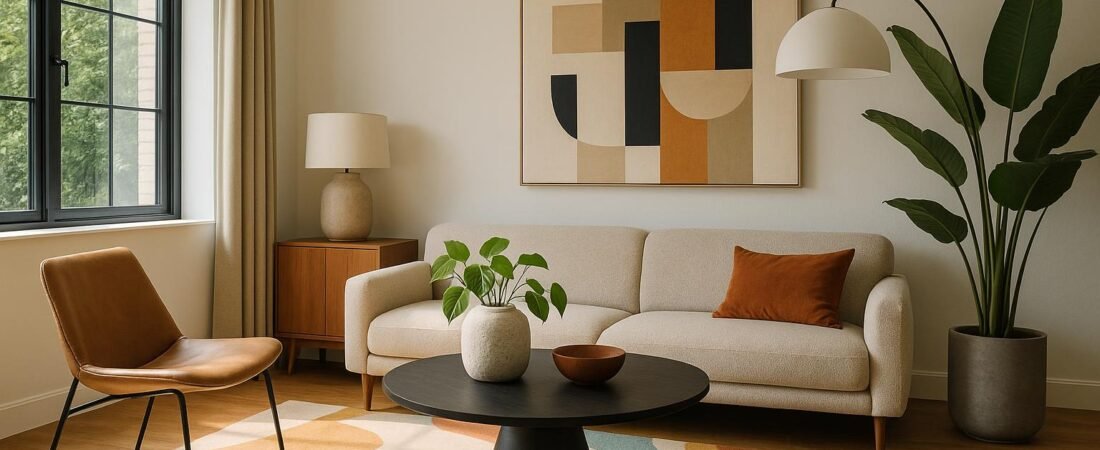
Contemporary Interior Design: What It Really Means Today
“Contemporary interior design” is one of the most overused — and misunderstood — phrases in the design world. Many people use it as a catch‑all for anything clean and modern-looking. Others think it means the same thing as mid-century modern. In reality, contemporary design is less a fixed look than a moving target.
Contemporary interiors are defined by the present moment. They evolve as our lives, technology, and values change. The white-box minimalism that felt contemporary in 2005 is not what feels contemporary in 2026.
This article breaks down what contemporary interior design really means, how it differs from modern style, and how to bring the 2026 version of contemporary into your own home in a way that can keep evolving over time.
What “Contemporary” Actually Means in Interior Design
In everyday language, “contemporary” and “modern” are often used interchangeably. In design, they’re not the same.
Contemporary = Current, Not a Period Style
Contemporary interior design literally means “of the moment.” It is not tied to a single historical period or movement. Instead, it describes what feels current right now — and that means it is always changing.
Think of contemporary design as a moving snapshot of:
- Which materials feel fresh
- How we want to live and use our homes
- What we value aesthetically (simplicity vs. ornament, color vs. neutral, etc.)
As those factors shift, so does the contemporary look. What remains consistent is the attitude: contemporary design is responsive, edited, and in tune with the present.
Modern vs. Contemporary: The Key Difference
Modern interior design usually refers to a specific 20th-century movement rooted in modernism: clean lines, functional forms, and often a mid-century modern influence (think Eames chairs, low teak credenzas, and graphic geometry).
Contemporary design, on the other hand:
- Is not fixed to one era
- Borrow from multiple styles — modernism, minimalism, Scandinavian, Japanese, even industrial or classic elements
- Adapts as trends, materials, and technology evolve
That’s why contemporary spaces can feel restrained and streamlined like modern interiors, but they are less rigid. They’re free to mix influences as long as the result feels fresh and relevant today.
The Core Characteristics of Contemporary Interiors
Even though contemporary design evolves, there are consistent traits that define the style at a high level. The details shift; the underlying principles don’t.
1. Clean Lines and Clear Geometry
Contemporary interiors favor simple, readable shapes:
- Sofas with straight or gently curved lines, not heavy ornament
- Cabinetry with flat fronts and minimal hardware
- Tables with slim, simple legs or sculptural bases
The goal isn’t to show off intricate detailing. Instead, the eye moves easily through the room, guided by strong lines and well-proportioned forms.
2. Simplicity and an Edited Feel
Contemporary design is not about owning as little as possible; it is about showing only what deserves to be seen. Surfaces are uncluttered. Decor is purposeful.
- Few, larger pieces instead of many small ones
- Artwork chosen with intention, often with breathing room around each piece
- Storage that hides visual noise (closed cabinets, integrated closets, concealed tech)
The result is a sense of visual calm, even if the home is highly lived-in behind the scenes.
3. Function First, Then Style
A contemporary room starts with how you live, not how the space will look in photos. Furniture often has multiple roles: ottomans that store blankets, benches that double as display surfaces, modular sofas that can reconfigure as life changes.
Every design decision serves function first. The style comes through in how cleanly and elegantly those functions are solved.
4. Open Space and Flow
Contemporary interiors value open, connected spaces. That doesn’t always mean knocking down every wall, but it does mean being deliberate about:
- Clear circulation paths
- Minimal visual barriers (glass partitions, lower-backed seating, leggy furniture rather than blocky pieces)
- Light — both natural and artificial — reaching into as many corners as possible
There’s a feeling of breathing room, even in small spaces, created by smart layout and restraint.
Contemporary Design in 2026: Warmer, Softer, More Personal
If contemporary design is always changing, what defines it right now? Across recent projects, trend reports, and product launches, a few themes are consistent for 2026.
From Cold Minimalism to Warm Minimalism
The sharp, ultra-white, almost clinical minimalism of the early 2000s has faded. Today’s contemporary interiors are still streamlined, but they are noticeably warmer and more tactile.
Key shifts include:
- Warmer neutrals: Cream, sand, mushroom, caramel, and greige instead of stark white and cool gray
- Softer forms: Rounded corners, curved sofas, and organic silhouettes mixed with clean-lined pieces
- More texture: Bouclé, linen, wool, ribbed stone, fluted wood, limewash, and plaster-like finishes
The room still feels edited and calm, but not severe. Comfort and approachability are now central to what feels contemporary.
Natural Materials Take Center Stage
One of the clearest threads in current contemporary interiors is the rise of genuinely natural, honest materials — often in their more tactile, imperfect forms.
- Wood: Oak, ash, walnut, and darker timbers in matte or low-sheen finishes
- Stone: Honed marble, limestone, travertine, soapstone, and terrazzo in warmer tones
- Textiles: Linen, cotton, wool, hemp, and textured weaves in upholstery, drapery, and rugs
- Mixed metals: Brushed brass, bronze, blackened steel, and nickel used together for subtle depth
These materials bring depth and longevity to a space, while aligning with a broader push toward sustainability and quality over disposability.
Warm Neutrals and Earth Tones
The contemporary color palette now leans unmistakably warm and grounded. Instead of cool grays and high-contrast black and white, you’ll see:
- Bone, ivory, and soft tan on walls and large pieces
- Clay, rust, olive, ochre, and tobacco brown as accents
- Charcoal and deep espresso for contrast instead of pure black everywhere
Color is still controlled and thoughtful, but it feels human and connected to nature, not sterile.
Statement Lighting as Sculpture
Lighting has become one of the most important tools in contemporary interior design. It is both functional and artistic.
- Oversized pendants in dining areas and kitchens
- Linear fixtures and slim, architectural profiles for task lighting
- Decorative lamps with sculptural bases or shades that act almost like art objects
The right lighting anchors zones in open-plan spaces, adds visual interest to simple rooms, and sets the overall mood — especially in homes designed for both work and rest.
Wellness-Oriented, Livable Spaces
Contemporary design today is closely tied to how we feel in our homes — not just how they look. Wellness is quietly shaping everything from layout to materials.
This shows up as:
- Biophilic design: more plants, natural light, and views outside
- Quiet corners for reading, meditation, or simply unplugging
- Acoustic comfort through textiles, rugs, and panels to soften noise in open spaces
- Healthy materials where possible — low-VOC paints, solid wood instead of particleboard when budgets allow
The contemporary home in 2026 is not a gallery; it’s a place to recharge.
More Personal, Less “Showroom”
Finally, contemporary interiors are moving away from cookie-cutter, catalog-perfect rooms and toward spaces that feel distinctly personal, while still edited.
- Curated collections (books, ceramics, art) instead of generic decor
- Custom or semi-custom details: built-ins, tailored window treatments, bespoke upholstery
- Mixing investment pieces with humble, characterful finds
The most successful contemporary interiors in 2026 feel like they belong to someone specific, not to a brand.
How to Bring Contemporary Style into Your Home (Now and Later)
Because contemporary design is always evolving, the smartest approach is to create a strong, flexible foundation and layer in details that can shift over time.
1. Start with a Simple, Neutral Base
Begin with the bones of the space:
- Choose warm neutral wall colors that work with natural daylight and evening lighting
- Keep flooring continuous where possible (wood, large-format tile, or polished concrete softened by rugs)
- Select streamlined, timeless main pieces of furniture in neutral fabrics and woods
This gives you a calm backdrop that will still work when you eventually update accents, art, or color.
2. Prioritize Clean Lines with Comfortable Forms
Look for pieces that are both structured and inviting:
- Sofas with tailored upholstery but deeper seats for lounging
- Armchairs with curved backs or arms to soften rectilinear architecture
- Tables with clear geometry but rounded edges to feel less harsh
Visually, this keeps the room contemporary. Functionally, it respects how we actually live at home now.
3. Layer in Texture for Depth
If your room feels flat, it usually needs more texture, not more color or “stuff.”
- Use a mix of textiles: linen and cotton next to bouclé or wool
- Add textured wall elements: a limewash paint, slatted wood, or fabric panels
- Balance smooth surfaces (glass, stone, lacquer) with matte and tactile finishes
This creates richness while preserving the clean, uncluttered feel of contemporary design.
4. Choose Materials That Age Well
Lean into materials that will patinate gracefully instead of those that look tired quickly:
- Solid wood rather than faux wood laminates where budget permits
- Honed or textured stone instead of ultra-polished finishes that show wear
- Metals that can handle patina (brass, bronze, blackened steel) in hardware and lighting
Contemporary design may move with the times, but building with longevity in mind is both sustainable and visually satisfying.
5. Use Lighting to Define the Mood
Plan lighting at three levels: ambient, task, and accent.
- Ambient: ceiling fixtures or recessed lights on dimmers for overall illumination
- Task: directional lighting for cooking, reading, working
- Accent: wall washers, sconces, or small lamps highlighting art, textures, or architectural features
Invest in at least one statement fixture per major zone (living, dining, kitchen). It becomes a contemporary focal point that can define the space even as other elements change.
6. Edit Regularly Instead of Decorating Once
Because contemporary design is about staying aligned with the current moment, treat your home as something you curate over time rather than “finish” once.
- Reassess surfaces seasonally; remove what feels like visual noise
- Rotate art, textiles, and smaller objects rather