
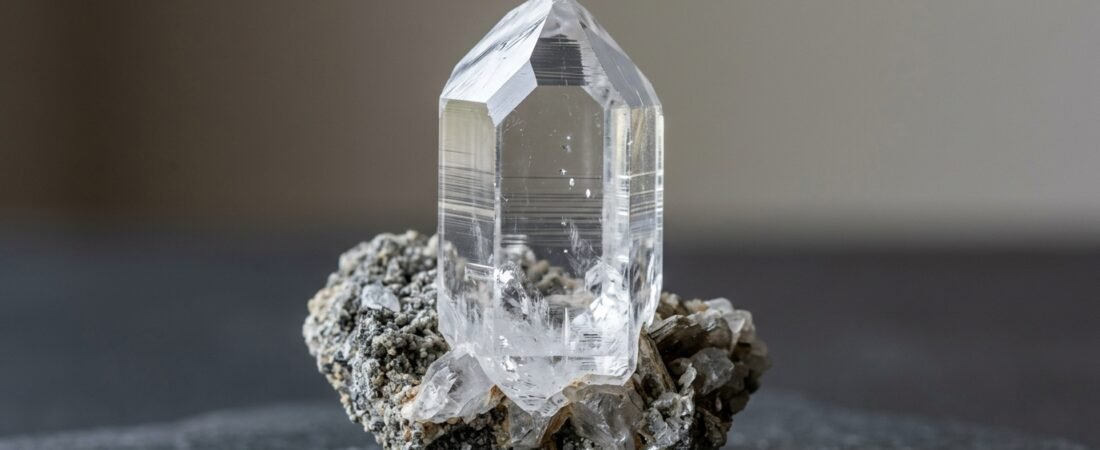
In the vast and chromatic world of tourmaline, color is currency. Collectors and gemologists alike prize the electric blues of Paraíba, the deep reds of rubellite, and the lush greens of verdelite. Yet one variety stands apart precisely because it possesses none of these colors at all. Achroite — the colorless tourmaline — occupies a singular position in the gemstone world, admired not for its brilliance of hue, but for an almost paradoxical rarity born from the complete absence of color. This guide explores everything worth knowing about achroite: its geological origins, metaphysical significance, market value, and proper care. Whether you are a seasoned collector, a crystal enthusiast, or simply curious, you will find this stone far more compelling than its unassuming appearance might first suggest.
What Is Achroite and Why Is It So Rare?
Achroite is the colorless variety of tourmaline, a complex boron silicate mineral belonging to the cyclosilicate group. Its name derives from the Greek word achromos, meaning “without color,” which is both its most distinctive feature and the source of its exceptional rarity. While tourmaline is celebrated for appearing in virtually every color of the spectrum, achroite represents the statistically improbable end of that range — a gemstone in which none of the trace elements responsible for color are present in meaningful concentrations.
Within the tourmaline family, achroite falls under the elbaite species, the same mineral species that produces rubellite, indicolite, and watermelon tourmaline. Its chemical composition is fundamentally identical to these colored relatives, yet the absence of iron, manganese, copper, or chromium — all chromophores that typically impart color to tourmaline — results in a crystal of striking transparency. Finding a naturally colorless elbaite of gem quality is genuinely uncommon, which is why achroite commands attention far beyond what its palette-free appearance might initially suggest.
The Geological Formation of Achroite Crystal
Tourmaline forms primarily in granitic pegmatites, the slow-cooling, fluid-rich intrusions that allow large crystals to develop over geological time. These environments are chemically complex, and the precise coloration of any given tourmaline crystal depends entirely on which trace elements are present in the surrounding fluid during growth. Achroite forms when that fluid is exceptionally pure — when iron, manganese, and other coloring agents are largely absent from the crystallization environment.
This degree of chemical purity is rare by geological standards. Pegmatite fluids almost invariably carry at least some concentration of transition metals, which means the conditions necessary to produce a truly colorless tourmaline are narrow. Significant deposits of achroite have been found in Elba, Italy — the island from which elbaite takes its name — as well as in Brazil, Madagascar, and parts of the United States, particularly in the gem-bearing pegmatites of California and Maine. Even in these locations, achroite represents a small fraction of the tourmaline recovered.
The crystal structure of achroite follows the typical trigonal symmetry of all tourmalines, forming elongated prismatic crystals with distinctive vertical striations along their length. Under magnification, achroite crystals may display inclusions, growth tubes, or fractures that serve as natural fingerprints, distinguishing them from synthetic or simulant materials.
How Achroite Differs From Other Tourmaline Varieties
Understanding achroite requires some familiarity with the broader tourmaline family. Tourmaline is not a single mineral but a group of closely related species sharing a common crystal structure. The most gem-relevant species include elbaite, schorl, dravite, and uvite, each with distinct chemistry. Achroite belongs to elbaite, the species most associated with the vivid, collectable gems found in the marketplace.
What sets achroite apart from its colorful siblings is straightforward in concept but remarkable in reality. Where indicolite draws its teal and blue tones from iron, where rubellite owes its crimson to manganese, and where the extraordinary Paraíba tourmaline derives its neon blues and greens from copper, achroite contains none of these chromophores in sufficient quantity to absorb visible light selectively. The result is a gem that transmits light with minimal interference, producing a clear, water-like transparency.
It is also worth distinguishing achroite from colorless specimens of other tourmaline species. Colorless dravite or schorl exists but is exceptionally unusual and is rarely gem-quality. When gemologists and collectors use the term achroite, they are almost exclusively referring to colorless elbaite of sufficient clarity and transparency to be fashioned into a gemstone or prized as a mineral specimen.
Achroite Healing Properties and Spiritual Meaning
Within crystal healing traditions and metaphysical practice, achroite occupies a distinctive place. Its colorlessness, which in the gem trade denotes rarity, is interpreted in spiritual contexts as a mark of neutrality and purity. Unlike stones associated with specific chakras through their color — red garnet for the root, blue sapphire for the throat — achroite is considered to operate across all energy centers simultaneously, functioning as a harmonizer rather than a stimulator of any single aspect of the self.
The achroite meaning in many traditions centers on clarity: clarity of thought, clarity of intention, and the clearing of energetic obstacles. Practitioners often describe it as a stone of transparency — not merely in the physical sense, but in the sense of bringing hidden truths to the surface and dissolving illusions that cloud perception. This quality makes it a valued tool for those engaged in meditative or introspective work.
Emotional and Physical Benefits of Achroite Stone
On an emotional level, the achroite stone is associated with releasing deeply held fears and mental patterns that no longer serve a constructive purpose. Crystal healers suggest that its neutral energy makes it particularly effective for individuals who feel emotionally overwhelmed by more charged stones, offering a gentler pathway to energetic cleansing. It is said to encourage emotional honesty, helping the individual recognize and articulate feelings that might otherwise remain suppressed.
From a physical standpoint, the achroite healing properties described in holistic traditions often relate to the nervous system and the brain. Some practitioners connect it to mental clarity, focus, and relief from neurological tension, viewing it as supportive for conditions related to cognitive fatigue or mental stress. It is also occasionally linked to the immune system and the body’s natural capacity for self-regulation, though these associations belong to the realm of complementary practice and should not replace professional medical care.
The achroite stone benefits most frequently cited by crystal practitioners include:
- Promoting mental clarity and sharp, focused thinking
- Supporting emotional release and honest self-reflection
- Amplifying the energy of surrounding stones when used in combination
- Encouraging a state of inner calm without suppressing emotional expression
- Facilitating communication, both internal and interpersonal
How to Use Achroite in Meditation and Energy Work
Achroite’s neutral energetic signature makes it a versatile companion in meditation. Because it is not strongly associated with any single intention or chakra, it can be incorporated into a wide range of practices without creating imbalance. One common approach is to hold a piece of achroite in both hands during seated meditation, using its physical coolness and transparency as an anchor for the mind when visualizing a state of mental clarity or stillness.
In energy work and crystal grid construction, achroite is frequently used as a central stone or amplifier. Its purported ability to enhance and stabilize the energies of surrounding crystals makes it a valued structural element in grids designed for healing, manifestation, or space-clearing. Practitioners sometimes place it at the crown chakra during bodywork sessions to open receptivity and facilitate the flow of subtle energy through the entire system.
For those new to working with crystals, achroite offers an accessible entry point. Its gentle energy is rarely described as overwhelming, and its association with clarity makes it an intuitive choice for anyone seeking to begin or deepen a meditative practice. Simply placing the stone on a desk or beside a workspace is considered sufficient by some practitioners to encourage focused, clear-headed thinking throughout the day.
Achroite Gemstone Value, Quality, and Buying Guide
The achroite gemstone occupies an interesting position in the colored stone market. Unlike many gemstones where a striking color drives desirability and price, achroite’s value is derived from its rarity, its clarity, and the quality of its cut. A fine achroite may not command the same immediate visual impact as a vivid Paraíba tourmaline, but among knowledgeable collectors and connoisseurs, it is recognized as one of the rarer tourmaline varieties available, a status that the market increasingly reflects.
Achroite value and price vary considerably depending on size, clarity, and provenance. Fine specimens of clean, eye-clear material have sold at auction and through specialist dealers at prices that rival or exceed comparable-weight examples of many popular colored tourmalines. Historically undervalued due to lower consumer awareness, achroite is gaining recognition in collector circles, making now an opportune moment to explore the market.
How to Identify Authentic Achroite and Avoid Fakes
Because achroite is colorless, it exists in a market space shared by several other transparent gemstones — white topaz, rock crystal (colorless quartz), white sapphire, and even synthetic moissanite — all of which can be passed off as achroite by unscrupulous sellers. Distinguishing genuine achroite from simulants requires either laboratory testing or familiarity with its specific physical properties.
Achroite has a refractive index range of approximately 1.614 to 1.666, which is measurable with a standard gemological refractometer. Its strong birefringence and pleochroism — the tendency to show different optical properties in different crystal directions — are diagnostic features that a trained gemologist can identify relatively quickly. Unlike quartz, which shows much lower birefringence, or topaz, which has a different refractive index and cleavage pattern, achroite presents a distinct profile under gemological instruments.
When purchasing achroite, particularly at higher price points, request a laboratory report from a recognized gemological authority such as the GIA, GRS, or AGL. A certified stone not only provides confidence in authenticity but also records the gem’s characteristics in a permanent document, which matters significantly for resale value. Additionally, purchasing from established dealers who specialize in rare tourmaline varieties offers a substantially greater degree of protection than buying from general gem marketplaces.
Be cautious of any seller who cannot provide clear documentation of origin or who conflates achroite with other colorless gems without explanation. The terminology itself — achroite versus “colorless tourmaline” — should be used precisely and with awareness of the distinction.
Factors That Determine Achroite Price and Rarity
Several key variables govern how achroite is priced in the market. Clarity is paramount: because achroite has no color to mask internal features, inclusions are immediately visible, and even minor imperfections can significantly reduce a stone’s value. Eye-clean specimens — those free of inclusions visible to the naked eye — command the highest premiums.
Size matters considerably as well. Large, clean achroite crystals of facetable quality are exceptionally rare. Most high-quality faceted achroite specimens weigh under five carats; anything above that threshold represents a genuinely significant find and is priced accordingly. Cut quality influences both the brilliance of the finished stone and the percentage of rough material retained, both of which affect final value.
Provenance also plays a role. Achroite from historically significant localities such as Elba or California may carry a premium among collectors interested in the stone’s geological narrative. Brazilian material, while often available in larger sizes, is evaluated on the same clarity and quality criteria as any other source.
Finally, market demand — while historically modest compared to colorful tourmaline varieties — is gradually increasing as collector awareness of rare tourmaline varieties grows. Those with an eye for undervalued gems may find achroite particularly rewarding to acquire at this stage of the market cycle.
How to Care for and Cleanse Your Achroite Crystal
Achroite, like all tourmaline, is a relatively durable mineral with a Mohs hardness of 7 to 7.5. This places it in the same general range as quartz, making it reasonably resistant to everyday wear. However, its prismatic crystal habit and the presence of natural fractures in some specimens mean that it should be handled with a degree of care, particularly when it comes to impacts and sharp edges. Proper maintenance preserves both the physical integrity of the stone and, for those who work with it energetically, its perceived metaphysical properties.
Best Methods for Cleaning and Recharging Achroite
Physical cleaning of an achroite crystal or faceted gemstone is best accomplished with warm water, a small amount of mild dish soap, and a soft brush. Gently scrubbing the surface removes accumulated oils, dust, and residue without risk of damage. Ultrasonic cleaners should be used with caution, particularly if the stone contains visible fractures or inclusions, as the vibration can propagate existing cracks. Steam cleaning is generally not recommended for tourmaline, as rapid temperature changes may stress the crystal structure.
For energetic cleansing — a practice central to crystal healing traditions — achroite responds well to several methods. Brief exposure to moonlight, particularly during a full moon, is a widely favored approach that avoids the risks associated with prolonged sunlight, which can affect some minerals over time. Sound cleansing using a singing bowl or tuning fork is another gentle and effective option. Burying achroite briefly in dry sea salt or placing it on a selenite charging plate are also considered effective by practitioners, as neither method introduces moisture or risk of abrasion.
Smudging with sage, palo santo, or incense is another popular method for energetic cleansing. Passing achroite through the smoke of a lit herb bundle is believed to clear accumulated energetic residue, resetting the stone to a neutral state. Given achroite’s association with clarity and purity, this method has a certain symbolic coherence as well.
Storing Achroite Safely to Preserve Its Energy and Clarity
Storage considerations for achroite are straightforward but worth taking seriously, especially for faceted specimens where surface scratching would be immediately visible on a colorless stone. Each piece should be stored separately — wrapped in soft cloth or placed in an individual padded compartment — to prevent contact with other gemstones that could scratch its surface. Tourmaline crystals kept as mineral specimens should be placed on stable display stands or cushioned mounts that support the crystal without placing stress on fragile terminations.
Avoid prolonged exposure to direct sunlight. While achroite does not contain the same light-sensitive color mechanisms as some tourmaline varieties, extended UV exposure can degrade inclusions or surface treatments present in some commercial specimens. A cool, dry, and moderately dark environment is ideal for long-term storage.
From a metaphysical perspective, many practitioners prefer to store achroite in proximity to selenite or clear quartz, believing that these minerals maintain a high-vibrational environment that keeps the achroite energetically clear between uses. Whether or not one subscribes to these interpretations, the physical storage advice remains consistent: separate, cushioned, and away from direct light and extreme temperatures.
Conclusion
Achroite may lack the visual drama of its tourmaline relatives, but it compensates with a rarity that is genuinely geological, a metaphysical reputation that is thoughtfully nuanced, and a collector appeal that continues to grow as awareness of rare tourmaline varieties expands. Its colorlessness is not an absence of character — it is, paradoxically, its defining characteristic, the result of exceptional mineralogical purity and the source of its distinction in both the gem trade and the crystal healing world.
Whether you are drawn to achroite for its geological improbability, its reputed capacity to bring clarity and focus, or its potential as an undervalued collector’s gem, the stone rewards close attention. In a market saturated with vivid, eye-catching color, achroite reminds us that rarity sometimes arrives quietly, without fanfare, in the form of perfect transparency.
Discover More from Didier Lancelot
Amazon Author page: amazon.com/author/didierlancelot
Narmer Store: narmerstore.org
AI and Technology Ebooks
- Creative AI: Animated Drawings, Manga & Illustrations
- Build a Game with AI: The No-Code Guide
- AI Image Generation Made Easy
- Build a Website with AI: The No-Code Guide
- How to Connect AI to Your Blog: The Ultimate Automation Guide
- AI Productivity Habits: Get More Done in Less Time
- AI Avatars Made Easy
- The Book of AI Prompts: 100+ Proven Prompts
- Make Music with AI: Suno, Udio and AI Music Generators
- Click to Cash
- The Automated Edge: Outwork, Outpace, and Outperform with AI
- AI Side Hustle: How to Make Money with ChatGPT and AI Tools
- Work Smarter with AI
Health, Lifestyle and Home Ebooks
- Hidden Superfoods: The World’s Most Powerful Healing Foods
- Spanish Food: The Complete Cookbook for Authentic Home Cooking
- The Science of Happiness Explained
- The Psychology of Success
- The Secret Sauce of Consistency: What the Experts Don’t Tell You About Fitness
- The Complete Home Bartender’s Guide: Link 1 | Link 2
- Natural Beauty, Made Simple: Easy DIY Organic Skincare Recipes
- Garden Made Simple: Easy, Beginner-Friendly Techniques
- The Dog Training Bible