
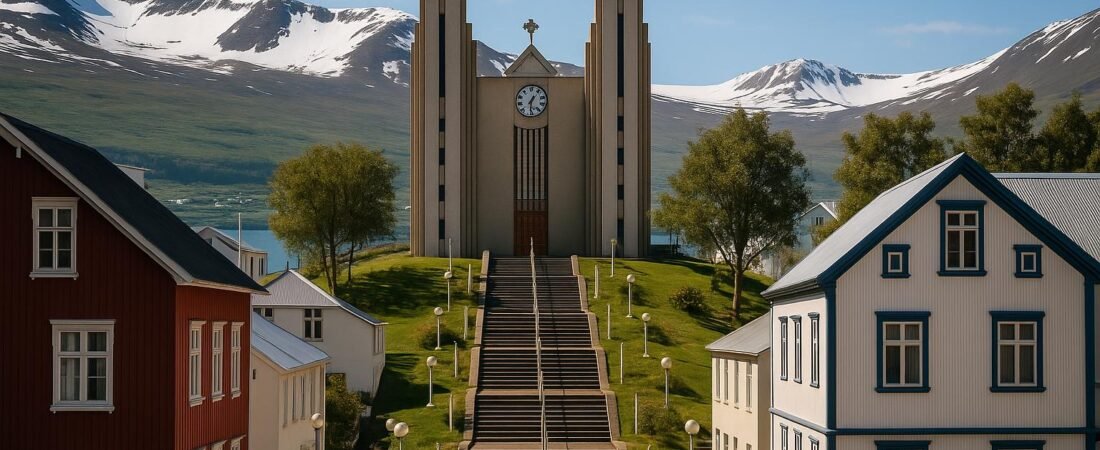
Akureyri, often called the Capital of the North, is Iceland’s second-largest urban area yet still feels like an intimate town pressed between mountains and sea. Sitting at the base of Eyjafjörður, Iceland’s longest fjord, it offers a compelling mix of cultural life, striking Arctic scenery, and easy access to waterfalls, geothermal pools, and volcanic landscapes. Whether you are road-tripping the Ring Road or seeking a quieter alternative to Reykjavík, Akureyri rewards visitors with character, charm, and a slower rhythm that suits the northern light.
Best Time to Visit Akureyri
Weather Overview by Season
Despite its latitude, Akureyri benefits from a relatively mild microclimate compared with other parts of northern Iceland. However, conditions still vary dramatically over the year, shaping the kind of experience you can expect.
Spring (April–May)
Spring is transitional in Akureyri. Snow lingers on the surrounding peaks while the town itself gradually thaws. Temperatures usually range from 0–8°C (32–46°F). Days grow noticeably longer, with increasing daylight offering good conditions for sightseeing without the summer crowds. Roads to nearby natural attractions tend to reopen, but the highlands and some remote tracks may remain inaccessible.
Summer (June–August)
Summer is the most popular time to visit Akureyri. Temperatures range from 8–15°C (46–59°F), with occasional warmer spells. The midnight sun brings near-continuous daylight around the solstice, ideal for long hikes, road trips, whale-watching excursions, and late-evening strolls along the fjord. This is the best season for driving the Diamond Circle, visiting highland oases, and enjoying outdoor cafés. Accommodation and tours book up quickly, so advance planning is essential.
Autumn (September–October)
Autumn in Akureyri is often underrated. Crisp air, fewer visitors, and beautifully colored foliage on the hillsides create a serene atmosphere. Temperatures usually sit between 0–10°C (32–50°F). Nights become dark enough for potential northern lights sightings, while many summer activities remain available in September, weather permitting. By late October, snow showers are increasingly common, giving the town a wintry feel without the deep cold of midwinter.
Winter (November–March)
Winter transforms Akureyri into a quintessential Nordic town with snow-covered streets, twinkling lights, and a strong sense of coziness. Temperatures generally hover between -5 and 3°C (23–37°F), occasionally dropping lower, but coastal influences usually spare it from the most extreme Arctic conditions. Short daylight hours are balanced by excellent opportunities for aurora borealis viewing, skiing at Hlíðarfjall, and relaxing in steaming geothermal pools as snow falls around you.
Festivals and Events to Consider
Akureyri’s cultural calendar is surprisingly rich for such a compact town. Timing your visit with a local festival adds depth to the experience.
- Akureyri Winter Festival (Aldrei Fór Ég Suður-inspired local events) – Typically held in late winter, this celebration brightens the darkest months with concerts, outdoor activities, and family-friendly events. Expect illuminated snow sculptures, live music, and special openings at local venues.
- Summer Arts and Culture Events – Throughout June, July, and August, Akureyri hosts various concerts, open-air performances, and art exhibitions. The town’s galleries, Hof Cultural and Conference Center, and local cafés often feature live music and cultural happenings.
- Akureyri Car Festival (Bíladagar) – Usually in early summer, this event draws automobile enthusiasts from across Iceland. Parades of vintage cars, modified vehicles, and motorsport demonstrations create a lively, slightly unexpected scene in the fjord-side town.
- Christmas Season and Advent – From late November, Akureyri becomes particularly atmospheric. Decorative lights, seasonal markets, and a festive ambiance make winter trips rewarding even outside the main festival dates.
Top Attractions in Akureyri
Must-See Landmarks
Akureyri’s compact center makes it easy to explore on foot, weaving together historic buildings, modern architecture, and panoramic viewpoints.
- Akureyrarkirkja (Akureyri Church) – Perched on a hill above the town, this iconic Lutheran church, designed by Guðjón Samúelsson, is one of Akureyri’s signature landmarks. Climb the flight of steps to the entrance for a rewarding view over the harbor and surrounding mountains. Inside, stained glass and a ship-shaped chandelier referencing local maritime heritage add subtle detail.
- Akureyri Botanical Garden (Lystigarðurinn) – One of the northernmost botanical gardens in the world, this oasis showcases plants capable of surviving close to the Arctic Circle. Well-tended paths lead through themed sections featuring native Icelandic species alongside imported flowers and shrubs. It is particularly beautiful from late spring to early autumn and remains a peaceful place for a quiet stroll even outside peak bloom.
- Hof Cultural and Conference Center – With its striking circular form and waterfront location, Hof serves as Akureyri’s hub for concerts, theatre, and exhibitions. Even if you do not attend a performance, the building itself and its fjord-facing terrace are worth a visit.
- Akureyri Old Town – Down by the harbor, narrow streets lined with timber houses, corrugated-iron façades, and historic warehouses reveal the town’s earlier life as a trading post. Small boutiques, cafés, and galleries occupy many of these buildings today, blending heritage with contemporary local design.
- Akureyri Swimming Pool (Sundlaug Akureyrar) – Icelandic pools are central to everyday life, and Akureyri’s complex is among the country’s finest. Multiple hot tubs, a sauna, water slides, and a large outdoor pool make it an inviting stop year-round, especially after a day of sightseeing or skiing.
Unique Natural Wonders Nearby
Akureyri is an ideal base for exploring north Iceland’s dramatic landscapes. Many of the region’s standout natural attractions are within easy driving distance.
- Goðafoss Waterfall – Around 30 minutes’ drive from Akureyri on the Ring Road lies Goðafoss, one of Iceland’s most photogenic waterfalls. The horseshoe-shaped falls cascade over volcanic rock into a turquoise pool, accessible from both the east and west banks. Its name, “Waterfall of the Gods,” refers to a pivotal moment in Icelandic history when pagan idols were cast into the waters as the nation adopted Christianity.
- Lake Mývatn and Surroundings – About an hour’s drive away, the Mývatn region offers pseudo-craters, geothermal fields, and lava formations. Highlights include the bubbling mud pools at Hverir, the surreal rock structures of Dimmuborgir, and the serene Mývatn Nature Baths, where you can soak in mineral-rich, milky-blue water with far fewer crowds than at the Blue Lagoon.
- Eyjafjörður and Whale Watching – The fjord itself is a natural attraction, framed by steep mountains and dotted with small settlements. From Akureyri’s harbor, whale-watching tours operate mainly in summer, seeking humpback whales, minke whales, and dolphins. The long, sheltered fjord often delivers excellent sightings in calm conditions.
- Tröllaskagi Peninsula – To the north and west, the Tröllaskagi (Troll Peninsula) offers a rugged landscape of dramatic peaks and deep valleys. Scenic drives to fishing villages such as Siglufjörður pass through tunnels carved into mountainsides and offer expansive coastal views. In winter, the region is renowned for backcountry skiing and heli-skiing.
- Dettifoss and the Diamond Circle – With a longer day trip (typically from summer to early autumn), you can tackle part or all of the Diamond Circle route, including Dettifoss, one of Europe’s most powerful waterfalls, and Ásbyrgi Canyon, a horseshoe-shaped depression steeped in folklore. Akureyri acts as a practical gateway for this iconic circuit.
Where to Stay in Akureyri
Recommended Hotels and Accommodations
Akureyri offers a thoughtful range of lodging, from contemporary hotels overlooking the fjord to intimate guesthouses on quiet side streets. Choosing the right base helps tailor your experience, whether you prioritize comfort, convenience, or atmosphere.
- Hotel Kea by Keahotels – Located beside Akureyrarkirkja and close to the main pedestrian street, Hotel Kea appeals to travelers seeking classic comfort in the heart of town. Rooms are modern and functional, and the on-site restaurant makes it a convenient choice in winter when you may prefer short walks between activities.
- Icelandair Hotel Akureyri – With clean lines, contemporary décor, and expansive fjord views from many rooms, this hotel offers a refined yet relaxed stay. Its location near the botanical garden and swimming pool places you slightly uphill from the center, rewarding you with vistas over the town and harbor.
- Hotel Akureyri and Guesthouse Options – Several smaller hotels and guesthouses, such as Hotel Akureyri or various locally run inns, provide a more personal touch. Many are set in renovated historical buildings, combining character with modern amenities and offering helpful advice from owners who know the region intimately.
- Self-Catering Apartments – For visitors staying several nights, apartments and aparthotels scattered around central Akureyri offer kitchen facilities and living areas, ideal for families or travelers who wish to cook some of their own meals and experience the town at a slower pace.
Budget-Friendly Options
Despite its remote location, Akureyri can be surprisingly manageable for budget-conscious travelers, especially outside the peak of summer.
- Hostels – Hostels in and around the center provide dormitories and private rooms at competitive rates. They often feature communal kitchens, which significantly reduce food costs, and social common areas where you can share travel tips with other guests.
- Guesthouses and B&Bs – Many family-run guesthouses offer simple but comfortable rooms, shared bathrooms, and inclusive breakfasts. These can be excellent value, especially in shoulder seasons, and often provide free parking for those driving the Ring Road.
- Camping and Cabins – During the summer months, campsites near Akureyri and on the outskirts of town are a cost-effective option for those with tents or campervans. Some sites also have basic cabins or small huts, which offer more shelter while maintaining a modest budget.
- Shoulder-Season Deals – Visiting in late spring or early autumn often yields lower accommodation prices across the board. Many mid-range hotels and apartments reduce their rates outside July and August, making a higher standard of lodging accessible for less.
Food and Dining in Akureyri
Best Local Restaurants
Akureyri’s dining scene mirrors the town itself: compact, creative, and influenced by both sea and mountains. While the selection is smaller than in Reykjavík, quality is high and local ingredients play a starring role.
- Strikið – Located on an upper floor in the town center, Strikið is known for its panoramic views across Eyjafjörður. The menu typically blends Icelandic ingredients with modern international techniques, featuring options such as fresh fish, lamb, and vegetarian dishes. In summer, the terrace is particularly appealing.
- Rub23 – This restaurant has built a strong reputation for seafood and sushi with Icelandic flair. Diners can expect refined presentations of local fish, often combined with Asian influences, as well as meat dishes and inventive starters.
- Local Bistros and Cafés – Throughout town, small cafés serve excellent coffee, homemade cakes, and light meals. They are ideal for lunch breaks while exploring. Many double as informal wine bars or evening hangouts, underscoring the relaxed, sociable nature of Akureyri.
- Pizzerias and Casual Eateries – For uncomplicated, satisfying meals, pizzerias and burger joints around the center offer reliable options, particularly useful for families or travelers seeking a quick bite after a long day on the road.
Traditional Cuisine to Try
Sampling Icelandic dishes in Akureyri provides insight into how people have adapted to the northern environment for centuries, relying on preservation techniques and resourceful use of local produce.
- Lamb – Icelandic lamb is free-range, grazing on wild herbs and grasses, resulting in tender, flavorful meat. In Akureyri, look for slow-roasted lamb, grilled cutlets, or hearty lamb stews on restaurant menus.
- Fresh Fish and Seafood – Proximity to rich fishing grounds ensures that cod, haddock, Arctic char, and other species regularly appear in local kitchens. Simple preparations—pan-fried fillets, fish of the day, or fish soup—allow the freshness of the catch to shine.
- Skyr – This traditional cultured dairy product resembles thick yogurt but with a uniquely Icelandic character. Often served with berries, honey, or granola, skyr is a staple at breakfast buffets, cafés, and supermarkets throughout Akureyri.
- Rye Bread and Baked Goods – Dense, slightly sweet rye bread (rúgbrauð) and various pastries are integral to Icelandic culinary traditions. Enjoy them at breakfast or alongside soup, ideally spread with butter and topped with cheese or smoked fish.
- Seasonal and Adventurous Specialties – Depending on the time of year, menus may include more traditional or experimental offerings such as cured meats, local cheeses, or fermented specialties. These are best approached with curiosity and perhaps shared among a group to sample a range of flavors.
Conclusion
Akureyri combines the amenities of a small city with the atmosphere of a mountain village, all set against the dramatic backdrop of North Iceland’s fjords and volcanic landscapes. Each season offers a distinct experience: luminous summer nights on the harbor, golden autumn slopes, snow-covered streets and northern lights in winter, and the soft awakening of spring. From its iconic church and botanical gardens to nearby waterfalls, geothermal baths, and whale-watching grounds, the town serves as both a destination and a gateway.
Whether you choose a centrally located hotel, a cozy guesthouse, or a self-catering apartment, you will find that distances are short and daily life moves at a measured pace. Pair that with satisfying local cuisine and a strong cultural calendar, and Akureyri becomes more than a stop on the Ring Road; it emerges as a place worth lingering, exploring, and returning to in different seasons.
Discover More from Didier Lancelot
Amazon Author page: amazon.com/author/didierlancelot
Narmer Store: narmerstore.org
AI and Technology Ebooks
- Creative AI: Animated Drawings, Manga & Illustrations
- Build a Game with AI: The No-Code Guide
- AI Image Generation Made Easy
- Build a Website with AI: The No-Code Guide
- How to Connect AI to Your Blog: The Ultimate Automation Guide
- AI Productivity Habits: Get More Done in Less Time
- AI Avatars Made Easy
- The Book of AI Prompts: 100+ Proven Prompts
- Make Music with AI: Suno, Udio and AI Music Generators
- Click to Cash
- The Automated Edge: Outwork, Outpace, and Outperform with AI
- AI Side Hustle: How to Make Money with ChatGPT and AI Tools
- Work Smarter with AI
Health, Lifestyle and Home Ebooks
- Hidden Superfoods: The World’s Most Powerful Healing Foods
- Spanish Food: The Complete Cookbook for Authentic Home Cooking
- The Science of Happiness Explained
- The Psychology of Success
- The Secret Sauce of Consistency: What the Experts Don’t Tell You About Fitness
- The Complete Home Bartender’s Guide: Link 1 | Link 2
- Natural Beauty, Made Simple: Easy DIY Organic Skincare Recipes
- Garden Made Simple: Easy, Beginner-Friendly Techniques
- The Dog Training Bible