
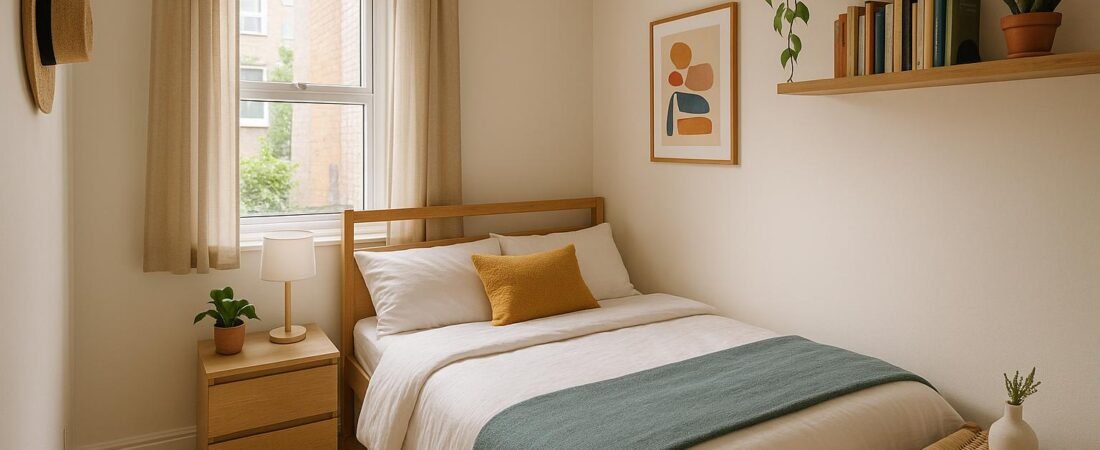
Small Bedroom Interior Design Ideas That Maximize Space
A small bedroom doesn’t have to feel cramped or cluttered. With the right layout and a few smart design decisions, you can create a space that feels calm, airy, and surprisingly functional. The key is to design around how you actually use the room, then layer in space-saving solutions that make every inch work harder.
Below are practical, real-world small bedroom ideas that focus on maximizing space without sacrificing comfort or personality.
Start With a Plan: Layout Before Furniture
Before shopping for anything, treat your bedroom like a mini floor-plan project. This step alone can prevent crowded walkways and buyer’s remorse.
- Measure the room. Note the exact wall lengths, ceiling height, and any awkward angles.
- Map all fixed elements. Mark doors (including swing direction), windows, radiators, and built-in closets.
- Trace natural pathways. Identify the clearest route from the door to the bed, closet, and any other key area. Keep this path as open as possible.
Always place the bed first, then build the rest of the layout around it. In very small bedrooms, pushing the bed into a corner or against a wall can open up a generous area of usable floor space. In slightly larger rooms, centering the bed on a wall with two compact nightstands can maintain symmetry without sacrificing circulation.
Choose Furniture That Fits the Room (Not the Catalog)
Scaled furniture is one of the biggest differences between a small bedroom that works and one that feels overstuffed.
- Right-size the bed. A queen is often a better fit than a king in a modest room; in some cases, a full-size bed offers more than enough comfort while freeing precious inches around it.
- Go low-profile. Low headboards or simple upholstered frames reduce visual bulk, making walls feel taller and the room feel lighter.
- Slim down the nightstands. Choose narrow models or wall-mounted ledges instead of bulky tables. Ensure there’s enough space to pass comfortably between the bed and any furniture.
- Skip duplicates. If you live alone, you might not need two nightstands. One well-chosen piece plus wall storage can be more efficient.
Focus on pieces that earn their place. If a dresser or chair blocks a walkway or crowd the bed, it’s the wrong scale for the room.
Make the Bed Work Double Duty
In a small bedroom, your bed is prime real estate. Let it carry some of the storage load so you can keep other areas clear.
- Under-bed drawers. Beds with integrated drawers or roll-out bins are ideal for clothes, shoes, linens, and off-season items.
- Lift-up storage frames. Ottoman-style or lift-up beds provide a large, hidden compartment—perfect for bulky bedding, suitcases, or even sports gear.
- Storage benches at the foot. A slim bench or trunk adds seating and extra storage without feeling heavy if you choose a low, streamlined design.
- Murphy beds for multi-use rooms. In guest rooms or studio apartments, a wall bed frees up daytime space and allows the room to serve as an office, workout area, or hobby room.
- Daybeds for flexibility. A daybed against a wall can function as a sofa by day and a guest bed at night—especially effective in very small spaces or home offices that double as bedrooms.
The goal is to replace at least one bulky storage piece—like an extra dresser—with bed-adjacent solutions that don’t eat up more floor area.
Use Walls Instead of More Furniture
When the footprint is limited, think in terms of vertical planes rather than floor space. Walls can take on many roles traditionally handled by freestanding furniture.
- Wall-mounted sconces. Mount sconces or plug-in reading lights on either side of the bed to eliminate the need for table lamps and free up surface space.
- Floating shelves and ledges. A narrow shelf can serve as a nightstand for essentials like a book, glasses, and a phone.
- Fold-down desks. In a bedroom-office hybrid, a wall-mounted fold-down desk provides workspace that disappears when not in use.
- Built-ins in awkward niches. Custom or semi-custom built-ins in alcoves, around windows, or flanking the bed can store more than a freestanding unit while appearing visually lighter and more integrated.
By assigning storage and lighting to the walls, you protect your floor space for circulation and breathing room.
Take Storage Upward
Vertical storage maximizes capacity without making the room feel crowded at eye level.
- Tall, narrow wardrobes. A single wardrobe that goes almost to the ceiling often holds more than a wide, low dresser while using a smaller footprint.
- High shelves for infrequently used items. Install shelves closer to the ceiling for luggage, extra linens, seasonal decor, or rarely worn clothing.
- Stacked storage solutions. Use vertical modular units or stackable boxes in closets and corners to fully utilize height.
Keep daily essentials between waist and eye level where they’re easiest to reach. Reserve higher and lower zones for items you don’t need as often.
Cut Visual Clutter for a Calmer, Larger Feel
Space is not only physical; it’s also visual. Reducing visual noise helps even a tiny bedroom feel larger and more restful.
- Edit belongings ruthlessly. Keep only what you use or love. A small bedroom cannot comfortably hide excess clutter.
- Clear surfaces. Nightstands and dressers should hold only a few daily-use items. Use trays, boxes, or drawer organizers to contain the rest.
- Prefer closed storage. Baskets with lids, boxes, and drawers help keep things out of sight and the room looking streamlined.
- Limit patterns and finishes. Too many different materials, colors, and patterns can visually shrink the space. Choose a cohesive palette with a few well-chosen accents.
A simpler layout—few pieces, each with a purpose—makes the room easier to navigate and more relaxing to spend time in.
Use Color and Light to Open Up the Room
Thoughtful use of color and light can transform how spacious your bedroom feels, even if the actual dimensions remain the same.
- Light, tonal color schemes. Soft whites, warm neutrals, and pale grays reflect more light and create a more expansive impression. Tonal schemes (different shades of the same color) keep the room cohesive.
- Blend walls and ceilings. Painting the ceiling the same color as the walls or a slightly lighter shade blurs the boundaries and makes the room feel taller and more enveloping.
- Strategic mirror placement. A large mirror opposite a window or near a light source reflects light and adds depth. Mirror-fronted wardrobes can double as a full-length mirror and visually enlarge the space.
- Keep window treatments simple. Light-filtering shades, Roman blinds, or simple curtains hung high and wide let in maximum daylight and draw the eye upward.
Consider how the room looks at different times of day. Aim for a bright, welcoming feel in the morning and a softer, cocoon-like atmosphere at night.
Layer Lighting Without Using Floor Space
Good lighting is crucial in a small bedroom—it helps define zones, set the mood, and make the space more practical.
- Replace floor lamps with wall or ceiling lights. Wall sconces, pendant lights, or ceiling-mounted fixtures free up floor area while providing ample lighting.
- Use multiple light sources. Combine ambient lighting (ceiling fixture), task lighting (bedside sconces, a desk lamp), and accent lighting (LED strips under shelves or inside closets).
- Consider dimmers. Dimmable switches or smart bulbs let you adjust brightness for reading, relaxing, or getting ready.
A layered lighting plan prevents dark corners, helps the room feel larger, and allows you to use the space comfortably at all hours.
Keep the Room Personal, Not Bare
Minimal doesn’t have to mean empty. A small bedroom can still feel rich in character without feeling cluttered.
- Choose a focal point. This might be a feature wall behind the bed, a striking headboard, a piece of art, or a textural rug that grounds the space.
- Use patterned textiles sparingly. One or two patterned elements—like a throw pillow, blanket, or curtain—can add interest without overwhelming the room.
- Add a touch of greenery. A small plant on a shelf or a hanging planter brings life and softness without taking up floor space.
- Curate decor intentionally. Instead of filling every surface, display a few meaningful items: a favorite photo, a sculpture, or a candle. Let them breathe.
The goal is to feel like the room reflects you, while still supporting rest and ease of movement.
A Practical Starting Point for Any Small Bedroom
If designing a small bedroom from scratch feels overwhelming, use this simple, step-by-step approach:
- Step 1: Measure and map. Measure the full room and note doors, windows, and built-ins.
- Step 2: Identify the room’s main need. Is your top priority more storage, a workspace, or open floor for exercise or yoga?
- Step 3: Choose one multifunctional piece to solve that need.
- For storage: a bed with drawers or a tall wardrobe.
- For work: a compact desk or fold-down wall desk.
- For open floor: a Murphy bed or daybed.
- Step 4: Add one wall-mounted or built-in solution. This could be a set of wall shelves, a wall-mounted nightstand, or integrated lighting.
- Step 5: Edit and style. Remove anything that blocks circulation, then add only the decor needed to make the space feel personal and cohesive.
By solving the main functional challenge first, you’ll avoid overfilling the room and end up with a layout that feels intentional rather than improvised.
Conclusion
Designing a small bedroom that maximizes space is less about squeezing in more furniture and more about making deliberate choices. Start with a clear layout, select furniture scaled to the room, and let your bed pull double duty. Use your walls for storage and lighting, take advantage of vertical space, and keep visual clutter in check.
Layer in thoughtful color, light, and a few personal touches, and even the smallest bedroom can feel spacious, functional, and distinctly yours. With a focused plan and a handful of smart interior design ideas, your small bedroom can become one of the most comfortable rooms in your home.
Discover More from Didier Lancelot
Amazon Author page: amazon.com/author/didierlancelot
Narmer Store: narmerstore.org
AI and Technology Ebooks
- Creative AI: Animated Drawings, Manga & Illustrations
- Build a Game with AI: The No-Code Guide
- AI Image Generation Made Easy
- Build a Website with AI: The No-Code Guide
- How to Connect AI to Your Blog: The Ultimate Automation Guide
- AI Productivity Habits: Get More Done in Less Time
- AI Avatars Made Easy
- The Book of AI Prompts: 100+ Proven Prompts
- Make Music with AI: Suno, Udio and AI Music Generators
- Click to Cash
- The Automated Edge: Outwork, Outpace, and Outperform with AI
- AI Side Hustle: How to Make Money with ChatGPT and AI Tools
- Work Smarter with AI
Health, Lifestyle and Home Ebooks
- Hidden Superfoods: The World’s Most Powerful Healing Foods
- Spanish Food: The Complete Cookbook for Authentic Home Cooking
- The Science of Happiness Explained
- The Psychology of Success
- The Secret Sauce of Consistency: What the Experts Don’t Tell You About Fitness
- The Complete Home Bartender’s Guide: Link 1 | Link 2
- Natural Beauty, Made Simple: Easy DIY Organic Skincare Recipes
- Garden Made Simple: Easy, Beginner-Friendly Techniques
- The Dog Training Bible