
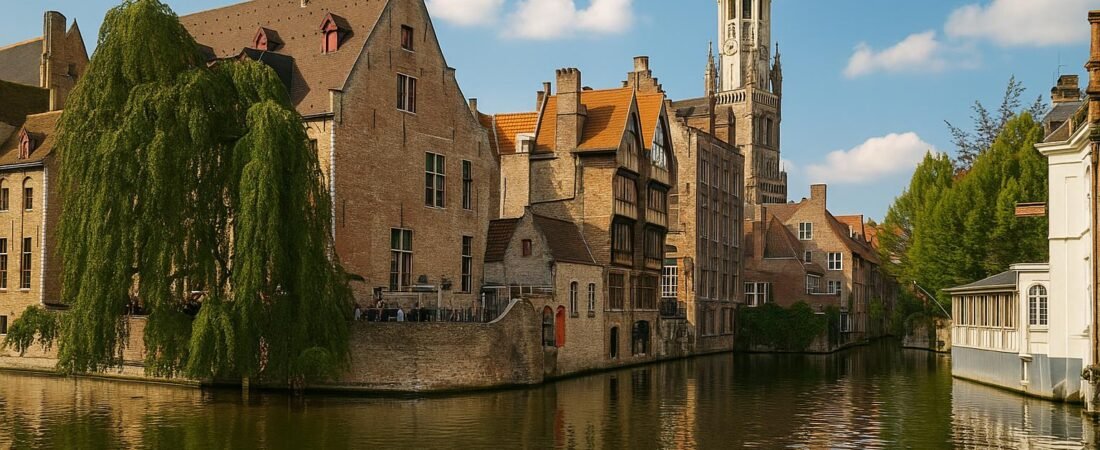
Bruges is one of those rare cities that feels perfectly preserved yet undeniably alive. Medieval steeples pierce the sky, swans glide along mirror-like canals, and cobbled lanes reveal centuries of mercantile wealth and devotional art at every turn. Whether you come for a weekend escape or a longer Belgian itinerary, Bruges rewards slow exploration: early-morning walks before the tour groups arrive, quiet evenings in candlelit brasseries, and unhurried hours in museums that tell the story of Flanders’ golden age.
Best Time to Visit Bruges
Weather Overview
Bruges has a temperate maritime climate, shaped by its proximity to the North Sea. This keeps temperatures relatively mild year-round but also brings changeable weather and frequent overcast skies.
From late April to June, spring ushers in longer days, blossoming trees along the canals, and comfortably cool temperatures between 10–18°C (50–64°F). Rain is common but usually comes in brief showers rather than all-day downpours. This is an excellent time for photography, as soft light flatters the city’s brick façades and gabled roofs.
July and August constitute peak season. Temperatures range from 18–24°C (64–75°F), occasionally higher during short heatwaves. Outdoor terraces are in full swing and canal cruises are popular, but crowds and accommodation prices are at their highest. If you visit in summer, early starts and late-evening strolls are the most tranquil moments to enjoy the historic center.
Autumn (September to early November) is arguably the most atmospheric period. Temperatures gradually fall from around 18°C (64°F) to single digits, yet remain pleasant for sightseeing with a light jacket. Leaves turn amber and russet, reflecting beautifully in the water. Tourist numbers decline after mid-September, allowing more space at major sites and in restaurants.
Winter in Bruges can be cold and damp, with temperatures often hovering between 0–7°C (32–45°F). Short daylight hours and misty mornings create a moody, almost cinematic backdrop. While you will need warm layers and a waterproof coat, the city feels wonderfully intimate at this time, particularly around Christmas and New Year.
Events and Festivals
Bruges’ cultural calendar is surprisingly rich for such a compact city, with events spanning classical music, contemporary arts, and traditional celebrations.
- Procession of the Holy Blood (May): Held on Ascension Day, this UNESCO-recognised religious procession dates back to the Middle Ages. Hundreds of participants in elaborate costumes re-enact biblical scenes and episodes from Bruges’ history. It draws large crowds, so advance planning and early arrival along the route are essential.
- Bruges Triennial (every three years, summer): When scheduled, this contemporary art and architecture festival transforms the historic center with large-scale installations, often interacting with the canals and squares. It provides a fascinating contrast between medieval fabric and experimental design.
- MAfestival Brugge (August): A prestigious early music festival focusing on Baroque and Renaissance compositions, staged in churches, historic halls, and intimate venues. Tickets for standout performances sell quickly, particularly for concerts in the Concertgebouw Brugge.
- Christmas Markets (late November–early January): Bruges becomes a winter postcard with festive lights, wooden chalets in the Markt and Simon Stevinplein, and an ice rink or winter experience that changes format from year to year. Hot chocolate, mulled wine, and seasonal specialties make the cold thoroughly enjoyable.
- Beer and Chocolate Events (various dates): Smaller fairs and themed weekends highlight Belgian craft beer and artisanal chocolate, giving visitors an excellent chance to sample regional producers beyond the usual brands.
Top Attractions in Bruges
Must-See Historical Sites
Bruges’ UNESCO-listed historic center is dense with architectural landmarks, each reflecting a different facet of the city’s mercantile and religious past.
- The Belfry of Bruges (Belfort): Dominating the Markt, this 83-meter bell tower is Bruges’ defining silhouette. Climb the 366 narrow steps to the top for sweeping views of the red-tiled rooftops, the web of canals, and the surrounding countryside. Along the way, you pass the old treasury and the carillon mechanism that still rings out over the city.
- Markt and Burg Squares: The Markt is the main square, ringed with stepped-gable guild houses and busy cafés. Just a short walk away, the Burg Square presents a more refined ensemble: the ornate Stadhuis (City Hall), the Gothic Basilica of the Holy Blood, and several grand civic buildings that illustrate Bruges’ political importance in medieval Flanders.
- Basilica of the Holy Blood: Tucked into the corner of Burg Square, this two-level basilica combines Romanesque and Gothic architecture. It houses a relic said to contain drops of Christ’s blood, brought to Bruges in the 12th century. The upper chapel, with its painted vaults and stained glass, is particularly evocative.
- Church of Our Lady (Onze-Lieve-Vrouwekerk): This brick church boasts one of the world’s tallest brick towers and an important art collection. Its highlight is Michelangelo’s marble Madonna and Child, one of the few sculptures by the artist to leave Italy during his lifetime. The surrounding complex also includes princely tombs and fine altarpieces.
- Groeningemuseum: Bruges’ foremost art museum, the Groeningemuseum showcases the Flemish Primitives—masters such as Jan van Eyck, Hans Memling, and Gerard David. Their panels, rich with symbolism and painstaking detail, provide an intimate window into religious devotion and civic pride during Bruges’ commercial heyday.
- Begijnhof (Beguinage): The whitewashed houses, quiet lawns, and shade-giving trees of the Ten Wijngaerde Beguinage form a cloistered world within the city. Founded in the 13th century as a semi-monastic community for laywomen, it remains a place of contemplation and silence, especially moving during early morning or late afternoon visits.
Hidden Gems Off the Beaten Path
Once you have seen the major monuments, Bruges invites you to slow down and explore quieter corners where daily life unfolds away from the main routes.
- St. Anne’s Quarter (Sint-Anna): East of the center, this residential neighborhood rewards wanderers with peaceful streets, small local bars, and lesser-known churches such as St. Anne’s Church, decorated with an impressively ornate Baroque interior. It feels markedly less touristic, particularly in the evenings.
- St. John’s Hospital (Sint-Janshospitaal): Although not unknown, this former medieval hospital is often overlooked in favor of more famous museums. Inside, you find atmospheric wards, a beautiful timber roof structure, and a remarkable collection of religious art, including works by Hans Memling created specifically for the site.
- Windmills on the Ramparts: A short walk from the center leads you to the city’s old defensive walls, now a green belt with walking paths. Historic windmills such as Sint-Janshuis and Koelewei still stand proudly on the grassy embankments. The views toward the old town are charming and, crucially, far less crowded.
- Minnewaterpark: Just south of the Begijnhof, the Lake of Love and its surrounding park offer a tranquil escape from the urban bustle. Legend links the lake to a tragic love story, but today it is a serene place where you can watch swans, linger on benches, and capture quintessential Bruges canal views without the noise of the Markt.
- Small Canals and Backstreets: Streets such as Gouden-Handrei, Spiegelrei, and the lanes around Carmersstraat are ideal for an unstructured stroll. They reveal quiet canal houses, ivy-clad walls, and arched bridges that feel a world away from the main tourist thoroughfares.
Where to Stay in Bruges
Recommended Neighborhoods
Bruges is compact, and most major sights are within a 15–20-minute walk from each other. Nonetheless, choosing the right area can shape the character of your stay.
- Historic Center (Binnenstad): Staying within the old city walls—particularly near the Markt, Burg, or the Church of Our Lady—places you in the heart of Bruges’ heritage. This is ideal if you value convenience and want to enjoy early-morning and late-evening strolls when day-trippers have left.
- Saint-Gillis and the Northern Canals: North of the Markt, around streets like Langestraat and Carmersstraat, you will find a slightly more residential feel. This area offers characterful guesthouses, boutique hotels, and a number of local restaurants and bars, all within walking distance of the center but pleasantly quieter at night.
- St. Anne’s District: East of the center, St. Anne’s appeals to visitors who prefer a tranquil base. It has good access to the windmills and the canal paths, and you can reach the Markt on foot in around 10–15 minutes. It is a good compromise between immersion in local life and proximity to the main sights.
- Near the Railway Station: While less atmospheric than the medieval core, the area around Bruges station suits travelers arriving late, departing early, or making day trips to Ghent or the coast. Modern hotels offer good value, and the walk into the historic center via Minnewaterpark is surprisingly pleasant.
Types of Accommodations
Bruges offers a wide spectrum of lodging options, many housed in historic buildings that have been sympathetically converted for contemporary comfort.
- Boutique Hotels in Historic Mansions: Several former patrician homes and canal-side residences now operate as intimate boutique hotels. Expect high ceilings, period details, and thoughtful design, often with views over courtyards or waterways. These properties are ideal for travelers seeking character and personalized service.
- Traditional Guesthouses and B&Bs: Family-run bed and breakfasts remain a hallmark of Bruges hospitality. Rooms are usually well maintained and cozy, breakfasts generous, and hosts knowledgeable about the city. Many are located on quieter side streets yet remain an easy walk from major attractions.
- Luxury Hotels: For those wanting a more indulgent stay, Bruges has upscale hotels with canal views, refined restaurants, and wellness facilities. These properties are often positioned in prime locations near the main squares or along the Rozenhoedkaai, one of the city’s most photographed spots.
- Self-Catering Apartments: Apartments and serviced flats work well for families or longer stays. They provide more space and the option to cook, useful in a city with excellent specialty food shops and markets. Look for options within the old town to avoid relying on transport.
- Budget-Friendly Options: While Bruges is not the cheapest destination, you will find hostels, simple hotels, and smaller guesthouses—especially a little outside the center—offering more economical rates. Booking midweek and outside major events further improves value.
Food and Dining in Bruges
Traditional Belgian Cuisine
Bruges is an excellent place to immerse yourself in Belgian gastronomy, from rustic Flemish dishes to refined tasting menus. The city’s culinary culture strikes a balance between comfort food and meticulous craftsmanship.
Classic dishes to seek out include stoofvlees or Flemish beef stew, slow-cooked in dark beer until tender, typically served with golden frites and mustard. Moules-frites appear in countless variations: mussels steamed with white wine, cream, garlic, herbs, or beer, accompanied by crisp fries and homemade mayonnaise.
Seafood plays a significant role, thanks to Bruges’ proximity to the North Sea. Look for grey North Sea shrimp, served in croquettes or atop simple salads. In colder months, rich soups and oven-baked gratins appear more frequently on menus, offering welcome warmth after a day of winter sightseeing.
Belgian frites warrant mention in their own right. Properly double-fried, they are best enjoyed from dedicated friteries with a choice of sauces from classic mayonnaise to Andalouse or Samurai. For a sweet interlude, sample both main waffle styles: the light, crisp Brussels waffle and the denser, caramelised Liège waffle.
Bruges is also synonymous with chocolate. Artisanal chocolatiers craft pralines, truffles, and seasonal specialties using high-quality cocoa and inventive fillings. Many shops offer tasting boxes, making it easy to compare styles—from traditional ganaches to more adventurous flavor combinations.
No exploration of Belgian cuisine is complete without beer. Bruges’ beer bars and local breweries showcase everything from Trappist ales and strong dark beers to contemporary IPAs and sour styles. Tasting flights are a practical way to discover what you enjoy before committing to a full glass.
Best Restaurants and Cafés
The dining scene in Bruges ranges from simple canal-side brasseries to Michelin-starred restaurants, along with intimate cafés perfect for a pause between sights.
- Traditional Brasseries: Around the Markt and Burg you will find numerous brasseries serving Belgian staples. While some cater heavily to tourists, there are also long-established spots favored by locals. Look for menus with a concise selection of seasonal dishes rather than extensive multi-language lists.
- Contemporary Flemish Cuisine: Several restaurants reinterpret regional ingredients with modern techniques, offering multi-course menus that remain firmly rooted in local terroir. Expect dishes built around North Sea fish, seasonal vegetables, and heritage meats, often paired with Belgian beers or a well-considered wine list.
- Canal-Side Dining: Streets and quays such as Rozenhoedkaai and Dijver host restaurants with atmospheric views of the water. These can be especially memorable at dusk, when the city lights reflect in the canals. Booking ahead is advisable in high season and on weekends.
- Casual Eateries and Beer Cafés: For a relaxed meal, seek out beer cafés and smaller bistros offering hearty comfort food, extensive beer menus, and a convivial ambiance. Many serve high-quality cheese and charcuterie boards alongside daily specials and bar classics such as croquettes and open sandwiches.
- Chocolatiers and Dessert Stops: Beyond sit-down restaurants, a key part of dining in Bruges is grazing on sweets. Visit independent chocolatiers for hand-crafted pralines, drop into patisseries for cakes and pastries, and pause at ice-cream parlors during warmer months. This informal, on-the-go style of eating pairs well with a day of walking.
- Atmospheric Cafés: Traditional cafés, sometimes with dark wood interiors and stained glass, are ideal for a mid-morning coffee or late-afternoon hot chocolate. Many also serve light lunches, making them an excellent alternative to more formal restaurants if you prefer something simple yet characterful.
Conclusion
Bruges is far more than a beautifully preserved medieval backdrop. It is a living city that rewards curiosity, inviting you to move beyond the postcard views of the belfry and canals and into quiet courtyards, residential quarters, and family-run establishments. By timing your visit to match your preferences—be that festive winter markets, tranquil autumn streets, or lively summer evenings—you can experience a distinct side of the city.
Whether you are drawn by Flemish art, historic churches, and museums, or by the promise of slow meals, exceptional chocolate, and contemplative walks along the ramparts, Bruges offers a deeply satisfying urban escape. Its scale encourages unhurried exploration, and its layered history reveals itself gradually to those who linger. With considered planning around where you stay, what you eat, and how you structure your days, Bruges becomes not just a destination but a richly textured journey through the heart of Flanders.
Discover More from Didier Lancelot
Amazon Author page: amazon.com/author/didierlancelot
Narmer Store: narmerstore.org
AI and Technology Ebooks
- Creative AI: Animated Drawings, Manga & Illustrations
- Build a Game with AI: The No-Code Guide
- AI Image Generation Made Easy
- Build a Website with AI: The No-Code Guide
- How to Connect AI to Your Blog: The Ultimate Automation Guide
- AI Productivity Habits: Get More Done in Less Time
- AI Avatars Made Easy
- The Book of AI Prompts: 100+ Proven Prompts
- Make Music with AI: Suno, Udio and AI Music Generators
- Click to Cash
- The Automated Edge: Outwork, Outpace, and Outperform with AI
- AI Side Hustle: How to Make Money with ChatGPT and AI Tools
- Work Smarter with AI
Health, Lifestyle and Home Ebooks
- Hidden Superfoods: The World’s Most Powerful Healing Foods
- Spanish Food: The Complete Cookbook for Authentic Home Cooking
- The Science of Happiness Explained
- The Psychology of Success
- The Secret Sauce of Consistency: What the Experts Don’t Tell You About Fitness
- The Complete Home Bartender’s Guide: Link 1 | Link 2
- Natural Beauty, Made Simple: Easy DIY Organic Skincare Recipes
- Garden Made Simple: Easy, Beginner-Friendly Techniques
- The Dog Training Bible