
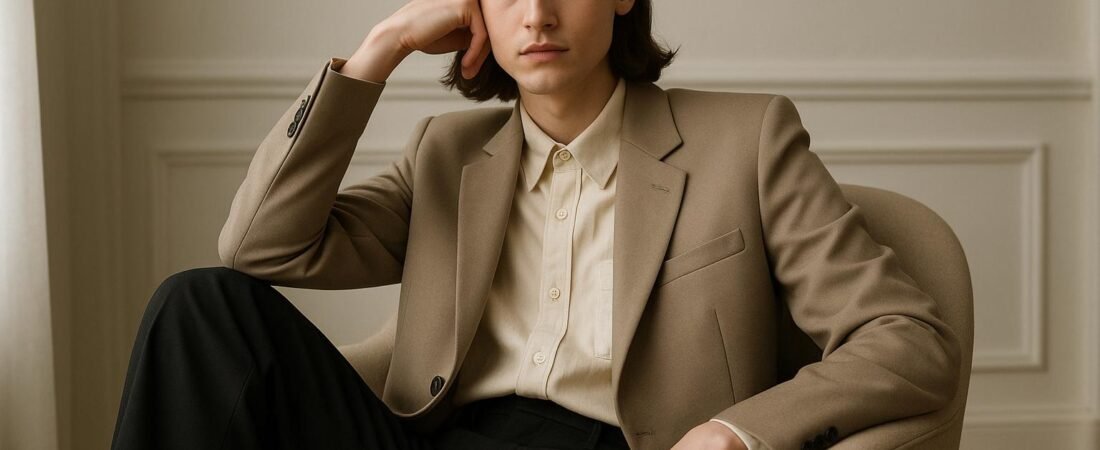
What Is Gender-Neutral Fashion?
Gender-neutral fashion is transforming the way we think about clothing. Instead of dividing garments into “menswear” and “womenswear,” it prioritizes design, comfort, and self-expression over traditional gender norms. More people are seeking a gender-inclusive approach to dressing that reflects who they are, rather than who the label assumes they should be.
Defining Gender-Neutral vs. Unisex vs. Androgynous Style
Although often used interchangeably, gender-neutral, unisex, and androgynous style each have distinct meanings.
Gender-neutral fashion refers to clothing designed without any inherent gendered cues. The intention is that anyone, of any gender identity, can wear the pieces without feeling they are “borrowing” from another category. Cuts, fits, and sizing are constructed to be broadly accommodating and not anchored in traditionally masculine or feminine shapes.
Unisex clothing is typically created to suit a wide audience but often adapts patterns historically derived from menswear, such as straight cuts and broader shoulders. A unisex style guide might present simple T-shirts, hoodies, and jeans labeled as suitable for all. While this is a step away from strict gender division, it can still lean toward one default body type or proportion.
Androgynous style is more about aesthetics than categorization. Androgynous outfits blend traditionally masculine and feminine elements to create a look that visually sits between the two, or outside them entirely. This could be a sharp blazer layered over a silk blouse, loafers with a flowing skirt, or wide-leg tailored trousers worn with a minimal tank. It is a visual language as much as a political statement.
In practice, these concepts often overlap. A gender-neutral wardrobe can incorporate androgynous silhouettes, unisex basics, and more expressive pieces sourced from any part of the fashion spectrum. The key is that the wearer, not the label, defines what fits.
Why Gender-Neutral Fashion Matters Today (Culture, Identity, Inclusivity)
Clothing has always been a cultural code, signaling identity, status, and belonging. Today, as conversations about gender identity, non-binary experiences, and LGBTQIA+ rights evolve, genderless clothing has become an important tool of self-determination. It allows individuals to articulate who they are without being constrained by expectations tied to their gender assignment at birth.
From a cultural perspective, gender-neutral fashion challenges rigid stereotypes. When skirts, nail polish, or floral prints are no longer labeled as “for women,” and ties or suiting are not branded as “for men,” people gain broader visual and emotional vocabularies. This shift has a ripple effect beyond wardrobes, encouraging more flexible thinking in workplaces, schools, and public spaces.
For non-binary and gender-expansive people in particular, access to gender inclusive clothing is not a trend but a practical necessity. It can ease dysphoria, reduce anxiety about public perception, and make daily dressing less fraught. At the same time, it benefits anyone who has ever felt out of place in conventional sizing and styling rules—regardless of identity.
Inclusivity also extends to representation and accessibility. As more inclusive fashion brands emerge, they are rethinking everything from sizing systems and fit models to marketing imagery and store layouts. This creates a more welcoming environment where diverse bodies and gender expressions are not side notes but central to the design process.
Key Elements of a Gender-Neutral Wardrobe
Building a gender-neutral wardrobe does not require starting from scratch. It involves curating versatile, well-considered pieces that can be styled in multiple ways and worn by people across the gender spectrum. Focus on longevity, comfort, and adaptability.
Essential Gender-Neutral Clothing Pieces (Tops, Bottoms, Outerwear)
Certain garments naturally lend themselves to genderless design. These pieces can form the foundation of a flexible and expressive closet.
- Tops
- Structured and relaxed shirts: Button-downs in cotton poplin, linen, or crisp blends work across styles. Look for subtle tailoring through the shoulders and torso, but avoid extreme darts or very narrow waists that target one specific body type.
- Premium T-shirts and tanks: Mid-weight jersey tees with slightly dropped shoulders and straight hems feel balanced on a wide range of bodies. Tank tops with wider straps and higher necklines provide more coverage and styling options.
- Knitwear: Crewneck and mock-neck sweaters, cardigans, and fine-gauge knits in neutral or saturated shades layer well over and under almost anything.
- Bottoms
- Tailored trousers: Flat-front or single-pleat trousers with a mid-rise suit many shapes. An elasticated back waistband or adjustable tabs can improve fit without resorting to gendered cuts.
- Straight and wide-leg jeans: Denim in straight, relaxed, or wide-leg silhouettes offers comfort and visual balance. Aim for mid to high rises; avoid overly contoured hip patterns if you want cleaner, more neutral lines.
- Utility and cargo pants: Workwear-inspired designs with pockets and sturdy fabrics function well as genderless clothing, emphasizing practicality over form-fitting silhouettes.
- Outerwear
- Blazers and chore jackets: Single-breasted blazers, work jackets, and chore coats with moderate structure create strong, androgynous outfits. Slightly boxy cuts read as modern and neutral.
- Trench and duster coats: Long coats with clean lines and minimal embellishment sit comfortably on most body types, adding instant refinement.
- Bombers and parkas: Sportswear-style outerwear, particularly in matte fabrics and understated colors, integrates seamlessly into a gender-neutral wardrobe.
Footwear and accessories also play a crucial role. Loafers, minimalist sneakers, Chelsea boots, and combat boots adapt easily to multiple styles. Belts, simple jewelry, scarves, and bags can be layered to create either softer or sharper effects, depending on the desired expression.
Fabrics, Colors, and Fits That Work Across the Gender Spectrum
The technical aspects of clothing—fabric, color, and cut—have a significant impact on how inclusive a garment feels.
Fabrics: High-quality natural fibers such as cotton, linen, wool, and Tencel are particularly suitable for gender-neutral fashion. They drape well on many body types and are comfortable in varied climates. Moderate weight fabrics avoid clinging while still following the body’s natural lines. Stretch blends can be helpful, but excessive elasticity risks emphasizing specific curves or muscle groups, which may not be desirable for everyone.
Colors: Traditional color coding is increasingly irrelevant. While black, navy, grey, beige, and white remain timeless foundations, richer tones—olive, rust, deep blue, burgundy—and muted pastels work elegantly for all genders. The key is harmony within the outfit rather than adherence to outdated associations of “masculine” or “feminine” hues.
Fits: Inclusive cuts prioritize proportion and ease of movement. Consider the following principles:
- Avoid extreme tapers that dramatically narrow at the ankle or wrist, as they can distort proportions on some bodies.
- Choose mid-rise bottoms for broad versatility; they sit comfortably on varying torso lengths and waist placements.
- Look for sufficient room through the shoulder and hip areas to accommodate different builds without pulling or gaping.
- Opt for garments labeled with measurements (chest, waist, hips, inseam) rather than strictly gendered sizes when possible.
These details may appear subtle, but they make a substantial difference to the experience of wearing gender inclusive clothing, especially across diverse body types.
How to Style Gender-Neutral Outfits for Everyday Life
Knowing how to style gender-neutral outfits is less about following fixed rules and more about developing an intentional approach to proportion, layering, and detail. Focus on balance, comfort, and personal expression rather than rigid categories.
Building Casual, Work, and Evening Looks Without Gender Rules
Casual looks:
- Combine a straight-cut T-shirt with relaxed jeans and sneakers. Add a chore jacket or bomber for structure. This simple ensemble suits a broad range of identities and can shift from streetwear to minimal chic depending on accessories.
- Pair an oversized shirt with tailored shorts or cropped trousers. Roll sleeves, half-tuck the hem, or layer a tank underneath for dimension. Finish with sandals, canvas sneakers, or loafers.
Workwear and professional settings:
- Use tailoring as a foundation. A neutral blazer worn with matching or contrasting trousers creates a polished, genderless silhouette. Underneath, choose a fine knit, crisp shirt, or structured tee.
- Monochrome outfits in dark or muted tones—such as charcoal, navy, or olive—feel refined without leaning too heavily into traditional menswear or womenswear codes.
- For offices with more conservative dress codes, emphasize clean lines, minimal patterns, and high-quality fabrics rather than overtly gendered details.
Evening and special occasions:
- Elevate a basic suit with a silk or satin shirt, a turtleneck, or a formal T-shirt in a rich color. Jewellery, such as a single bold ring or chain necklace, can add an androgynous edge.
- Consider longline blazers or duster coats over tailored trousers for a streamlined, elegant profile. A sleek boot or polished loafer completes the look.
- Play with texture—velvet, jacquard, metallic details—rather than overtly gendered silhouettes to introduce drama and personality.
In all scenarios, the aim is to create cohesion through proportion and texture, rather than aligning with gendered expectations. Non-binary fashion tips frequently emphasize layering as a way to adjust how your body is perceived, enhancing comfort and control over your presentation.
Styling Tips for Different Body Types in Gender-Neutral Fashion
A genuinely inclusive unisex style guide recognizes that bodies are diverse. Gender-neutral fashion must adapt, not erase those differences. The following strategies offer starting points; ultimately, comfort and self-affirmation matter more than any guideline.
- For broader shoulders or chests:
- Choose slightly dropped or relaxed shoulders to avoid overly sharp lines that can exaggerate width.
- Mid-weight fabrics help prevent clinging around the chest while still draping smoothly.
- Vertical details—open plackets, long scarves, vests, or vertical seams—draw the eye downward and balance proportions.
- For fuller hips or thighs:
- Look for straight or wide-leg trousers and jeans. Avoid extremely skinny or tapered cuts if they feel disproportionate.
- Mid to high rises with a comfortable waistband distribute volume more evenly.
- Layer slightly longer tops, blazers, or shirts that skim the hip area rather than clinging tightly.
- For more petite frames:
- Opt for slightly cropped tops or jackets to prevent outfits from overwhelming your height.
- Tailored shoulders and narrower sleeves can help maintain structure while still reading as neutral.
- Monochromatic looks or low-contrast combinations elongate the silhouette.
- For taller or larger builds:
- Embrace proportionally larger pieces rather than sizing down. Oversized garments can look intentional and modern when shoulders and lengths are correct.
- Mix fitted and relaxed elements—for example, a more tailored trouser with a relaxed knit—to avoid appearing boxy.
- Use layering to break up areas of volume: longline shirts under shorter jackets, or vests over shirts.
These non-binary fashion tips are not prescriptive. Rather, they provide tools for fine-tuning how genderless clothing interacts with different body types so each wearer can feel both seen and comfortable.
Where to Shop and How to Support Inclusive Fashion
Finding truly gender inclusive clothing requires a discerning eye. While many brands use inclusive language, not all deliver on fit, representation, or ethical practices. Supporting labels that prioritize both diversity and sustainability encourages a healthier fashion ecosystem.
Popular Gender-Neutral Fashion Brands and Sustainable Labels
A growing number of inclusive fashion brands specialize in gender-neutral lines or offer thoughtfully designed collections that avoid rigid categories. Characteristics to look for include:
- Dedicated gender-neutral collections: Some brands label pieces as “gender-free,” “all-gender,” or “for every body,” with consistent sizing and fit experiments to suit varied shapes.
- Inclusive campaigns and imagery: Look for advertising that features models of different genders, sizes, ages, and abilities wearing the same garments in distinct ways.
- Sustainable practices: Many forward-thinking labels also emphasize organic or recycled materials, ethical production, and transparent supply chains. This reduces environmental impact while promoting more equitable labor conditions.
Alongside established names, numerous independent designers focus exclusively on gender-neutral fashion. They often experiment with innovative silhouettes, repurposed fabrics, and customizable fits. Supporting these smaller brands can be a meaningful way to foster diversity and creativity in the industry.
Shopping Tips: Sizing, Fit, and Reading Brand Inclusivity Policies
When building a gender-neutral wardrobe, strategic shopping will save time, resources, and frustration. Consider the following steps:
- Study size charts in detail: Do not rely on a single S–M–L label. Compare your measurements—chest, waist, hips, inseam, shoulder width—to the brand’s charts. Since genderless clothing often uses unified sizing, these figures are crucial to securing the desired fit.
- Read product descriptions carefully: Look for information about fabric weight, stretch, cut, and intended fit (relaxed, boxy, tailored). This helps you understand how a piece will sit on your frame.
- Check return and alteration policies: Inclusive fashion should allow room for experimentation. Flexible return options, alteration services, or repair programs indicate a brand’s commitment to long-term wear rather than quick turnover.
- Assess inclusivity beyond marketing: Explore the brand’s “About” or policy pages. Genuine gender-neutral fashion initiatives often include:
- Statements on gender inclusion and non-discrimination.
- Information about diverse fit models and expanded size ranges.
- Clear language affirming that all items are designed for any gender.
- Observe community feedback: Customer reviews and social media discussions can reveal whether pieces work well for people across genders and body types. Pay particular attention to comments about fit in the shoulders, chest, hips, and length.
By applying these criteria, you can better identify brands that truly support gender-neutral fashion rather than using it as a trend-driven marketing phrase.
Conclusion
Gender-neutral fashion is not simply a shift in aesthetics; it reflects a broader cultural movement toward authenticity, autonomy, and respect for diverse identities. Moving beyond narrow categories allows individuals to explore style as a personal language rather than a fixed script.
By focusing on versatile garments, thoughtful fabrics, and adaptable fits, anyone can assemble gender-neutral wardrobe essentials that feel both modern and enduring. Styling choices—whether casual, professional, or formal—become opportunities to align outward appearance with inner self, instead of conforming to external expectations.
Supporting inclusive fashion brands, paying attention to sizing transparency, and prioritizing ethical production all contribute to a more equitable industry. Ultimately, genderless clothing offers more than new silhouettes; it creates space for people to be fully themselves, every time they get dressed.
Discover More from Didier Lancelot
Amazon Author page: amazon.com/author/didierlancelot
Narmer Store: narmerstore.org
AI and Technology Ebooks
- Creative AI: Animated Drawings, Manga & Illustrations
- Build a Game with AI: The No-Code Guide
- AI Image Generation Made Easy
- Build a Website with AI: The No-Code Guide
- How to Connect AI to Your Blog: The Ultimate Automation Guide
- AI Productivity Habits: Get More Done in Less Time
- AI Avatars Made Easy
- The Book of AI Prompts: 100+ Proven Prompts
- Make Music with AI: Suno, Udio and AI Music Generators
- Click to Cash
- The Automated Edge: Outwork, Outpace, and Outperform with AI
- AI Side Hustle: How to Make Money with ChatGPT and AI Tools
- Work Smarter with AI
Health, Lifestyle and Home Ebooks
- Hidden Superfoods: The World’s Most Powerful Healing Foods
- Spanish Food: The Complete Cookbook for Authentic Home Cooking
- The Science of Happiness Explained
- The Psychology of Success
- The Secret Sauce of Consistency: What the Experts Don’t Tell You About Fitness
- The Complete Home Bartender’s Guide: Link 1 | Link 2
- Natural Beauty, Made Simple: Easy DIY Organic Skincare Recipes
- Garden Made Simple: Easy, Beginner-Friendly Techniques
- The Dog Training Bible