
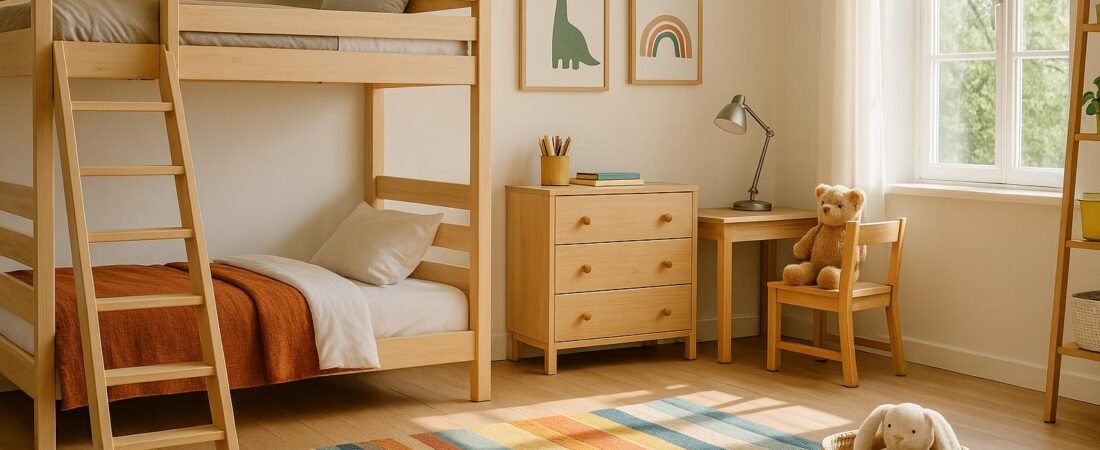
Kids’ Room Interior Design Ideas That Grow With Them
Designing a child’s bedroom can feel tricky: you want it to match who they are now, but you also know they’ll change fast. The most practical approach is to create a flexible foundation—durable furniture, calm colors, and smart storage—then layer in personality with details that are easy to update.
Below are practical, design-forward ideas for a kids’ room that can evolve beautifully from toddler to teen without a full makeover every few years.
Start With a Flexible Foundation
Keep Permanent Choices Versatile
The biggest cost in any kids’ room makeover is often what you can’t easily swap later: flooring, large furniture pieces, and most wall finishes. Make these elements versatile so they can grow with your child.
- Choose a neutral or nature-inspired palette. Soft whites, warm beige, gentle greys, muted clay, dusty blue or soft green all age well and pair with almost any accent color.
- Skip permanent themes on big surfaces. Instead of painting a giant superhero mural, keep walls simple and add themed artwork, posters, or removable decals.
- Use changeable wall decor. Temporary wallpaper, peel-and-stick murals, pinboards and framed prints let you shift from dinosaurs to space to minimal art without repainting the room.
- Opt for classic flooring. Hardwood, cork, or durable laminate with a neutral area rug is easier to update than a bold wall-to-wall carpet you’ll regret in a few years.
Think of the room like a calm, timeless backdrop. The personality comes from bedding, pillows, toys, art and lighting—items you can rotate as your child’s tastes evolve.
Invest in Furniture That Has a “Next Job”
When planning kids’ bedroom furniture, imagine how each piece can work now and later. Buying with the “next job” in mind means fewer replacements and less waste.
Smart Bed Choices
- Convertible crib-to-bed. If you’re starting from a nursery, choose a crib that converts to a toddler bed and eventually a full-size bed to extend its life.
- Daybed or simple single bed. A daybed with a back rail can double as seating for reading or hanging out with friends as your child grows.
- Storage bed. Built-in drawers or lift-up storage under the mattress are ideal for extra bedding, off-season clothes or bulky toys—especially in small rooms.
- Loft bed for compact spaces. For older kids, a loft bed can create a study nook or play zone underneath, maximizing vertical space.
Dressers, Desks and Seating That Grow
- Full-size dresser. Skip the “kid-size” dresser; a standard dresser with deep drawers will still work for a teenager’s wardrobe.
- Sturdy bookshelf. A tall, anchored bookcase holds board books and toys now, then novels, school supplies and decor later.
- Adjustable desk and chair. Look for a desk height and chair that can be adjusted as your child grows, with enough surface area for crafting today and a laptop tomorrow.
- Modular seating. Floor cushions, a small armchair or modular poufs can move from play corner to reading nook to gaming area as needs shift.
The guiding principle: spend more on items that would be costly or disruptive to replace (bed, storage, desk) and less on the pieces that are purely decorative.
Plan Flexible Zones (Even in Small Rooms)
A kids’ room has to do a lot: it’s often a bedroom, playroom, study area and quiet retreat in one. Thoughtful zoning helps the space work harder without permanent walls.
Key Zones to Include
- Sleep zone. Keep the bed area calm and uncluttered. Use softer colors, minimal toys near the pillow, and warmer, lower lighting for a restful feel.
- Play zone. Leave a clear patch of floor where blocks, trains, dolls or building sets can spread out. Use a rug to visually define this “activity island.”
- Reading zone. A comfy chair, floor cushion or beanbag plus a small bookshelf or wall-mounted shelves and a warm reading light is enough to create a cozy nook.
- Creative zone. A small table or desk supports drawing, crafts or puzzles now, and transitions easily into a homework station.
- Storage zone. Dedicate one wall or corner to shelving, hooks and bins for clothes, toys, books and gear.
How to Define Zones Without Building Walls
- Use rugs. A rug under the bed, another in the play area, or a small one under a reading chair helps visually “separate” activities.
- Play with furniture placement. A low shelf can act as a subtle divider between the play area and sleeping area while keeping sight lines open.
- Layer lighting. A brighter ceiling fixture over the play or study area and softer lamps near the bed and reading nook cue different moods.
As your child grows, you can easily rebalance these zones—shrinking the play area to extend the study zone, for example—without redoing the whole room.
Make Storage Accessible and Adaptable
Clutter builds up fast in kids’ rooms. Smart storage keeps the space functional while also teaching children to care for their belongings.
Combine Open and Closed Storage
- Open shelves for display. Use low bookshelves for favorite books, puzzles, and a few special toys or collections.
- Closed bins and drawers for the rest. Baskets, fabric bins, and drawers hide visual clutter and make cleanup easier.
- Label everything. Picture labels for younger kids and word labels for older ones help everyone remember where things go.
Plan Storage That Evolves
- Low shelves now, more sophisticated later. A low shelf that currently holds stuffed animals can later store textbooks and decor.
- Adjustable shelving. Choose systems with movable shelves that can change height as toys give way to taller books and storage boxes.
- Hooks at multiple heights. Add wall hooks at kid height for backpacks and dress-up clothes; later, use the same hooks for bags, jackets and sports gear.
- Under-bed and over-door storage. Ideal for off-season items or things that don’t need to be reached daily.
Make it easy for younger children to tidy up by ensuring most everyday items are at their eye level or lower. As they get older, you can gradually increase vertical storage without replacing everything.
Design for Multiple Activities
Children need room for both wild energy and quiet focus. Designing a kids’ bedroom for multiple activities helps it function all day, every day.
Encourage Reading and Downtime
- Create a reading nook. A simple corner with a soft rug, cushions and a small bookshelf can encourage calm time—even in very small rooms.
- Keep it inviting, not overcrowded. Rotate a few books into the reading area rather than storing the whole library there to avoid visual clutter.
Support Study and Creativity
- Compact study area. Even a small wall-mounted desk or narrow table with a good chair and task lighting can serve as a study spot.
- Art-friendly surfaces. Use a wipeable tabletop and keep a caddy with basic supplies so creativity is easy but cleanup isn’t overwhelming.
- Adapt as homework increases. Over time, you can add a corkboard, magnetic strip or rail system above the desk for schedules, project inspiration and reminders.
Free Up Floor Space
- Think vertical. Wall-mounted shelves, pegboards, and hooks keep the floor clear while still giving everything a home.
- Use lofts and bunks wisely. For older kids, a loft or bunk bed can free up valuable space underneath for play or a workstation.
The goal is a kids’ room that can swing easily between playtime, reading, relaxing and focused work, without feeling cramped or chaotic.
Choose Finishes That Can Handle Real Life
A child’s room sees more wear and tear than almost any other space in the home. Choose finishes that are both practical and healthy.
Durable, Easy-Care Surfaces
- Wipeable paint. Use a washable, scuff-resistant paint finish on walls so you can clean crayons, fingerprints and scuffs without constant repainting.
- Washable bedding and covers. Duvet covers, removable pillow covers and slipcovered chairs make laundry day easier.
- Rugs that can handle spills. Look for flatweave or low-pile rugs in darker or patterned designs, which hide stains better and are easier to clean.
- Protect work surfaces. A clear desk mat or laminated placemat on a craft table saves the finish from markers, glue and paint.
Healthy, Natural Materials
- Low-VOC paints and finishes. These reduce off-gassing and help maintain better air quality in a space where your child spends many hours.
- Natural fibers where possible. Cotton, linen, wool and jute are breathable; wool and some natural blends can also be more stain-resistant than you might expect.
- Solid wood furniture. When budget allows, solid wood pieces tend to be more durable and refinishable than particleboard.
Choosing resilient, breathable materials means the room will look fresher for longer and feel more comfortable to live in.
Layer the Lighting
Well-planned lighting supports everything from bedtime stories to homework. Layering different types of light lets you adapt the room as your child’s needs change.
The Three Layers of Light
- General (ambient) lighting. A ceiling fixture or flush mount provides overall brightness for play and tidying up.
- Task lighting. A desk lamp, bedside reading light or wall sconce offers focused illumination for reading, drawing and homework.
- Accent or night lighting. A plug-in nightlight, string lights or a small lamp with a warm bulb can make bedtime feel comforting and safe.
Adapting Lighting as They Grow
- Switch out the nightlight. As your child becomes more confident, the nightlight might give way to a more grown-up desk lamp or reading sconce.
- Add dimmers. Dimmable lights on the ceiling or bedside lamp help ease the transition from playtime to bedtime.
- Use warm bulbs. Warmer color temperatures (around 2700K–3000K) feel cozy and are typically better before sleep than bright, cool-toned light.
Think in layers from the beginning so you’re not stuck with just one harsh ceiling light for all activities.
Let Your Child Help Personalize It
For a bedroom that truly feels like “theirs,” involve your child in age-appropriate decisions and give them safe, flexible ways to express themselves.
Start With Their Routines and Favorites
- Ask about daily habits. Do they like to read in bed, draw at a table, or lay on the floor with toys? Plan zones and furniture based on real routines.
- Note favorite colors and interests. Use these as accent colors in bedding, artwork and accessories, rather than in permanent finishes.
Build in Changeable Personal Touches
- Rotating art rails. Hang a simple rail, wire or cork strip where your child can clip up drawings and photos. Updating the display becomes part of the fun.
- Pinboards or magnet boards. These hold awards, postcards, schedules and inspirational images as your child’s world expands.
- Creative AI: Animated Drawings, Manga & Illustrations
- Build a Game with AI: The No-Code Guide
- AI Image Generation Made Easy
- Build a Website with AI: The No-Code Guide
- How to Connect AI to Your Blog: The Ultimate Automation Guide
- AI Productivity Habits: Get More Done in Less Time
- AI Avatars Made Easy
- The Book of AI Prompts: 100+ Proven Prompts
- Make Music with AI: Suno, Udio and AI Music Generators
- Click to Cash
- The Automated Edge: Outwork, Outpace, and Outperform with AI
- AI Side Hustle: How to Make Money with ChatGPT and AI Tools
- Work Smarter with AI
- Hidden Superfoods: The World’s Most Powerful Healing Foods
- Spanish Food: The Complete Cookbook for Authentic Home Cooking
- The Science of Happiness Explained
- The Psychology of Success
- The Secret Sauce of Consistency: What the Experts Don’t Tell You About Fitness
- The Complete Home Bartender’s Guide: Link 1 | Link 2
- Natural Beauty, Made Simple: Easy DIY Organic Skincare Recipes
- Garden Made Simple: Easy, Beginner-Friendly Techniques
- The Dog Training Bible
Discover More from Didier Lancelot
Amazon Author page: amazon.com/author/didierlancelot
Narmer Store: narmerstore.org