
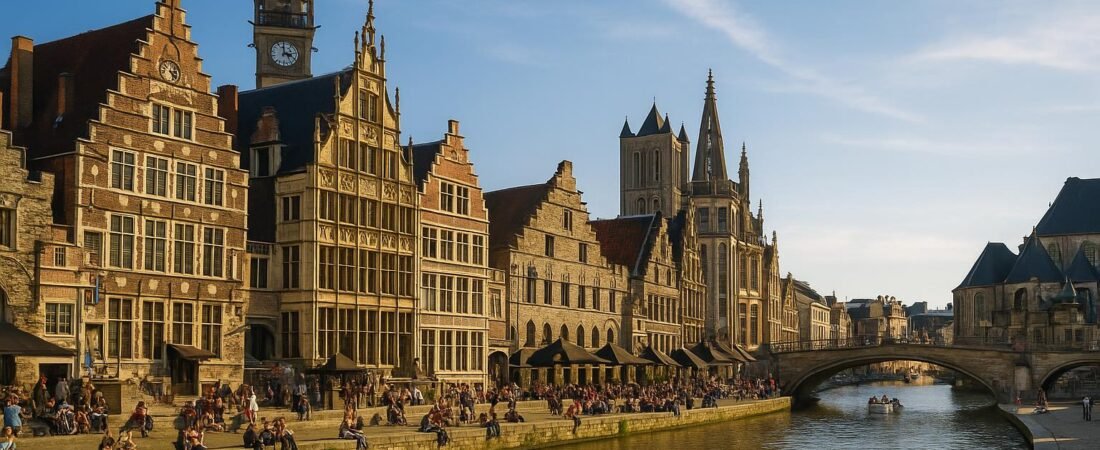
Ghent is one of Europe’s most rewarding city breaks: a compact medieval city with a modern, creative pulse. Canals thread past steepled guild houses, atmospheric churches shelter Flemish masterpieces, and former industrial docks now host cutting-edge galleries and breweries. Less crowded than nearby Bruges or Brussels yet every bit as beautiful, Ghent feels lived-in rather than staged – a place where students cycle past Gothic towers and locals still shop in centuries-old markets.
This guide explores the best time to visit, the essential sights, distinctive cultural experiences, where to stay, and what to eat and drink to experience Ghent at its most authentic.
Best Time to Visit Ghent
Weather Overview
Ghent enjoys a temperate maritime climate, with relatively mild temperatures year-round and frequent but usually light rainfall. The city is perfectly visitable in all seasons, but each period offers a different character.
- Spring (March–May): Days lengthen, trees along the Graslei and Korenlei burst into leaf, and café terraces reopen. Temperatures range roughly from 8–18°C. Showers are common, but crowds remain manageable, especially outside Easter.
- Summer (June–August): This is peak season, with long daylight hours and average temperatures hovering between 18–25°C. It rarely becomes oppressively hot, though humidity can rise. Ghent’s canals, boat tours and terraces are at their most inviting, but accommodation prices and visitor numbers climb.
- Autumn (September–November): Early autumn is an excellent time to visit. September often feels like an extension of summer, with fewer tourists. By October, crisp air and golden foliage create atmospheric walks through the Patershol and Citadelpark. Rain increases from mid-autumn, so pack waterproof layers.
- Winter (December–February): Winters are generally cold and damp rather than snowy, with temperatures around 0–7°C. Short days and mist over the canals lend Ghent a moody, cinematic appeal. Lower hotel rates and the winter festival season make this an appealing choice for culture-focused travellers.
For most visitors, late spring (May–early June) and early autumn (September) offer the best balance of pleasant weather, atmospheric city life and fewer crowds.
Festivals and Events
Ghent’s calendar is remarkably full for a city of its size. Many travellers plan their trip around a specific event, and doing so can transform a standard city break into an unforgettable cultural immersion.
- Gentse Feesten (Ghent Festival, July): One of Europe’s largest open-air cultural festivals, Gentse Feesten turns the historic centre into a 10-day celebration of music, theatre, comedy and street performance. Expect free concerts on multiple stages, late-night bars, and a jubilant, inclusive atmosphere. Book accommodation many months in advance.
- Ghent Jazz Festival (July): Overlapping with Gentse Feesten on some years, this acclaimed festival draws international jazz, soul and world musicians to venues throughout the city. It is a major event for music aficionados.
- Light Festival Ghent (biennial, usually January or February): On selected winter evenings, Ghent’s façades, bridges and monuments become canvases for striking light installations. The curated walking route reveals both major landmarks and lesser-known streets in a completely new light.
- Film Fest Gent (October): Belgium’s leading film festival spotlights international cinema and film music. Screenings and events take place in cinemas and cultural centres across the city, attracting an engaged, creative crowd.
- Ghent Winter Festival & Christmas Market (December): From Saint Bavo’s Cathedral to Sint-Baafsplein, wooden chalets, ice rinks and festive lights create a classic European winter scene. It is a particularly appealing time for couples and families.
Even outside headline festivals, recurring events such as weekly markets, design fairs, and student-driven cultural programmes ensure there is almost always something happening.
Top Attractions in Ghent
Must-See Historical Sites
Ghent’s compact centre is dense with architectural treasures that span a millennium. Many key sights are within walking distance of each other, making it easy to explore in a day while rewarding slower, more detailed visits.
- Gravensteen (Castle of the Counts): This imposing 12th-century fortress rises dramatically from the Lys River, its crenellated walls and towers remarkably intact. Inside, exhibitions trace the history of medieval justice and warfare; the panoramic views from the ramparts over Ghent’s rooftops and spires are among the city’s finest.
- Saint Bavo’s Cathedral (Sint-Baafskathedraal): A masterpiece of Gothic architecture, the cathedral is home to the world-renowned altarpiece The Adoration of the Mystic Lamb by the Van Eyck brothers. Recently restored, the polyptych’s colours, detail and symbolism are astonishing up close. Reserve time for the visitor centre, which uses multimedia to illuminate the work’s turbulent history.
- Belfry of Ghent (Belfort): Together with Saint Bavo’s Cathedral and Saint Nicholas’ Church, the UNESCO-listed Belfry forms Ghent’s iconic “three towers” skyline. Climb (or take the lift) to the top for another remarkable viewpoint, and listen for the carillon bells that have marked city life for centuries.
- Graslei and Korenlei: These twin quays along the Lys are lined with historic guild houses and warehouses, some dating back to the Middle Ages. Today they form Ghent’s most photogenic waterfront, filled with cafés and boat tours. Visit at dusk when the facades are beautifully illuminated.
- Saint Nicholas’ Church (Sint-Niklaaskerk): One of Ghent’s oldest churches, its blue-grey Tournai stone and graceful towers dominate Korenmarkt. The interior’s interplay of light and height showcases Scheldt Gothic architecture at its most elegant.
- Patershol District: A warren of cobbled lanes and restored townhouses just north of the centre, Patershol was once home to tanners and tradespeople. Today it offers an atmospheric backdrop for evening strolls and intimate dining.
Allow at least one full day to explore Ghent’s historical core at a relaxed pace, pausing often to appreciate smaller details: stepped gables, carved stone saints, and hidden courtyards.
Unique Cultural Experiences
Beyond its monuments, Ghent stands out for its creative spirit, contemporary art scene and distinctive local culture.
- MSK Ghent (Museum of Fine Arts): Housing a strong collection of Flemish and European paintings from the Middle Ages to the 20th century, MSK is essential for anyone interested in art. Works by Bosch, Brueghel and Ensor share space with changing exhibitions that often engage boldly with current themes.
- S.M.A.K. (Municipal Museum of Contemporary Art): Directly opposite MSK in Citadelpark, S.M.A.K. showcases provocative contemporary art, installations and performance. Its exhibitions are often experimental, reflecting Ghent’s reputation as an avant-garde hub.
- STAM – Ghent City Museum: Located in a former abbey and convent, STAM provides a clear, engaging overview of Ghent’s evolution from medieval powerhouse to modern university city. Interactive displays and historical maps help orient your explorations.
- Street Art & Graffiti Alley: Ghent’s street art scene is particularly vibrant. The constantly changing Werregarenstraat (Graffiti Street) serves as a legal canvas, while larger commissioned works appear across the city. Consider a guided street art tour to uncover murals you would likely miss.
- Canal Boat Tour: Seeing Ghent from the water offers a different perspective on its architecture and bridges. Commentary typically covers both history and contemporary life, making this a good introduction on your first day.
- Local Beer and Brewery Culture: Flanders is synonymous with beer, and Ghent has its own traditions. Visit city-centre bars specialising in Belgian brews, or join a tasting at a local brewery to sample regional styles, including Ghent’s own specialties.
- University and Music Scene: As a major university city, Ghent has a youthful population and dynamic nightlife. Check listings for live music at smaller venues and independent theatres; the atmosphere is relaxed yet sophisticated, more about culture than spectacle.
Engaging with these cultural experiences provides a deeper understanding of Ghent as a living, evolving city rather than a static open-air museum.
Where to Stay in Ghent
Recommended Neighborhoods
Ghent’s centre is compact, and nearly all key areas are within walking or cycling distance. The ideal base depends on your priorities: nightlife, tranquillity, budget, or proximity to specific attractions.
- Historic City Centre (Binnenstad): For first-time visitors, staying in the medieval core around Korenmarkt, Graslei and Vrijdagmarkt is extremely convenient. You will be within walking distance of major sights, canals, restaurants and tram connections. Expect higher prices and more activity, especially during festivals.
- Patershol: This atmospheric quarter north of Gravensteen offers cobbled streets, boutique hotels and refined restaurants. Evenings here feel intimate and old-world, ideal for couples and travellers seeking a romantic setting.
- Arts Quarter & Citadelpark: South of the centre, the area around Citadelpark, MSK and S.M.A.K. balances green space with culture. It is quieter at night but still close to cafés and tram lines, making it suitable for families or longer stays.
- Portus Ganda & Muide-Meulestede: East and north-east of the centre, former docklands and working-class districts are being transformed into creative hubs, with waterside promenades, co-working spaces and design-led accommodation. This is a good choice for travellers who enjoy emerging neighborhoods and a slightly more local feel.
- Stationsbuurt (near Gent-Sint-Pieters Station): Practical for rail travellers and those planning day trips across Belgium. It is less charming than the historic core but offers modern hotels, good public transport and straightforward airport access via Brussels.
Best Hotels and Accommodations
Ghent’s accommodation ranges from heritage townhouses and design hotels to cosy guesthouses and budget-friendly hostels. Booking ahead is essential during major events.
- Historic & Boutique Hotels:
- Canalside Boutique Hotels: Several converted guild houses along the Graslei and Korenlei combine historical architecture with contemporary interiors. Rooms often feature exposed beams, canal views and thoughtful design, making them ideal for a special-occasion stay.
- Patershol Townhouse Hotels: In Patershol, small-scale boutique hotels and bed-and-breakfasts occupy renovated medieval buildings. Narrow staircases, wooden floors and intimate courtyards create a distinct sense of place.
- Design & Contemporary Stays:
- Art-Focused Hotels: In the Arts Quarter near Citadelpark and around the old docks, you will find hotels that integrate local art, minimalist Belgian design and sustainable practices. They typically appeal to design-conscious travellers and weekend city-breakers.
- Serviced Apartments: For longer stays, serviced apartments in the centre and near Gent-Sint-Pieters Station provide kitchens and extra space, particularly useful for families or digital nomads.
- Budget-Friendly Options:
- Hostels and Guesthouses: Well-located hostels offer dorms and private rooms, often in characterful historic buildings. Facilities may include communal kitchens, bicycle rental and social events – a good option for solo travellers.
- Simple City Hotels: Around the station and on the fringes of the centre, straightforward business-style hotels provide reliable comfort at lower rates, especially outside weekdays.
When choosing where to stay, balance charm with practicality. If you plan day trips, proximity to tram lines and Gent-Sint-Pieters Station matters; if you are focused on late dinners and evening walks, the historic centre or Patershol are more compelling.
Food and Dining in Ghent
Traditional Dishes to Try
Ghent’s culinary scene blends traditional Flemish recipes with contemporary creativity. The city is also known for embracing vegetarian and plant-forward cuisine, giving classic dishes thoughtful updates.
- Waterzooi: Perhaps Ghent’s most celebrated dish, waterzooi is a creamy stew originally based on river fish, now often prepared with chicken. It features a rich broth with leeks, carrots, celery and potatoes, finished with egg yolk and cream. Hearty yet refined, it is perfect on a cool day.
- Gentse Stoverij (Flemish Stew): A slow-cooked beef stew braised in dark beer, typically served with fries and mustard. Flavours are deep, slightly sweet and robust – a classic of Flemish home cooking.
- Gentse Neuzen (Cuberdons): Cone-shaped purple sweets with a soft raspberry-flavoured centre, sold from traditional carts and speciality shops. They are intensely sugary, so sampling a few is generally sufficient.
- Moules-Frites: While associated with Belgium more broadly, mussels with fries are common in Ghent’s brasseries during the season. Variations include white wine, cream or garlic broths.
- Belgian Waffles and Chocolate: Waffle stands and patisseries offer Liège and Brussels-style waffles, often topped with fruit or chocolate. Numerous chocolatiers craft pralines and truffles using both classic and inventive fillings.
- Local Beers and Cheese: Pair regional cheeses with Belgian ales in traditional cafés. Many menus highlight pairings, allowing you to explore Flanders’ gastronomic heritage.
Vegetarians and vegans are particularly well catered for. Ghent has promoted “Veggie Thursday” for years, and plant-based versions of traditional dishes are increasingly common.
Popular Restaurants and Cafés
From fine dining to relaxed brown cafés, Ghent’s dining landscape is diverse and approachable. Reservations are advisable for weekend evenings and during festivals.
- Traditional Flemish Brasseries:
- In and around the historic centre, brasseries serve classics such as waterzooi, stoverij and mussels alongside Belgian beers. Look for menus that change seasonally and highlight local produce, a good indicator of quality.
- Near Graslei and Korenlei, several long-established restaurants combine canal views with regional specialties. These can be busy but are convenient for a first evening in the city.
- Modern Belgian and Creative Cuisine:
- Chef-driven restaurants across the city reinterpret Flemish flavours with contemporary techniques, tasting menus and carefully curated wine lists. They often showcase vegetables prominently, reflecting Ghent’s progressive culinary mindset.
- In the arts and dockland quarters, you will find bistros with Nordic-influenced minimalism, open kitchens and an emphasis on local, organic ingredients.
- Vegetarian and Vegan Dining:
- Specialist vegetarian restaurants are scattered throughout the centre, offering inventive plant-based dishes rooted in Mediterranean, Middle Eastern or Asian traditions.
- Many mainstream cafés and eateries clearly mark vegetarian and vegan options, making it easy to dine flexibly.
- Cafés, Coffee Bars and Bakeries:
- Independent coffee bars near the university and in the side streets off Korenmarkt serve speciality coffee, pastries and light lunches. Interiors range from industrial chic to cosy vintage.
- Traditional “brown cafés” – wood-panelled bars serving beer, simple snacks and coffee – remain an essential part of Ghent’s social life. They are ideal for sampling local brews and observing daily rhythms.
- Artisanal bakeries and patisseries tempt with crusty bread, buttery viennoiseries and Belgian cakes, perfect for breakfast on the go.
- Street Food and Markets:
- The Vrijdagmarkt and other local markets offer food stalls selling fresh produce, cheeses, cured meats and ready-to-eat snacks. These are excellent places to assemble a picnic for a canal-side lunch or a visit to Citadelpark.
- During Gentse Feesten and the winter festival, temporary stalls serve everything from waffles and fries to international street food, reflecting the city’s cosmopolitan character.
Conclusion
Ghent rewards curiosity. It offers the visual drama of Gothic towers and canals, yet feels grounded in everyday life: cyclists crossing stone bridges, markets trading as they have for centuries, students filling cafés and concert halls. Visitors can move easily from medieval fortresses to cutting-edge galleries, from traditional brasseries to experimental kitchens, all within a walkable, welcoming urban fabric.
Whether you time your visit to coincide with a major festival, seek a quieter off-season escape, or use Ghent as a base for exploring Flanders, the city leaves a lasting impression of depth rather than spectacle. Plan thoughtfully – choose a neighbourhood that matches your travel style, explore both headline attractions and side streets, make space for long meals and slow canal-side walks – and Ghent will reveal itself as one of Europe’s most nuanced and rewarding city destinations.
Discover More from Didier Lancelot
Amazon Author page: amazon.com/author/didierlancelot
Narmer Store: narmerstore.org
AI and Technology Ebooks
- Creative AI: Animated Drawings, Manga & Illustrations
- Build a Game with AI: The No-Code Guide
- AI Image Generation Made Easy
- Build a Website with AI: The No-Code Guide
- How to Connect AI to Your Blog: The Ultimate Automation Guide
- AI Productivity Habits: Get More Done in Less Time
- AI Avatars Made Easy
- The Book of AI Prompts: 100+ Proven Prompts
- Make Music with AI: Suno, Udio and AI Music Generators
- Click to Cash
- The Automated Edge: Outwork, Outpace, and Outperform with AI
- AI Side Hustle: How to Make Money with ChatGPT and AI Tools
- Work Smarter with AI
Health, Lifestyle and Home Ebooks
- Hidden Superfoods: The World’s Most Powerful Healing Foods
- Spanish Food: The Complete Cookbook for Authentic Home Cooking
- The Science of Happiness Explained
- The Psychology of Success
- The Secret Sauce of Consistency: What the Experts Don’t Tell You About Fitness
- The Complete Home Bartender’s Guide: Link 1 | Link 2
- Natural Beauty, Made Simple: Easy DIY Organic Skincare Recipes
- Garden Made Simple: Easy, Beginner-Friendly Techniques
- The Dog Training Bible