
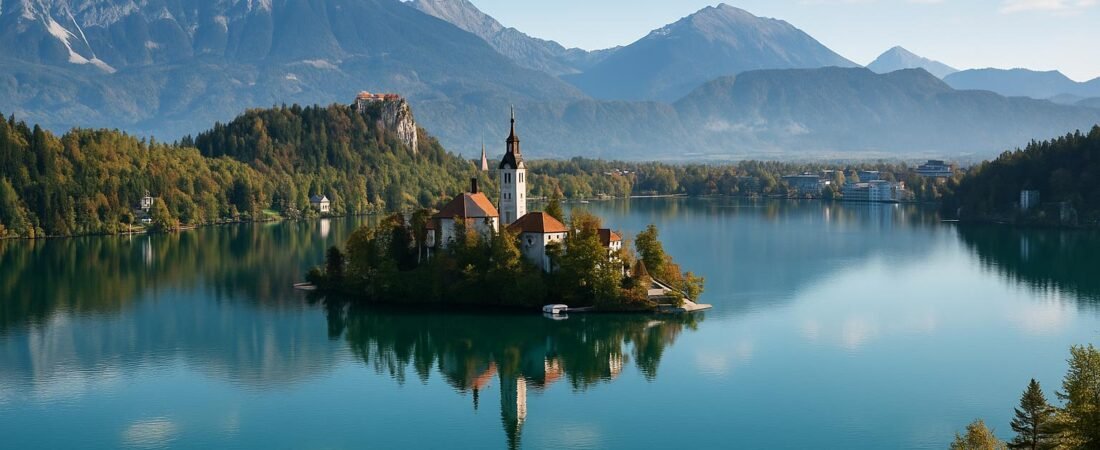
Lake Bled, with its emerald waters, tiny island church and cliff-top castle, is one of Europe’s most cinematic destinations. Set against the Julian Alps in northwestern Slovenia, it combines Alpine scenery with a refined, almost storybook atmosphere. Whether you come to hike and cycle, explore medieval heritage, or simply slow down by the lakeshore, planning your trip around the seasons, key sights and local logistics will help you make the most of your stay.
Best Time to Visit Lake Bled
Weather Overview by Season
Lake Bled has a distinctly Alpine climate, with four marked seasons that each offer a different experience.
Spring (April–June) is one of the most rewarding times to visit. As the snow recedes in the surrounding mountains, wildflowers appear along lakeside paths and temperatures gradually rise into the mid-teens to low 20s °C (60s–70s °F). April can still be cool and occasionally rainy, but May and June often bring clear skies and fewer crowds than midsummer. It is an ideal period for hiking, cycling and photography, with soft light and lush greenery.
Summer (July–August) is high season, with long days, warm temperatures and the liveliest atmosphere. Daytime highs hover around 25–30°C (77–86°F), perfect for swimming, paddleboarding and leisurely boat trips to Bled Island. The flip side is crowding around the lakeshore and popular viewpoints, as well as higher accommodation prices. If you come in summer, early mornings and late evenings are the most tranquil times to explore.
Autumn (September–October) brings crisp air, vivid foliage and a more contemplative mood. September often retains summer warmth with calmer crowds, making it a sweet spot for many travelers. By October, temperatures cool and mist sometimes veils the lake in the early morning, creating atmospheric conditions for photography. Hiking and cycling remain very feasible, and the changing colors around the Julian Alps are striking.
Winter (November–March) is the quietest period and can be magical, especially when snow dusts the castle and the surrounding hills. Temperatures regularly drop below freezing, particularly in January and February. Some activities, such as swimming and certain boat services, are limited, and daylight hours are shorter. However, winter rewards those seeking solitude, lower rates and the possibility of ice-skating when the lake occasionally freezes under safe conditions. Nearby ski resorts in the Slovenian Alps are easily accessible for day trips.
Events and Festivals
Lake Bled’s calendar of events is not as dense as that of a large city, but several well-chosen festivals add cultural depth to a visit.
- Bled Days and Bled Night (July): This is the lake’s signature summer celebration. Over a weekend, craft fairs, concerts and performances animate the lakeside promenade. The highlight is Bled Night, when thousands of small lights in decorated eggshells are floated on the water, followed by fireworks that illuminate the island and castle.
- Okarina Ethno Festival (late July–August): An acclaimed world music festival that brings international artists to open-air stages in Bled and the surrounding area. It is a refined, relaxed way to experience live music against an Alpine backdrop.
- International Rowing Regattas (various dates): Lake Bled is an established rowing venue, occasionally hosting major competitions and training camps. When regattas are scheduled, the lake comes alive with teams and spectators, adding a dynamic element to the otherwise tranquil surface.
- Christmas and New Year Festivities: In December, Bled adopts a festive glow with illuminated trees, seasonal markets and occasional concerts. The lakeside promenade feels particularly atmospheric at dusk when lights reflect in the dark water.
Checking event dates in advance allows you to choose between the energy of festival periods and the calm of off-peak weeks, depending on your travel style.
Top Attractions in Lake Bled
Bled Castle: A Historical Gem
Perched on a sheer cliff 130 meters above the lake, Bled Castle (Blejski grad) is the most commanding landmark in the area. First mentioned in the 11th century, it is considered one of Slovenia’s oldest castles and offers a compelling blend of medieval architecture and sweeping views.
Inside the castle walls, you will find a small but well-curated museum tracing the region’s history from prehistoric times through the Middle Ages and into the Habsburg era. Exhibits highlight the strategic significance of Bled as well as the development of the town as a health resort in the 19th and early 20th centuries. The castle chapel, decorated with Baroque frescoes, adds a contemplative corner to the visit.
Bled Castle is also an experiential site rather than just a viewpoint. A traditional printing workshop demonstrates historical techniques, and a wine cellar sometimes offers tastings of Slovenian wines, with visitors invited to fill and seal their own bottles. The castle restaurant makes the most of its position with panoramic terraces; even a brief stop for coffee or classic Bled cream cake (kremšnita) becomes a memorable moment when paired with the scenery below.
Access involves a short but fairly steep walk from the lakeshore or nearby parking areas, so comfortable footwear is advisable. Early morning visits are often quieter, with the added benefit of softer light for photography over the lake, island and encircling peaks.
The Island Church: Must-See Destination
Bled Island (Blejski otok), rising out of the lake’s center, is the focal point of countless photographs and the heart of many local legends. Its Church of the Assumption, with a graceful bell tower and red-tiled roof, has stood in various forms since the medieval period, on a site that once hosted pre-Christian shrines.
Reaching the island is part of the experience. Traditional wooden pletna boats, rowed standing up by local oarsmen, depart from several points around the lake. The journey is unhurried, usually around 15–20 minutes each way, offering uninterrupted views of the castle-topped cliff and surrounding mountains. Alternatively, visitors can rent a rowing boat or, in the warmer months, a stand-up paddleboard or kayak for a more independent approach.
On the island itself, a long stone staircase leads up to the church. Inside, the baroque interior is intimate, with gilded altars and painted details. Many visitors are drawn to the “wishing bell” in the nave: tradition holds that ringing it and making a heartfelt wish may bring good fortune. The bell’s resonant chime carries across the water, adding to the island’s almost theatrical ambience.
Besides the church, there is a small café and some vantage points around the island’s edge where you can appreciate the circumference of Lake Bled from a central perspective. Plan at least an hour or two for the outing, allowing time to climb the tower if open, wander the island and enjoy the return journey without rushing.
Where to Stay in Lake Bled
Recommended Hotels and Resorts
Despite its compact size, Bled offers a range of refined hotels and lakeside resorts well suited to travelers seeking comfort and a polished experience.
- Lakeside Hotels: Properties directly on the shore command the most iconic views. Several long-established hotels combine modern amenities with a slightly grand, historic atmosphere, offering balconies facing the island and castle. These are ideal if you value waking up to lake vistas, easy access to the promenade and on-site wellness facilities such as pools and saunas.
- Boutique and Design Hotels: A growing number of smaller, design-forward hotels and guesthouses sit either near the lake or on the quieter slopes above town. These often feature contemporary interiors, high-quality local breakfasts and personalized service. Many travelers choose them for a more intimate ambiance and curated experiences, including private tours or tailored activity recommendations.
- Spa and Wellness Resorts: Bled has a tradition as a health resort, and several properties incorporate thermal or wellness offerings. Facilities might include indoor pools, saunas, massage services and wellness programs that combine outdoor activity with restorative treatments. Such stays are particularly appealing in shoulder seasons and winter, when time in the spa complements brisk lakeside walks.
When selecting your accommodation, consider the balance between proximity to the lake, views, and your tolerance for peak-season crowds, as the busiest areas around the promenade can feel animated well into the evening in summer.
Budget-Friendly Accommodation Options
Travelers with modest budgets will find numerous options in and around Bled without sacrificing charm or accessibility.
- Guesthouses and B&Bs: Family-run pensions on residential streets or just outside the central zone provide comfortable rooms and generous breakfasts at competitive prices. Many include parking and are within walking or biking distance of the lake. Host interactions often yield valuable local insight on quieter viewpoints, hiking routes and restaurants.
- Hostels: A small but well-developed hostel scene caters to solo travelers, backpackers and digital nomads. Dormitory and private rooms, shared kitchens and communal lounges encourage interaction, and some hostels organize group hikes, outings or social evenings. They are an efficient way to stay close to the lake while keeping costs low.
- Self-Catering Apartments: Rental apartments and studios, both in town and in nearby villages such as Mlino or Zasip, suit families and longer stays. Access to a kitchen reduces food expenses, while locations slightly away from the immediate lakeshore offer better value and quieter surroundings.
- Rural Stays: Farm stays and countryside guesthouses in the wider Bled region allow you to experience Slovenian rural life while remaining a short drive or bus ride from the lake. Expect fresh produce at breakfast, expansive views and a slower rhythm.
Booking in advance, especially for summer and event weekends, is advisable across all categories. Shoulder seasons often yield more favorable rates and availability, allowing you to secure higher-tier options within a moderate budget.
Getting Around Lake Bled
Transportation Options: Local Guides
Lake Bled is compact, but understanding transport options helps you move efficiently between viewpoints, trailheads and nearby attractions.
Arriving at Bled is straightforward from Slovenia’s main gateways. Ljubljana, the capital, is around 55 kilometers away, linked by frequent buses and regional trains to the nearby Lesce-Bled station, from which local buses or taxis cover the final stretch. From Ljubljana Airport, direct shuttles and private transfers are common and relatively quick.
Once in Bled, local buses connect the town with nearby villages, vantage points and destinations such as Bohinj and the Vintgar Gorge (operational in season). They are useful if you plan to explore without a rental car. Schedules are reasonably frequent in high season but more limited in winter, so checking timetables in advance is prudent.
Taxis and private transfers are readily available and suited for early-morning departures, late-night arrivals or specific excursions. They naturally cost more than public transport but can be economical when shared between several travelers.
Hiring a local guide can enhance experiences beyond the lake itself. Guided hikes into Triglav National Park, cycling tours through the countryside and cultural walks in Bled town provide context that might otherwise be missed. Guides can tailor routes to your fitness level, explain local traditions, and point out viewpoints and historical details not obvious at first glance.
For complete flexibility, a rental car is valuable, particularly if you plan to combine Lake Bled with Lake Bohinj, Kranjska Gora or the Soča Valley. Parking is regulated around Bled, and fees apply in most central lots and at popular starting points, so factor this into your planning.
Tips for Exploring on Foot or by Bike
The lake’s manageable scale and well-maintained paths make walking and cycling the most enjoyable ways to experience Bled’s setting.
On Foot, a nearly flat path encircles the shore, taking about 1.5–2 hours at a leisurely pace. This circuit offers shifting perspectives of the island and castle, with benches and small piers inviting pauses. Detours lead up to scenic viewpoints such as Ojstrica and Mala Osojnica, which involve steeper, sometimes muddy trails but reward the effort with some of the finest panoramas of Lake Bled.
Good footwear is advisable, particularly if you intend to tackle hillside paths or visit the Vintgar Gorge, where wooden walkways can be damp. In summer, early morning or late afternoon walks are more comfortable and photogenic, avoiding the brightest midday light and heat.
By Bike, the area opens up even further. Several rental shops in town offer standard and electric bicycles. The mostly gentle terrain around the lake is suitable for casual cyclists, while e-bikes make longer forays into the surrounding countryside accessible to a broad range of fitness levels.
Popular cycling routes include quiet back roads to nearby villages, viewpoints above Bled, or onward to Lake Bohinj via designated cycling stretches and secondary roads. Always keep to marked bike paths or road shoulders, watch for traffic on shared sections and carry water, especially in warmer months.
Whether on foot or on two wheels, factor in the region’s changeable mountain weather. Layers, a light waterproof jacket and sun protection are sensible year-round, as conditions can shift quickly from bright sunshine to sudden rain.
Conclusion
Lake Bled’s appeal lies in the harmony of its elements: a serene Alpine lake, a cliff-top castle steeped in history, a romantic island church and a landscape that invites active exploration at an unhurried pace. By aligning your visit with the season that best suits your interests, choosing accommodation that matches your style and budget, and making thoughtful use of local transport, walking paths and cycling routes, you can experience far more than a postcard view.
Whether you come for a contemplative winter retreat, a lively summer escape or a nuanced shoulder-season journey, Lake Bled rewards attentive travelers with layers of culture, nature and quiet moments that linger long after you leave its shores.
Discover More from Didier Lancelot
Amazon Author page: amazon.com/author/didierlancelot
Narmer Store: narmerstore.org
AI and Technology Ebooks
- Creative AI: Animated Drawings, Manga & Illustrations
- Build a Game with AI: The No-Code Guide
- AI Image Generation Made Easy
- Build a Website with AI: The No-Code Guide
- How to Connect AI to Your Blog: The Ultimate Automation Guide
- AI Productivity Habits: Get More Done in Less Time
- AI Avatars Made Easy
- The Book of AI Prompts: 100+ Proven Prompts
- Make Music with AI: Suno, Udio and AI Music Generators
- Click to Cash
- The Automated Edge: Outwork, Outpace, and Outperform with AI
- AI Side Hustle: How to Make Money with ChatGPT and AI Tools
- Work Smarter with AI
Health, Lifestyle and Home Ebooks
- Hidden Superfoods: The World’s Most Powerful Healing Foods
- Spanish Food: The Complete Cookbook for Authentic Home Cooking
- The Science of Happiness Explained
- The Psychology of Success
- The Secret Sauce of Consistency: What the Experts Don’t Tell You About Fitness
- The Complete Home Bartender’s Guide: Link 1 | Link 2
- Natural Beauty, Made Simple: Easy DIY Organic Skincare Recipes
- Garden Made Simple: Easy, Beginner-Friendly Techniques
- The Dog Training Bible