
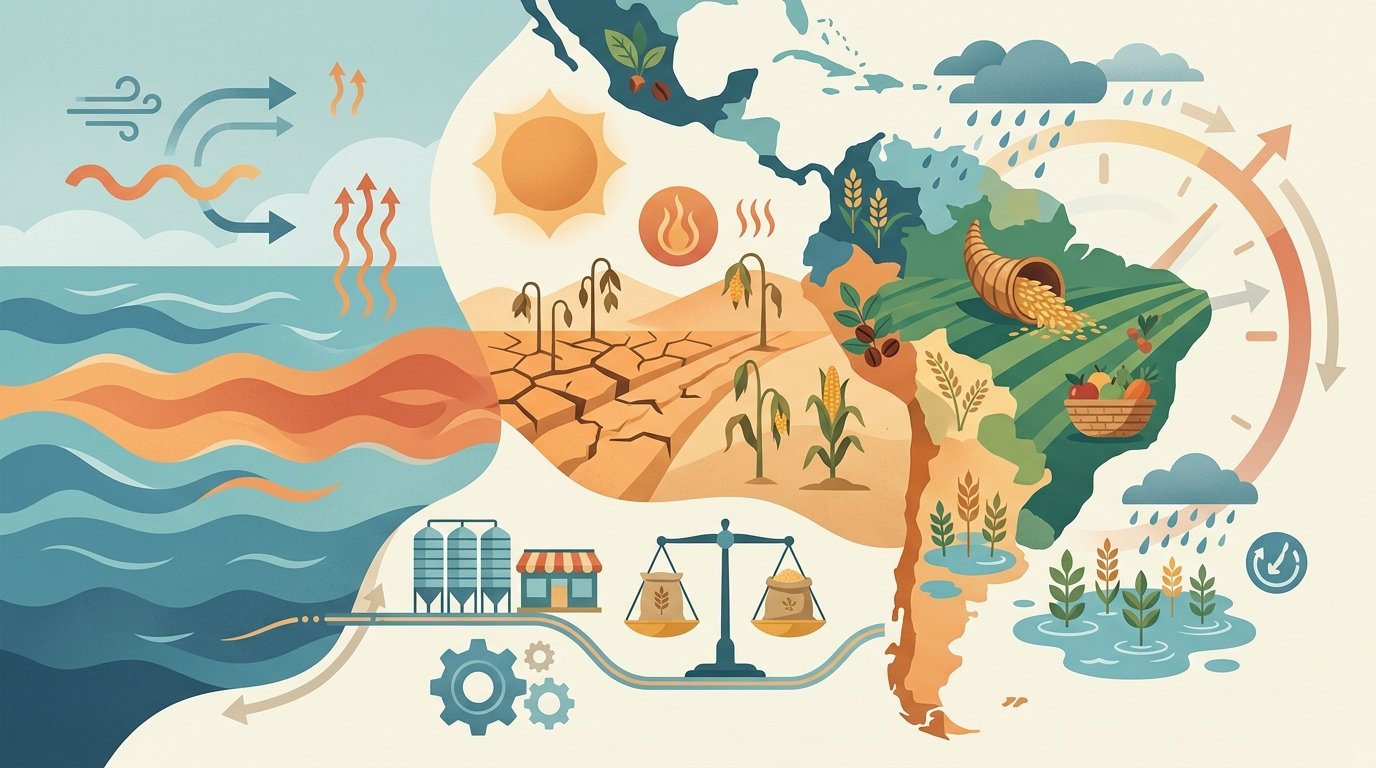
A recurring Pacific Ocean weather pattern is placing mounting pressure on food systems across Latin America and the Caribbean, with researchers and international agencies warning that the effects could deepen significantly in the months ahead.
Crops, livestock and livelihoods under threat
The El Niño–Southern Oscillation, a naturally occurring climate cycle that alternates between warmer and cooler Pacific sea surface temperatures, has been linked to a series of damaging weather events across the region. In central Bolivia, an unusually heavy snowfall buried hundreds of animals belonging to farming families, prompting authorities to declare the area a disaster zone. In Colombia’s Tolima region, wildfires have swept through land used to grow coffee, cocoa, fruits and vegetables, destroying harvests that represent years of accumulated family assets.
Experts note that small-scale producers — including Indigenous communities — are estimated to account for around 80 percent of food supply in Latin American countries, yet they have limited capacity to absorb these kinds of losses on their own. The World Food Programme has highlighted three interlocking pressure points: reduced crop yields in the field, rising food prices in markets, and weakened household purchasing power. A 2026 report from five international organisations found that roughly 2.1 billion people worldwide experienced moderate or severe food insecurity in 2025, though global hunger figures showed a third consecutive year of decline.
A region exposed on multiple fronts
The World Meteorological Organisation has identified several areas of particular concern:
- The Central American Dry Corridor, spanning parts of Costa Rica, Nicaragua, Honduras, El Salvador and Guatemala, faces droughts, water shortages and heatwaves
- Ecuador and Peru’s Pacific coasts are at risk of extreme rainfall and flooding
- South-eastern South America could see above-average precipitation and severe storms
Beyond agriculture, the International Labour Organisation has flagged risks to informal, rural and outdoor workers, as well as potential strain on health systems, infrastructure and transport networks. The phenomenon is expected to intensify during the second half of the year.
Some governments and organisations have begun developing early-warning systems and climate insurance schemes to help communities prepare, though specialists stress that addressing deep-rooted inequality and fragile local food systems remains essential to building lasting resilience.
This article is adapted from “El Niño speeds climate crisis and tests Latin America’s food security” published by Global Voices, licensed under CC BY 3.0. Changes were made. Read the original story at the link above.
Discover More from Didier Lancelot
Amazon Author page: amazon.com/author/didierlancelot
Narmer Store: narmerstore.org
AI and Technology Ebooks
- Creative AI: Animated Drawings, Manga & Illustrations
- Build a Game with AI: The No-Code Guide
- AI Image Generation Made Easy
- Build a Website with AI: The No-Code Guide
- How to Connect AI to Your Blog: The Ultimate Automation Guide
- AI Productivity Habits: Get More Done in Less Time
- AI Avatars Made Easy
- The Book of AI Prompts: 100+ Proven Prompts
- Make Music with AI: Suno, Udio and AI Music Generators
- Click to Cash
- The Automated Edge: Outwork, Outpace, and Outperform with AI
- AI Side Hustle: How to Make Money with ChatGPT and AI Tools
- Work Smarter with AI
Health, Lifestyle and Home Ebooks
- Hidden Superfoods: The World’s Most Powerful Healing Foods
- Spanish Food: The Complete Cookbook for Authentic Home Cooking
- The Science of Happiness Explained
- The Psychology of Success
- The Secret Sauce of Consistency: What the Experts Don’t Tell You About Fitness
- The Complete Home Bartender’s Guide: Link 1 | Link 2
- Natural Beauty, Made Simple: Easy DIY Organic Skincare Recipes
- Garden Made Simple: Easy, Beginner-Friendly Techniques
- The Dog Training Bible